Hepper is reader-supported. When you buy via links on our site, we may earn an affiliate commission at no cost to you. Learn more.
Do Female Dogs Have Periods? Vet-Approved Facts & Tips



In this article
When adopting a dog, there are many things to take into consideration, including their breed, size, and health issues. With female dogs, reproductive cycles are often one factor that owners need to know more about.
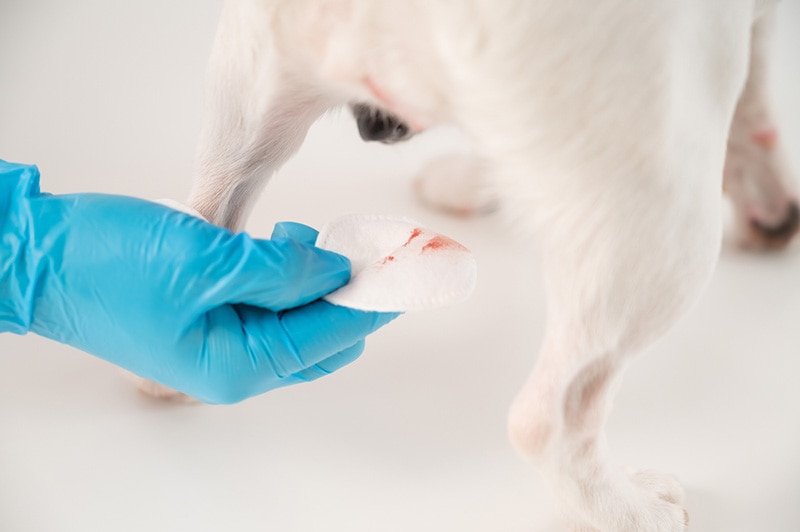
Many of us are aware that female dogs have a season, or are “on heat” every six months, and that during this time they experience bleeding from the vulva. You may be surprised to learn that this bleeding is actually quite different to a human “period” or menstruation.
In dogs, bleeding occurs during the estrus cycle, when they are ready to mate, whereas in humans, the bleeding signifies the end of the fertility window. From this, we can say, that female dogs don't go through "periods" in the same sense as humans do.
Read on to learn more about the estrus cycle, how it impacts your dog, and how it differs from human periods.

Human Periods vs. Canine Heat
During each month of the human reproductive cycle, the uterine lining becomes thickened in preparation for pregnancy. When ovulation occurs and there is no fertilization, the uterine lining is shed over a period of 3-5 days in a process known as menstruation.
Conversely, dogs will usually come into season once every 6 months (some breeds only have one season per year). It starts with a phase called proestrus, when the reproductive hormones signal to the organs to become ready for mating, and blood flow and mucus production in the vagina increase in preparation. Towards the end of proestrus, external signs like swelling of the vulva and bloody discharge appear, marking the start of the fertile period.
The transition from proestrus to estrus is when the female becomes receptive to male suitors, and at the same time, the discharge becomes lighter and less bloody. This is also when ovulation occurs.
As you can see, there is a big difference between human periods and canine heat.
How Often Do Dogs Go Into Heat?
The average female dog reaches sexual maturity between 6 and 9 months of age, though some larger or giant breeds can be 18 months to 2 years before they reach that stage. After that, most dogs will go into heat once every 6 months, give or take a few weeks.
It’s worth noting that, with some breeds, a female’s estrus cycle can take up to 2 years to establish itself and become regular. Larger breeds often have fewer estrus cycles than smaller breeds. For example, a Maltese may have her estrus cycle twice, even three times a year, while a Great Pyrenees may have hers every 14 to 16 months.
How Long Does the Estrus Cycle Last in Dogs?
Although all dogs are unique, the average time one stays in heat is between 10 and 14 days, with some as short as 4 days or as long as 24 days. Once her estrus cycle is established and regular, you should be able to determine how many days estrus lasts. Some dogs will bleed for only 3-5 days, others may have a discharge for the entire length of their cycle.
What Are the Signs a Dog Is in Her Estrus Cycle?
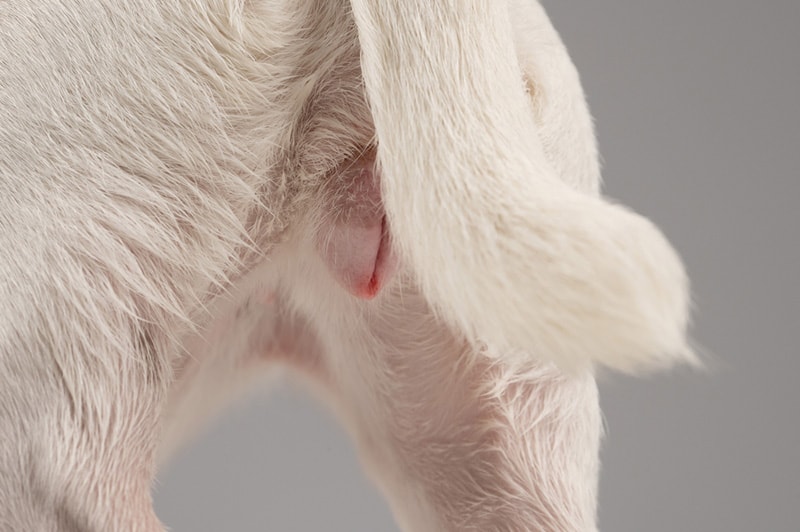
Most signs that a dog is in heat are easy to spot, but some might be more elusive. One of the first signs is that your dog’s vulva, the outer part of her vagina, becomes engorged and looks almost inflamed. Some of the other signs include the following:
How Do Male Dogs Know a Female Is in Heat?
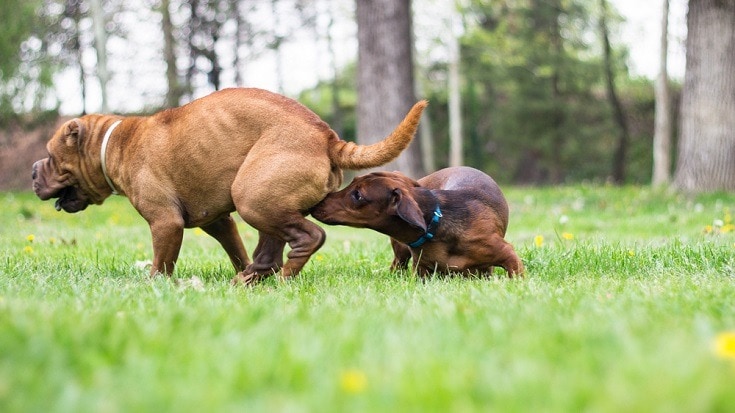
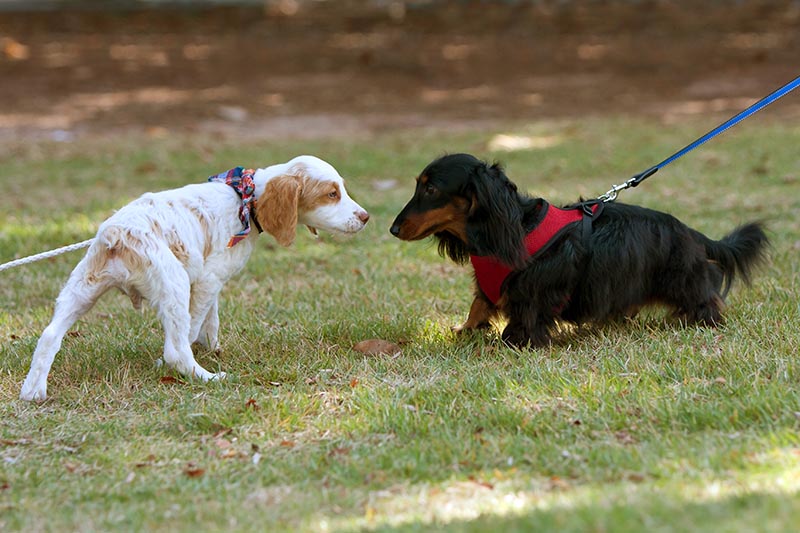
Did you know that a male dog can detect a female in estrus from over 3 miles away? It’s true, thanks to the amazing sense of smell dogs possess. It’s also thanks to the pheromones a female dog releases when she’s in estrus. Males pick up on these highly detectable scents in her urine and come from all over to try their luck, usually spraying and marking to designate the female dog as “theirs.”
When Do Vets Recommend Breeding a Female Dog?
If you plan to breed your dog when she’s sexually mature, veterinarians recommend waiting until she’s at least on her third estrus cycle. This ensures that she is fully mature and that, reproductively, everything is functioning normally. It also allows her to reach a stage of behavioral development that is more suited to having a litter.
During Which Part of Estrus Can a Dog Become Pregnant?
We mentioned earlier that, as your dog progresses through the estrus cycle, the discharge from her sexual organs becomes watery, usually after the first week (proestrus). This is when most dogs will also ovulate, making the 2nd week the most fertile time and the best chance for two dogs to make puppies together.
The sperm from a male dog can survive in a female’s reproductive tract for around 5-7 days. That means she might be in her 1st, 2nd, or 3rd week of estrus and can become pregnant from any male dogs that have successfully mated with her during that time. This is also why predicting a due date can be difficult, as fertilization might occur a week after mating.
Can You Prevent Estrus?
There are hormonal injections available that can shorten an estrus period and prolong the time between each season (diestrus). This method is generally used in breeding females, or those that are of a high surgical risk. It can result in complications such as pyometra, an infection of the uterus, which can be life-threatening, and can also lead to a permanent diestrus, which would not be a desirable outcome for breeders.
In most cases, veterinarians recommend ovariohysterectomy, more commonly known as “spay”. There are also laparoscopic techniques that involve removing only the ovaries. This technique was developed to reduce surgical wound size and recovery, although most people who have had their dog spayed will know that the recovery is usually very fast!
What Is the Best Method to Prevent Your Female Dog from Becoming Pregnant?
Like with estrus, the best way to prevent your dog from becoming pregnant is to have her spayed. Besides that, ensuring that your dog can’t be around and mate with any male dogs is the only other method to prevent pregnancy.
This means keeping your dog far out of reach of males throughout her estrus cycle, which might be problematic if you have intact males in or around your home. For some female dogs, preventing them from being alone in your yard is critical. Males will find a way to get to her, even if you have a good fence or other deterrent.
What Is The Best Time To Spay?
It is recommended that your female dog be spayed after her first heat. There is strong evidence to show that spaying before their second season significantly reduces the risk of mammary cancer, and completely eliminates the risk of uterine infection (pyometra).
There is an even greater reduction of mammary cancer risk if spayed before the first season, but, there are other health implications of spaying before they are sexually mature, such as urinary incontinence.
Dogs should not be spayed during estrus, as the enlarged blood vessels of the reproductive tract increase the risk of hemorrhage. Ideally, spaying should occur when they are in diestrus, around 1-3 months after all signs of their season have settled, and up to 1 month before they are due to have another one.
Sometimes dogs can experience a false or “phantom pregnancy”, which is where the hormones are behaving as though a pregnancy has occurred. This will normally occur around 3 months after a season, so your vet will examine your dog to make sure she is not showing signs of a phantom pregnancy before she is spayed to avoid causing disruption to the hormones.

Should You Let Your Dog Have a Litter Before She Is Spayed?
It is a common misconception that female dogs need to have a litter to help her feel more settled, or even more commonly, to have the opportunity to have babies. Both these ideas are very much based on anthropomorphism; assigning human ideals to other species.
Unlike humans, who raise their children for almost two decades (or longer!), dogs wean their young at 5-6 weeks, and in many cases, have friction with any offspring that do not leave, particularly females. This is because, in the wild, her female pups will grow to be her competition in the pack. Of course, we cannot speak definitively about how a female dog feels about her pups, but natural canine behavior is to show bonding and affection for her litter until they reach an age that they can survive on their own, at which point, she is looking to have a new litter.
Certainly, having puppies just for the sake of “letting her have a litter” is not a responsible thing to do when there are so many dogs in need of homes, with animal shelters overflowing.
How Can You Reduce the Mess of Estrus At Home?
Doggie diapers are the best solution to the stains and messes that occur when a dog is in heat. Several types of diapers are made specifically for dogs, including small, medium, and large dogs. But DO NOT rely on these to block a determined male!
Reusable dog diapers are meant to be used and washed and are more economical, and can be found in a range of fun colors and styles. For convenience, disposable dog diapers work exactly like disposable baby diapers and are handy for dogs (and their pet parents) on the go. One last type is full-body dog diapers which, as the name suggests, fit your dog’s entire body. That makes them hard to chew or tear off, which many dogs do when their owners aren’t looking.
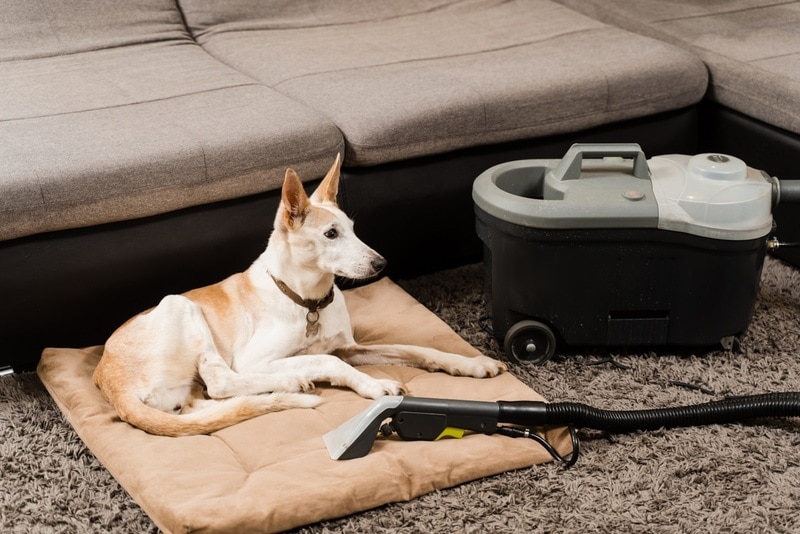
The other way to reduce mess in the home is to restrict your female dog to a part of the home with less soft furnishings, but be sure to provide her with a comfy bed!
Conclusion
Female dogs have an estrus cycle that differs significantly from human periods. The bloody discharge seen in dogs is due to the increase in blood flow to the reproductive organs that make her ready for mating. This is quite different to human menstruation, which is the monthly shedding of the uterine lining if pregnancy does not occur.
A dog’s estrus cycle usually occurs twice a year, during which time she can become pregnant by any sexually mature male. The best way to prevent pregnancy, estrus, and the mess it can cause is to have her spayed.
Spaying your female dog between her first and second seasons is the best way to ensure she is fully developed, and also reduce risks of mammary cell tumor.
Sources
Featured Image Credit: EverGrump, Shutterstock
Get Hepper In Your Inbox


Pet care tips from our vets and experts, straight to your inbox.
You may opt-out at any time. View our Privacy Policy for more information.
Greg Iacono is a self-taught writer and former chiropractor who, ironically, retired early due to back problems. He spends his time writing scintillating content on a wide variety of subjects. Greg is also an accomplished video script writer known for his ability to take a complex subject and make it accessible for the layperson.
Join the conversation
Ask a question, share your story, or send private feedback.