Hepper is reader-supported. When you buy via links on our site, we may earn an affiliate commission at no cost to you. Learn more.
When Do German Shepherds Go Into Heat? Reproductive Cycle Facts & FAQ
In this article
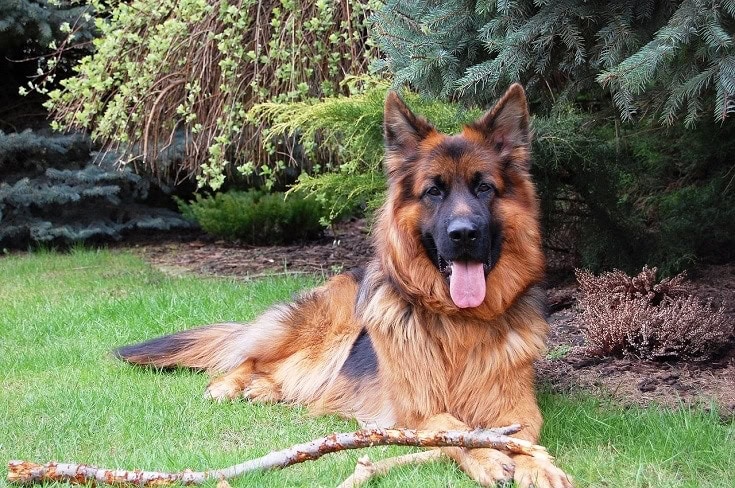
The first heat or estrus cycle for a German Shepherd is a significant milestone. It means that your pup has reached sexual maturity and can mate. It is a stressful time for your pet. Their hormone levels rise and influence their behavior and physiology. Plus, the German Shepherd grows up more slowly than smaller ones since your pup is a large breed.
While there is some variation, you can expect your pet to go into heat between 6–12 months of age.

Going Into Heat: Large vs. Small Dogs
Usually, smaller animals have shorter lifespans. Mice may live only a year or two, whereas an elephant can live 70 years in the wild. Dogs stand as a stark contrast to that fact. A Toy Poodle may live over 14 years in contrast to the average 7 years for a Saint Bernard. That fact plays a direct role when a German Shepherd Dog goes into heat.
Research suggests that larger breeds mature slower with shorter lifespans is because it takes so much energy and genetic resources to reach their adult sizes. While that Toy Poodle may be sexually mature at 5–6 months, the German Shepherd Dogs will need some extra time to achieve the same growth level at 9–15 months.
The factors that will affect the start include:
You have some control over those variables, but the die is cast for most of them. It’s merely a matter of observing your pet’s behavior and physical changes to determine when its estrus cycle has begun.
Signs of Estrus in Dogs
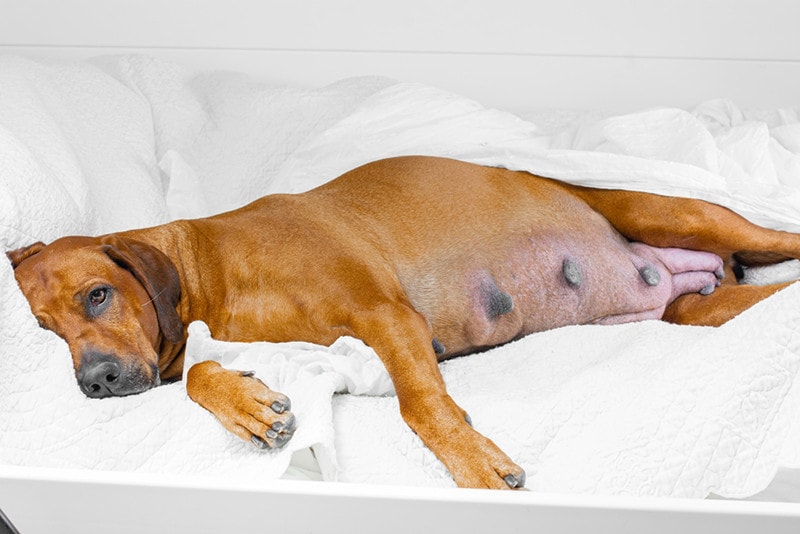
As a large breed, you can expect the estrus cycle to last between 14–21 days for your German Shepherd. It will occur around twice a year for breeds of this size. The first signs that your pup is receptive to males are physical. Its vulva will become swollen, which you may or may not notice because of the thickness of this breed’s coat. You may also see your pet licking their genital area as a result.
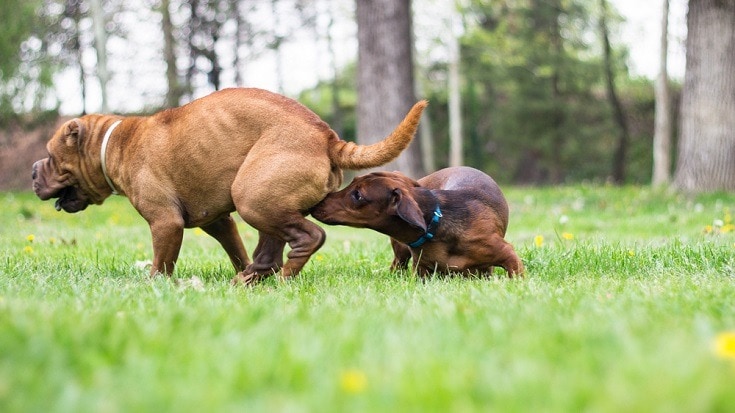
The swelling puts added pressure on other internal organs, including the bladder. You’ll likely find that your dog is urinating more frequently. The telltale sign is the bloody discharge. Your pet’s behavior will likely differ in response to the physical changes going on inside their body. Your pup may seem more anxious or agitated, and they may mount other objects.
Your German Shepherd will permit mating around 10 days into its cycle. Its vaginal discharge will gradually decrease. Either the estrus will end after a long anestrus stage, where all signs will abate, or pregnancy will begin.
Care of a Female Dog in Heat
The question of what to do with your pet depends on whether you want your dog to have puppies. If that’s not the case, the best thing to do is to keep an eye on your pup every time you let them outside. Don’t leave your pet outdoors unwatched. Females are just as determined as males when it comes to mating. If you take your dog on walks, keep your pup on a short leash.
We suggest erring on the side of caution and adhering to these restrictions for the entire 21 days. You’ll notice that things are back to normal when your pet acts like they usually do. The discharge and swelling both will have stopped.
Dog Neutering vs. Breeding
It’s a common myth that a dog should have a litter of puppies before you get your pup spayed. Unfortunately, that’s not true. However, the question of whether to spay your pet isn’t cut and dried, either. Research has shown that there are pros and cons to getting it done that may affect your dog’s health in unexpected ways.
Genetic factors play a significant role in determining whether or not the surgery is the best choice for your German Shepherd. That’s why it’s imperative to get a pet only from reputable sellers who will conduct the recommended pre-breeding health screening of the risk of some of the conditions affected by spaying.

Final Thoughts
As you’ve seen, the size of the breed has an impact on when your German Shepherd dog will go into heat. It typically occurs later in these pets after 6 months of age. It also affects the timespan between the cycles, which will likely happen twice a year. Knowing the signs can help you prevent an unwanted pregnancy until you and your vet discuss the best option for your dog.
Related Reads:
Featured Image Credit: Callipso, Shutterstock
Get Hepper In Your Inbox


Pet care tips from our vets and experts, straight to your inbox.
You may opt-out at any time. View our Privacy Policy for more information.

Nicole is a lover of animals of all sizes but is especially fascinated with the feline variety. She’s the proud mom of Baby, a Burmese, and works every day so he can relax in the sunshine or by the fire. She’s always had a cat in her home and has spent countless days with others, observing behaviors and softening up even the grouchiest of the lot. Nicole wants to share her kitty expertise with you so you and your cat can live happy, healthy, and care-free.
Join the conversation
Ask a question, share your story, or send private feedback.