Hepper is reader-supported. When you buy via links on our site, we may earn an affiliate commission at no cost to you. Learn more.
Do Ferrets Bite? Our Vet Identifies Reasons, Explanations & Provides Training Tips

In this article
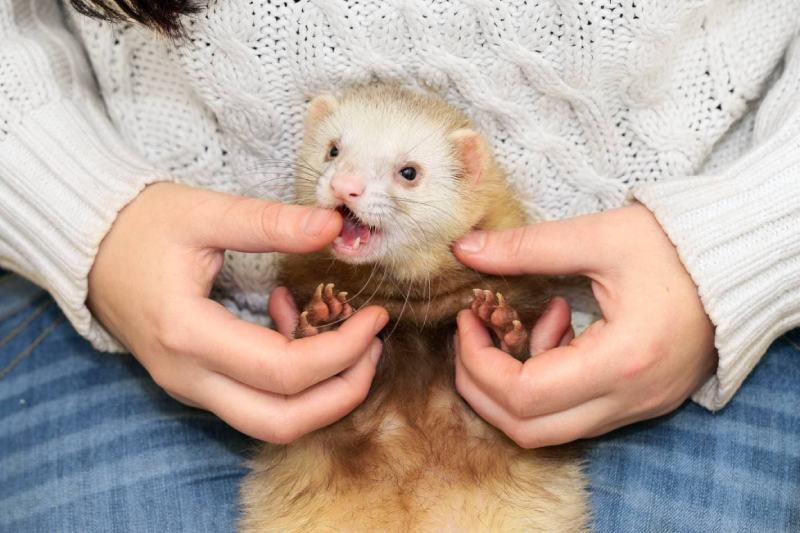
Ferrets are unique animals that make amusing pets. They use their mouths to eat, play, defend themselves, and communicate. Sometimes, a ferret will bite. Understanding why your ferret is biting is crucial to taking the necessary steps to prevent it. To do so, you must recognize the difference between nipping and biting and determine your pet’s motives. We’ll discuss the biting behaviors in ferrets so that you can be well-informed in case you ever face such an issue.

Nipping Versus Biting
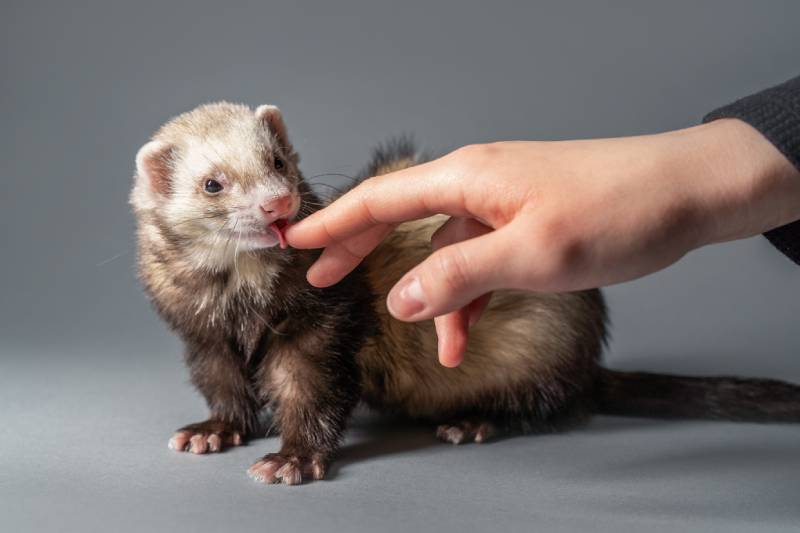
Nipping (sometimes known as mouthing) is not the same as biting. Nipping can sometimes be inconvenient or undesirable, but it is not a sign of aggression or a behavioral issue. Conversely, biting can be painful and is often a sign that something is amiss.
Normal Biting
Nipping is a normal behavior, but it is still something that you can train your ferret to minimize so that they do not nip constantly. Essentially, you want to train your ferret to understand that there are limits to acceptable nipping behavior.
Ferrets nip to play or to seek attention. To prevent your ferret from nipping, look for the signs that they want attention before they decide to nip. If you give your pet attention as soon as you notice their need for interaction, they will not need to resort to attention-seeking behaviors, like nipping. Generally speaking, nipping isn’t a health concern and is not painful.
Problematic Biting
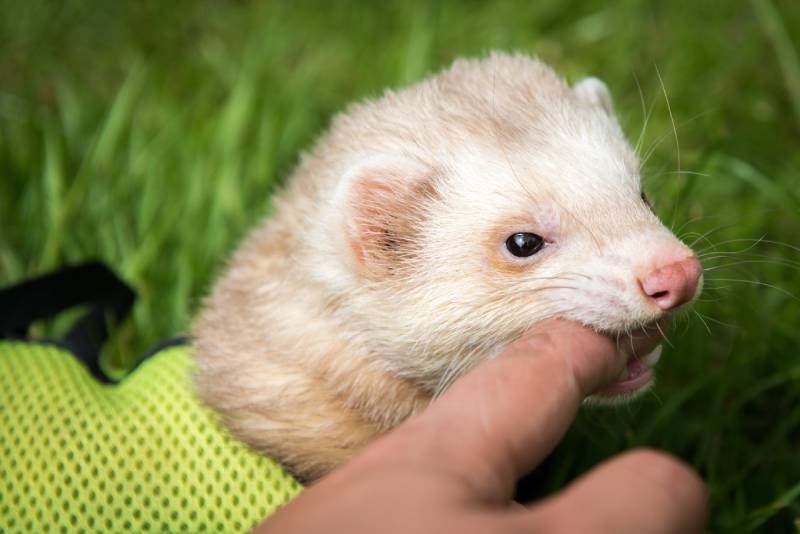
Biting is painful, and a ferret that bites hard enough can definitely draw blood. However, biting is not typical of ferrets and usually indicates a problem. Understanding why your ferret is biting will help you to take steps to curb this behavior.
Why Do Ferrets Bite?
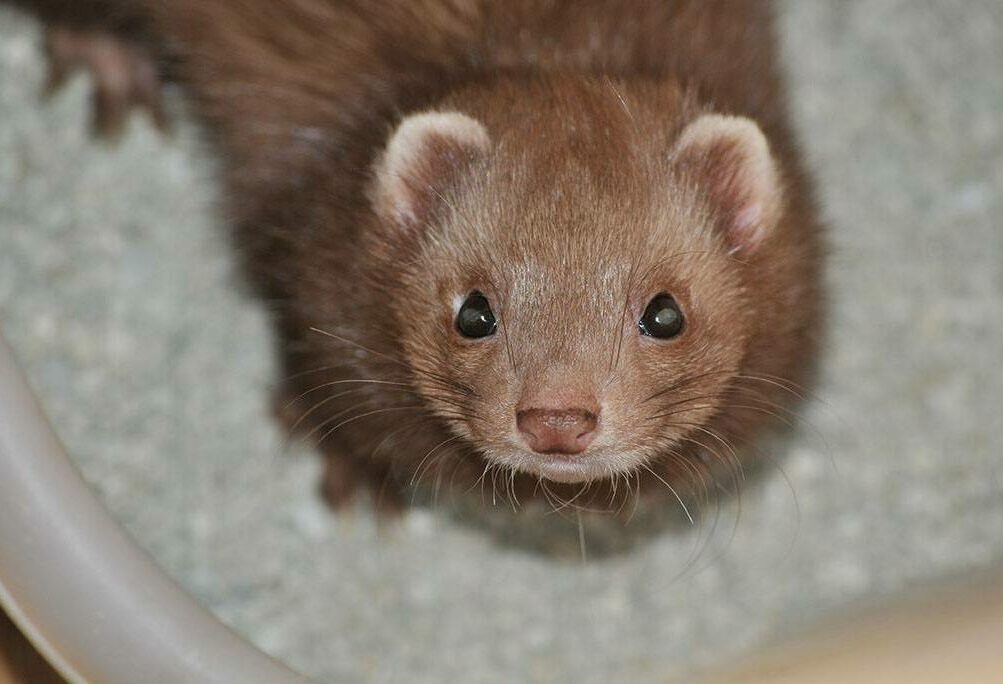
When ferrets bite, it is usually (but not always) due to a behavioral issue. Determining the root of the issue will help you address it.
1. Teething
Like puppies, baby ferrets bite when they’re about to lose their milk teeth (also known as deciduous teeth). This period of time in a ferret’s life is generally uncomfortable, and they bite to relieve the discomfort that they feel in their mouth. This behavior often corrects itself once a ferret’s adult teeth come in and they no longer feel uncomfortable.
2. Premature Weaning
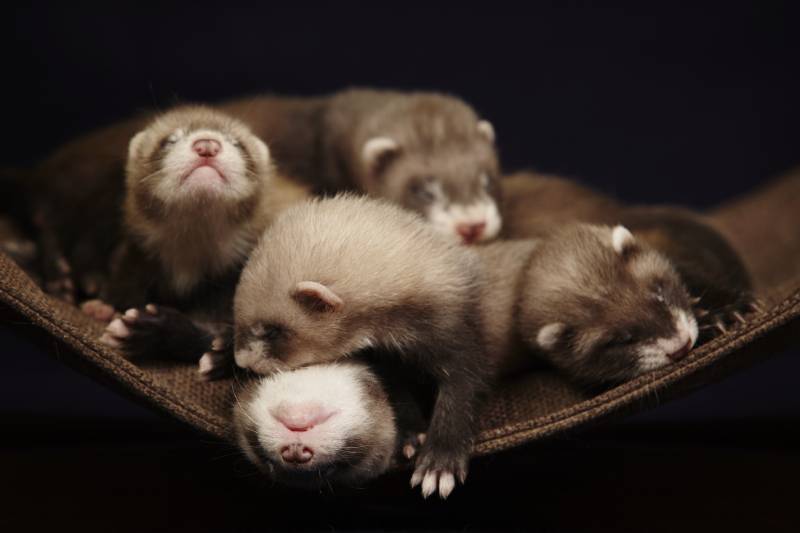
A young ferret (with adult teeth) that hasn’t been adequately socialized with their mother and siblings may sometimes bite incredibly hard when playing with their human caretakers. This often happens when ferrets are weaned prematurely.
Under normal circumstances, they learn to control their biting antics when they’re playing with their siblings or interacting with their mothers. However, being separated from their mother and siblings doesn’t give them this crucial training period, and they may resort to biting too hard when being handled. This issue requires training your pet to understand when they’ve gone too far with their antics.
3. Boredom
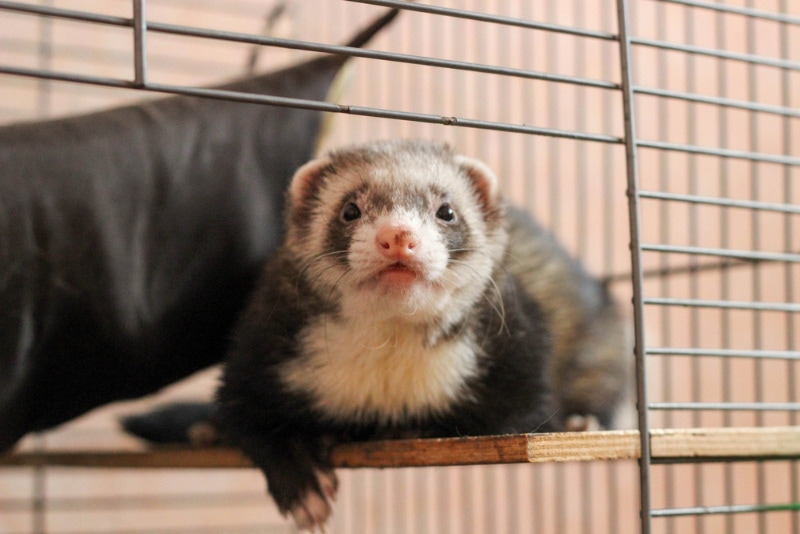
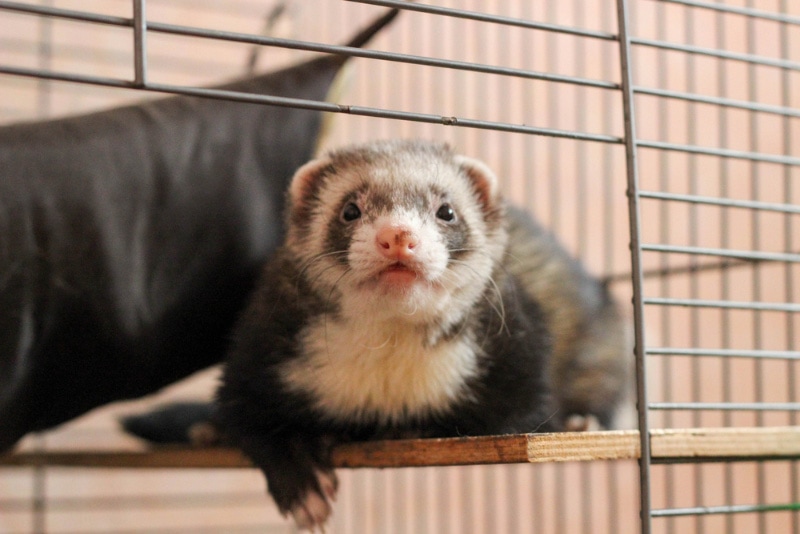
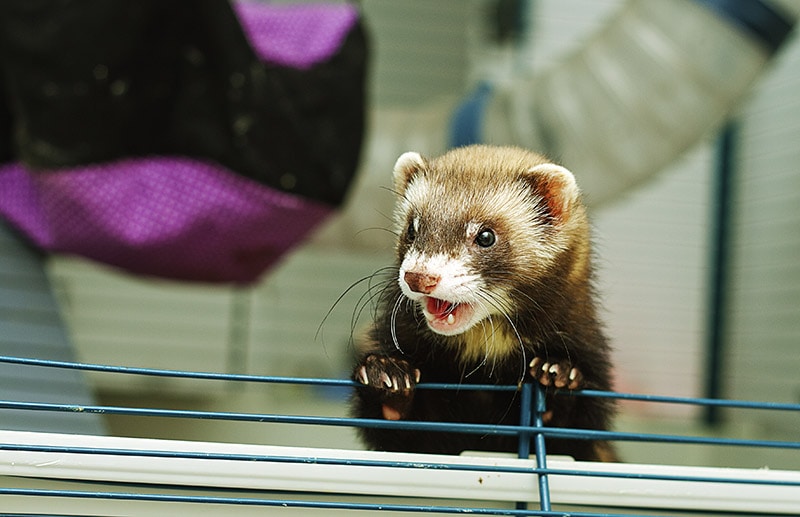
If your ferret spends too much time inside a small cage and doesn't get enough exercise outside, they may simply bite out of boredom. They may resort to biting the cage itself (known as cage rage), or they may bite you once you finally do handle them.
The American Ferret Association highly recommends allowing your ferret to spend at least 4 hours outside of their cage on a daily basis. Please note that this is a minimum requirement, not an optimal recommendation.
4. Improper Training
If your ferret seems to bite you and a bite is usually followed by you placing your pet down or letting go of them, they will quickly learn that biting is an easy way for them to get whatever it is they want from you, and they may repeat the behavior more often. This often happens with ferrets that are poorly trained and not socialized well enough with humans. This issue requires more frequent training and handling so your ferret learns how to properly interact with you.
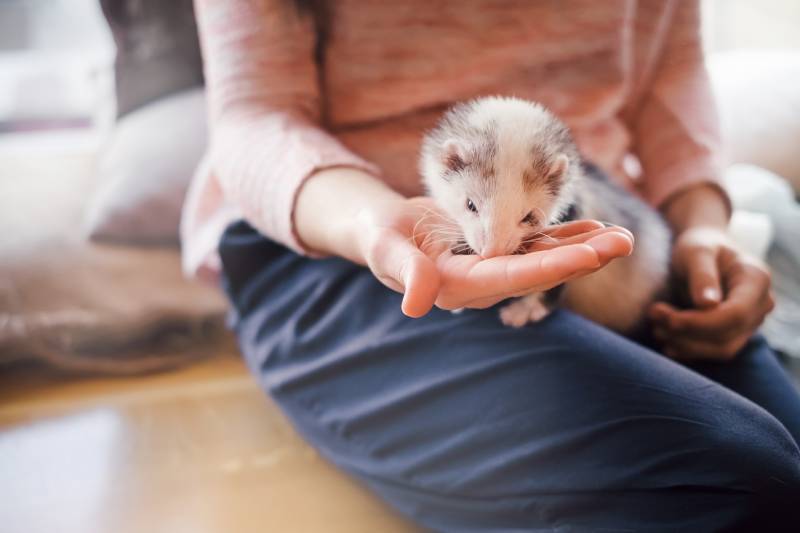
5. Fear
Another reason a ferret may bite is due to fear. Such a ferret is aptly referred to as a “fear biter.” Fear biters have often experienced abuse, neglect, or other forms of trauma. Some will only target the person who has harmed them, while others will lash out at anyone. Ferrets may also bite unsupervised children who handle them too roughly, and they learn that biting enables them to escape the unwanted attention of kids.
After a fear-induced attack, place the ferret in a pet carrier and leave them alone. This will give them the space to calm down and feel secure. After your ferret has calmed down, you can begin rehabilitation. By providing treats and positive interactions for your pet, you can create pleasant experiences for your ferret. By investing this time and care into your pet, you can forge a bond between you and reduce their fear-based aggression.
6. Environmental Stress
A change of environment (such as a relocation), loud noises, a new pet, or a sudden alteration of a routine can stress ferrets, leading them to bite. These problems can be addressed by ensuring that any changes that you make to your ferret’s environment are slow and gradual. Ferrets are not fond of loud noises, and minimizing these will help your pet stay calm.
7. Territorial Aggression
Ferrets are territorial, and sometimes, a new pet may lead to a territorial scuffle. This is often in the form of rolling, interlocking, and biting the new ferret. A ferret may inadvertently bite you if you’re not careful in terms of how you go about separating two ferrets that are fighting.
Male ferrets that aren’t neutered or fixed are particularly territorial and aggressive during the mating season, and they will mark, display, and bite during this time to assert their dominance over other ferrets. They are highly likely to bite humans in this state of hormonal lust. Pet ferrets should be neutered for their health and welfare. Talk to a small animal veterinarian if your pet isn’t fixed.
8. Pain, Injury, or Disease
At times, your ferret may bite if they are suffering from an underlying health condition that is uncomfortable and painful, causing their body stress. This can be due to various reasons, such as an internal medical issue, skin and ear mites, or if they’ve eaten something that their body doesn’t agree with. If you suspect this to be the reason, you should promptly reach out to your veterinarian and have them assess your pet.

What to Do If You Are Bitten
Enduring a ferret bite can be shocking. If you or someone else in the home has been bitten, you should take immediate action to treat any wounds left by your pet.
First Aid
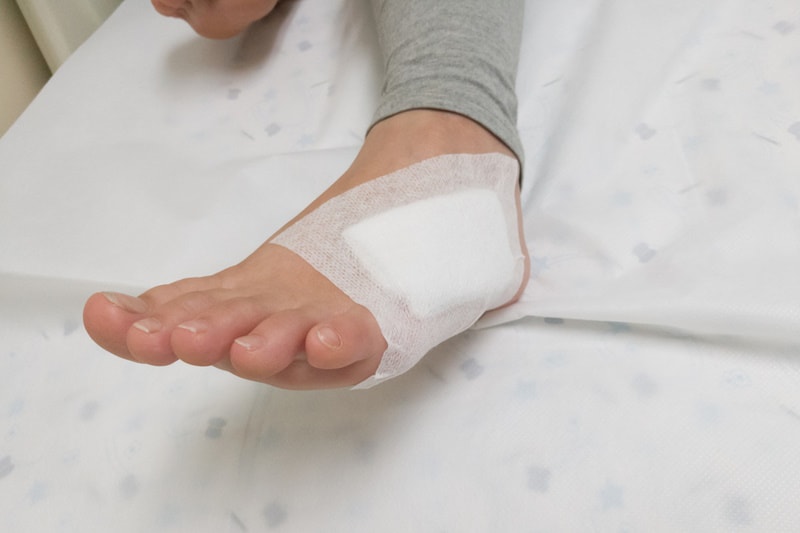
A severe bite from a ferret is at risk of developing an infection. First, wash the wound thoroughly with warm soap and water. Then, apply an antiseptic or antibacterial ointment to the wound for continued cleansing.
Once you have cleaned the wound, inspect it. If it is a shallow, small cut, you can bandage and monitor it in the coming days. However, it is often advised to seek medical attention.
When to Seek Medical Attention
If you are unsure whether to seek medical attention, it is best to err on the side of caution. Bacteria can be transmitted from animal bites, regardless of the wound’s depth. Even a shallow bite can lead to a severe infection.
You should always seek medical attention if you are bitten by an unvaccinated ferret or a ferret whose vaccination status is unknown, since they can infect you with rabies. If the ferret behaved unusually or appeared sick, your wound (and the ferret) should be checked immediately.
Seeing a medical professional is especially important for young children, the elderly, pregnant people, and immunocompromised individuals. Likewise, seek treatment if you are experiencing extreme pain, uncontrollable bleeding, or an inability to move the injured body part.
Final Thoughts
Ferrets are typically friendly, gentle creatures that nip to communicate or play with their loved ones. On the rare occasion that a ferret bites, there may be several reasons for the behavior. However, every ferret that bites can be rehabilitated.
If you are bitten, immediately clean the wound with hot water, soap, and rubbing alcohol. Then, inspect the wound to determine whether a visit to a doctor is necessary. If you are concerned for your well-being at any time, do not delay seeking treatment.
Featured Image Credit: David Vogt Photography, Shutterstock
Get Hepper In Your Inbox


Pet care tips from our vets and experts, straight to your inbox.
You may opt-out at any time. View our Privacy Policy for more information.
Dr. Luqman grew up with an extreme fondness for animals and turned a childhood dream into reality by becoming a veterinarian. His goals are now focused on helping pet owners understand their pets better in order to ensure the best quality of life for all pets globally. He is passionate about wildlife, exotic pets, pet owner education, and animal welfare. Luqman has 3 years of professional experience working with a variety of animal species. He has skills in demonstrating proper animal husbandry and training some exotic species, such as parrots. Additionally, he has decades of personal experience with keeping many exotic pets: freshwater fish, parrots, songbirds, chickens, ducks, turtles, and hamsters.
Dr. Luqman grew up with an extreme fondness for animals and turned a childhood dream into reality by becoming a veterinarian. His goals are now focused on helping pet owners understand their pets better in order to ensure the best quality of life for pets all around the world. His passions are wildlife, exotic pets, pet owner education, and animal welfare.
Education
Luqman received his degree from Universiti Putra Malaysia.
Experience
Luqman has 3 years of professional experience working with a variety of animal species. He has skills in demonstrating proper animal husbandry and training some exotic species, such as parrots. Additionally, he has decades of personal experience with keeping many exotic pets: freshwater fish, parrots, songbirds, chickens, ducks, turtles, and hamsters.
Join the conversation
Ask a question, share your story, or send private feedback.