Hepper is reader-supported. When you buy via links on our site, we may earn an affiliate commission at no cost to you. Learn more.
Are Ferrets Aggressive? Temperament & Posible Causes Explained

In this article
Ferrets have become ever more popular as pets over the past few years, and it’s easy to see why. These little guys are cute, funny, and can be incredibly sweet. But can they also be aggressive?
The question of “Are ferrets aggressive?” is easy to answer—no, ferrets aren't aggressive.
Under normal circumstances, these aren’t aggressive animals. However, there are some situations where a ferret (like most animals) can become aggressive. What are the instances where a ferret could become aggressive, and what do you do if yours is showing aggressive behavior?

Reasons Ferrets Get Aggressive
Here’s a look at the four main reasons a ferret might be aggressive. Knowing which reason is the cause of a ferret being aggressive means you can figure out how to calm that aggression.
1. Doesn’t Know Better
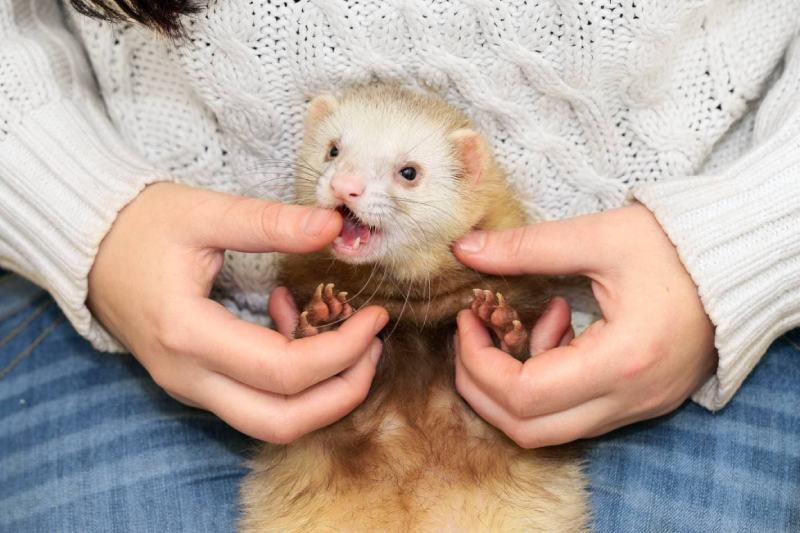
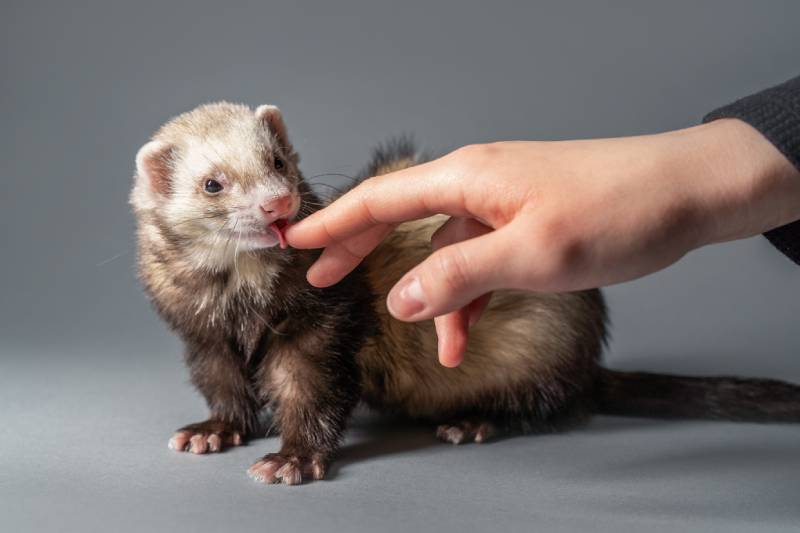
If you have a very young ferret on your hands, they may simply not know any better. When a ferret is young, they should spend the first few months of life around their family. Why is that? Because at this stage, a lot of communication is done via biting, and doing this with their family teaches them what is and isn’t acceptable. But ferrets that come from backyard breeders or pet stores likely were removed from their families early on, so they didn’t learn when not to be aggressive or bite. A ferret may still do some biting while they’re at play, even if they are well-behaved, but the difference will be that these are gentle nips and not chomping.
2. Was Neglected or Abused
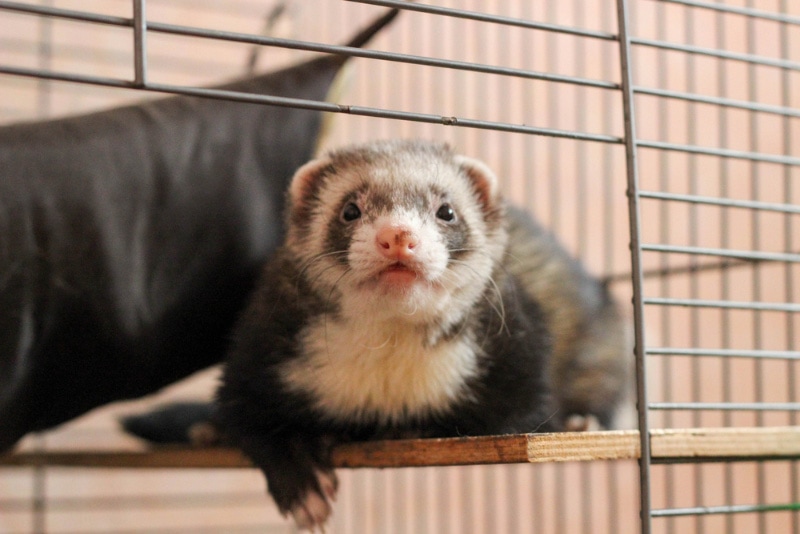
Unfortunately, ferrets can be neglected and abused, just like more common pets. Whether it’s physical abuse, being held in a too-small space or under poor conditions, or not ever being let out of their enclosure to play and use up their energy, it all adds up to one scared and potentially aggressive ferret. So, if you’ve adopted a ferret from a shelter and see signs of aggression, this could be why. With a bit of patience and love, though, you’ll be able to make your ferret see that things are different in your home, which should go a long way in quelling any aggressive behaviors.
3. Is in Pain or Ill
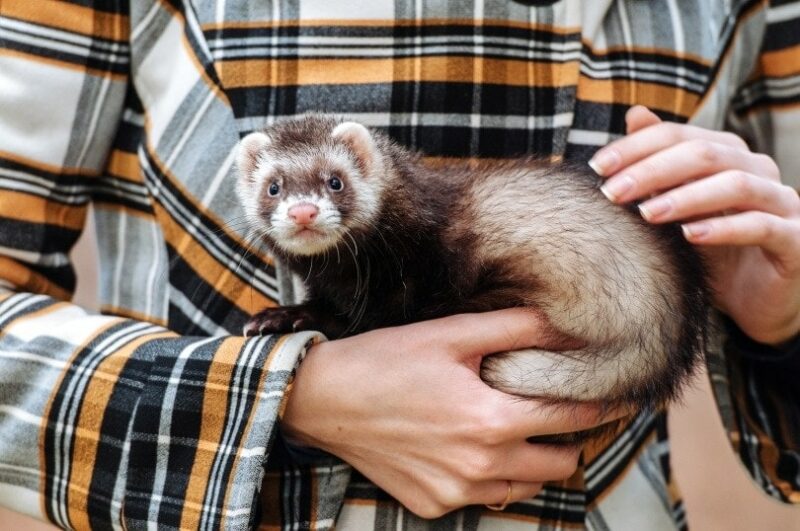
If your ferret is generally well-behaved but suddenly becomes aggressive out of nowhere and gets bitey, chances are good your pet is experiencing pain or illness. Carefully hold your ferret and see if they start biting when you touch a specific point on the body; if so, there’s probably something wrong there. If this is the reason for your pet’s aggression, you may also notice a loss of appetite, different sleeping habits, or strange behavior. If you suspect your pet is ill or hurting, seek a vet to get them checked out.
4. Hasn’t Been Neutered
One of the more common reasons a ferret will be aggressive is because it hasn’t been neutered. When the mating season rolls around, unaltered males often become aggressive toward anyone and anything around them. This aggressive behavior is an attempt to show any nearby females he is the most dominant male around. The simplest way to prevent this sort of aggression from occurring is to have your male ferret neutered.

Signs of Aggression in Ferrets
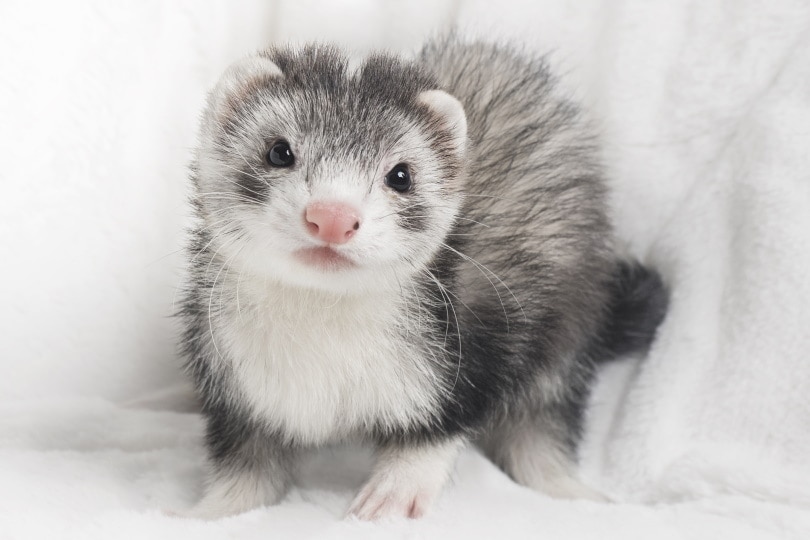
Now that you know the reasons for aggression in ferrets, you might be wondering what the signs of aggression are. After all, even playful, non-aggressive ferrets will nip and nibble at you since biting is part of how they communicate. So, how can you differentiate between a playful ferret and an aggressive one? You'll notice a handful of signs if your ferret is engaging in aggression rather than playfulness.
How Can I Handle an Aggressive Ferret?
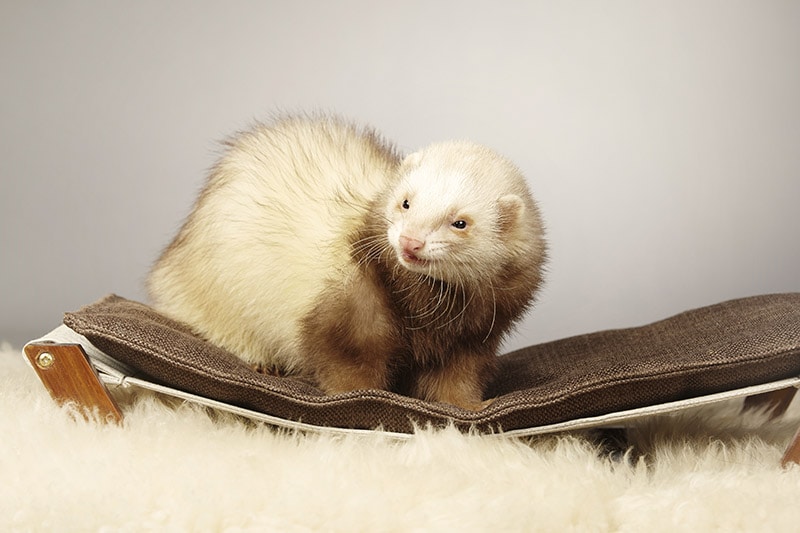
If your ferret is displaying aggressive behavior, the most important thing to remember is that you need patience and caution to deal with it. You can also expect the process of breaking them of this aggression to take some time.
The first step is to figure out why your ferret is being aggressive. Did they come from a shelter? Then, it might be past neglect or abuse that’s causing them to lash out. If they’re unaltered, it could be time to get them neutered. Knowing the cause of the behavior will help you decipher how to handle it.
Once you’ve determined the cause, you can deal with the issue accordingly. For example, if your pet needs to be neutered, arrange an appointment with your vet for that to happen. If your pet seems ill or in pain, take them to the vet.
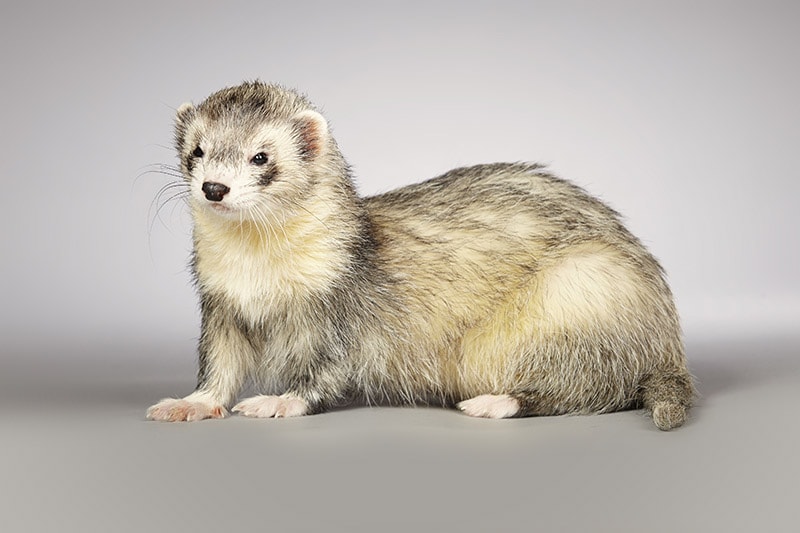
If your ferret was neglected or abused, dealing with aggression won’t be as simple as a vet visit. You’ll need to teach your pet to trust people again, which can take considerable time. If you’ve just brought your ferret home, let them get used to their new surroundings before doing anything else. Once your pet seems comfortable in their new environment, you can begin spending time with them, but from a distance. Just hang out in the same room as your ferret while you both do separate things. When your ferret is ready, they will approach you, although probably cautiously. After your pet approaches you, you can try to touch them, but if they bite, back off. If they let you touch them, you can attempt to pick your pet up; again, if they bite, take a step back.
And if your ferret doesn’t know any better, take the time to train them out of being aggressive or engaging in harsh biting.
Conclusion
Ferrets aren’t aggressive by nature, but there are certain situations wherein they can become aggressive. But most of these situations can be remedied (though some will take time and patience). If you’re experiencing aggression from your ferret, take the time to figure out what the likely cause is, then act accordingly. With a bit of patience, you should soon have a playful, happy ferret on your hands!
See Also:
Featured Image Credit: Julie Gaia, Shutterstock
Get Hepper In Your Inbox


Pet care tips from our vets and experts, straight to your inbox.
You may opt-out at any time. View our Privacy Policy for more information.
Misty Layne lives out in the woods in small-town Alabama with her two Siamese—Serafina and Jasper. She also has an array of stray cats, raccoons, and possums who like to call her front porch home. When she’s not writing about animals, you’ll find her writing poetry, stories, and film reviews (the animals are, by far, her favorite writing topic, though!). In her free time, Misty enjoys chilling with her cats, playing piano, watching indie and foreign films, photographing abandoned places, and catching up on her never-ending TBR list.
Join the conversation
Ask a question, share your story, or send private feedback.