Hepper blog

Search our database of over 9,984 posts with up-to-date information from our experts and veterinarians.

Hepper is reader-supported. When you buy via links on our site, we may earn an affiliate commission at no cost to you. Learn more.

Do Ferrets Need a Cage? Important Care Tips
By Nicole Cosgrove
Share
Ask us a question in the comments
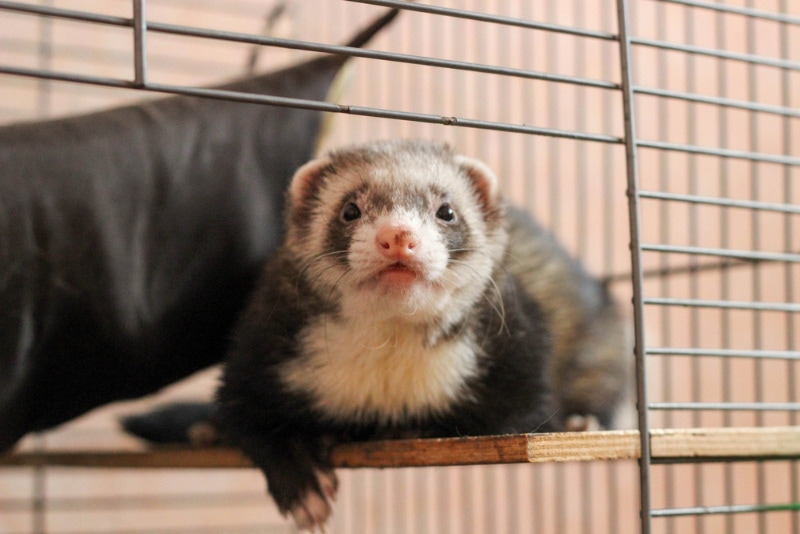
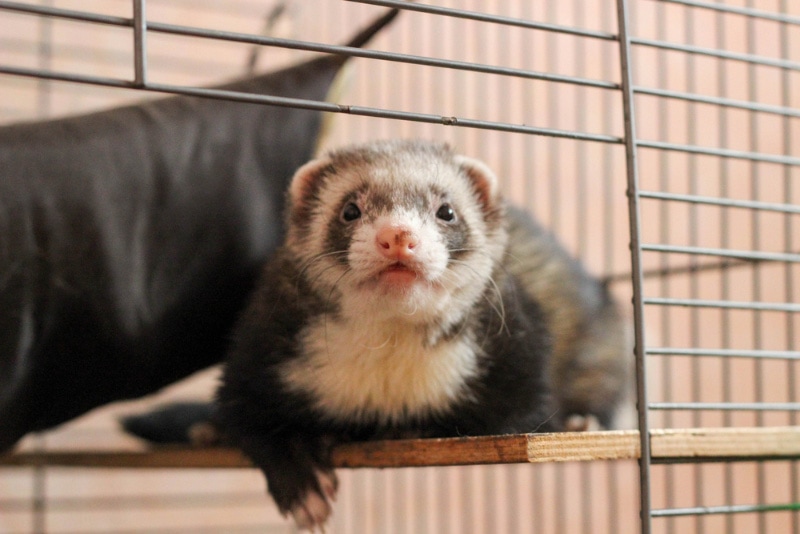
ferret resting in his cage

People who are looking for a cute and playful pet will love ferrets. These animals are lively, socially active, and mischievous. Ferrets are also extremely curious and like to investigate every nook and cranny.

Does that mean they need a cage, then? Absolutely! If you’re a busy parent who wants to keep the pet out of harm’s way 24/7, a cage for ferrets is a must.

Technically, ferrets can do without cages; they’re independent, intelligent, and resourceful creatures. But without one, the pet will constantly get in trouble and might even end up hurting itself. So, how big should the cage be? What benefits does it bring? And how do you make the house ferret-proof? Let’s talk about it!

Do These Pets Actually Need a Cage?

Ferrets are a bit too inquisitive for their own good, and there are just too many hazards waiting for them in every corner. We’re talking about sharp objects like knives, things to chew on like wires, or chemicals like cleaning products. So, think of a cage as a safety measure for keeping the naughty pet safe. That said, they don’t belong in a cage all the time; always let your pet ferret stretch its legs and breathe in fresh air.

Ferrets need to spend at least 4–5 hours per day outside of the cage to feel happy. Ideally, the “fun time” should be broken down into two or three shorter sessions so that the pet can burn off excess energy and get ready for nap time. If you keep the fur baby locked up all the time, that will lead to anxiety and stress, not to mention making the pet aggressive and ready to bite you.
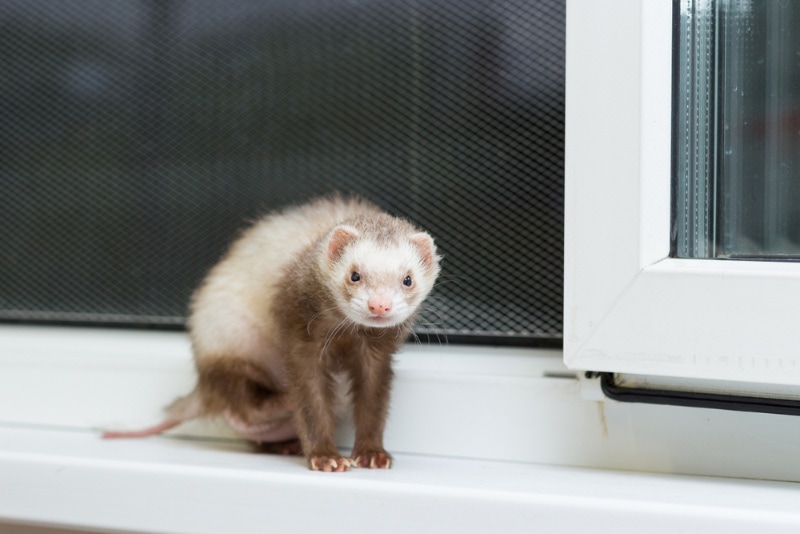
ferret sitting on a windowsill
Image Credit by: Fayzulin Serg, Shutterstock

The Pros of Putting a Ferret in a Cage

Just like humans, ferrets like to have a place where they can get some alone time and collect their thoughts. And a cage is perfect for that. It also keeps the pet safe, helps it adapt to the life of a domestic animal, and, above all, prevents it from getting into hardships. Besides, you, as the owner, will sleep better knowing the weasel is safe and sound.

Here are the biggest pros of a cage:

  • Safety and security. Very few things excite ferrets more than exploring their surroundings. However, unless you ferret-proof the house (we’ll talk about that in a moment), the little bud will probably end up hurting itself or worse. But if the pet stays in the cage, it won’t be able to get stuck in a hole, cut itself with a knife, or sink in the toilet.
  • Gives you peace of mind. If you often work late hours, it’s important to know that the ferret won’t get in trouble while you’re away. When you’re in a hurry, it’s almost impossible to think of everything (i.e., close all the doors, lock all the cabinets, and remove all the potentially hazardous toys). In these situations, the cage can be a life-savior!
  • Makes the pet feel at home. Despite their desire to go out there and “see the world”, ferrets also like knowing that they can always enjoy the coziness of a cage. If you put a hammock or two in there and shower the pet with tasty snacks, pretty soon, the ferret will start treating the cage as its home, which is exactly what we’re going for here.
  • No accidents with the pet. Sometimes, it’s best for the ferret to stay in the cage and not get in your way. For example, if you want to vacuum the carpets, clean the floor with a detergent (potentially harmful to the ferret), or invite a bunch of folks over, make sure the fur baby is resting in its cage. Otherwise, it might get hurt or worse!

How Big Should It Be? Does Size Matter?

See that the cage is at least 24” L x 24” W x 18” H—that’s the suggested minimum for most ferrets. If the pet is a bit larger, you might want to switch to something more spacious. These nimble creatures are renowned escape artists, which is why the cage should always be on lock. That’s right: once you’re happy with the size, don’t forget to install secure doors with locks (ferrets are smart enough to open regular doors).

The cage should also be properly ventilated. As for the flooring, go with wires or a solid structure. Wood is not recommended, as it will rot and soak from the pet’s urine and excrement. Lastly, add a couple of plastic platforms to turn the cage into a multi-level home. As for the cage, the metal wires need to be narrower than one inch. If you go for a wider gap, chances are, the ferret will be able to squeeze through and escape.

To make the ferret’s life more comfortable, don’t forget to:

  • Put the pet’s litter box at the very bottom of the cage for easy access.
  • The bowls, in turn, can go to “level two”—one of the platforms.
  • If you have extra platforms, put the ferret’s toys and blankets there.
  • It’s important to keep a distance between the litter box and the bowls.
  • This way, you’ll prevent bacteria from getting into the fur bay’s food or water.
  • Don’t install any rails or ramps because ferrets are very bad at climbing.
  • Never use aquariums as cages, as they don’t provide proper air circulation.
  • Consider letting the ferret out in the morning when it’s most active.

Why Not Let the Pet Roam Freely?

Many first-time ferret owners wonder: can you kiss the cage goodbye and let the little guy use the entire house as he pleases? Well, not quite! True, wild ferrets are perfectly fit to “handle” a much larger environment than a cage. However, that doesn’t apply to a lived-in house, especially if you have little kids. Ferrets sleep for up to 16–18 hours yet stay extremely busy when they’re awake.

And they can’t seem to resist the urge to chew on wires/cables and swallow things they’re not supposed to. So, even if they don’t get electrocuted, cut, or stepped on, ingesting a tiny piece of plastic could lead to death. If you take the pet to a vet’s clinic ASAP, they should be able to remove the foreign object, but that won’t be cheap.
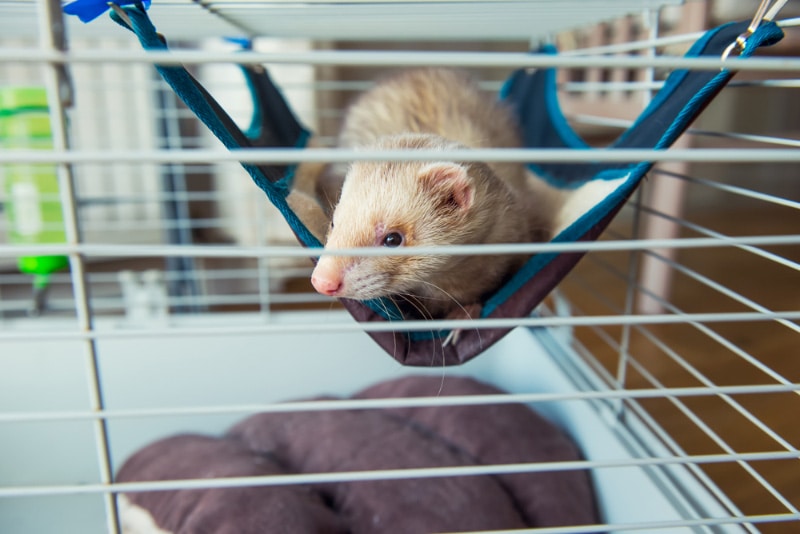
beige ferret resting on a hammock in its cage
Image Credit By: Okrasiuk, Shutterstock

Conclusion

Looking for a fun, sweet little pet to keep you entertained? Adopt a ferret, and you’ll be in for a treat! While these fur babies aren’t exactly low maintenance, if you buy a cage and pack it with tunnels, blankets, and toys, that will make life so much easier (for both of you). Cages give ferrets a sense of home, let them rest in peace, and provide protection.

These pets are natural-born scouts and can sneak into the tightest spots, putting themselves in danger. So, while you should definitely ferret-proof the house, with a cage, you can stay one step ahead of trouble and keep the pet locked up when need be. That’s why cages are so important!

Sources

Featured Image Credit: justart7, Shutterstock

Get Hepper In Your Inbox

Pet care tips from our vets and experts, straight to your inbox.

List

Select all that apply.

You may opt-out at any time. View our Privacy Policy for more information.

Nicole Cosgrove
Authored by

Nicole Cosgrove

Join the conversation

Ask a question, share your story, or send private feedback.

Rate this post
Required to post. Only our editors see your rating.
Who should see this?

A human reviews every comment before it appears. Your email is never published.

Picked to go with this article

How to Take Care of a Ferret: 17 Vet-Approved Expert Tips

How to Take Care of a Ferret: 17 Vet-Approved Expert Tips

Ferrets are European polecat relatives that were domesticated approximately 2,500 years ago. Even though they appear to be easy to care for, they are very inte…

Nicole Cosgrove
By Nicole Cosgrove ·
3 DIY Ferret Cage Plans You Can Build Today (with Pictures)

3 DIY Ferret Cage Plans You Can Build Today (with Pictures)

Every ferret owner needs a cage, but some cages can just be unsightly and expensive. So why not DIY one? A ferret cage is a great way to provide a safe and com…

Nicole Cosgrove
By Nicole Cosgrove ·
How to Ferret Proof a Room: 16 Steps to Follow

How to Ferret Proof a Room: 16 Steps to Follow

Ferrets are playful, inquisitive, and somewhat athletic little pets. They need plenty of time outside their cages to enjoy a fulfilling and enriching life but…

Nicole Cosgrove
By Nicole Cosgrove ·
20 Fun Ferret Facts You Probably Didn't Know

20 Fun Ferret Facts You Probably Didn't Know

Ferrets are mischievous, affectionate animals that many love to keep as pets. Their feisty and curious personalities make them entertaining companions, and the…

Jordyn Alger
By Jordyn Alger ·

Keep reading

More stories you might like

Are Ferrets Nocturnal? Vet-Verified Sleeping Pattern Info

Ferrets are popular pets that make great house companions because they’re friendly, inquisitive, and generally enjoy spending time with their people. Another r…

Nicole Cosgrove
By Nicole Cosgrove ·
Are Ferrets Nocturnal? Vet-Verified Sleeping Pattern Info

How Much Is a Ferret at Petco in 2026? Updated Price Guide

On average, a ferret costs between $150 to $400 at Petco pet stores. The catch is that the exact price might vary based on where you live, plus the type of fer…

Codee Chessher
By Codee Chessher ·
How Much Is a Ferret at Petco in 2026? Updated Price Guide

How Long Do Ferrets Live? Vet-Reviewed Average Lifespan, Data & Care Guide

Ferrets are lively, entertaining animals that can make excellent companions for the right owner. When considering a ferret as a pet, there are several factors…

Jordyn Alger
By Jordyn Alger ·
How Long Do Ferrets Live? Vet-Reviewed Average Lifespan, Data & Care Guide

Black Sable Ferret: Info, Care, Pictures, Habitat & Traits

A Black Sable ferret is a slight color variation of the domestic ferret. Therefore, it isn’t a different species—it’s just a color variation. Besides this ferr…

Kristin Hitchcock
By Kristin Hitchcock ·
Black Sable Ferret: Info, Care, Pictures, Habitat & Traits

Do Ferrets Smell? Vet-Approved Hygiene & Odor Control Tips

If you're considering adding a ferret to your home, you may have read or heard that ferrets have a distinctive smell or will likely stink up your home. But do…

Nicole Cosgrove
By Nicole Cosgrove ·
Do Ferrets Smell? Vet-Approved Hygiene & Odor Control Tips

5 DIY Ferret Tunnel Systems (With Pictures)

Ferrets adore tunneling through tubes that fulfill the role of natural burrows and dens for these little animals. They’ll run through them, chasing each other…

Cheryl Regan
By Cheryl Regan ·
5 DIY Ferret Tunnel Systems (With Pictures)

How to Train a Ferret: 10 Vet-Approved Tips & Tricks

Having a ferret can be a ton of fun—but it comes with challenges. If you're a first-time ferret owner, you might not know just how to manage these feisty, fant…

Ashley Bates
By Ashley Bates ·
How to Train a Ferret: 10 Vet-Approved Tips & Tricks

How Long Do Ferrets Sleep? Vet-Reviewed Sleeping Habits Explanation

To you, it might seem like your ferret sleeps a lot! But do they actually sleep as much as you think? The answer might surprise you. Healthy adult ferrets can…

Ashley Bates
By Ashley Bates ·
How Long Do Ferrets Sleep? Vet-Reviewed Sleeping Habits Explanation