Hepper is reader-supported. When you buy via links on our site, we may earn an affiliate commission at no cost to you. Learn more.
How to Ferret Proof a Room: 16 Steps to Follow
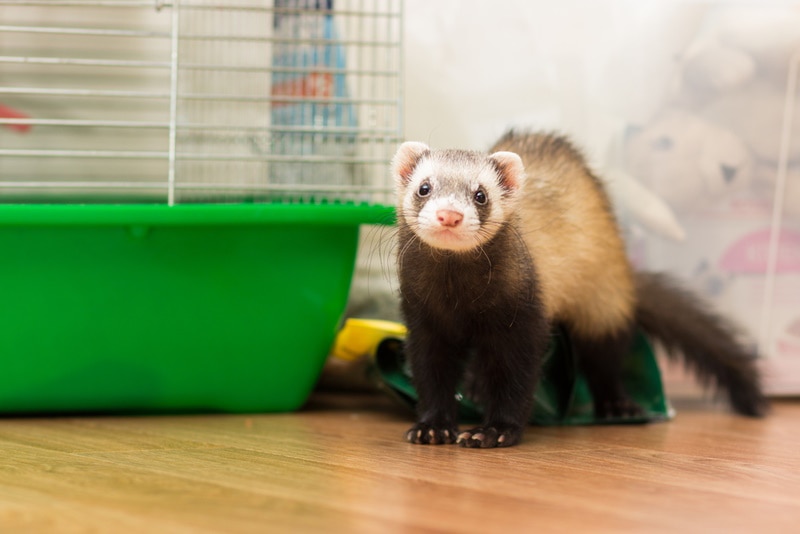
Ferrets are playful, inquisitive, and somewhat athletic little pets. They need plenty of time outside their cages to enjoy a fulfilling and enriching life but left to their own devices, they can cause all kinds of destruction and potentially even harm themselves in the process. When it's time to let your ferret out of the cage, you should ensure that it has a safe environment in which to roam.
Below, we look at 16 steps you should take so that your ferret can have fun without being in any undue danger. While it sounds like a lot of effort, some steps only need to be completed once, and some only occasionally.

The 16 Steps to Ferret Proof a Room
1. Choose a Room
Let your ferret have free run of the house and it will likely find every exit, every hole in the furniture, and every item you want to keep it away from. By limiting playtime to just one room, you have much greater control over your ferret’s environment, and it will be easier. Choose a room like a bedroom or living room, rather than a bathroom or kitchen. Try to choose one with as few potential dangers as possible and one that people don’t need to enter and exit all the time.
2. Think Like a Ferret
Ferrets are capable of squeezing through tiny holes. To properly ferret-proof a room, you need to get down on the floor and look from a ferret’s level while also remembering they excel at problem-solving and they can climb, clamber, and conquer obstacle courses. As well as looking from your ferret’s eye level, think about what your ferret will be looking for white out of its cage.

3. Remove Other Pets
Ideally, the ferret should be the only animal in the room you let it out in. Even your seemingly placid dog or friendly cat could be tempted to attack the ferret and while it does have sharp claws and teeth, it is unlikely to be able to adequately defend itself against bigger pets. Conversely, ferrets will hunt and kill smaller prey animals including mice and potentially even hamsters, so never have them in the room at the same time.
4. Close Off Exits
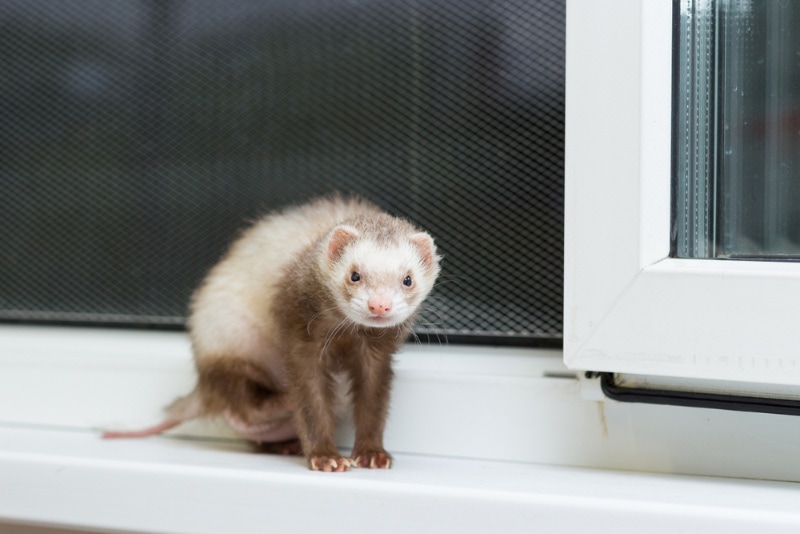
Ensure doors and windows are tightly closed and secure. You will also need to look around for potential ferret exits. Ferrets are especially skilled at climbing through tunnels and squeezing through gaps, so you even need to check the gaps at the bottoms of doors or the side of window frames to fully secure a room. Ventilation grids and even plumbing pipework can present potential points of exit, too.
5. Block Up Holes
Ferrets are intelligent and they love a challenge. If they see a hole with something in front of it, they will likely take up the challenge of trying to figure out how to get around the obstacle and into that desirable dark hole. This means you need to be equally up for the challenge. Block up holes permanently, where possible, and look for secure temporary solutions where permanent solutions aren’t an option.
6. Check the Furniture for Possible Ferret Hideouts
Ferrets love dark spaces as much as they love tight holes and pipes. The underneath of furniture like sofas, chairs, and even bookshelves and units may have holes that you haven’t really paid attention to, but you can be sure your ferret friend will spot them. You could spend hours looking for a ferret that is hidden inside your sofa. Most sofas have thin material covering the base and ferrets can easily tear and chew through this material so consider nailing lightweight wood to the bottom of your furniture items.

7. Cover the Fireplace
The fireplace is not only a danger if the fire is on or has recently been on, but it can be a danger even if it is unused. Although ferrets are not as agile as cats, they are good at climbing, and they can find routes that we might not see. Ensure the fireplace is properly covered and even if you have a fire guard, you will need to check that there is no way through.
8. Look for Electrical Hazards
Ferrets aren’t as prone to chewing as some small animals, like rats, but they are playful, and they do have sharp teeth. Secure as many electrical wires away as possible and absolutely make sure there are no electrical hazards like live or frayed wires showing. A ferret will investigate and may pay the price for its curiosity.

9. Remove Potentially Dangerous Items
Check for chemicals and other hazardous items in the room. Ideally, move them to another room or, failing this, put them in a securely locked cupboard or drawer. Make sure there are no holes or other entrances to the storage area and keep an eye on your ferret’s activity.
10. Check Your House Plants
It isn’t just harsh chemicals that pose a poison risk to ferrets. Some house plants can be deadly if ingested by a curious animal. As well as toxic plants, you should remove cacti and other plants with sharp thorns that could cause physical damage to ferrets.

11. Clear Up Clothes Piles
We’re not judging—we’ve all had times when we walk into the room, discard the day’s work attire, and step into something more comfortable. It’s a cathartic process that signals the end of the working day and the start of your leisure time. It’s also a time to dispense with the usual formalities of tidying clothes away. But ferrets love the smell of worn clothes because they smell of you. They love the feel, too, because the clothes are comfortable.
If you have clothes lying on the floor when you let your ferret out for a runabout, you could put them in danger if you accidentally step on a ferret-filled blouse. Clean your clothes away and check your laundry basket.
12. Empty the Trash
When you do find items that are potentially dangerous, don’t throw them in the trash in the room you’re clearing. Your ferret will likely enjoy rooting through the waste to look for scraps of food or just to explore and hide in the dark environment. Empty the trash can to ensure there are no potential dangers left in there.

13. Move Your Keys and Other Essentials Out of Reach
The primary goal when ferret-proofing a room is to protect the ferret from potential harm, but you will also want to protect your own belongings. A playful ferret might pick up your house keys or even cell phone and then hoard it in a favorite dark place, leaving you without keys until you find the hidden alcove under the sofa. Remove your keys, wallet, mobile phones, and even your TV remote to prevent them from going missing or getting damaged.
14. Offer Toys and Enrichment
Distraction is a powerful tool. Most ferrets go looking around a room and rooting around your belongings when they’re bored. Provide toys, play games, and offer other forms of distraction so that your pet doesn’t wreck your room and get into too much mischief.

15. Inform the Family
The easiest way for a ferret to get out of a room is through an open door, and while you may close it, other members of the family who don’t know the ferret is loose can just as easily open the door and let them out again. Always let family members and visitors know where your pet is so they don’t open the doors or let other pets in the room.
16. Provide a Litter Box
Another possible cause of frustration for ferret owners is finding pee and poop all over the room and because they get into every crack and hole, you won’t always find any mess straight away. Fortunately, ferrets can be litter trained, although it does take time and patience and yours may still choose to go wherever it wants when out of the cage. Train your ferret and provide access to a litter tray that they can use.
Conclusion
Ferrets are fun, lively, and entertaining pets. They are also inquisitive and active, and they need time out of their cage to roam and explore, every single day. Before letting your ferret free, ensure that the room is fully secure and that you remove any potential hazards. You will also want to hide away items like keys and cell phones, or you could be looking for them for days.
Sources
Featured Image Credit: Fayzulin Serg, Shutterstock
Get Hepper In Your Inbox


Pet care tips from our vets and experts, straight to your inbox.
You may opt-out at any time. View our Privacy Policy for more information.

Nicole is a lover of animals of all sizes but is especially fascinated with the feline variety. She’s the proud mom of Baby, a Burmese, and works every day so he can relax in the sunshine or by the fire. She’s always had a cat in her home and has spent countless days with others, observing behaviors and softening up even the grouchiest of the lot. Nicole wants to share her kitty expertise with you so you and your cat can live happy, healthy, and care-free.
Join the conversation
Ask a question, share your story, or send private feedback.