Hepper is reader-supported. When you buy via links on our site, we may earn an affiliate commission at no cost to you. Learn more.
Do Parakeets Pee? Vet Reviewed Facts & FAQ


In this article
Parakeets are less messy than some of the larger parrot species, but they do still make a mess. As well as throwing their food and seed husks around, they also produce a messy poop. While their poop is quite obvious to spot, you’ve probably never noticed urine spots, making you wonder if parakeets pee at all.
Although they have a urinary system different from that of humans, parakeets do pee. The difference is the “urine” isn’t excreted by itself, instead it is mixed with feces in the digestive system and both exit the body at the same time.
In this article, we will cover just how it is that parakeets pee and how you can best keep them hydrated. We’ll also look at how to litter train a parakeet should you want to further cut down on the mess.

Do Parakeets Pee?
Parakeets do pee, in a sense, but it’s very different from how mammals do. In mammals, the kidneys filter the blood and regulate fluids, creating urine that travels to the bladder where it’s stored until the critter is ready to let it go. It exits the body through the urethra and feces exits through the anus.
In birds, the kidneys filter unwanted waste from the blood, and this is excreted as urine. However, instead of being stored in a urinary bladder, it is released directly into the lower digestive tract. Here, the waste product can be modified depending on a bird’s hydration status and mixed with the feces. Both substances are released from the body as one through a common opening called the cloaca. This means there is no separation between pee and poop that is released.
How to Keep a Parakeet Hydrated
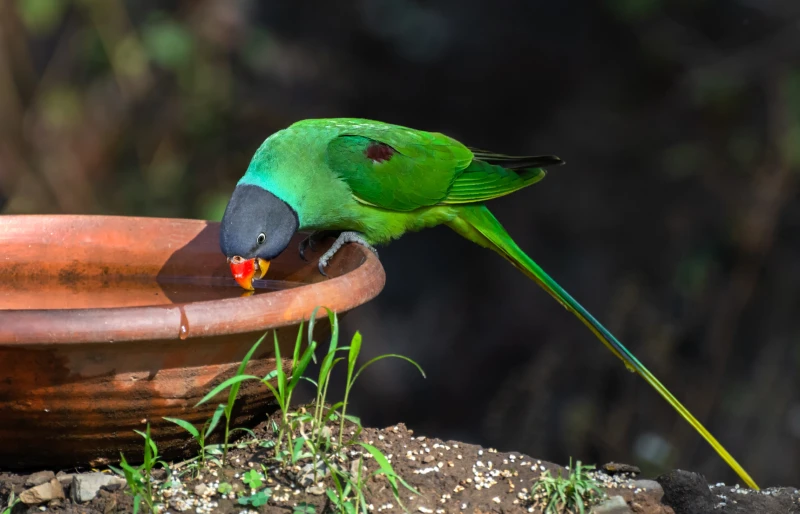
Since you won’t see urine output by itself the way you would a cat or dog, it can be difficult to tell if your parakeet is hydrated. Fortunately, you can look for some of the same signs of dehydration as you would in mammals. Those include sunken eyes, lethargy, and tenting of the skin. If you suspect that your parakeet is dehydrated, see your veterinarian immediately.
You can help ensure that your bird maintains proper hydration by providing them with plenty of fresh, clean water. Most parakeets will readily drink from a water bowl, but these can be hard to keep clean. Instead, drinking from a water bottle may be preferred but it will require some training on your part to teach your parakeet how to use it properly. You don’t want to remove the water bowl from your parakeet’s cage until they are reliably using a water bottle.
Be sure to change water sources frequently and completely wash water bottles or bowls on a regular basis. Also, providing fresh fruits and vegetables will help boost your bird’s fluid intake. You’ll want to speak to your veterinarian first to find out which foods are best and in what amount.

Litter Training a Parakeet
Parakeets are clever birds that tend to respond well to praise and treats. This means that they can be trained to perform some commands. It also means that most parakeets can be litter-trained. Litter training means you will have less mess to clear up, and it can also leave your bird’s cage, the bird itself, and your home less messy.
1. Ensure Your Parakeet Is Hand Tamed
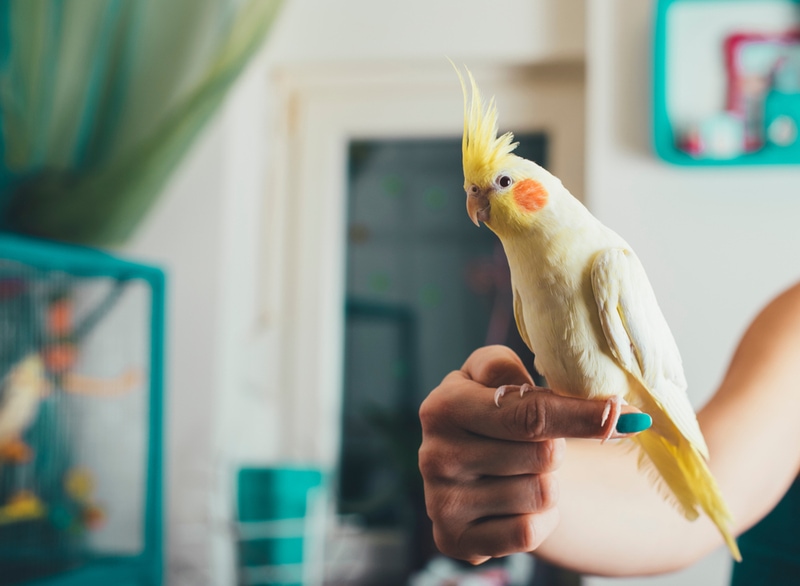
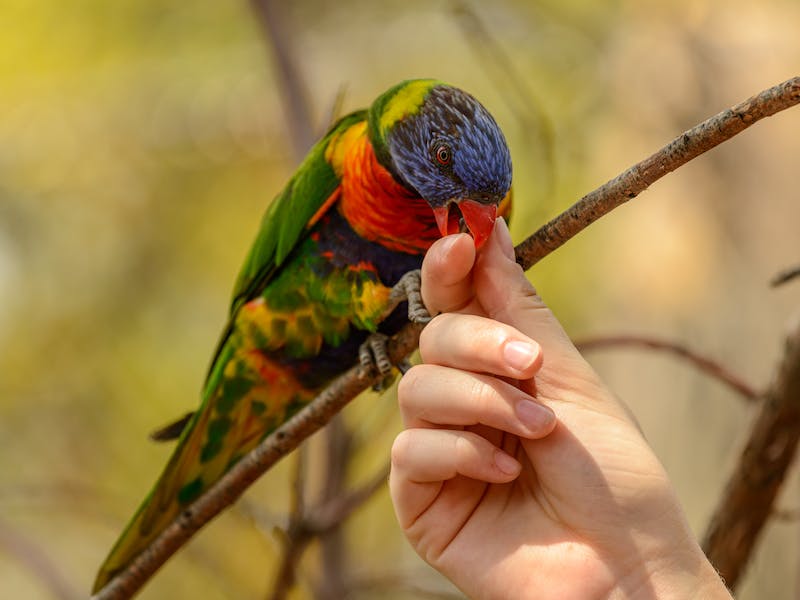
Your parakeet will need to be hand-tamed and confident perching on your finger. Spend time every day working with your bird to build up its confidence in this way.
2. Start Young
Spend these early days taming your bird so they are happy and confident in your hand and know the room they live in. When they do get a little older, you can start to litter train, but don’t leave it too long, or it will be a lot more difficult to successfully train them.
3. Learn to Identify Signs
While handling your bird, watch for signs that they are going to eliminate. This can include lifting the tail. The signs are different with different birds so you will need to watch carefully.
4. Move Your Parakeet to the Desired Toilet Location
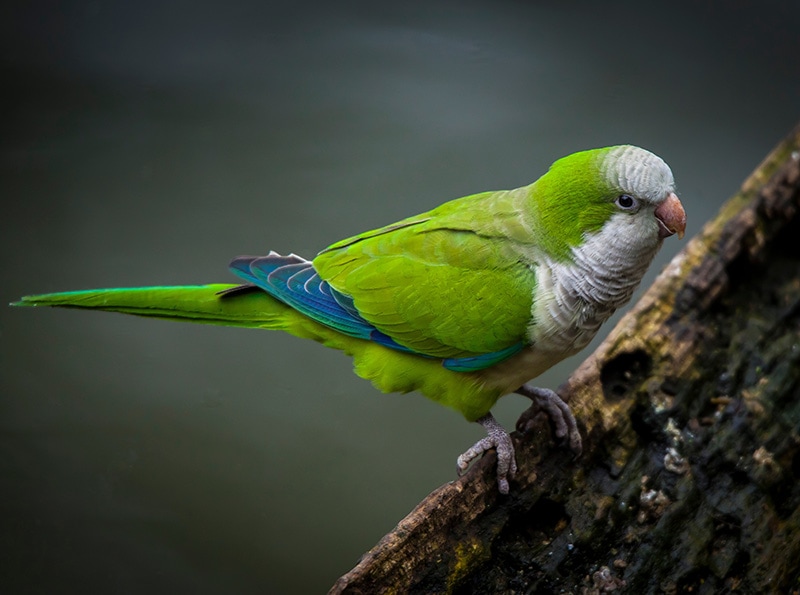
When you can identify these signs, you will be able to quickly move the bird to the area you want them to poop, for example, over a kitchen towel, or in a small litter tray.
5. Use a Verbal Command and Offer Praise on Success
When the bird starts to poop, use a verbal command like “potty”, and as soon as they have finished, offer verbal praise and give a reward such as millet or your bird’s favorite seeds.
6. Repeat
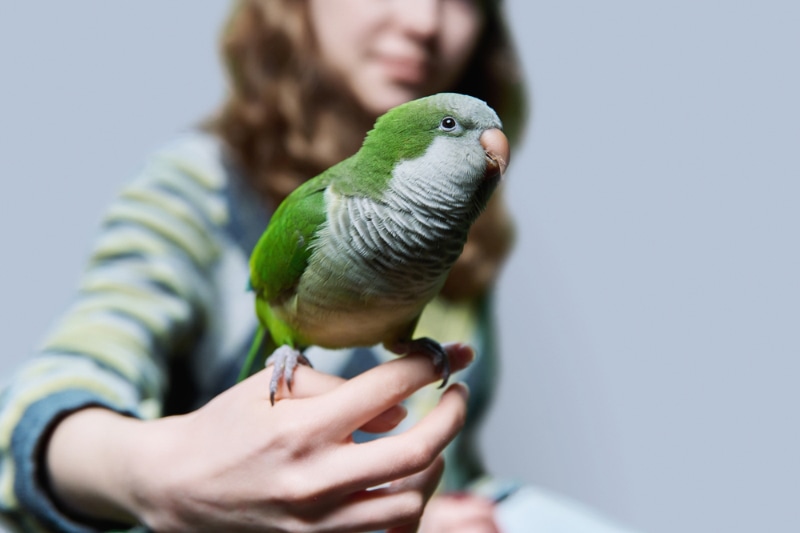
Whenever you have the bird out of the cage and in your hand, repeat this process. Keep offering verbal praise and treats whenever they successfully go where you want them to. Over time, they will learn to fly to the designated spot to eliminate. Continue to praise and reward whenever you see a successful use of the litter area.
7. Not All Parakeets Will Learn
While it is possible to train most parakeets to use a designated area for elimination, not all birds will be successful with litter training.
Frequently Asked Questions
Does Parakeet Pee Smell?
As long as your parakeet is healthy and on a healthy diet, the urine and fecal output should not smell too strong or bad. If you do notice a strong odor, or if the smell persists, it may be a sign that your bird is ill, and you should see an avian vet to identify the problem.
Do Parakeets Poop All Over the House?
Unless your parakeet is litter trained, they will poop pretty much anywhere they can land. You can try litter training as this can help reduce the places your bird will poop.
Final Thoughts
A parakeet’s urinary system is different from those of most mammals. They don’t have urinary bladders, instead the waste products from the kidneys are excreted into the digestive system where it mixes with the feces. Both products are eliminated via the cloaca, rather than through individual holes. It’s important to ensure that your parakeet stays properly hydrated to avoid many health issues. So, be sure to always provide fresh, clean water for them.
Featured Image Credit: goja1, Shutterstock
Get Hepper In Your Inbox


Pet care tips from our vets and experts, straight to your inbox.
You may opt-out at any time. View our Privacy Policy for more information.
Nicole is a lover of animals of all sizes but is especially fascinated with the feline variety. She’s the proud mom of Baby, a Burmese, and works every day so he can relax in the sunshine or by the fire. She’s always had a cat in her home and has spent countless days with others, observing behaviors and softening up even the grouchiest of the lot. Nicole wants to share her kitty expertise with you so you and your cat can live happy, healthy, and care-free.
Join the conversation
Ask a question, share your story, or send private feedback.