Hepper is reader-supported. When you buy via links on our site, we may earn an affiliate commission at no cost to you. Learn more.
10 Doberman Colors, Markings & Patterns (With Pictures)
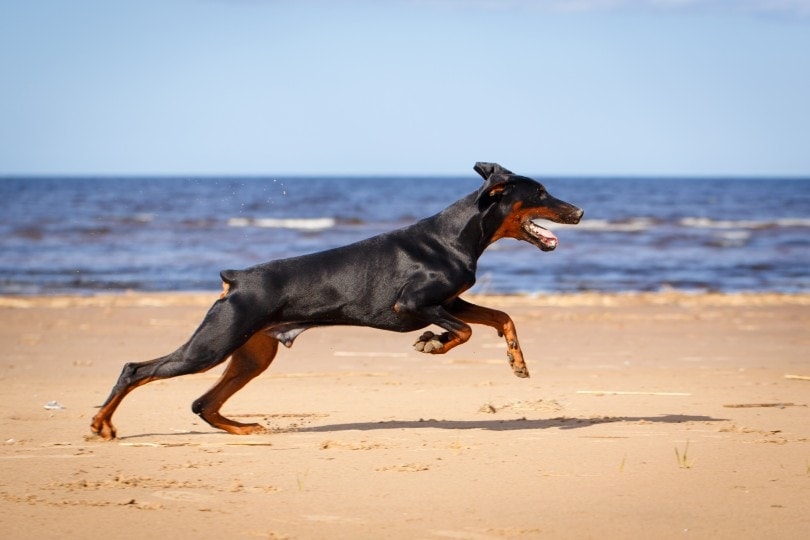
The Doberman is a German breed that is known for its powerful stature and sleek coat. The traditional coat is black and brown, properly referred to as black and rust, but various colors and markings may be seen in this breed. While some are officially recognized by kennel clubs and breeder clubs, others are not. But, if you’re looking for a companion pet, don’t let kennel club color recognition put you off as they can make just as excellent pets as the standard colors, although some are more difficult to come by and may, as a result, cost more.
Below, we look at the history of the Doberman, which gives us an insight into why Dobermans tend to be black and tan, as well as 10 Doberman colors.

History of the Doberman
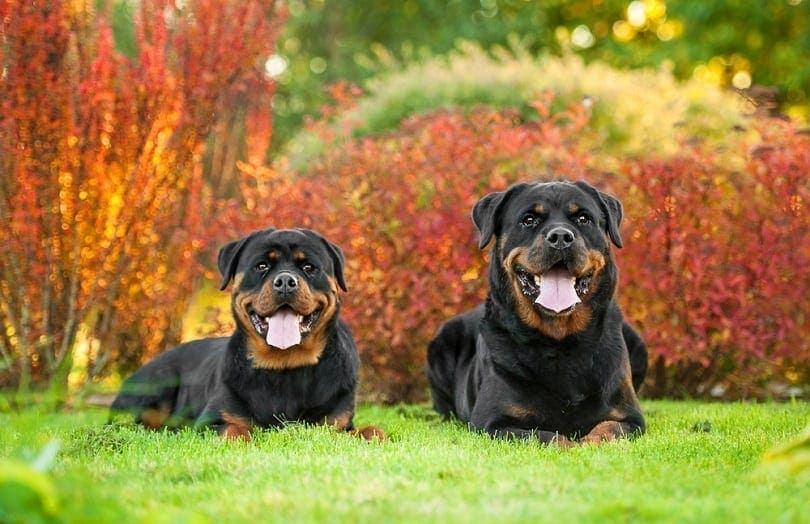
The Doberman breed is widely regarded as having been developed by Louis Dobermann in the 19th Century. Dobermann was a tax collector and managed the local dog pound. He used his experience at the pound, as well as the access it gave him to many different dog breeds, to create a fierce dog that would protect him while on his tax collecting rounds. Although there are no records of exactly which dogs he used, it is believed that Dobermann crossed Rottweilers, German Pinschers, German Shepherds, and Great Danes as well as Greyhounds and some other breeds.
Many of the German breeds used traditionally come in black and brown or black and tan, so the black and tan color genes would persist into the new Doberman breed.
The 10 Doberman Colors, Markings & Patterns
1. Black and Rust
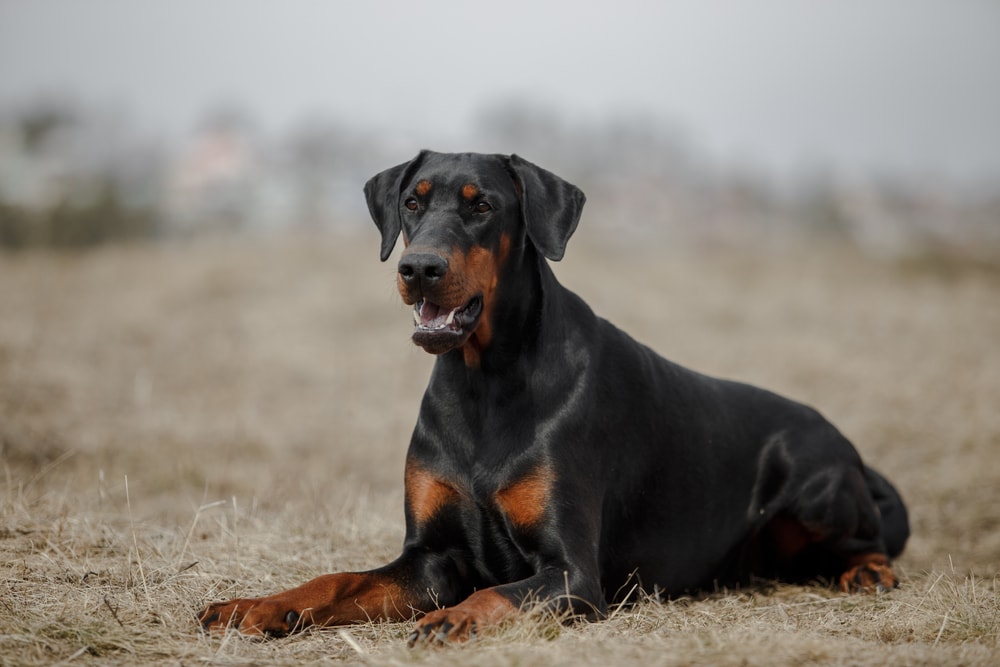
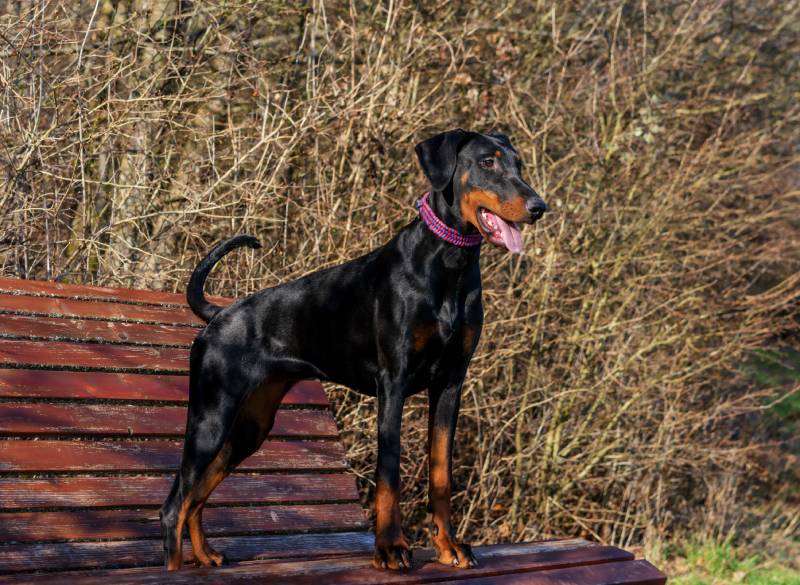
Black and rust is the traditional and most common Doberman color combination. This is the easiest color to find and is considered the ideal color combination by kennel clubs around the world. This recognition means that prices of black and rust Dobermans tend to be higher than other color combinations. The black and tan coat is sleek and shiny but it retains heat, which means that the dogs might struggle in extreme heat.
2. Red and Rust
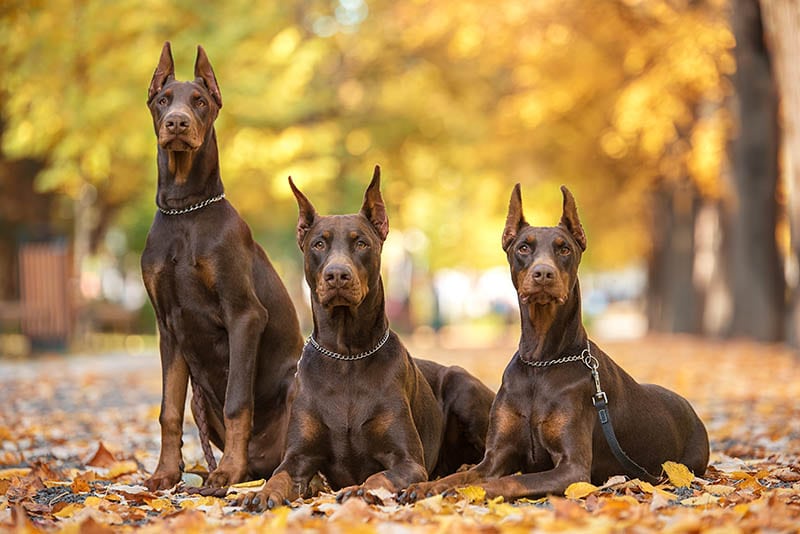
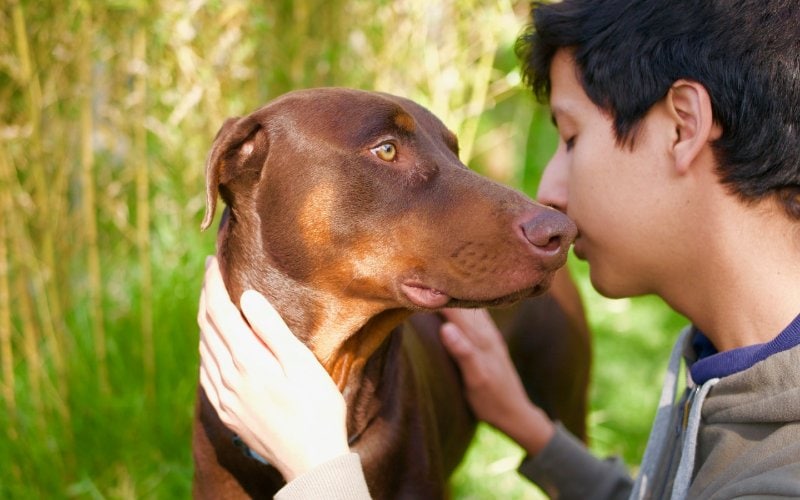
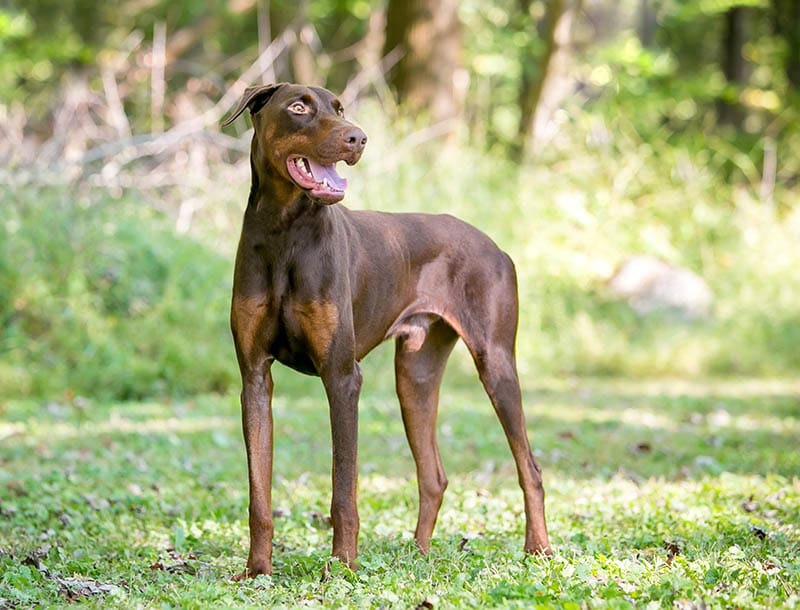
Red and rust is a common coloring, although nowhere near as common as black and rust. Prices are usually similar to the black and rust colors, and red and rust Dobermans are accepted by kennel clubs globally. Acne and hair loss are a little more common in this color and owners claim that red and rust Dobermans are not as territorial as black and rust, but are more light-hearted and less “business-like.”
3. Blue and Rust
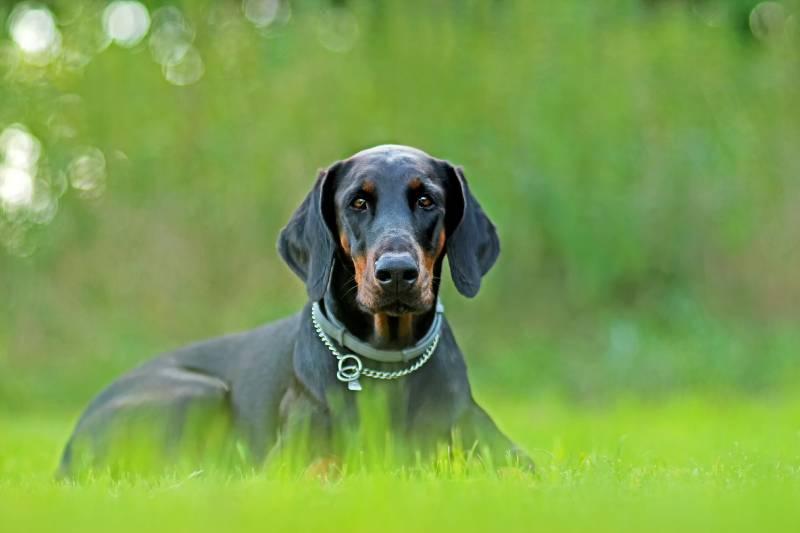
Blue and rust Dobermans are rarer still than red and rust and while they are accepted as standard colors by the AKC, they are not recognized globally. Even in US competitions, the blue coloring can see a Doberman disqualified from judging. As such, prices are a little lower for this color. They can be prone to hair loss but they are considered to have a standard Doberman temperament.
4. Fawn and Rust
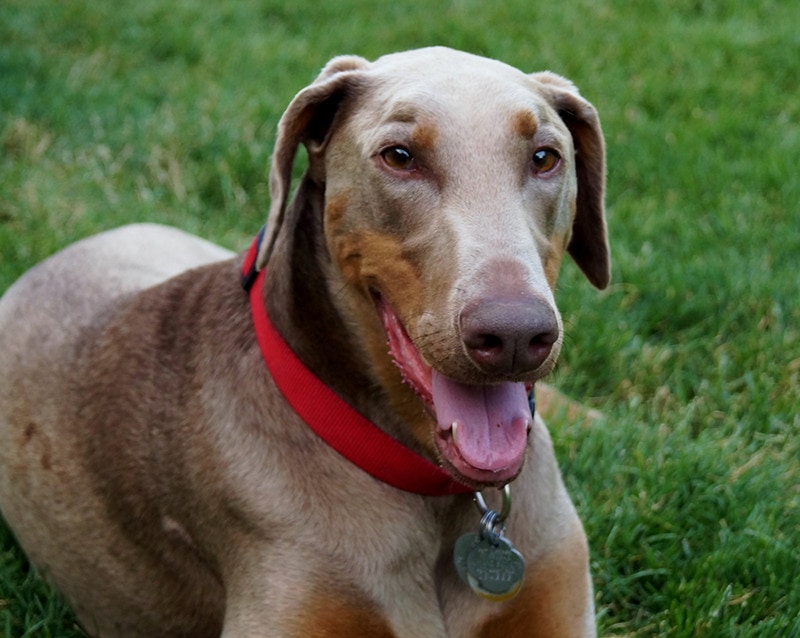
Another color that is officially recognized in the US only, but may still be turned down by some judges, is the fawn and rust color, also known as the “Isabella and Rust” Doberman. These cost around the same as blue and rust puppies and they can suffer hair loss and some skin irritation.
5. Melanistic Black
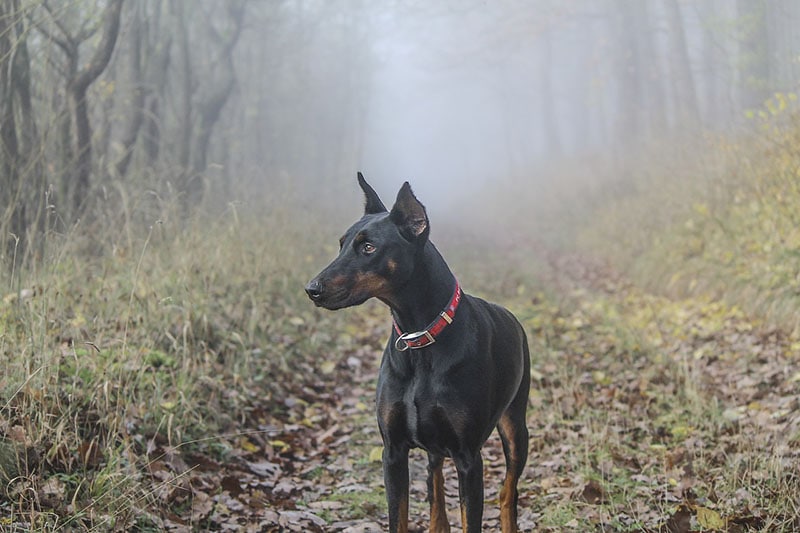
Melanistic means that an excess of black pigmentation is produced. In the case of melanistic black Dobermans, this produces a pure black Doberman. This is not considered a standard color and the all-black Doberman is very rare. Costs can be quite high for this color due to its rarity and intrigue. The rarity of the color means it is difficult to determine whether they are more or less prone to certain illnesses and conditions, or whether their temperament is different from the standard Doberman.
6. Melanistic Red
The melanistic red Doberman has an all-red coat and it is an extremely rare color with prices that typically match those of the melanistic black. It is not considered a standard color by kennel clubs and there are many claims that most melanistic red variants are crossbred dogs and not pure Dobermans.
7. Melanistic Blue
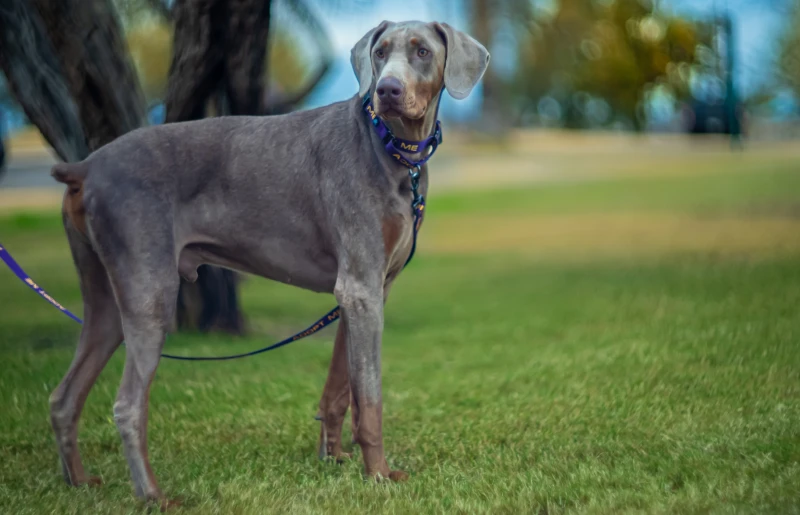
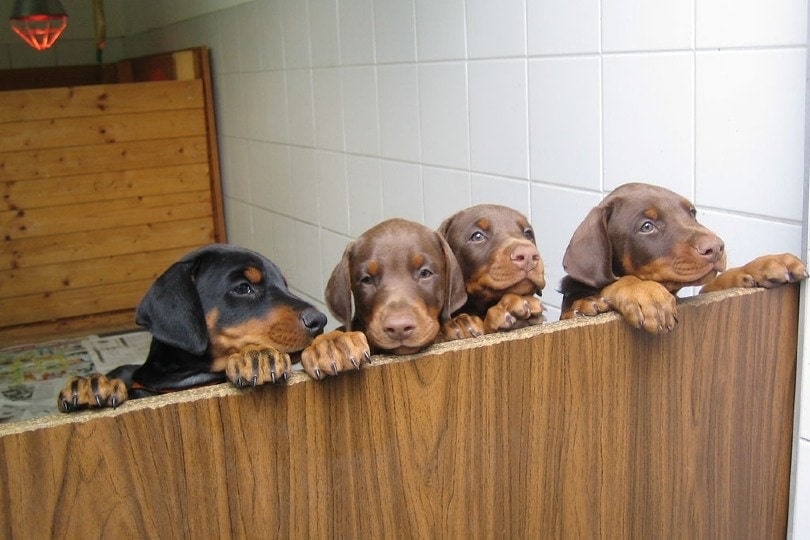
The blue Doberman has a color-dilution gene, which means that the blue color is a muted black. This, combined with the melanistic gene results in the melanistic blue. This color is not officially recognized and prices can be high, with breeders pointing to its rarity, or they may be low if the breeder has accidentally bred a melanistic blue Doberman while trying to produce standard colors.
8. Melanistic Fawn
Fawn is another color that arises as a result of the color dilution gene present in the melanistic blue, but melanistic fawns have a muted red coat. They’re very rare, it is not a standard color, and puppy prices vary depending on whether the breeder claims it is a rare and unusual color or an accidental color.
9. White
White Dobermans, or leucistic Dobermans, are not albino. They do still produce some melanin, but not much. The coat is very light but not true white and, unlike a full albino, the partial albino has blue eyes and pink facial features. The white Doberman is rare, and puppies can cost a lot. However, they are thought to be more likely to suffer certain illnesses and conditions and they can also have behavioral problems, so many people believe it unwise and unethical to intentionally breed them.
10. Albino
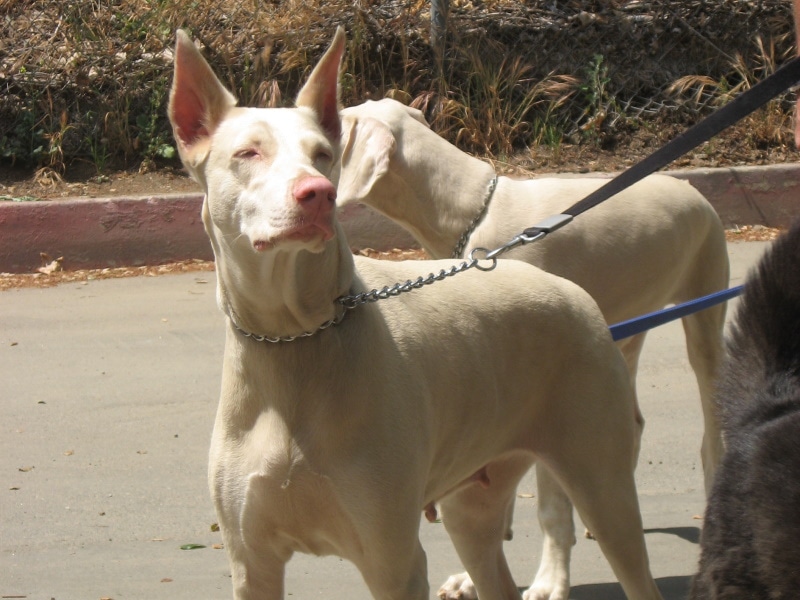
Albino Dobermans produce no melanin, which is what gives the coat, eyes, and other features their color. As such, albinos have white hair. They also have red eyes because there is no melanin to color the eyes. Albino Dobermans may exist but there are no known examples of them.

What is The Rarest Color of a Doberman?
Of the four colors that are considered standard in the US fawn or Isabella is the rarest color. Overall, the albino is the rarest as there are no known examples of albinism in Dobermans. Melanistic fawn Dobermans are probably the rarest of what might be considered normal, non-albino, colors.
What Are the Original Colors Of the Doberman?
The original Doberman colors are black and tan or black and rust. This coloring likely came about as a result of the breeding of other brown and black breeds including the Rottweiler, German Pinscher, and German Shepherd.
Are All-Black Dobermans Rare?
All-black Dobermans, or melanistic black Dobermans, are very rare. It is not considered a standard color which means that all-black Dobies cannot be shown or exhibited and this puts a lot of breeders off breeding them and prevents buyers from buying them.
Conclusion
Dobermans are strong, resolute dogs that historically have made excellent guard dogs. They also make excellent companions and family pets, thanks to their loving, loyal nature. Black and rust is the most common color, but various other colors might be seen, ranging from red and rust to white Dobermans.
Prices do vary according to color, and so too does susceptibility to skin complaints and other health problems, as well as the potential for behavioral issues.
You Might Also Be Interested In:
Sources
Featured Image Credit: DragoNika, Shutterstock
Get Hepper In Your Inbox


Pet care tips from our vets and experts, straight to your inbox.
You may opt-out at any time. View our Privacy Policy for more information.

Nicole is a lover of animals of all sizes but is especially fascinated with the feline variety. She’s the proud mom of Baby, a Burmese, and works every day so he can relax in the sunshine or by the fire. She’s always had a cat in her home and has spent countless days with others, observing behaviors and softening up even the grouchiest of the lot. Nicole wants to share her kitty expertise with you so you and your cat can live happy, healthy, and care-free.
Join the conversation
Ask a question, share your story, or send private feedback.