Hepper is reader-supported. When you buy via links on our site, we may earn an affiliate commission at no cost to you. Learn more.
Fawn Doberman: Info, Pictures, Facts & History

In this article
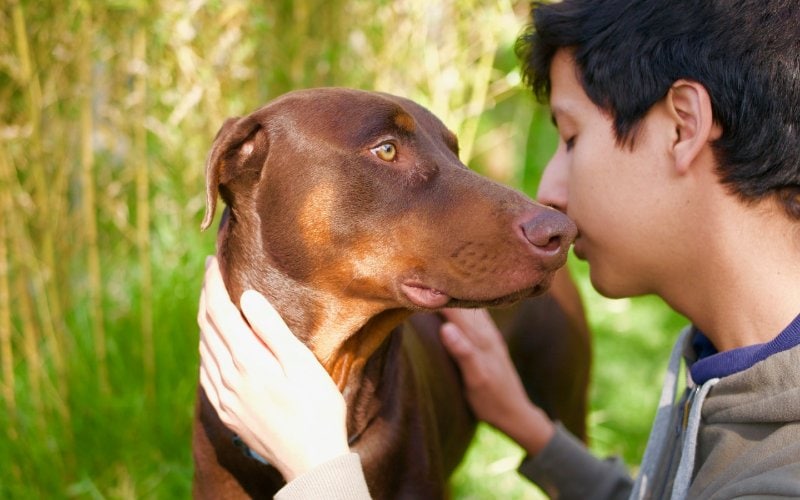
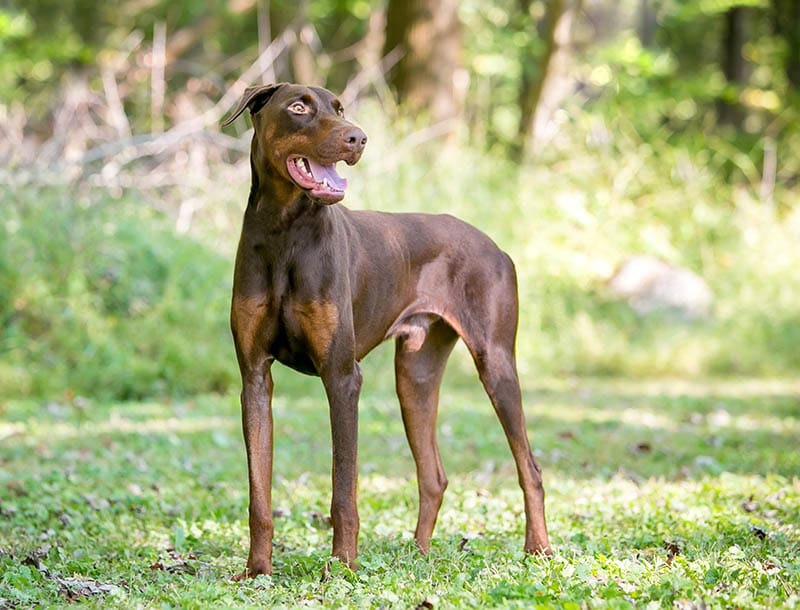
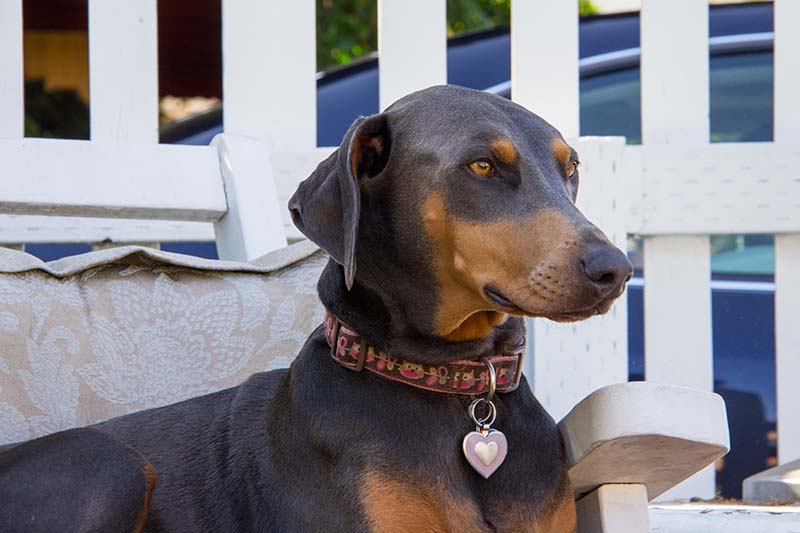
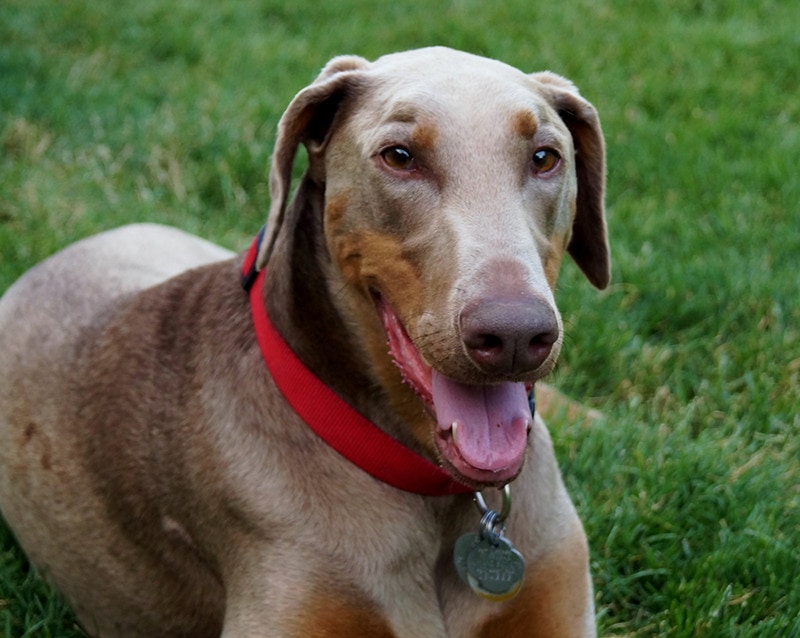
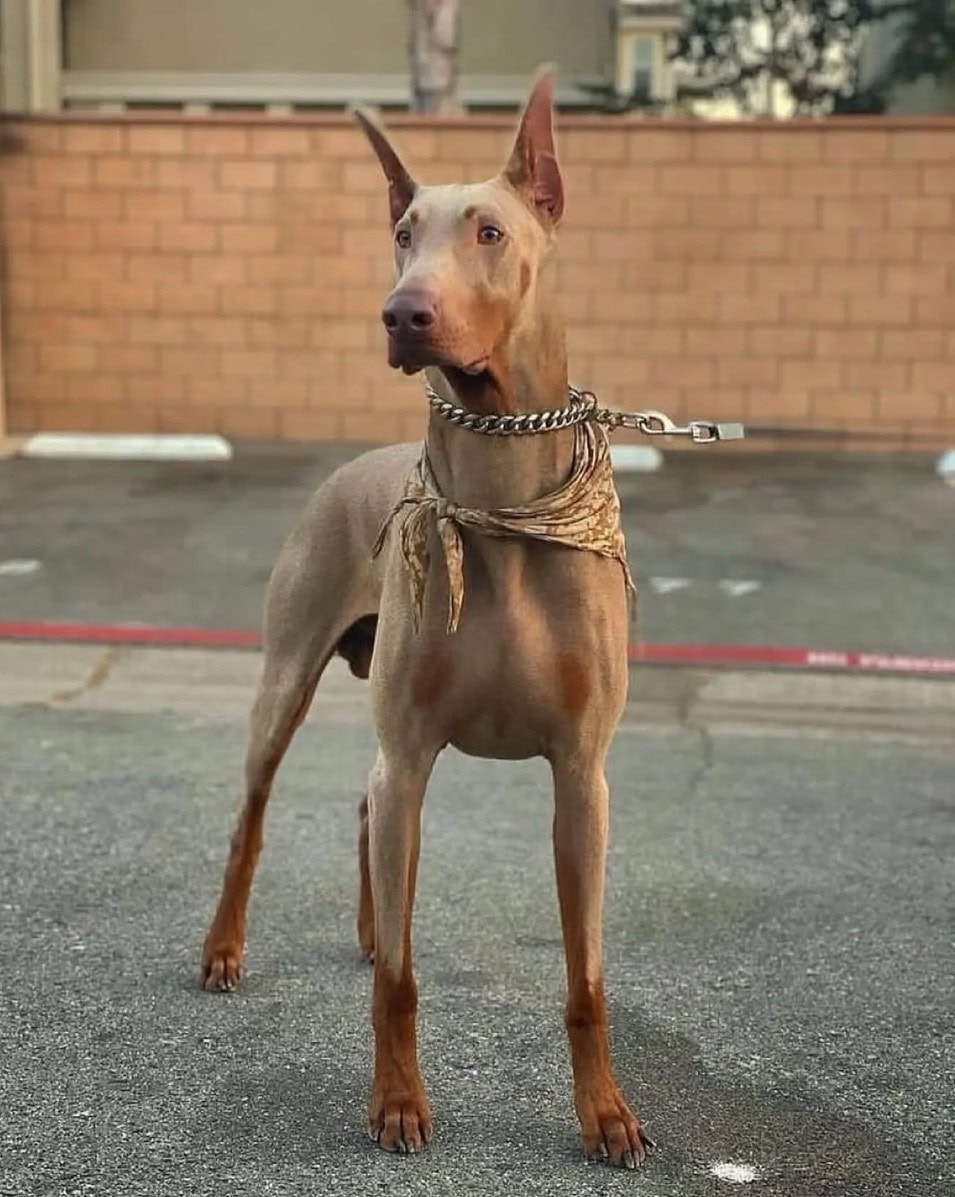
When you think of Dobermans, you probably picture a black and tan dog. But did you know that this breed actually comes in six colors? They do! And one of those colors is fawn.
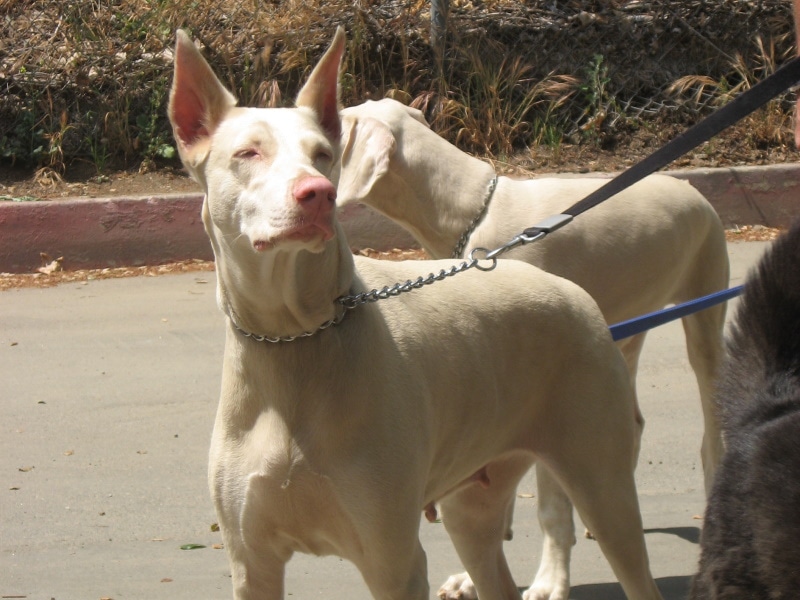
The fawn color on the Doberman occurs because of a recessive gene that causes color dilution. This gene, known as melanophilin1, dilutes the red gene in the Doberman, resulting in the fawn color (super light brown or even beige). This color of Doberman is relatively rare, so you might have a difficult time getting your hands on one.
Before you consider this color of the breed, though, keep reading to learn more about the Doberman and its fawn color.

The Earliest Records of the Fawn Doberman in History
While it’s unknown when exactly the fawn coloring showed up in the Doberman breed, the breed itself is newer, as it only came about in the 1890s. And, believe it or not, the breed was created by a tax collector! Karl Friedrich Louis Dobermann was a tax collector in Germany who was quite unpopular due to his job. Since he wasn’t well-liked and carried around large sums of money often, he decided a vicious guard dog was in order.
He also occasionally worked as a dog catcher, so he was familiar with the breeds at the local dog pound. However, he found that they were different from what he was looking for.
So, Dobermann took these breeds and began cross-breeding, and as a result, the Doberman was born. No one is quite sure which breeds were used to create the Doberman breed, but it’s theorized they include the Rottweiler, Manchester Terrier, Greyhound, Beauceron, Great Dane, black and tan Terrier, Weimaraner, and German Shorthaired Pointer.
How the Fawn Doberman Gained Popularity
While the Doberman breed was initially bred to be a vicious guard dog, throughout the years, it has become so much more. As aggressive traits started to be bred out, these dogs began working with the military, police, and more. Over time, the Doberman also became a popular pet; in fact, the breed is listed as 16th on the AKC’s list of most popular breeds!
The fawn Doberman isn’t the most popular, though, partially due to its rarity. It’s also possible that it is less popular because of the health issues that arise due to the inbreeding required to get the coat color. And the fawn color is considered inferior when it comes to show dogs, which doesn’t help.
Formal Recognition of the Fawn Doberman
Fawn Dobermans are only recognized by the American Kennel Club (AKC) and the United Kennel Club (UKC); specifically, the AKC recognizes the fawn and rust coloring of the breed. The reason the fawn Doberman isn’t recognized by more clubs is that they are considered inferior to other colors. And the reason they are considered inferior is because of the skin conditions they get that come about as a result of their color dilution.
One such skin condition is color dilution alopecia, which this color of Doberman has a 75% chance of getting. With color dilution alopecia, the fawn Doberman can end up without any hair at all by the time they reach the age of 2 or 3.
Top 3 Unique Facts About the Fawn Doberman
1. Fawn Dobermans have an exotic look.
The fawn-colored Doberman’s coat is almost a pure light brown that looks lilac under the sun. The coat is also shiny. Because of these things, the fawn Doberman tends to look more exotic than the regular Doberman.
2. Only about 10% of Dobermans are fawn-
We said earlier that the fawn Doberman is rare, and we meant it! It’s estimated that only a tenth of the breed ends up with a fawn-colored coat.
3. Fawn Dobermans tend to be sold either at a discount or for more than other Doberman colors.
Different breeders charge wildly different prices for fawn Dobermans. Some will offer them at a discount since the coat color isn’t a popular one, while others will charge more for the rarity of the color. So, if you’re seeking a fawn Doberman, shop around to find the best price!
Does the Fawn Doberman Make a Good Pet?
The fawn Doberman (or any color Doberman) makes an excellent pet for the right person. This breed can do well in families—even those with small children, as long as the dog has been trained and socialized properly. The breed can also be a great fit with singles. However, this dog is an active one, so the right person or family will need to be active right along with it!
The Doberman is also capable of getting along with other animals—again, so long as it has been properly socialized. The Doberman breed has a fairly strong prey drive, so if not socialized, they could end up chasing cats and smaller animals.
Conclusion
The fawn Doberman is a rare color of Doberman, with only an estimated 10% of the breed being that color. Though this color of Doberman can make an excellent pet, it will also be prone to skin conditions, such as color dilution alopecia, due to the color of its coat. This means your dog could be entirely without hair within a couple of years or just suffer from skin irritation often.
If you feel like you’re up for the challenge of dealing with that, though, you may want to adopt one of these lovely dogs. Just be sure to check around at different breeders, as some will sell the fawn Doberman at a discount, while others will charge much more due to the rarity of the coat color.
See Also: Best Dog Shampoos - Reviews & Top Picks
Sources
Featured Image Credit: Just_Julie, Shutterstock
Get Hepper In Your Inbox


Pet care tips from our vets and experts, straight to your inbox.
You may opt-out at any time. View our Privacy Policy for more information.
Misty Layne lives out in the woods in small-town Alabama with her two Siamese—Serafina and Jasper. She also has an array of stray cats, raccoons, and possums who like to call her front porch home. When she’s not writing about animals, you’ll find her writing poetry, stories, and film reviews (the animals are, by far, her favorite writing topic, though!). In her free time, Misty enjoys chilling with her cats, playing piano, watching indie and foreign films, photographing abandoned places, and catching up on her never-ending TBR list.
Join the conversation
Ask a question, share your story, or send private feedback.