Hepper is reader-supported. When you buy via links on our site, we may earn an affiliate commission at no cost to you. Learn more.
Doberman vs. Great Dane: How Do They Compare? (With Pictures)
In this article
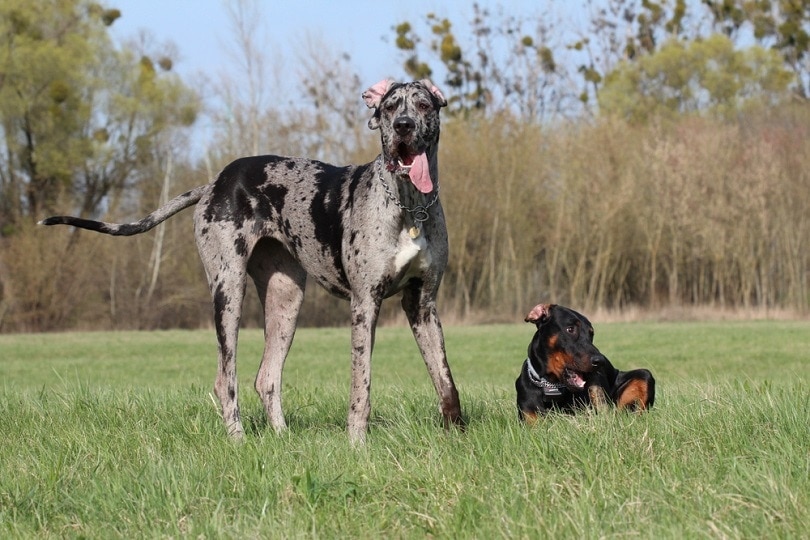
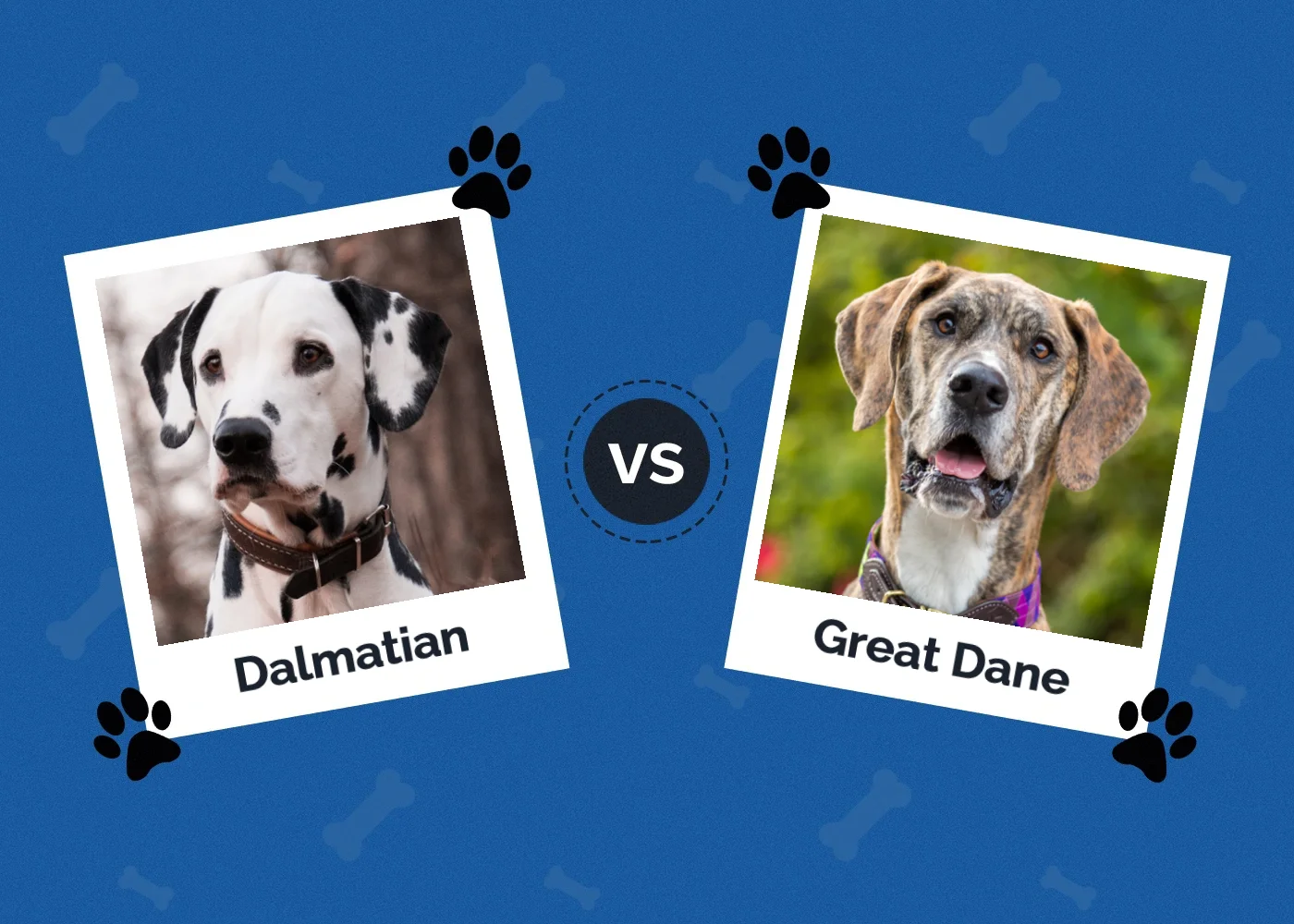
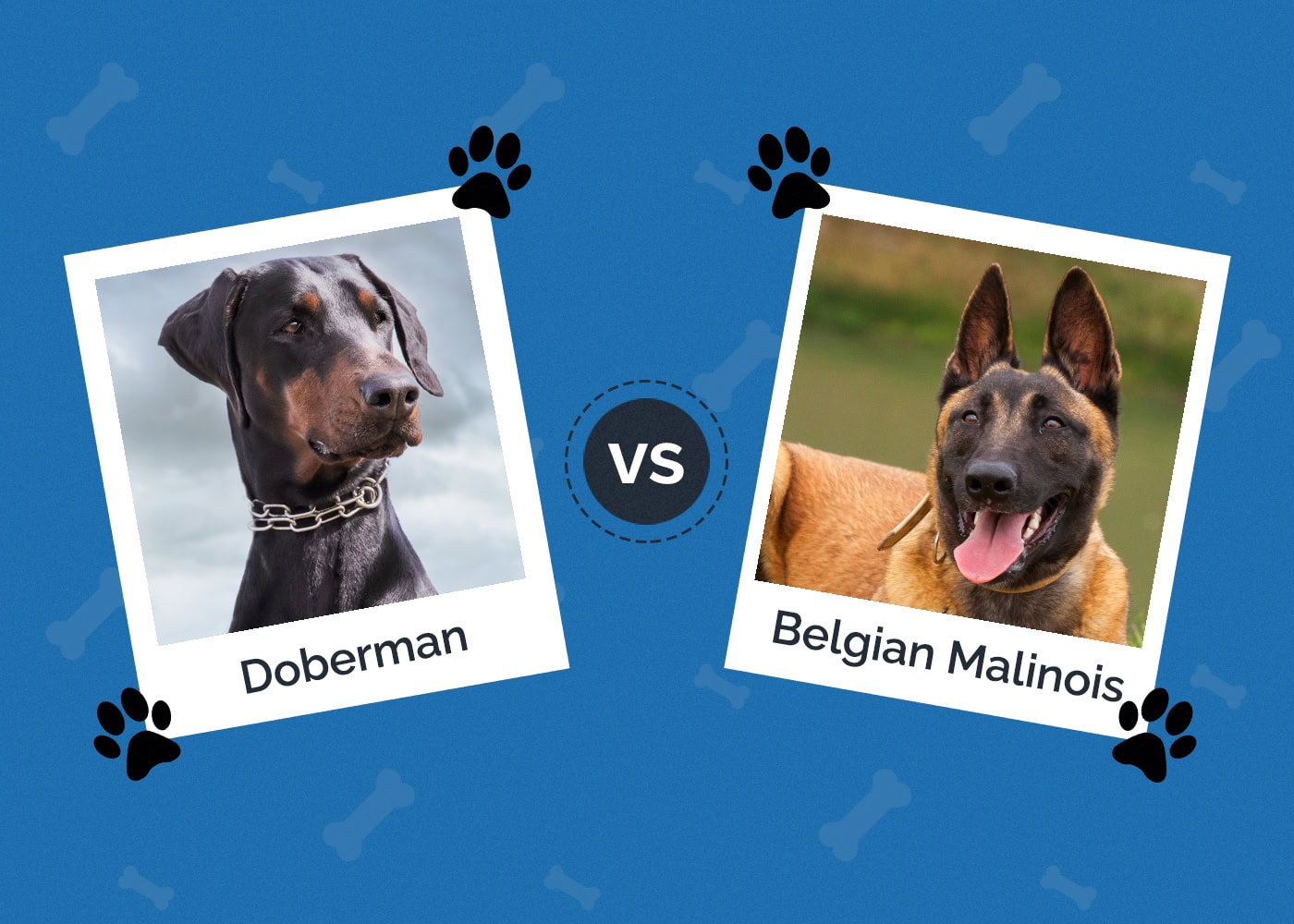
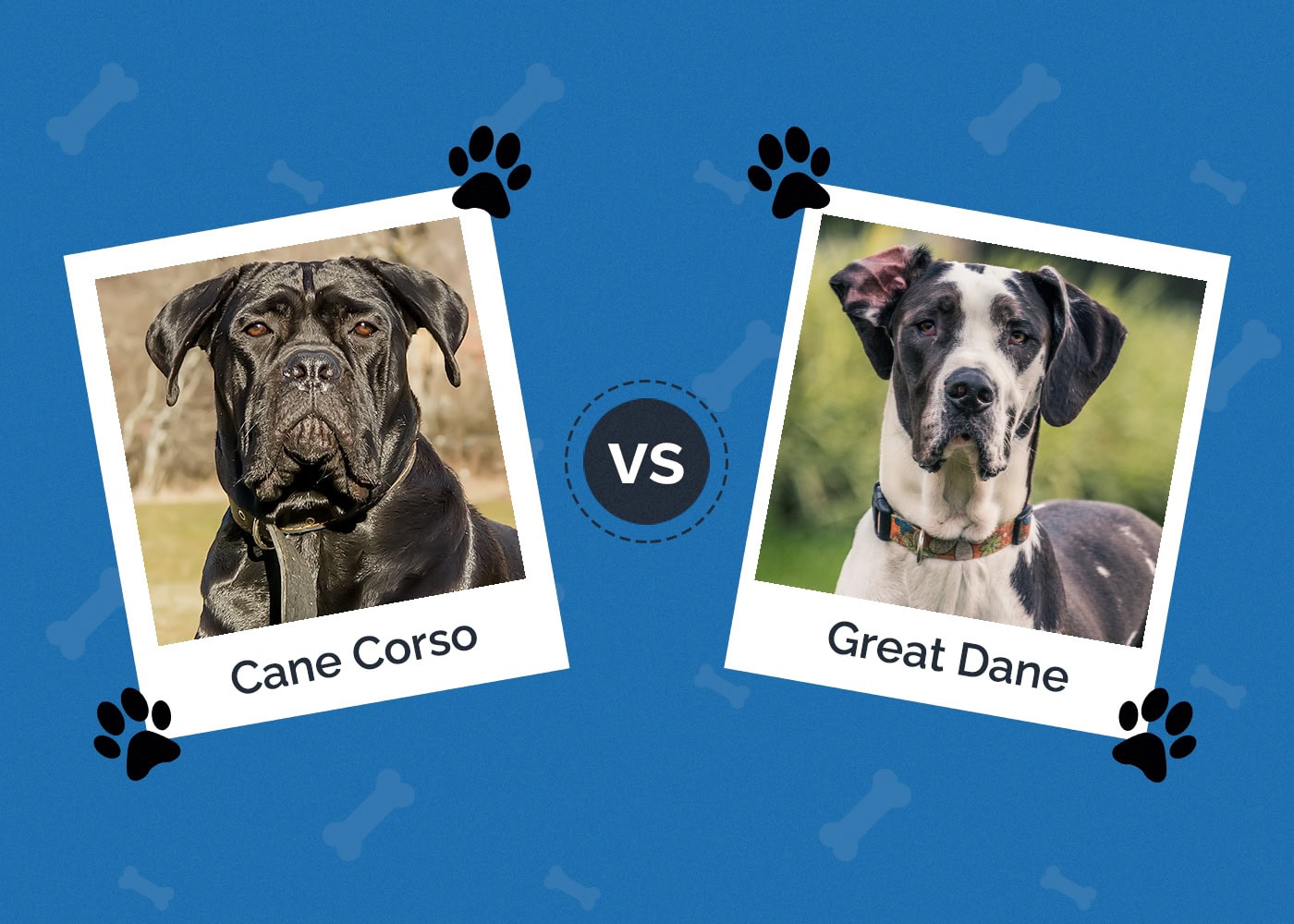
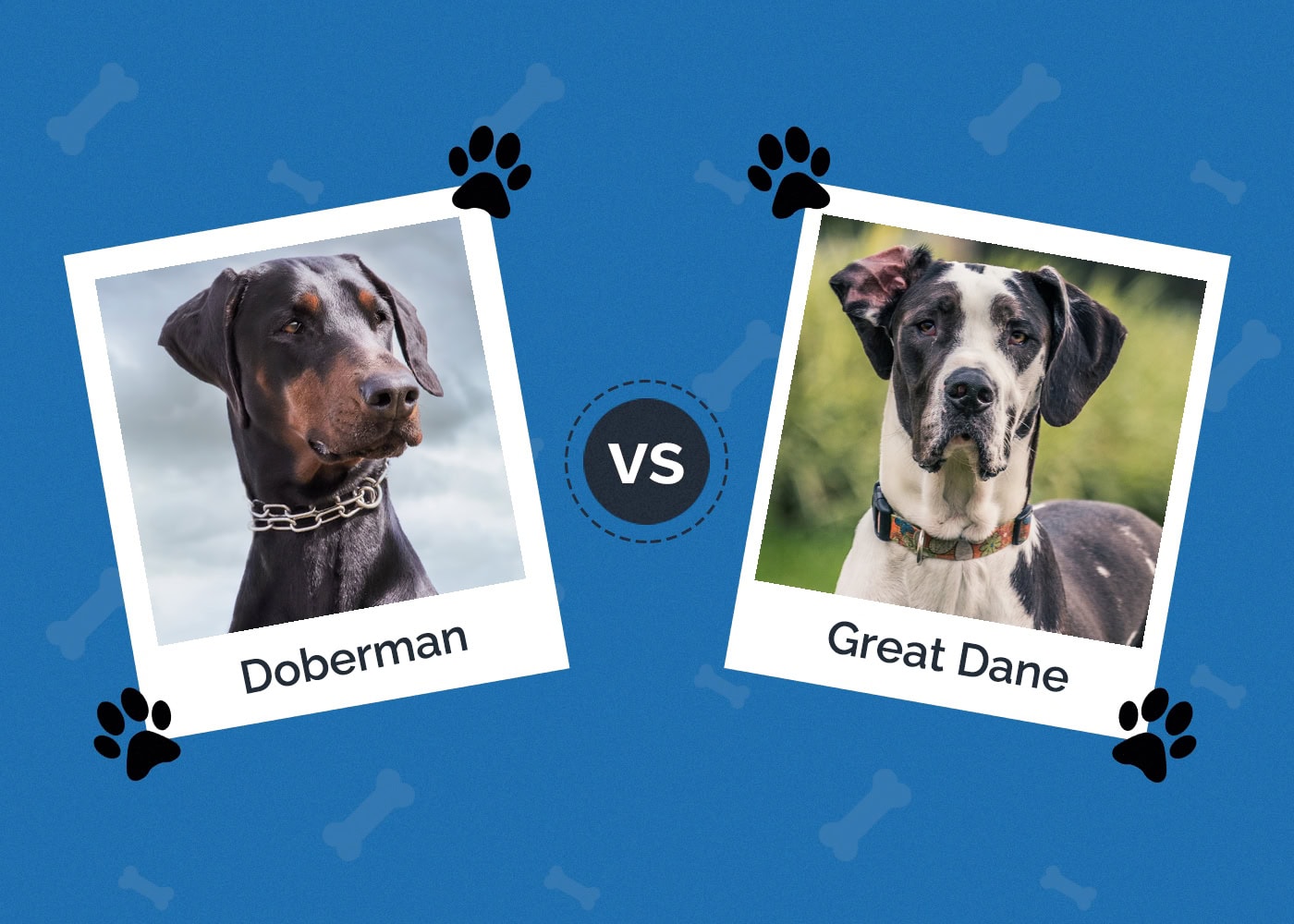
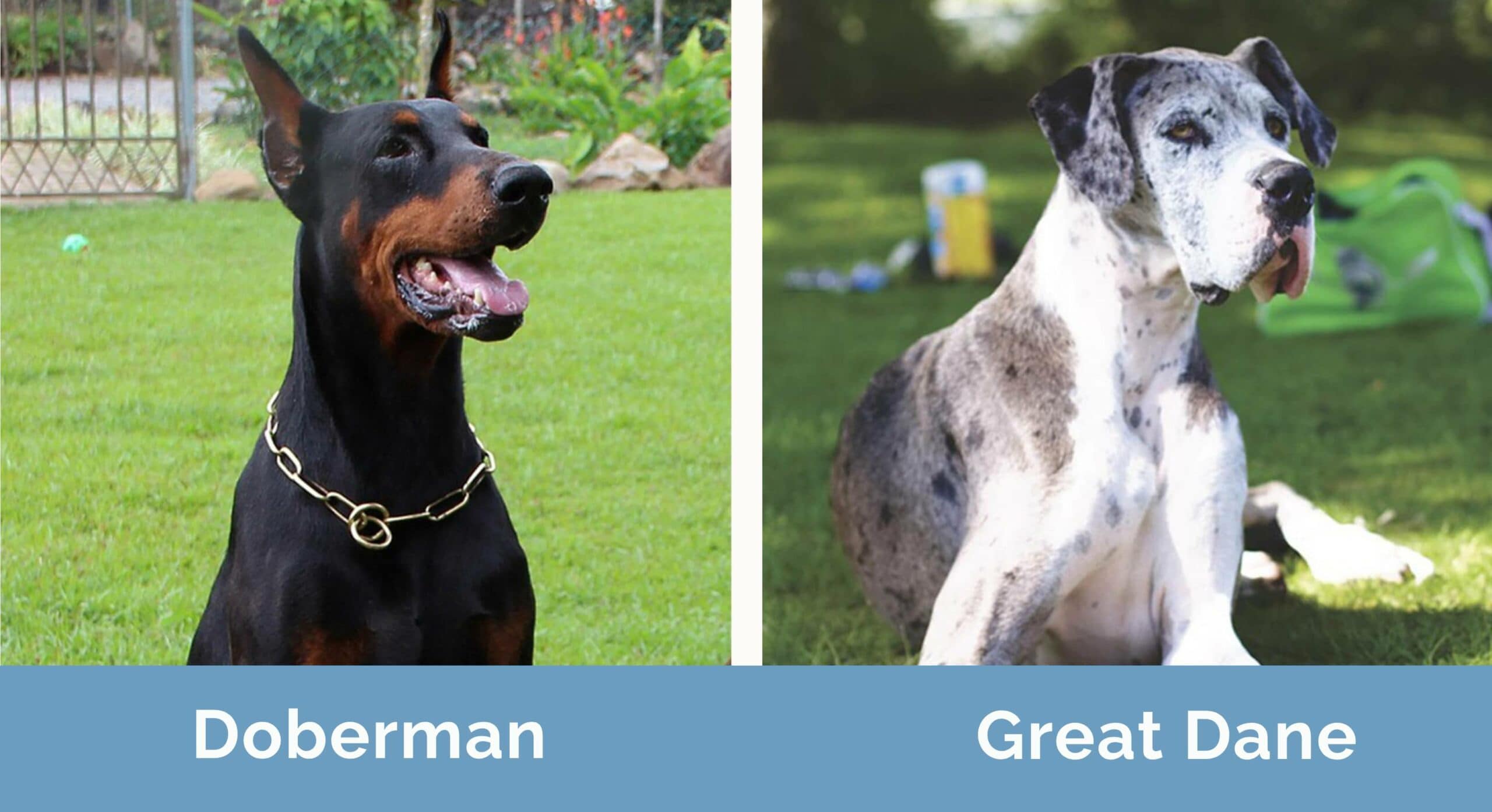
Doberman Pinschers and Great Danes have a few similarities and differences. They are both large breed dogs with sleek bodies and are classified as part of the Working Group. As for a comparison, their temperaments and traits are a little different from each other. Dobermans are naturally protective of their owners, while Great Danes are often referred to as “gentle giants.” The Doberman has a slender head; however, the Great Dane has a bulkier and larger head by comparison.
Both dog breeds make exceptional pets, and if you’ve considered either breed, you’ve come to the right place to get the information you need to make an informed decision. We will compare these two breeds and discuss their similarities and differences.

Visual Differences
At a Glance

Doberman Pinscher Overview
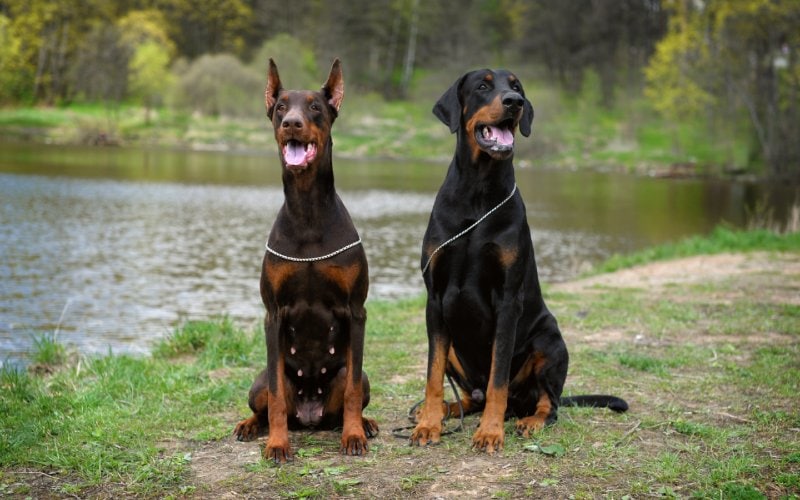
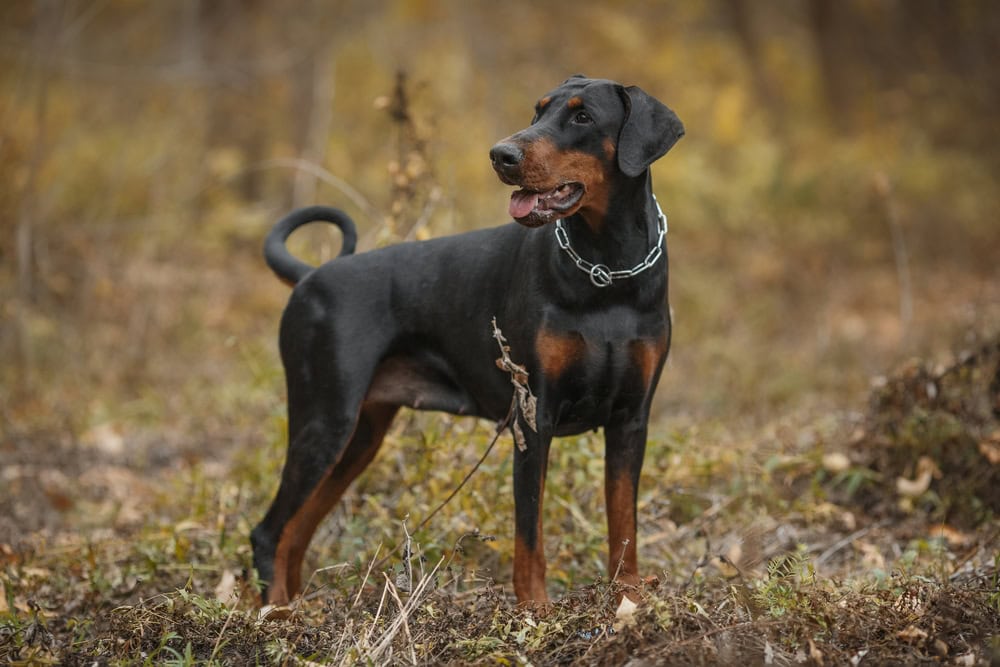
Doberman Pinschers are intelligent, quick to learn, and make loving canine companions. The males range from 75 to 100 pounds, while females range from 60 to 90 pounds. They are loyal and make excellent guard dogs due to their muscular and powerful lean bodies and protective nature. Early socialization is important with this breed, as they can be aggressive if not properly trained. They get along with other pets if socialized early, and they pair better with dogs of the opposite sex because they are prone to same-sex aggression.
Dobermans come in colors ranging from black and rust (tan), red and rust, blue and rust, and fawn and rust. They have naturally floppy ears, but ear cropping is not uncommon with this breed. Ear cropping is only necessary if you plan to enter your Dobie in an AKC breed show, as it is required under the breed standard. Otherwise, ear-cropping a Doberman is not necessary.
Dobermans require little grooming due to their short and smooth coats. You can do a quick brush daily with a grooming mitt to keep dead hair to a minimum, and they only require occasional baths unless they get dirty. Inspect and trim the nails monthly, and brush your Dobie’s teeth as often as you can. You should aim for at least three or four times a week. Inspect the ears once a week and wipe them clean with a quality ear cleaner or wipe.
Personality/Character
Dobermans are part of the working group. They are intelligent, affectionate, and loyal to their owners. These dogs are also big and powerful with sleek bodies, and it’s best to acquire a Doberman if you’re an experienced dog owner. Without the proper training, Dobies can be hard to handle and destructive.
We should note that Dobermans need to be well socialized around children, and children need to be taught how to respect the dog and approach them in a non-aggressive way.
Training
Training a Doberman is crucial in getting the outcome necessary to have a safe environment. Early socialization is key to a well-behaved Doberman who knows its boundaries. Dobies have the desire to please and will be in tune with their owner’s emotions, which comes in handy during the training process.
They need regular direction and guidance, and without proper training, they can develop separation anxiety, destructive behavior, and may even become aggressive. You can always hire a professional trainer to ensure training is a success; however, if you remain consistent, your Dobie can be trained easily. You should start training as early as 8 weeks of age.
Health & Care
Dobermans are an overall healthy breed and require a healthy diet and regular exercise for optimal health. As with any breed, Dobies may be susceptible to certain health conditions, such as bloat, hypothyroidism, liver conditions, cardiac diseases, and neurological diseases.
Dental disease can strike any dog breed, and developing a dental hygiene routine is vital in keeping dental disease at bay. Strive to brush your Dobie’s teeth at least three times a week using a finger brush or doggie toothbrush.
Never use human toothpaste but rather a toothpaste formulated specifically for dogs. Dental wipes are also good to have handy to use in between brushings. Try to develop a dental hygiene routine early, so your Dobie gets used to it.
Breeding
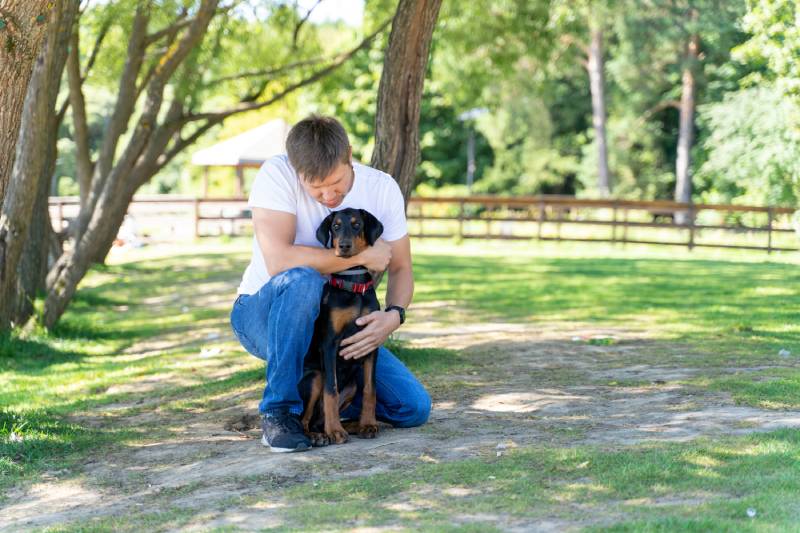
When searching for a breeder, ensure you locate a reputable and responsible one. Avoid breeders that do not allow you to visit their home or wherever they keep the dogs. A reputable breeder will be extremely knowledgeable about the breed and can answer any questions you may have. A reputable breeder will also avoid breeding dogs with known physical ailments to prevent an inherited health problem for the offspring.
Suitable for:
Doberman Pinschers are suitable for families that want a dog for protection while also gaining a loyal companion. Dobies need active families who can devote at least 1 to 2 hours of exercise a day, and they need a fenced yard to roam and run.
Dobermans require training to be well-behaved, and they are more suited for the experienced Doberman owner to keep undesired behaviors at bay, such as destructive behavior or aggression.

Great Dane Overview
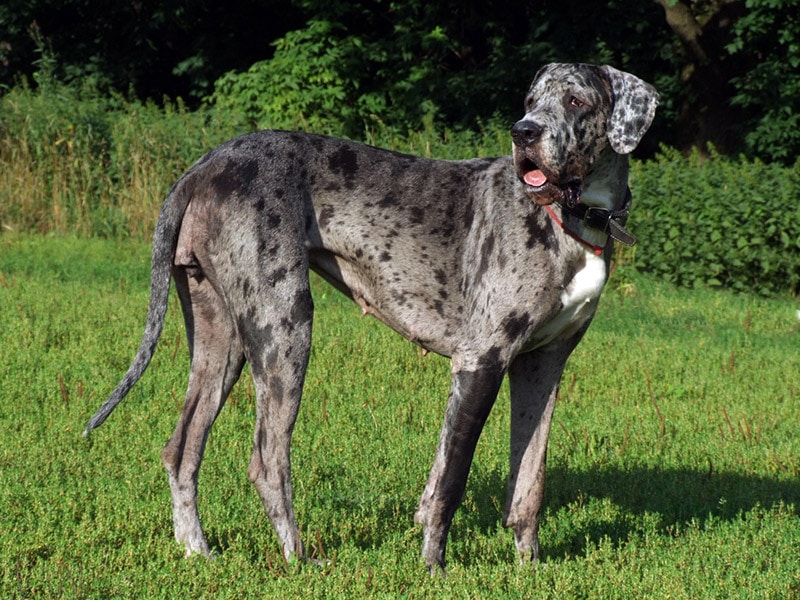
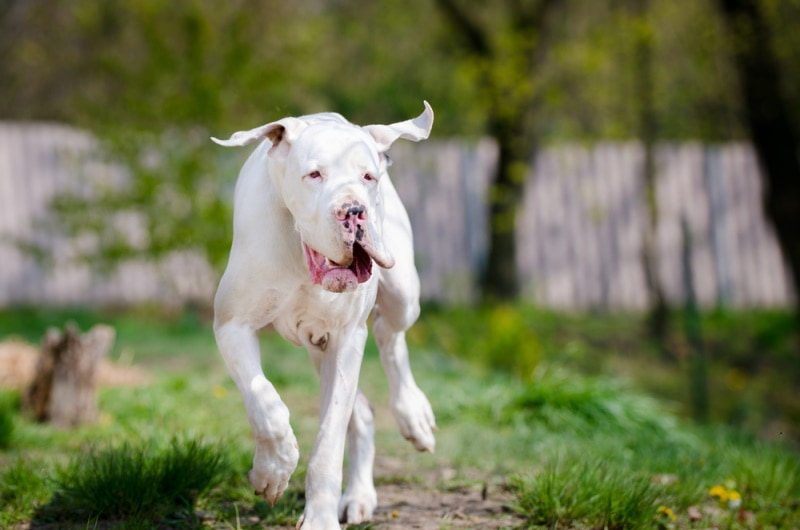
Great Danes are easy-going, sociable, and friendly. They are often considered giant goofballs and won’t hesitate to climb in your lap despite their enormous size. Great Danes do well with children and know how to be gentle with them. Watching these dogs walk is fascinating, as they possess a smooth and easy stride in their gait.
Great Danes have an easy-going nature, but that doesn’t mean they are not protectors of their humans. Their enormous size is usually enough to deter someone from breaking into your home, and they get along very well with other pets. Again, their size may intimidate some dogs, but their sweet demeanor is discovered quickly.
Great Danes have smooth, dense single coats and do not require much grooming. They shed more in fall and spring, but you can keep shedding down by brushing once weekly with a grooming mitt, much like the Doberman. During heavy shedding months, you can brush daily to minimize dead hair. Bathe your Great Dane when needed.
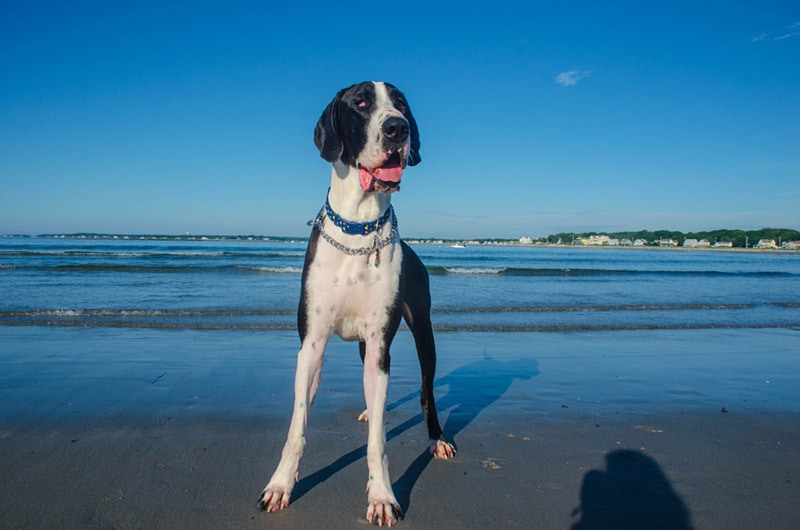
Great Danes come in fawn (the most common color), white, brindle, blue, black, blue, silver, harlequin, merle, and mantle.
Personality/Character
Great Danes hail from Germany and are dependable, courageous, spirited, reliable, and protectors of their humans. They make excellent watchdogs rather than guard dogs, but with their size, a deep bark may be all that is needed to deter someone from your property.
These giant dogs are huge and often stand taller than the average human while on their hind legs. They are slow to mature, with puppies reaching adult size by age 3. Don’t let the size fool you, as a Great Dane pup of this age has not fully matured emotionally or physically. These gentle giants also have a shorter life span than most, which is between 7 and 10 years.
Exercise
It’s vital to point out that Great Dane puppies up to 18 months should not be over-exercised due to the possible negative impact on their musculoskeletal development. Large and giant breeds are more prone to hip dysplasia and other joint-related issues due to their large size. You should strive for 30 minutes to 1 hour of exercise daily. Going on walks or light runs with your adult Great Dane is ideal, as well as playing in the backyard with its favorite toy for mental stimulation.
Training
Great Danes need early socializing to deter bad behaviors, and they may not get along well with other pets, especially ones they don’t know. Consistent training is key to success, and using positive reinforcement brings positive outcomes. These dogs are easy to train, but that doesn’t mean they can’t be stubborn. Stay the course, remain patient, and use positive reinforcement and you’ll gain a gentle giant companion who wants to please you.
Health & Care
Great Danes require a healthy diet with special nutrition to keep them from growing too fast. As we’ve mentioned, Great Danes are prone to joint issues due to their large size. Great Danes are also prone to bloat, and feeding an optimal diet is crucial. You’ll need to alter your Great Dane diet from puppyhood into adulthood because the feeding requirements will change. As we’ve stated, you don’t want your Great Dane puppy to grow too fast.
When looking for commercial dog food, opt for a brand that makes high-quality food for large-breed puppies or dogs. You’ll want to ensure that the puppy food you provide has a decrease in the amount of calcium, phosphorus, and vitamin D to reduce the risk of joint issues. The best advice we can give is to consult your veterinarian to ensure you always feed an optional, well-balanced diet for a Great Dane.
Breeding
As we’ve mentioned regarding Dobermans, you’ll want to ensure you find a reputable breeder if you want to go that route with a Great Dane. Reputable breeders will not breed dogs with known health problems, and they should be extremely knowledgeable about the breed. If you adopt your Great Dane from a rescue, you may not have access to its pedigree, but your vet can examine your Great Dane to determine its health.
Suitable for:
Great Danes are suitable for families who want a giant, loveable, mild-mannered goofball. One must be willing to exercise their Great Dane daily with at least two walks per day or outdoor exercise in the backyard, and you must be prepared for their short life span. FYI: these dogs also drool and slobber, so be prepared for slobbery kisses. Training is vital in keeping your Great Dane well-behaved, and remember that they may not get along with other pets, but early socialization helps with this potential problem.
Which Breed Is Right for You?
In the end, the right breed for you specifically will depend on what you’re looking for in a dog. Both are large breeds, require minimal grooming, and are eager to please their humans. Any dog breed is susceptible to health problems, but the Great Dane requires more fine-tuning in its diet to prevent certain disorders, and its life expectancy is shorter than the Doberman. They are both easy to train, and both require early socialization for optimal success in desired behaviors, especially with children and other pets.
Both breeds make excellent family companions, and both are protectors of their humans. Both are intelligent and sociable and will love you to the ends of the earth. Great Danes are extremely large dogs, and you’ll need to ensure you have the space for one. Dobermans also do better with dogs of the opposite sex.
See Also:
Sources
https://www.petmd.com/dog/conditions/musculoskeletal/c_dg_hip_dysplasia
https://www.akc.org/expert-advice/health/puppies-how-much-exercise/
https://www.akc.org/expert-advice/lifestyle/9-tips-finding-working-responsible-breeder/
https://pets.webmd.com/dogs/what-know-about-doberman-pinschers
https://www.dobermanplanet.com/are-male-or-female-dobermans-better-guard-dogs/
https://www.dobermanclub.org/find-a-puppy/buying-a-puppy/doberman-ear-crops/
http://images.akc.org/pdf/breeds/standards/DobermanPinscher.pdf
Featured Image Credit: (L) Dyrefotografi, Shutterstock | (R) Earl Wilkerson, Shutterstock
Get Hepper In Your Inbox


Pet care tips from our vets and experts, straight to your inbox.
You may opt-out at any time. View our Privacy Policy for more information.

Rachel Giordano is a writer and musician out of Pensacola, Florida, living there with her partner and their two dogs, Aero, a Border Collie/Sheltie mix, and Sophie, a Boston Terrier. Rachel has a Bachelor of Arts degree in communication and enjoys writing about all types of animals. When Rachel’s not dedicating her time to writing about animals, she enjoys writing thriller/suspense novels. A writer by day and a musician by night, she's passionate about educating the public about the requirements and needs of all types of animals.
Join the conversation
Ask a question, share your story, or send private feedback.