Hepper is reader-supported. When you buy via links on our site, we may earn an affiliate commission at no cost to you. Learn more.
Dracula Parrot: Pictures, Personality, Food & Care Guide
In this article
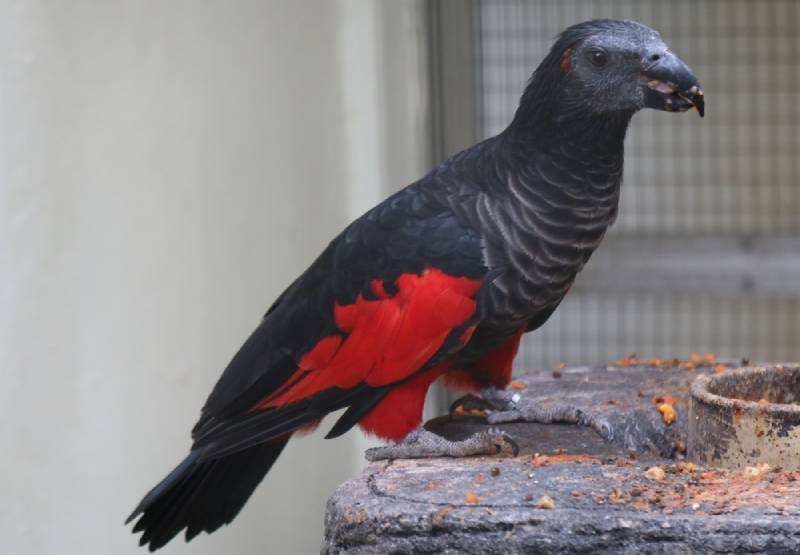
The Dracula or Pesquet’s parrot (Psittrichas fulgidus) is a rare and vulnerable species endemic to New Guinea. These parrots are recognized by their unique appearance with striking red and black plumage. Although Dracula parrots cannot legally be kept as pets, they have some interesting characteristics and history worth knowing.

Species Overview
With plumage that looks like a vampire’s cloak and vulture-like heads, the name “Dracula parrot” is quite fitting for this species. Despite this, there is nothing scary about the Dracula parrot’s behavior! Dracula parrots might look like carnivores, but they eat an entirely fruit-based diet. They are a social species that live in large flocks and nests in hollow trees.
Unfortunately, populations of Dracula parrots have been decreasing and these unique birds could face extinction. Keeping Dracula parrots as pets is prohibited, and they are best observed in their wild habitat.
Dracula Parrot Characteristics
History & Natural Habitat
Dracula parrots are part of the Old-World parrot family Psittaculidae and the sole member in the genus Psittrichas. They are found in New Guinea where they inhabit rainforests along hills and mountains. Their numbers are unevenly distributed in parts of Papua New Guinea, specifically the Huon Peninsula, Finisterre Mountain villages, and Ok Tedi. In rare instances, Dracula parrots are found in Tabubil, Kiunga, and Cyclops mountains.
Most of their natural habitat has constant low-lying cloud coverage, tall trees, and frequent heavy rainfall. Dracula parrots can be found at elevations as high as 5,905 feet and as low as 328 feet.
Dracula Parrot Appearance
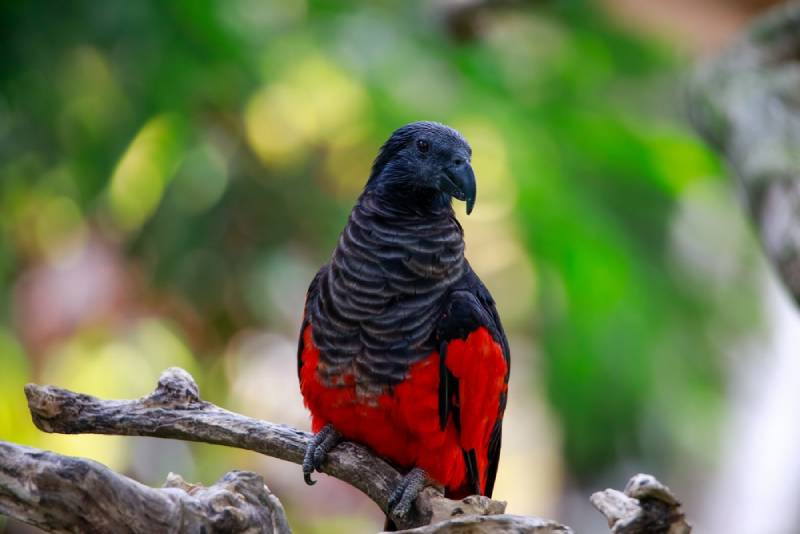
Dracula parrots have a haunting appearance with an uncanny resemblance to vultures. They are large birds, with adults growing up to 18 inches long and weighing up to 1.75 pounds. Their most prominent feature is the blood-red plumage on their flanks, wings, and belly. The rest of their plumage is a black or charcoal grey color extending to their beaks.
Dracula parrots have curved narrow beaks and a featherless head. The main reason these parrots have no feathers on their head is because of their diet. Their diet is high in fruit and the juices would create a sticky mess.
The easiest way to determine between male and female Dracula parrots is by looking at the sides of their heads. Only male Dracula parrots have red markings behind their ears.
Dracula Parrot Conservation and Illegality as Pets
It's illegal to keep Dracula parrots as pets, although there are small numbers of them in the pet trade. Since they are not domesticated, Dracula parrots do not make good pets. These parrots are facing extinction with a vulnerable conservation status on the IUCN Red List. It's estimated that around 20,000 to 49,000 mature Dracula parrots are left, but these numbers are rapidly declining.
Dracula parrots are hunted for their prized feathers which are used in certain ceremonial practices. They are also hunted for their skin and meat or illegally captured for the pet trade. Deforestation is another concern for their declining numbers, although it's not one of their major threats.
If you are looking for a pet parrot, various legal species make good pets. You should avoid purchasing a Dracula parrot to keep in captivity, even if they are sold at a promising price.
Diet and Feeding Habits
Dracula parrots are frugivores so most of their diet consists of fruit. Various fig species such as Ficus septica grow in their natural habitat, so figs make up a large portion of their diet. They will also readily eat other fruits like bananas, mangos, papayas, berries, and the occasional insect or flower nectar.
It's difficult to replicate the Dracula parrot’s species-appropriate diet in captivity because the figs they eat do not grow in many other parts of the world. Their long beaks are well adapted to eating fruit and reaching the soft insides.
3 Little-Known Facts About the Dracula Parrot
1. Dracula parrots produce a series of growling sounds
The Dracula parrots’ vocalizations are strange and scary, much like their appearance. These parrots do not produce pleasant chirps or songs, but rather deep and raspy growls. They also make harsh squawking sounds when flying. Mated pairs of Dracula parrots typically communicate by slurring sounds.
2. They prefer to hop and jump between trees.
Dracula parrots are not the biggest fans of long flights, and primarily jump and hop from high tree branches. These parrots fly by rapidly flapping their wings over short distances and gliding.
3. Dracula parrots are suggested to be one of the most vulnerable species in New Guinea
The IUCN Red List suggests that Dracula parrots are one of New Guinea's most vulnerable species. Dracula parrot populations are dwindling and could face extinction.

Conclusion
The rare Dracula parrot is a wild species only found in New Guinea. They prefer forests with plenty of tall trees and an abundance of figs. These parrots should not be kept as pets because they are illegal and not yet domesticated. However, that doesn't stop poachers from illegally removing them from the wild to be sold in the pet trade.
Unless we work on conserving the Dracula parrots’ numbers, they could become extinct.
See Also:
Featured Image Credit: Jembalang_Belang, Shutterstock
Get Hepper In Your Inbox


Pet care tips from our vets and experts, straight to your inbox.
You may opt-out at any time. View our Privacy Policy for more information.

Sarah is residing in South Africa with her partner and pets. She currently is interested in veterinary science and ichthyology, which she wants to study alongside her main passion: pet content writing. Sarah has over 60 fish including goldfish, tropicals, shrimp, and snails. She also keeps hamsters and a tarantula and wishes to provide quality content for readers and allow others to learn from her knowledge and experience. Sarah has much experience in all aspects of pet care, and providing the world with knowledge on ethical pet ownership is her lifelong dream.
Join the conversation
Ask a question, share your story, or send private feedback.