Hepper is reader-supported. When you buy via links on our site, we may earn an affiliate commission at no cost to you. Learn more.
Dry Skin on Cats: Vet-Approved Causes & Treatments


In this article
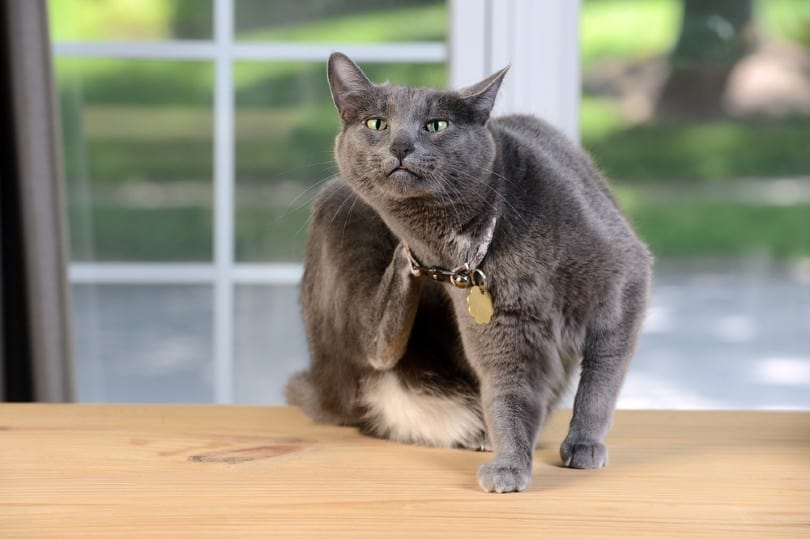
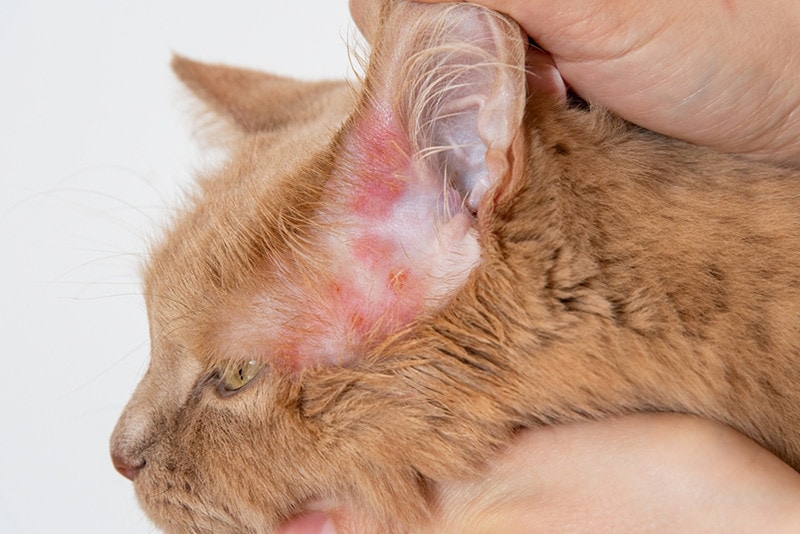
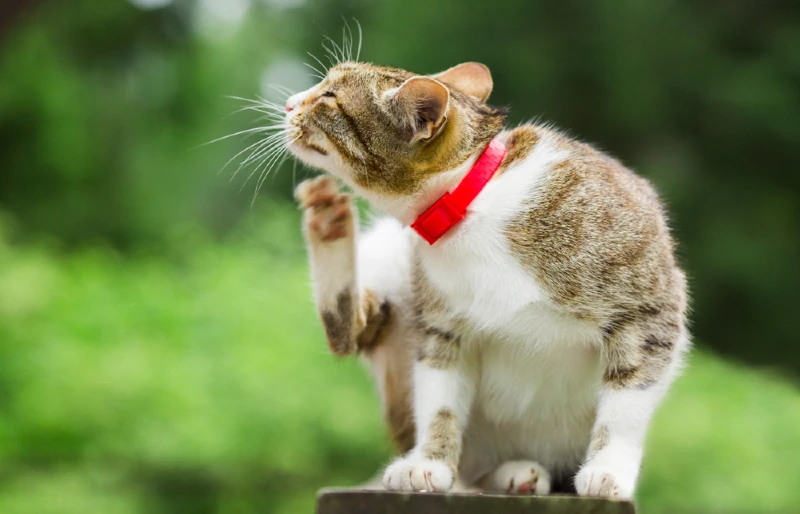
Cats are well known for their ability to keep their fur looking clean and well-kept. Therefore, it can be a surprise when they start looking a little ragged, with clumps of missing fur or red, itchy skin. While cats try to keep themselves presentable, they can suffer from skin issues just like we can.
Dry skin can be caused by anything from allergies to underlying health conditions or even your cat’s grooming habits. In this article, we go over the common causes of dry skin in cats and home remedies for treating the issue.

Top 7 Causes of Dry Skin on Cats
The reason that dry skin is affecting your cat can be difficult to determine, but knowing the common causes will help you figure out how to treat it.
1. Allergies
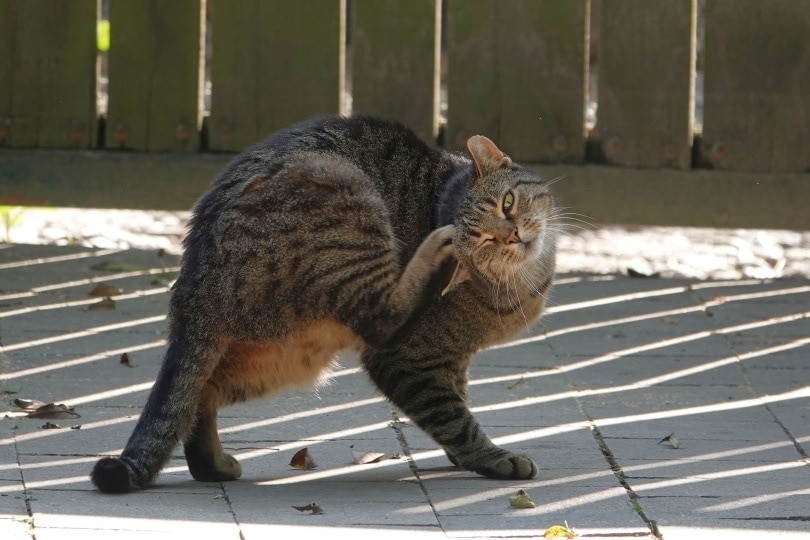
If you suffer from allergies — for example, to pollen — you may have noticed that your skin itches more on days with a high pollen count. When your immune system reacts to an allergen, it can develop into the usual runny nose and itchy eyes but also incredibly itchy skin. The same is true for your cat.
It’s not just allergens like pollen and dust that can get cats itching either. Cats can be allergic to mold, ingredients in their food, and flea bites. They might even be reacting to the new feline shampoo that you’re trying or the detergent that you washed their bed with.
While allergies are one of the most common causes of dry skin in cats, it’s not always easy to tell what allergen sets them off.
2. Dry Air
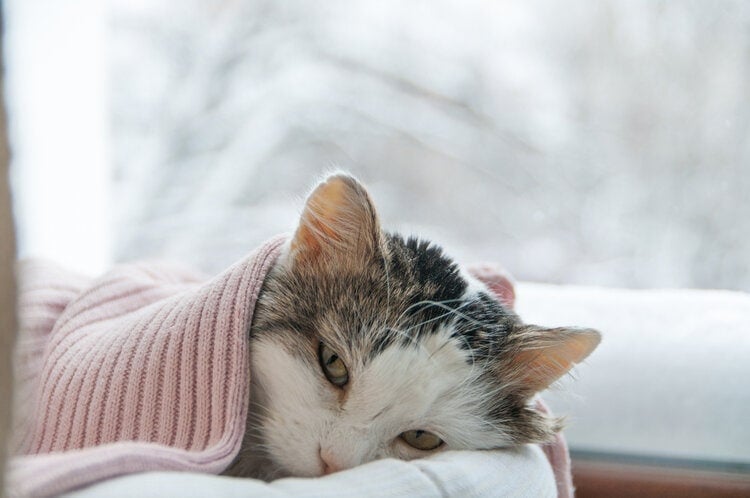
Wet, muggy days might be sticky and horrible, but they are gentle on sensitive skin. Dry air might be less sweaty in certain circumstances, but it has the downside of drying out your skin. Heaters in winter or a sudden change in the weather — or even just a long, dry summer — can cause skin conditions to flare up.
Cats are just as susceptible to the humidity in the air or lack thereof. If your cat suffers from dry skin during winter, when they spend more of their time curled up in front of the heater, it’s probably the dry air that’s causing it.
3. Infections
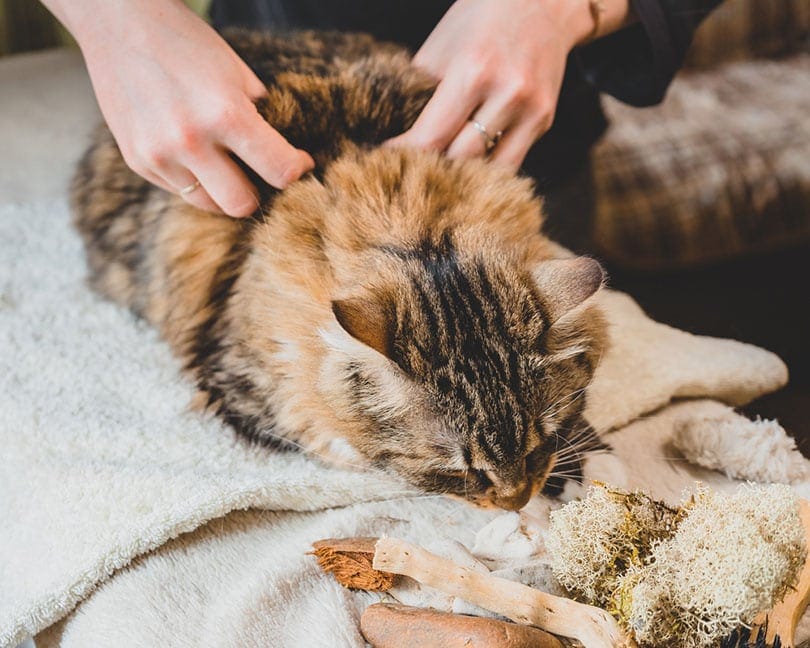
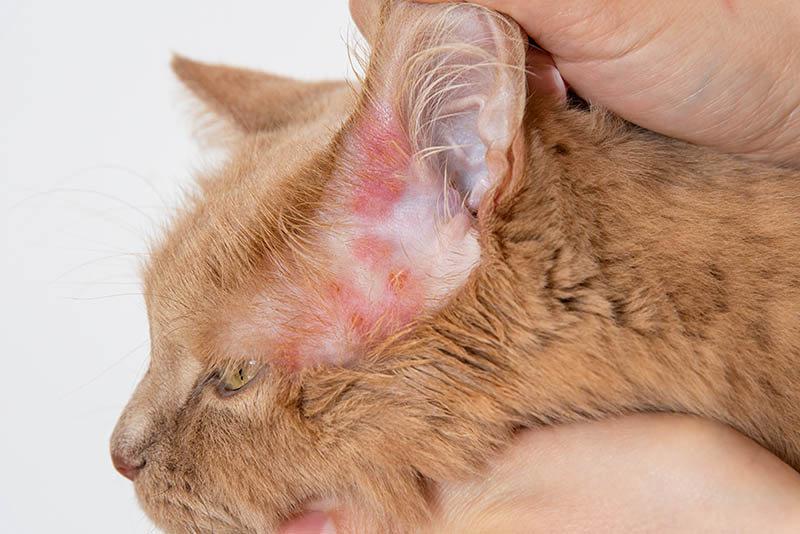
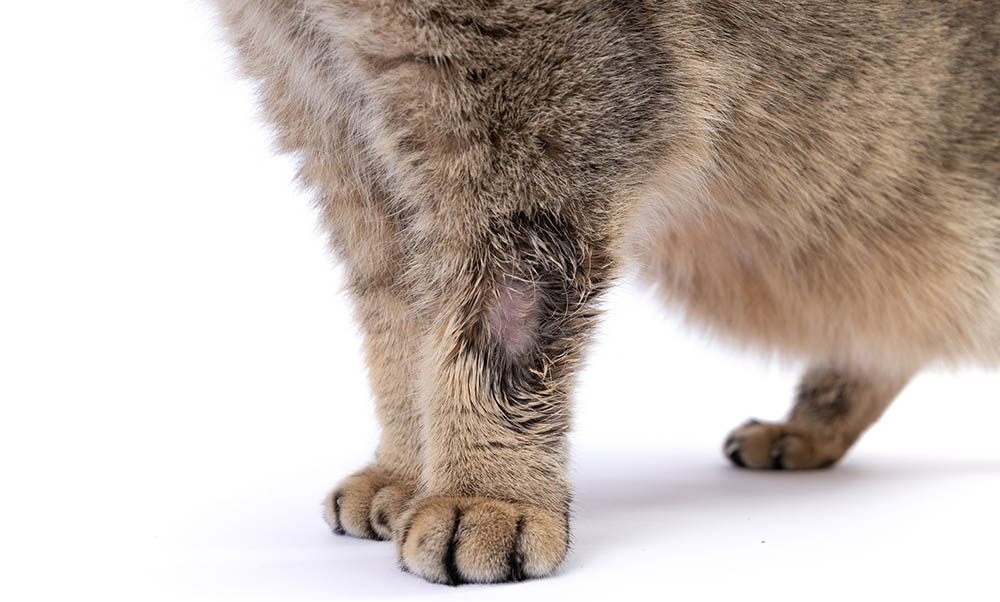
Fungal and bacterial infections can both lead to scaly patches, flakiness, or red, irritated skin. These types of skin conditions often require a trip to your veterinarian to be properly diagnosed so you can treat them effectively. The symptoms can vary depending on the type of infection your cat has, which is why it’s best to discuss the symptoms with your veterinarian.
These infections can be contagious, too. One common fungal infection that can infect other pets and humans is ringworm, which can present as circular patches of flaky and red skin. To keep your family healthy, you’ll need to diagnose and treat the infection as soon as possible.
4. Improper Grooming
One of the most common causes of irritated skin in cats is over-grooming, but many cat owners don’t realize that under-grooming can cause similar problems. Once you’ve determined whether your cat is grooming too much or not enough, you can figure out what steps to take to fix it.
Under-Grooming
Your cat’s age can be a common factor in how often or how well they groom themselves. Older cats are more likely to suffer from joint conditions like arthritis and might not be flexible enough anymore to give their fur the care that it needs. Similarly, obesity can affect a cat’s ability to groom itself.
If your cat can’t clean their fur after their adventures, all the dirt that they pick up stays in their fur and can cause matts, greasy fur, and irritated skin.
Over-Grooming
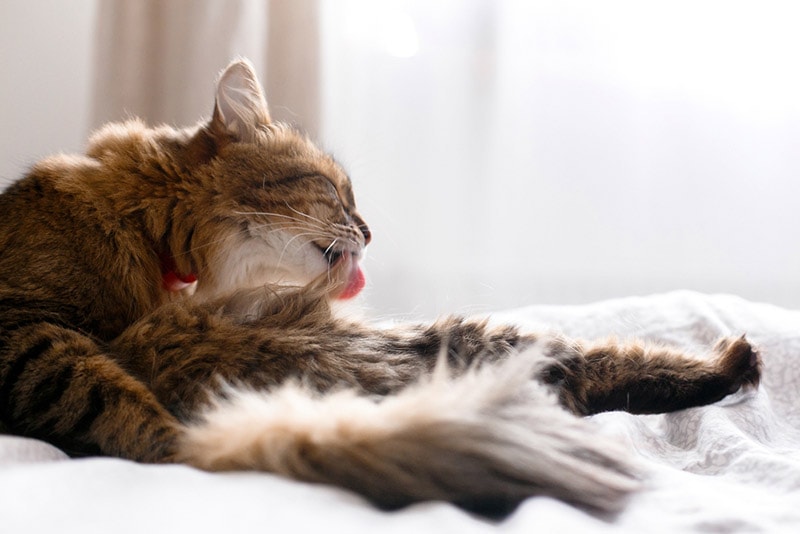
Over-grooming can also lead to dry, flaky skin. Stress is the biggest cause of this problem. Cats don’t just groom themselves to stay clean, they also do it to soothe their nerves when they feel restless. Stressful situations that interrupt their routine — like you returning home from work late when you’re always on time — can make your cat feel uncertain.
Certain behavioral conditions or underlying medical conditions can also be a cause of over-grooming.
5. Nutritional Imbalance
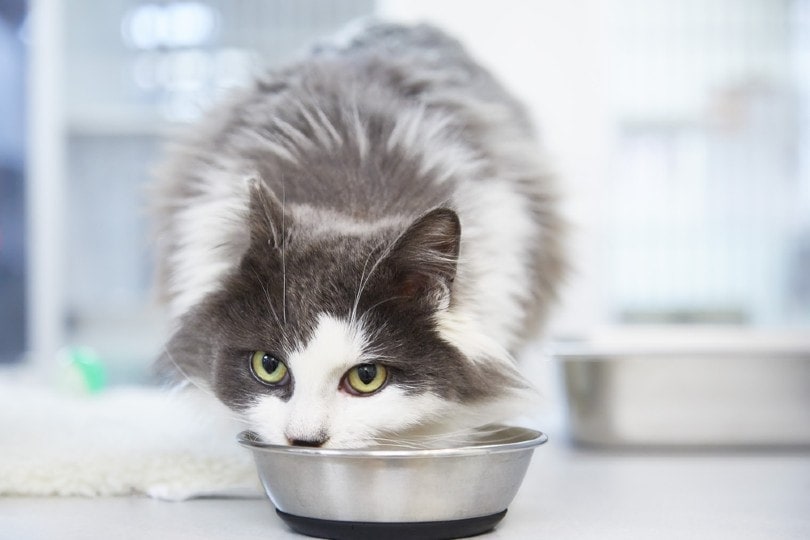
Along with allergies and dry air, nutrition imbalance is a common factor when it comes to the health of your cat. The food that your cat eats is an important source of nutrients. Dry, flaky skin is often the first sign of a nutritional imbalance, as the body will automatically prioritize the well-being of vital organs over skin and coat health.
Eating too much human food, cat treats, or even low-quality cat food can all be reasons that your cat isn’t receiving the nutrients that they need to stay healthy. Certain health conditions can also prevent your cat from properly absorbing the nutrients that they need.
6. Over-Bathing
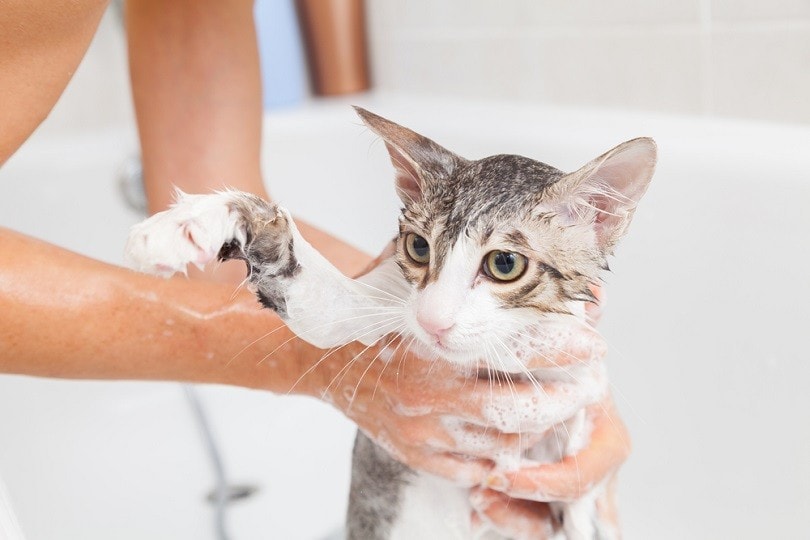
Not all dry skin is caused by outside influences; sometimes, it’s human error. While we might mean well and only want our cats to smell and look nice — especially if they’ve been crawling around underneath the cupboards — bath time can do more harm than good.
This doesn’t mean you shouldn’t bathe your cat at all, but you need to be careful when you do so. While we can hop in the shower regularly with few ill effects, baths strip the natural oils out of our cat’s fur. They might look sleek and shiny after a bath, and certain cat shampoos can even soothe sensitive skin, but too many baths have the same effect as over-grooming. It’ll dry out your cat’s skin and leave it feeling itchy and irritated.
Using the wrong shampoo can also be a problem, even if you don’t bathe your cat that often.
7. Parasites

Many cat owners with indoor pets often rule out fleas and ticks as a cause of their cat’s itchy skin simply because their cat doesn’t go outside to collect them. However, it’s not quite that simple. Even if your cat doesn’t go out, if you have a dog that takes regular potty breaks, your trusty canine can bring back these parasites to your cat. In fact, most fleas on your dog are cat fleas.
It’s not just the dog either. Fleas and ticks can latch onto you while you’re out, whether you’re visiting a friend who has pets or taking a walk through the park. Fleas naturally don’t like living on humans, so while they might hitch a ride and steal a bite or two, they’re more likely to enjoy living on your cat after you get home.

Top 6 Treatments for Dry Skin on Cats
Once you have an idea of the causes of your cat’s dry skin, you can take steps to help treat the condition. Here are a few ways that you can help ease your cat’s dry skin at home:
1. Flea and Tick Prevention
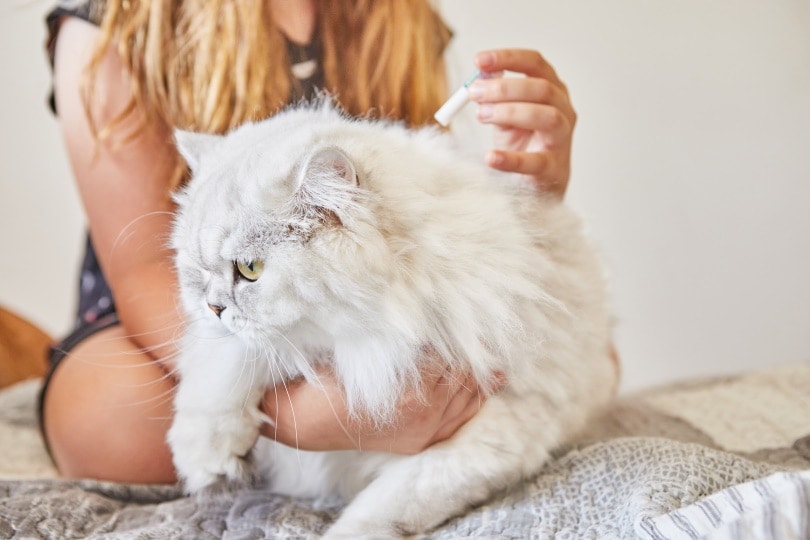
Even if your cat doesn’t go outside, they can still benefit from a dedicated flea and tick treatment. You might not require the strong product that you’d need if your cat was adventuring outdoors, but keeping your house treated for pests can help keep them off your pet.
Regularly vacuuming carpets and under furniture and washing your pet’s bedding can all help with controlling fleas. Checking your dog and yourself for ticks can help prevent you from taking them back to your stay-at-home cat too.
2. Grooming Schedule
For cats that struggle to groom themselves because of their age, assisting their grooming can help them keep their fur in pristine condition. Most of the time, cats don’t require help with their grooming habits and can mostly be left alone, though they’ll appreciate a brush now and then simply for attention.
Remember not to overdo their grooming sessions. A quick brush once a week is often enough to get rid of loose fur and clogged dirt.
Try to avoid too many baths too. Unless your cat has gotten into something smelly or you’ve rescued a kitten that you suspect has fleas, bath times aren’t often necessary. Some cats dislike showers too, and sometimes it’s easier to stick with a trusty brush or grooming glove.
3. High-Quality Cat Food
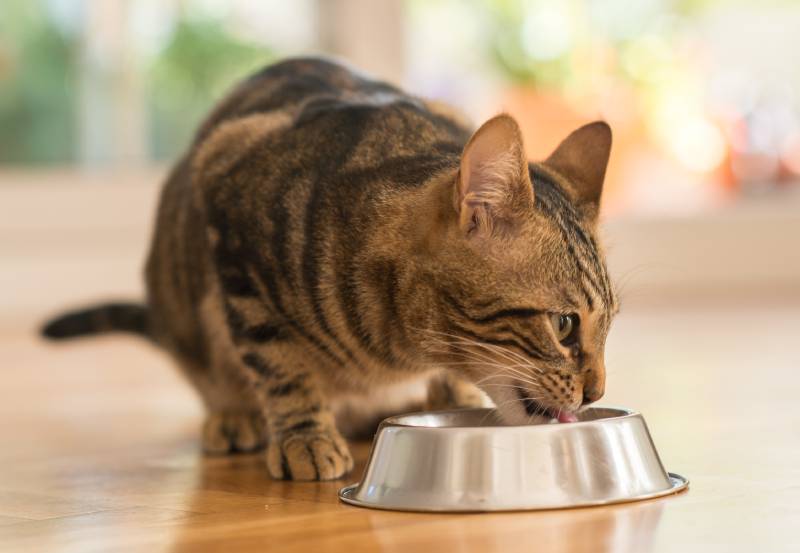
Nutritional imbalances can be difficult to correct, but once you’ve found a diet that works, your cat will benefit from the healthy meal plan. High-quality cat food is more likely to contain the nutrition that your cat needs and be healthier for your pet in the long run.
If your cat frequently suffers from sensitive skin, you can invest in formulas that contain plenty of protein and omega-3 fatty acids to help promote their skin and coat health. You can even try mixing wet food with their kibble to give them extra moisture in their diet.
When you introduce a new diet, remember to do so slowly and take a week or two to gradually switch to the new brand. This will help your cat’s digestive system get used to the new food without causing gastrointestinal distress.
4. Humidifier
Dry air in winter or arid climates in summer can all be challenging to deal with. You can help raise the humidity in your home by using a humidifier on particularly dry days or to counteract the dryness from the heater.
A humidifier is designed to put more moisture into the air and will benefit both you and your cat. You don’t even need to purchase one from a store. A simple DIY solution is leaving a bowl of water beside the radiator or heater and letting it slowly evaporate. Just make sure to keep it out of reach of any pets or children that might knock it over.
5. Less Stress
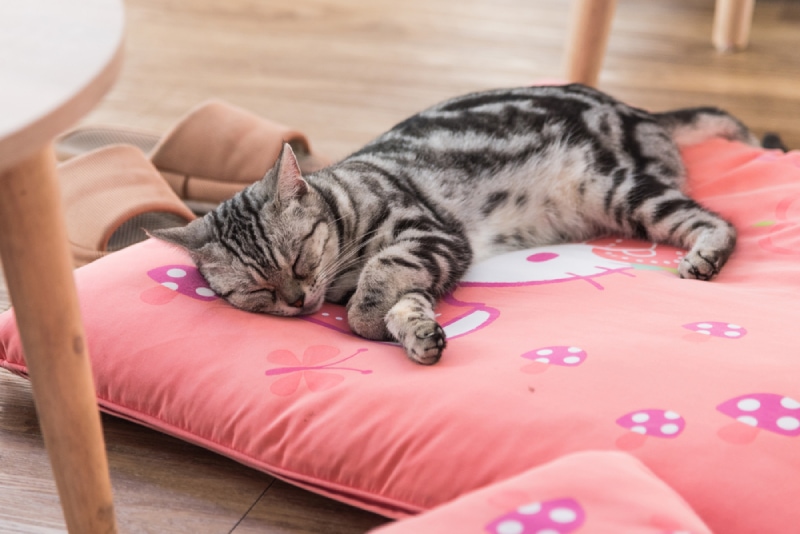
Although it can be easier said than done, reducing your cat’s stress can be an effective way of stopping them from over-grooming. Figuring out what has caused your cat’s discontent isn’t easy, though, especially when they can’t tell us what they’re unhappy with. It’s also not an instant fix, and it may take a while for your cat to settle down again.
Creating a routine for your cat is one of the best ways to keep them comfortable. They’ll appreciate knowing when they’re going to be fed and when you head out to work. Giving them somewhere warm and cozy to nap along with their favorite blankets and other things that smell like you, like a warm sweater, can also assure them that everything’s okay.
6. Regular Wellness Checks
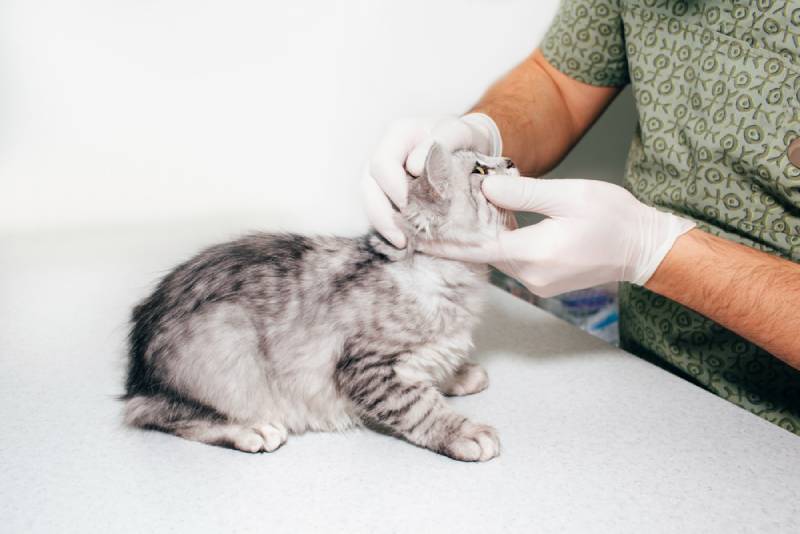
While some skin conditions can be treated at home without assistance from your veterinarian, others require professional help. This is why regular trips to a veterinarian can keep your cat healthy. With wellness checks, you’ll be more likely to catch any early signs of developing skin conditions and take steps to prevent them.
Your veterinarian will be able to recommend suitable diets to help nutritional imbalances and flea and tick treatments. They’ll also be able to provide medication for fungal or bacterial infections or run tests for any underlying health conditions that can cause dry skin.
Conclusion
Most cases of dry skin in cats have relatively benign causes, but it can also be a symptom of more serious health concerns. Allergies, nutrient deficiencies, and dry air are common causes of skin conditions in cats. Over-grooming due to stress and under-grooming because of obesity or arthritis are a few others. Less common causes can include fungal infections or diseases that will need to be diagnosed and treated by your veterinarian.
Featured Image Credit: AlexanderDubrovsky, Shutterstock
Get Hepper In Your Inbox


Pet care tips from our vets and experts, straight to your inbox.
You may opt-out at any time. View our Privacy Policy for more information.
Nicole is a lover of animals of all sizes but is especially fascinated with the feline variety. She’s the proud mom of Baby, a Burmese, and works every day so he can relax in the sunshine or by the fire. She’s always had a cat in her home and has spent countless days with others, observing behaviors and softening up even the grouchiest of the lot. Nicole wants to share her kitty expertise with you so you and your cat can live happy, healthy, and care-free.
Join the conversation
Ask a question, share your story, or send private feedback.