Hepper is reader-supported. When you buy via links on our site, we may earn an affiliate commission at no cost to you. Learn more.
Why Are There Scabs On My Cat? 7 Vet-Reviewed Common Causes


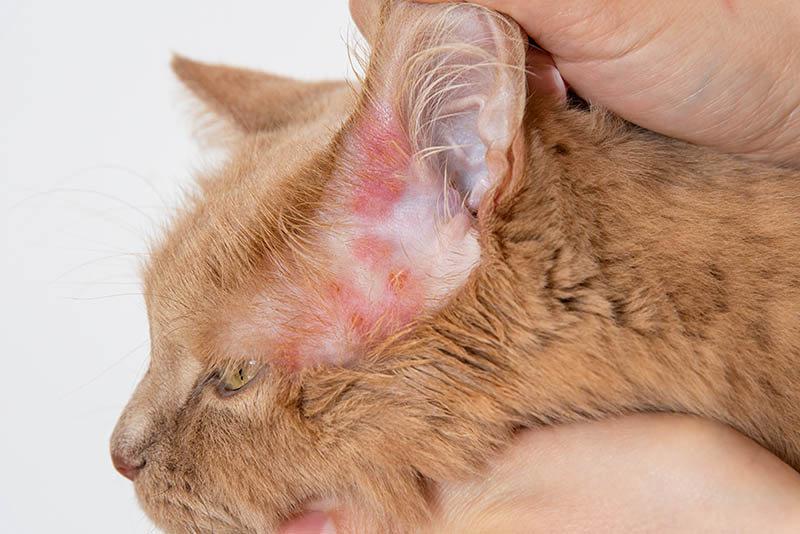
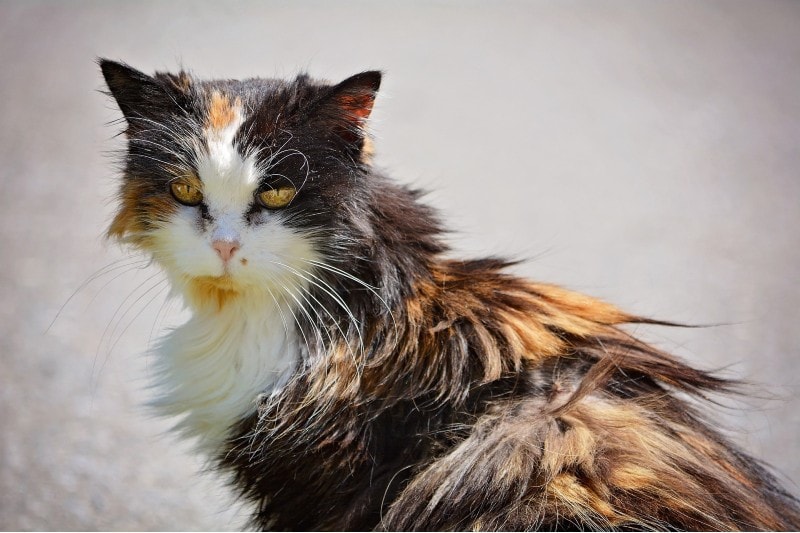
Scabs on a cat can look a little strange and confusing sometimes, mostly because of all the fur. Hiding under a thick coat of dense fur, scabs can easily remain hidden and seemingly pop up out of nowhere.
Since fur makes it difficult to see them, people often feel a scab first and then cannot tell what it is because the fur is in the way. Scabs usually feel like a dry, raised bump, or sometimes a bunch of bumps, sitting on the top of the skin intertwined with the fur.
Sometimes the scab is found so late the initial cause has completely healed, and the scab itself gets stuck in the fur above the newly healed skin. This can be confusing though because when someone tries to pull it off it pulls on the hair, which hurts! It can be hard to tell if the cat is in pain because of what is under the scab or because the scab is pulling on the hair.
Knowing the common causes of scabs and how they look different can help you identify a scab. To learn more, read below.

The 7 Causes of Scabs on a Cat
1. Flea Bite Allergy
One of the most common causes of scabs is an allergy to flea saliva. When a flea bites an allergic cat, they develop a very itchy rash that can progress to small scabby lesions. This is often called miliary dermatitis, and although very common in flea allergy dermatitis, it can also occur in cats that suffer from other types of allergies or even non-allergic issues.
You can notice small, rice-sized scabs nestled in the fur on top of the skin, usually on the rump (on the back just in front of the tail) or along the spine. When you run your hand over these scabs, it feels like little spots of rice under the fur.
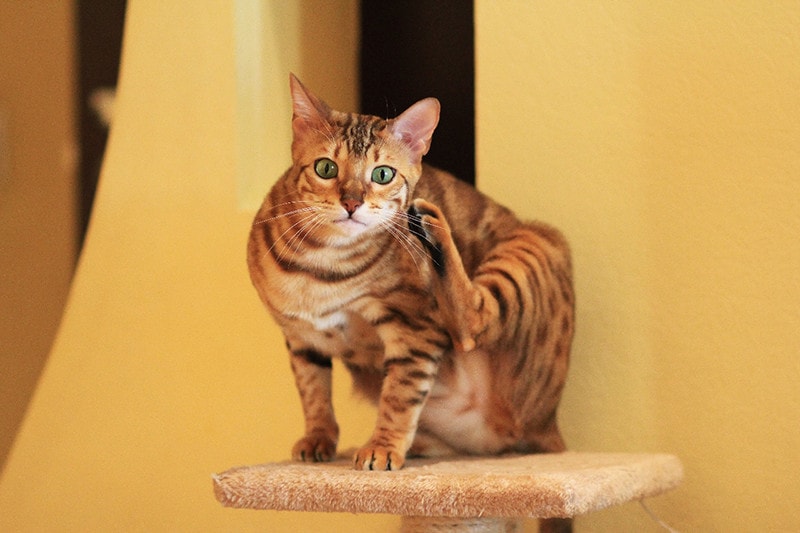
The allergic reaction is itchy. So, cats can further injure themselves as they over-chew and scratch at themselves. This further irritates the skin creating more sites for microabrasions and scratches which turn into more scabs.
A flea bite allergy becomes a vicious cycle perpetuating more and more damage to the skin as it becomes itchier and more painful. Your vet cannot cure an allergy but can help your cat have the best quality of life possible with various treatment options.

2. Other Allergies
Allergies in a cat look very different than they do in humans. While humans have itchy eyes and sneeze, cats usually develop itchy skin rashes, among other signs. These allergic skin rashes manifest as redness and scabs.
As well as flea allergic dermatitis, cats can also develop allergies to food items and environmental substances. The foods typically associated with food allergies in cats include beef, fish, chicken, and dairy. On the other hand, environmental allergens can range from indoor substances such as dust mites and molds to outdoor airborne offenders including tree, grass, and weed pollens.
Cats that suffer from these allergies may over-groom different parts of their body and develop miliary dermatitis, hair loss, and even generalized signs including vomiting and diarrhea.
3. Ear Mites
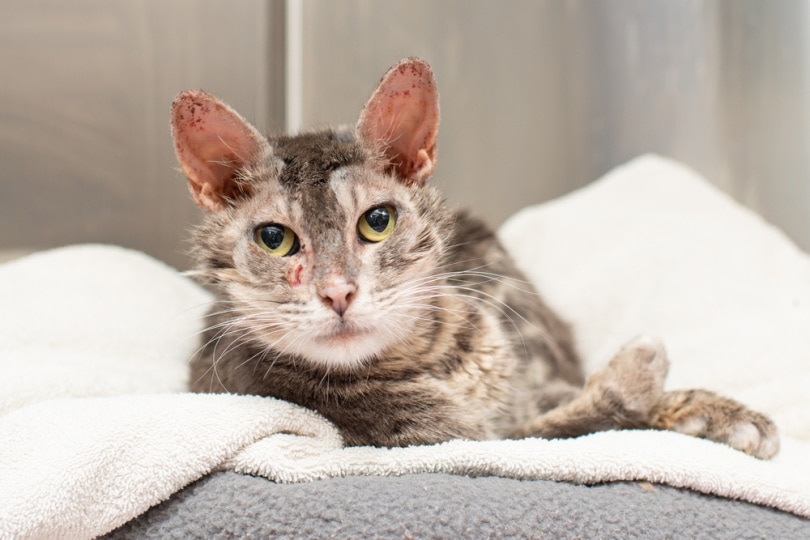
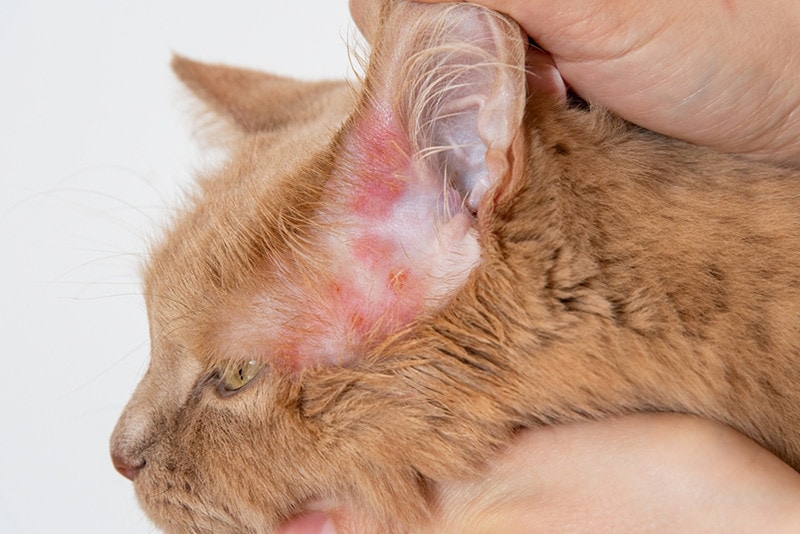
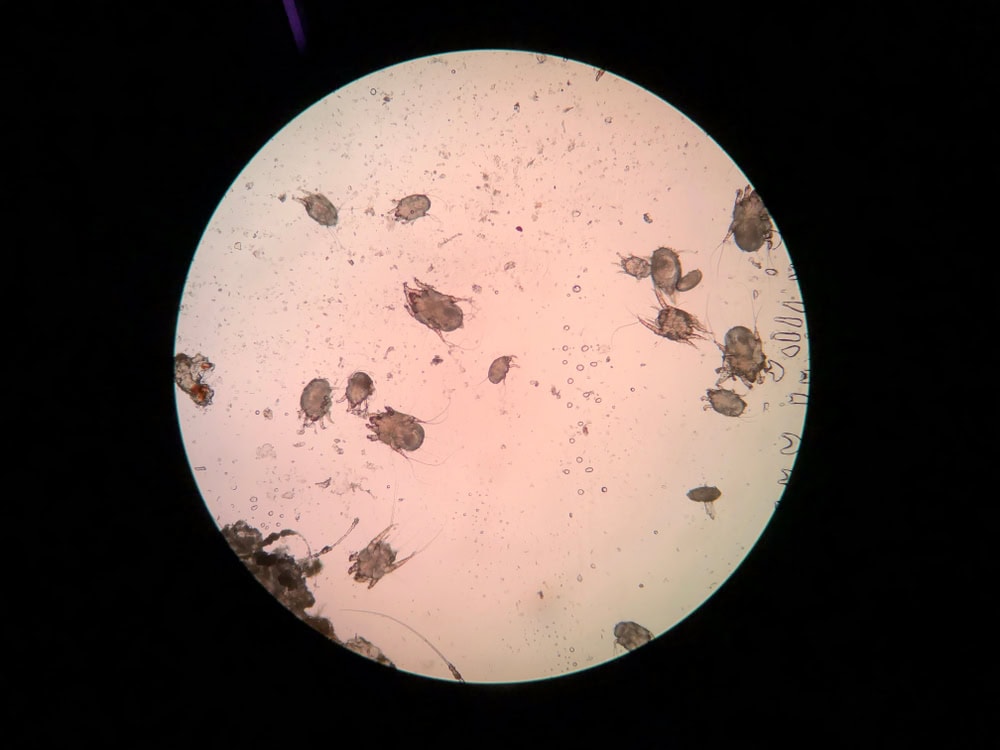
Ear mites can also create scabs on your cat’s ears. Mites are almost microscopic insects that affect cats’ ears.They can be very itchy, so often a cat with mites overgrooms and scratches their skin, creating wounds that then—you guessed it—scab over.
Luckily, ear mite infestations are quite easy to notice by the severe itchiness and brownish discharge that cats’ ears develop. They are equally easy to diagnose and treat. Your vet will look down at your cat’s ear and take a sample to check for mites using a microscope. Successful treatment involves an ear cleaner and medication to kill the parasite.
4. Catfight Wounds
Cats can get scabs in two ways when they fight with other cats. The most intuitive way is if they simply get scratched by a cat claw. This forms a shallow wound that is hidden by fur and might not be found until it has formed a scab.
These types of scabs vary in shape and size. The best way to tell if it is a trauma-induced scab is by the location; the most common place for them to happen is around your cat’s head and neck, but you may find them anywhere on the body. The other more common but slightly more complicated mechanism is from a cat bite.
When a cat gets bitten by another cat the wound is usually a tiny puncture that can be difficult to see. But, after a few days, the bacteria from the cat's tooth festers under the skin and forms an abscess. Many people bring their cat to the vet at this point because the abscess is so painful. But if the cat hides the abscess, it can burst open on its own and form a wound which then scabs over.
This type of scab can also be anywhere on the body but is often found on a cat's head, neck, legs, and tail. The most tell-tale sign that this scab was a cat bite abscess is the extraordinary amount of discharge and swelling around it.

5. Ringworm
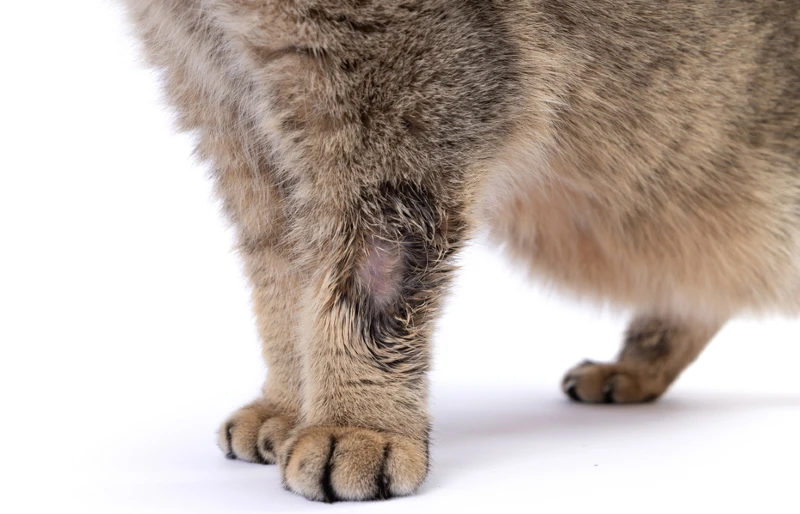
Ringworm is caused by a fungus that affects the skin of your cat. It is also called Dermatophytosis, and despite its common name, it has nothing to do with worms. It is most common in young cats and can be hard to identify because it can look so different.
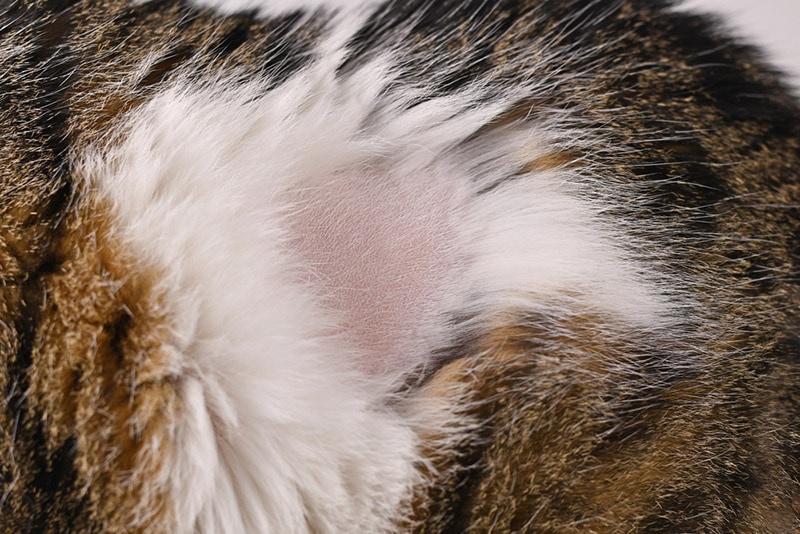
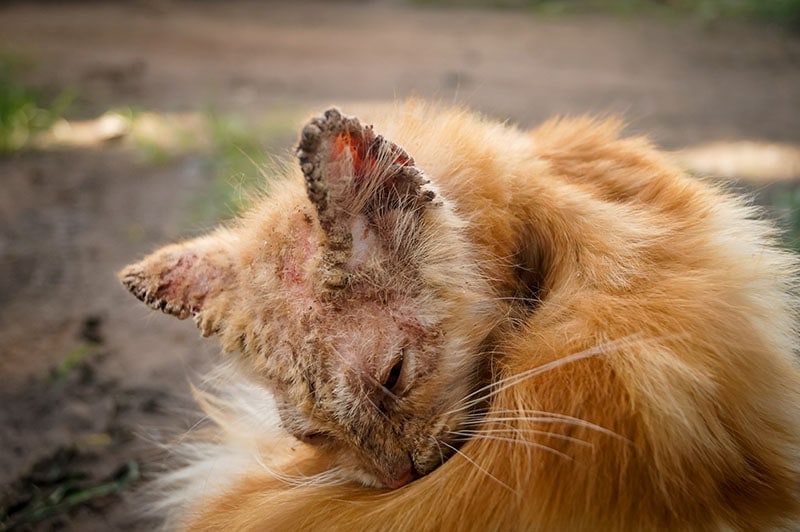
The classic case of ringworm is a round lesion with hair loss and dry, flaky skin. But the infection can also create scabby skin and changes to hair color. The fur can get stuck in the scab, and even if it is no longer attached by the root, it can get stuck to the skin by the scab, camouflaging the infection under a mat of fur and scabs.
The good news is that ringworm is unlikely to become a serious problem in healthy cats, and in most cases, cats will improve quickly with the right treatment. Just be prepared for a few weeks of medication. But the bad news is that it is contagious to humans and other animals, so getting rid of it as fast as possible with medical treatment is always the best option.
6. Weather Injuries (Frostbite/sunburn)
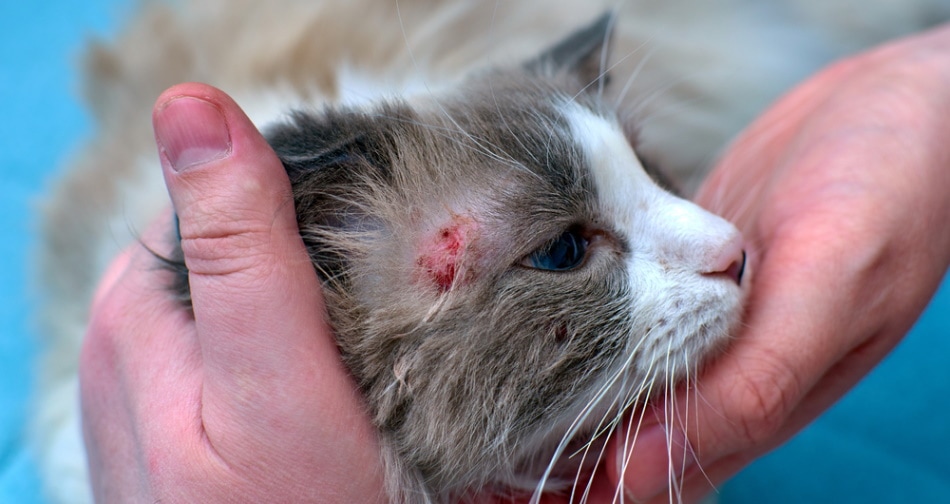
The tips of the ears and nose have less protective fur, so they are more sensitive to extreme weather than other parts of the body. Especially in cats with light or white fur, the ears and nose can be injured by frostbite or by sunburn.
The first sign of these injuries is reddening of the tip of the ears, followed by scaling. Scabs may develop alongside ulceration. It is extremely important to protect your cat from extreme sun and cold and be vigilant with these types of lesions. Unfortunately, sunburns can progress into skin cancer, and treatment usually requires surgery.
Protecting cats from extreme sun and cold is the best way to avoid this type of scabbing and permanent damage. Protection involves keeping your cat indoors when necessary and following your vet’s advice in terms of sun protection. Two ingredients that have been associated with toxicity in pets should be avoided: salicylates and zinc oxide.
7. Acne
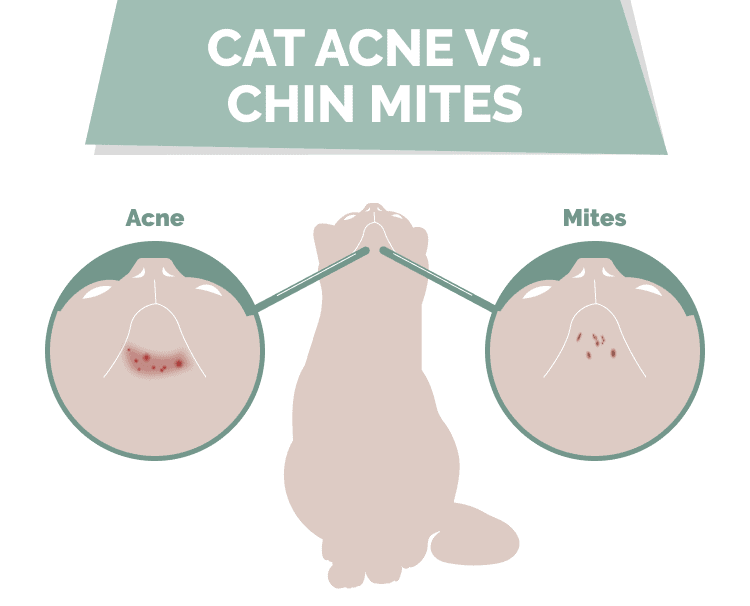
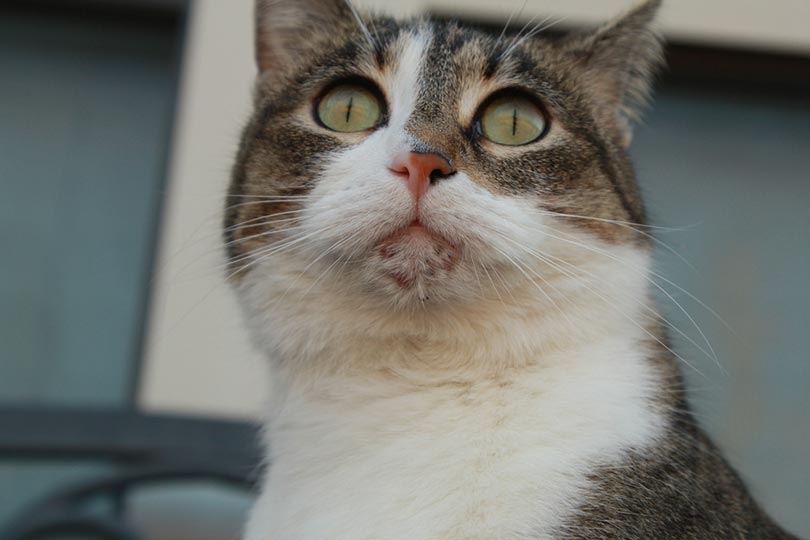
Your cat may develop scabs, bumps, or black dots on their lower chin which can sometimes be mistaken for flea dirt. The reason behind this is often a condition called feline acne. The most common sign is a greasy and dirty-looking chin, but small, red bumps that look like pimples or blisters can also form and burst, creating little scabs that poke out on the chin.
The reason why feline acne appears in some cats is not fully understood. It starts off as excessive production of sebum and keratin in the area that eventually blocks the glands on the skin, causing inflammation and secondary bacterial infection. If you notice this problem, a visit to your vet will be very helpful. Treatment often involves special shampoos or ointments and a change in the food bowl if the current one is made of plastic. Ceramic or stainless steel bowls are the best options in these cases.
Conclusion
Scabs are pretty common in cats, but they do need to be taken care of before they turn into a worse inflammatory reaction. Knowing the source and cause of the scab can help you prevent them and keep your cat comfy and healthy.
Sources
Scherk, M., Little, S., Maddison, J. E., Murrell, J., Hibbert, A., & Taylor, S. BSAVA Manual of Feline Practice. A Foundation Manual. BSAVA British Small Animal Veterinary Association.
The Merck veterinary manual. Whitehouse Station, NJ :Merck & Co., Inc.
https://www.aspcapro.org/resource/sunscreen-and-zinc-oxide-ingestion-pets
Featured Image Credit: Yaya Photos, Shutterstock
Get Hepper In Your Inbox


Pet care tips from our vets and experts, straight to your inbox.
You may opt-out at any time. View our Privacy Policy for more information.
Nicole is a lover of animals of all sizes but is especially fascinated with the feline variety. She’s the proud mom of Baby, a Burmese, and works every day so he can relax in the sunshine or by the fire. She’s always had a cat in her home and has spent countless days with others, observing behaviors and softening up even the grouchiest of the lot. Nicole wants to share her kitty expertise with you so you and your cat can live happy, healthy, and care-free.
Join the conversation
Ask a question, share your story, or send private feedback.