Hepper is reader-supported. When you buy via links on our site, we may earn an affiliate commission at no cost to you. Learn more.
15 Fastest Cats in the World & Their Achievements (Updated in 2026)
In the wilderness, cats rely heavily on their wits, agility, and speed to survive. A feline too slow to catch prey or run from danger won’t make it too far. But what about domestic cats, though? Can they chase after a rodent, or maybe they’re too slow for that now? Well, their centuries-old instincts haven’t gone anywhere.
At the core, pet kitties are the same as their wild relatives and haven’t lost their touch. For example, an Egyptian Mau can cover 30 miles in one hour! So, join us, and let’s take a look at the fastest cats in the world. We’ll start with domestic breeds and then check how fast tigers, lions, and cheetahs can get. Stay tuned!

The 7 Fastest Domestic Cats
When there’s not much to do, cats turn into couch potatoes and doze off into a nap. However, our feline friends can also be fast and furious, killing their prey with a carefully carried-out strike. So, don’t let the cute faces and miniature bodies fool you: fur balls are incredibly fast and use that to their advantage. And here are the swiftest breeds to date:
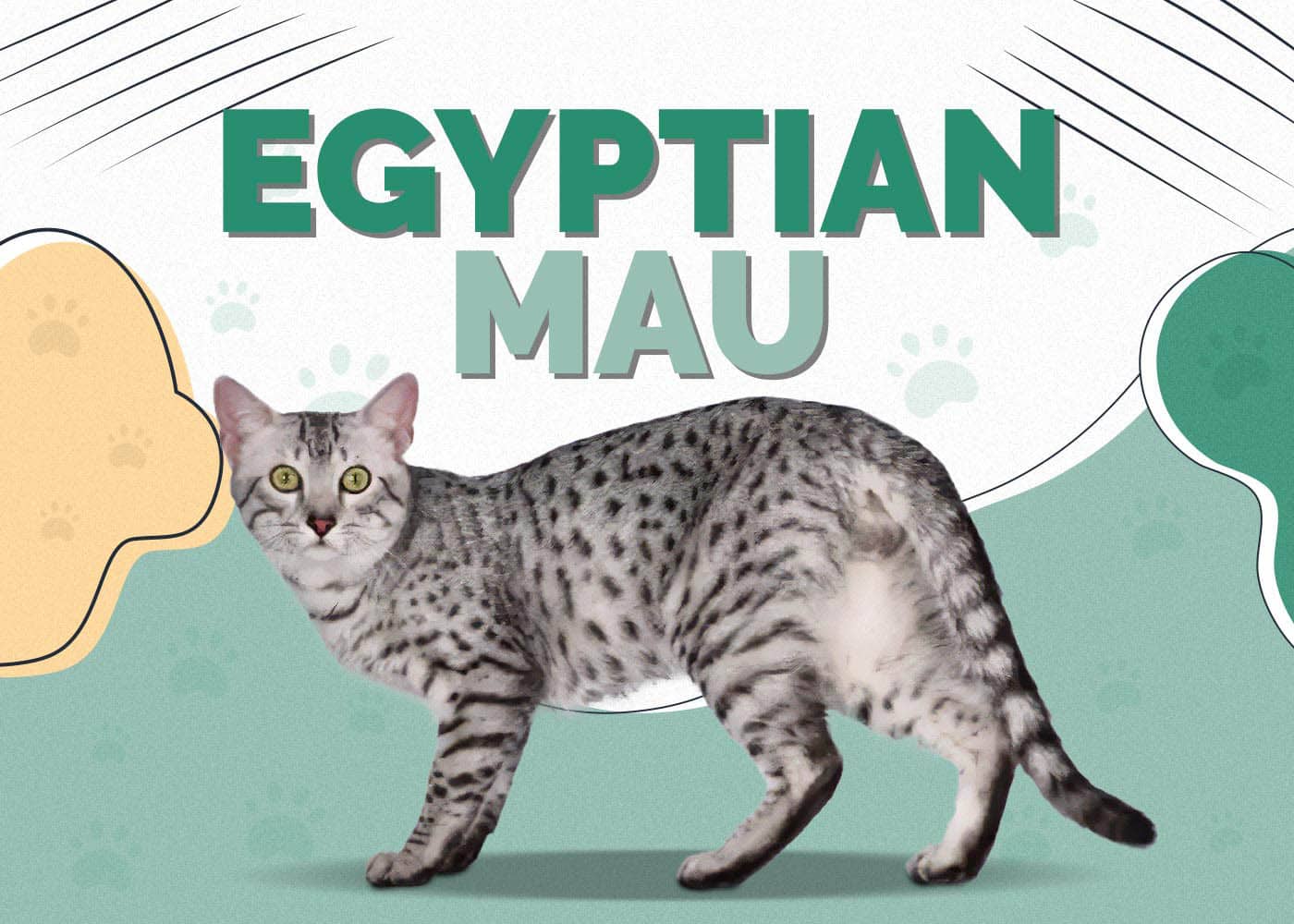
1. Egyptian Mau

| Top Speed | 30+ mph |
| Body Weight | 8–14 pounds |
| Average Height | 7–14 inches |
| Average Lifespan | 10–15 years |
| Originally From | Egypt (Fertile Crescent) |
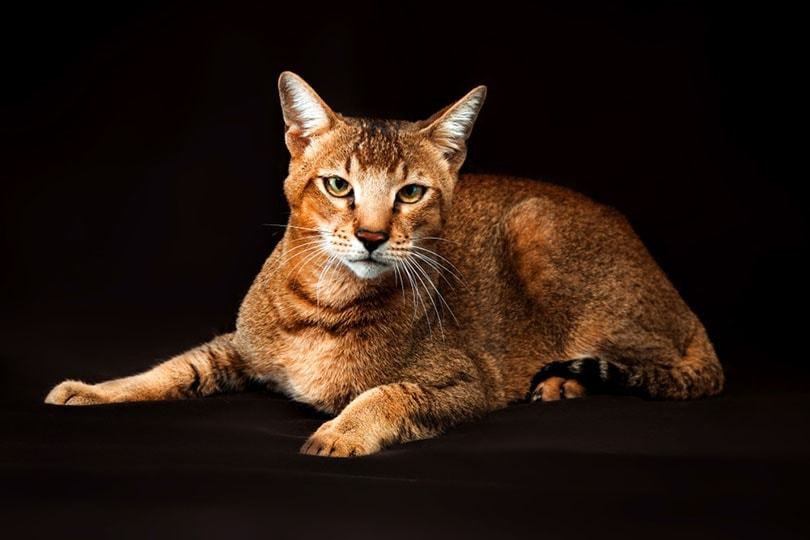
Egyptian Maus are athletic, intelligent cats with beautiful, dotted coats, large, almond eyes, and a sweet personality. And although these fascinating felines are, indeed, from Egypt, their DNA traces back to Europe and the Americas. More importantly, they’re officially recognized by the Guinness World Records1 as the fastest domestic cat breed.
Often called the feline greyhounds, Egyptian Maus can easily reach a max speed of 30 miles per hour (48 km/h). On top of that, these cats can maintain that speed until they catch a rat or escape from a dog. Lastly, thanks to their mighty bone and muscle structure, Mau cats jump up to 70 inches in the air while standing still.
2. Abyssinian Cat

| Top Speed | Up to 30 mph |
| Body Weight | 8–12 pounds |
| Average Height | 10–16 inches |
| Average Lifespan | 9–15 years |
| Originally From | Ethiopia/South East Asia |
It takes one look into the eyes of an Abyssinian cat to know that it means business. Hailing from Ethiopia, this feline has a slim, robust body, strong joints, and an even stronger prey drive. When trying to catch an elusive rodent or bird, Abyssinians go from zero to 30 miles per hour in the blink of an eye, giving Maus a run for their money. They’re also good at overcoming obstacles and climbing.
It takes this cat seconds to reach the top of a tall tree or building. So, if you have a pet rabbit, bird, or lizard, make sure the cat sees them as friends, not as potential food! Luckily, despite the predatory traits, Abyssinian cats are very loyal, affectionate, and playful.
3. Bengal Cat

| Top Speed | 30 mph (35 on short sprints) |
| Body Weight | 9–15 pounds |
| Average Height | 13–16 inches |
| Average Lifespan | 12–18 years |
| Originally From | United States |
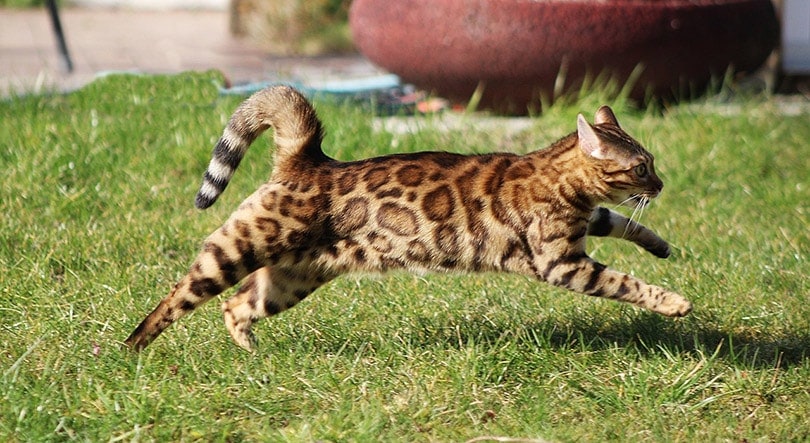
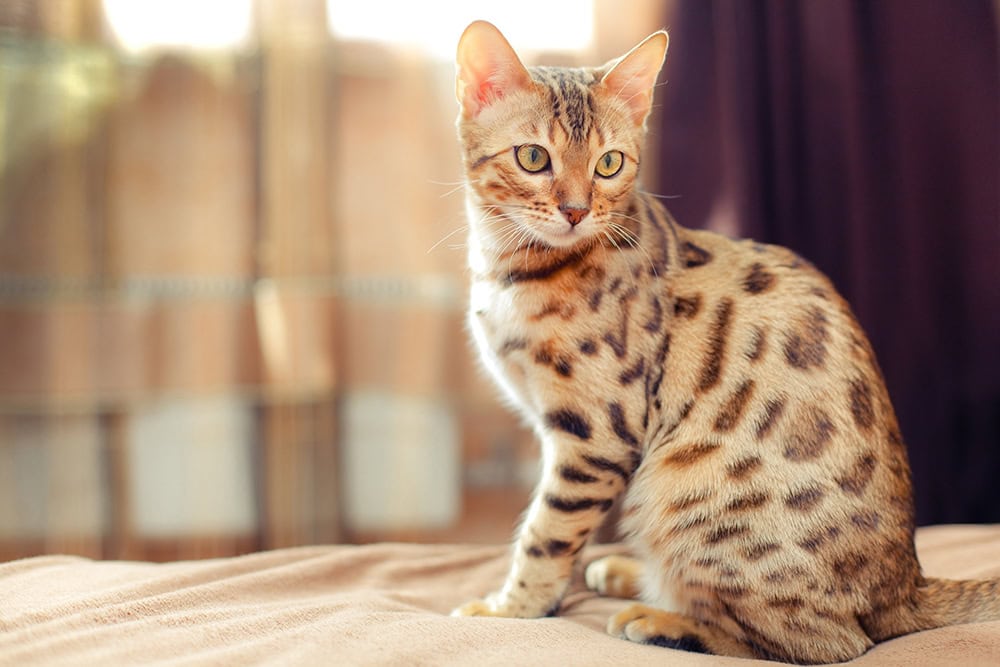
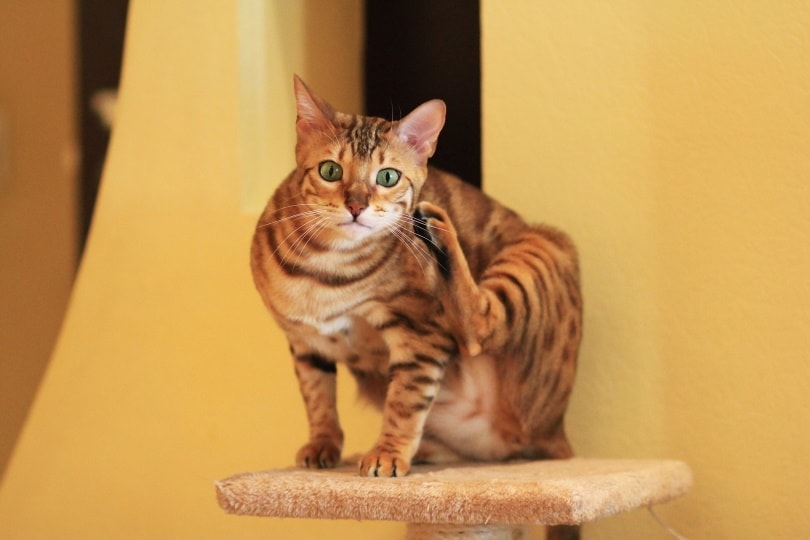
Next up, we have the beautiful Bengal cats. Originally, they were bred in the States and, to this day, remain a very popular choice as pets. Bengal cats are almost as fast as Egyptian Maus and Abyssinians. In fact, when pushed to their limit, these furry buds can accelerate to 35 miles per hour! However, that’s only true for short “bursts”, not a steady chase.
In the long run, they won’t be able to catch up to our gold and silver prize winners. That said, Bengal cats are inquisitive, energetic, and always up to something. A crossbreed between domestic felines and Asian Leopard Cats, they have the perfect manners of a domestic pet paired with the raw energy of a wild feline.
4. Savannah Cat
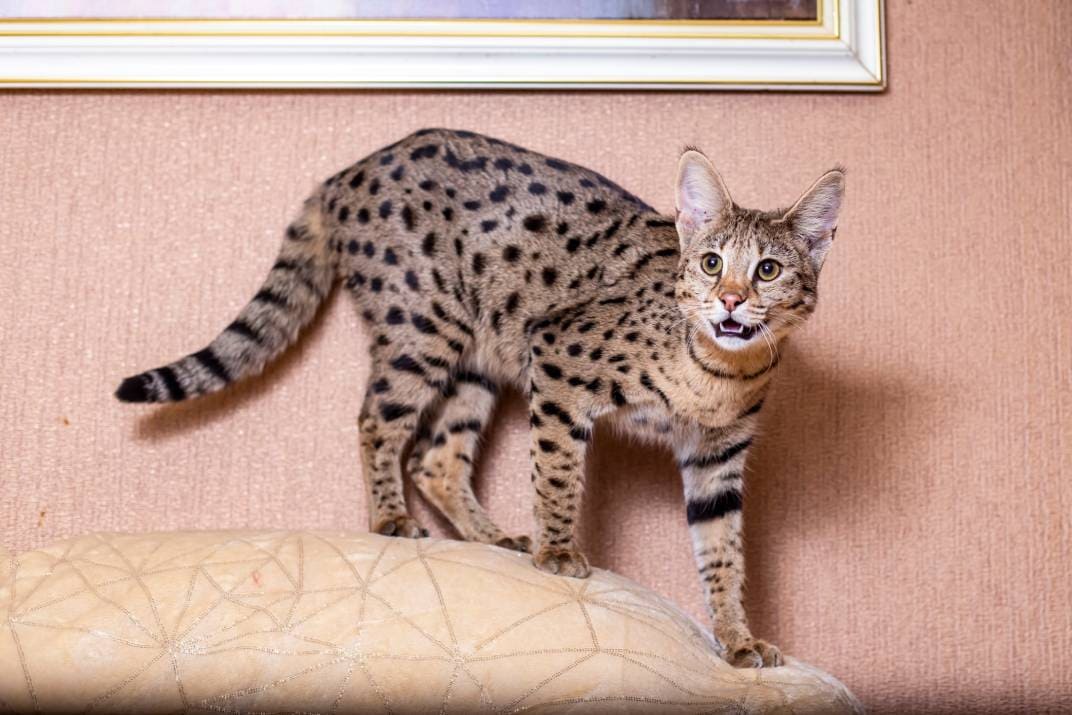
| Top Speed | 25–30 mph |
| Body Weight | 12–25 pounds |
| Average Height | 10–18 inches |
| Average Lifespan | 12–20 years |
| Originally From | United States |
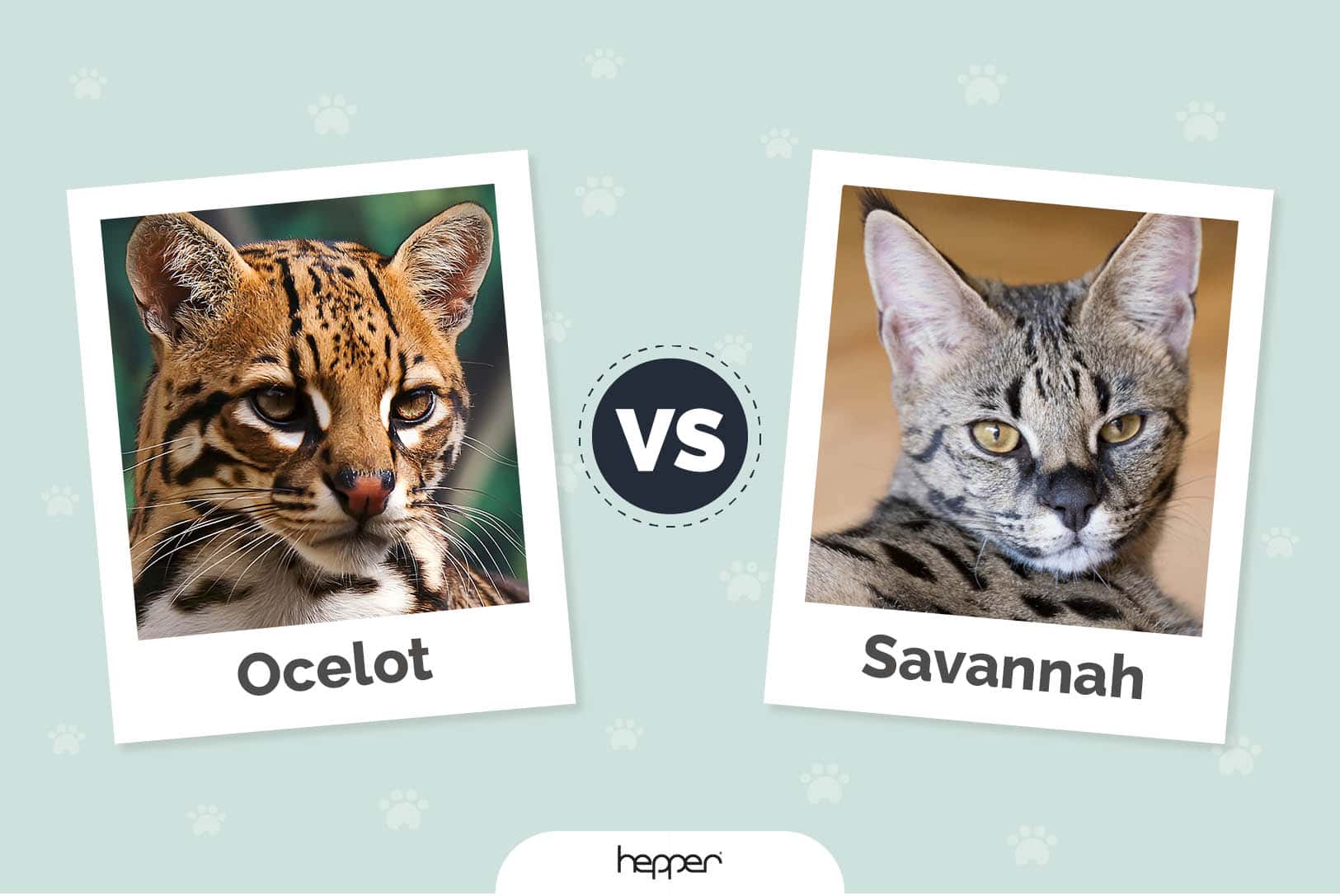
The first thing that will probably catch your attention when looking at this lovely feline is its size. Savannah cats often reach 25 pounds in weight and 18 inches in height, which makes them the biggest domestic cats on the list. That’s because they’re the “love child” of servals and Siamese cats. And the witty mind, strong hind legs, and the “eye of the tiger” make them a force to reckon with.
So, does that mean Savannah cats are also the fastest breed? Well, not quite. While they are, indeed, very fast, they do lag a bit behind the competition with a top speed of 25–30 miles per hour. However, if you adopt an F1 or F2 cat, it might be a bit faster, thanks to a higher percentage of wild blood in its veins.
5. The Ocicat
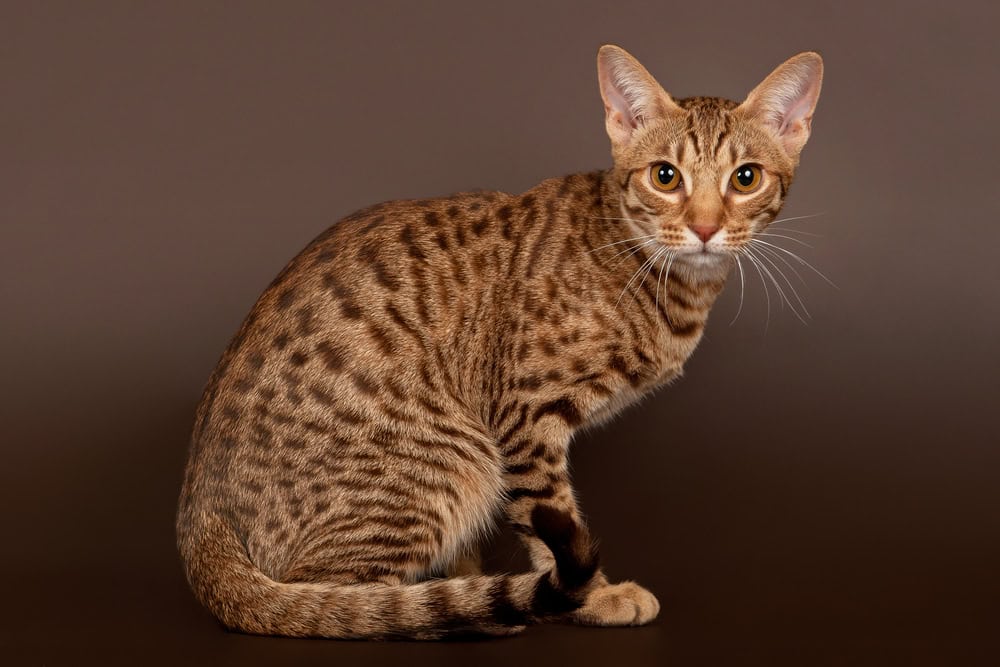
| Top Speed | Up to 30 mph |
| Body Weight | 8–15 pounds |
| Average Height | 9–11 inches |
| Average Lifespan | 12–18 years |
| Originally From | United States (Michigan) |
To answer your question, no, Ocicats aren’t related to Ocelots in any way. Instead, they are the result of a successful Siamese–Abyssinian crossing. So, while they are not as big or imposing as Ocelots, the speed, agility, and enhanced reflexes are there, thanks to the strong genes from the parent breeds. But can they run as fast? No, they’re slightly slower compared to the leaders.
But, while there’s not enough data to say just how speedy Ocicats are (most likely, a bit shy of 30 mph), there’s no doubt that they are fast creatures.
6. Manx Cat

| Top Speed | 30 mph (on short distances) |
| Body Weight | 8–14 pounds |
| Average Height | 7–12 inches |
| Average Lifespan | 14–16 years |
| Originally From | Isle of Man |
In contrast to all the other felines on the list, Manx cats don’t have a tail. This is caused by a natural genetic mutation of the body (or, rather, the spine). Thankfully, that doesn’t stop these oh-so-cute fur babies from competing for the title of the fastest domestic cat. On short distances, they are known to zip at up to 30 miles per hour.
Their average speed is slightly lower than that, of course. Manx cats like to jump and are often caught climbing a new tree, structure, or shelves and cabinets in the house. And one more thing: sometimes, these gifted hunters move their rear legs simultaneously, which makes them look more like rabbits.
7. Siamese Cat

| Top Speed | 20–25 mph |
| Body Weight | 8–15 pounds |
| Average Height | 7–10 inches |
| Average Lifespan | 15–20 years |
| Originally From | Thailand (Siam) |
Brought to the US and the EU from Thailand, the Siamese cat is an exotic beast with big blue eyes, perky ears, and an upbeat personality. When playing with fellow felines, racing to get a treat, or running toward their favorite humans, Siamese cats often move at 20–25 miles per hour. So, while they’re not the fastest domestic cats in history, they can keep up with or even outrun the average human.

The 8 Fastest Wild Cats
Alright, that’s it for the quickest pet cats. And, with all due respect to domestic felines, they’re no match for their big brothers and sisters from the wilderness. For example, Jaguars are almost twice as fast as Egyptian Maus, and they’re not even the speediest beasts. So, take a look at our list of the fastest wild cats to walk the Earth:
8. Cheetah
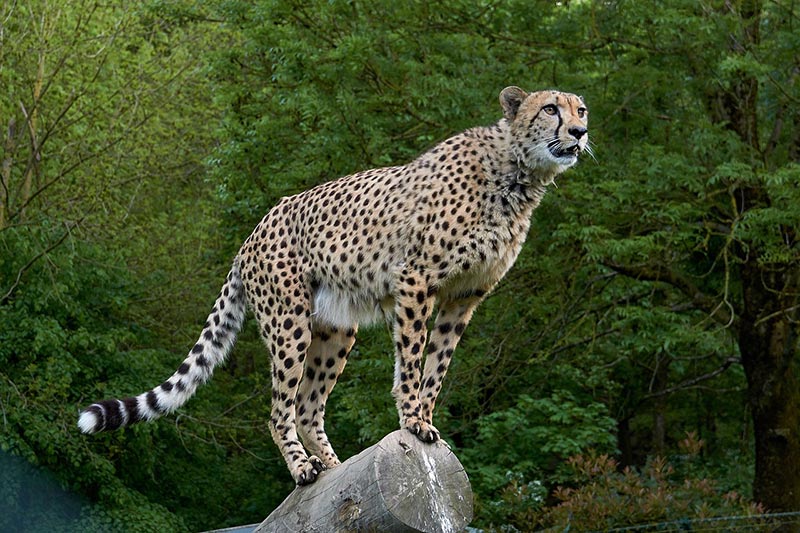
| Top Speed | 70–75 mph |
| Body Weight | 46–160 pounds |
| Average Height | 25–30 inches |
| Average Lifespan | 8–12 years |
| Originally From | Africa/Southwest Asia |
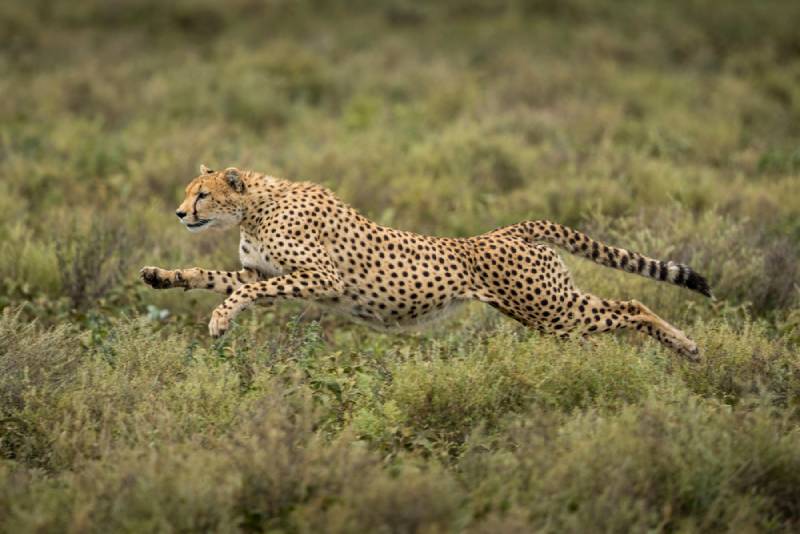
Did you know that cheetahs are the fastest land mammals in the world? That’s right! With an average speed of around 60 miles per hour, cheetahs easily reach 75 mph when trying to bring down a gazelle or impala. What’s the “secret formula” here, then? First, compared to other wild cats, cheetahs are relatively small, with a max weight of 160 pounds.
The strong muscles and retractable claws, in turn, help reach sprinting speeds in seconds. Cheetahs can also change direction without losing speed thanks to their unique vertebral column and longer-than-average tail (up to 35 inches). Oh, and while the normal breathing rate of this beast is 60 breaths per minute, it jumps to 150 in a chase!
9. Jaguar
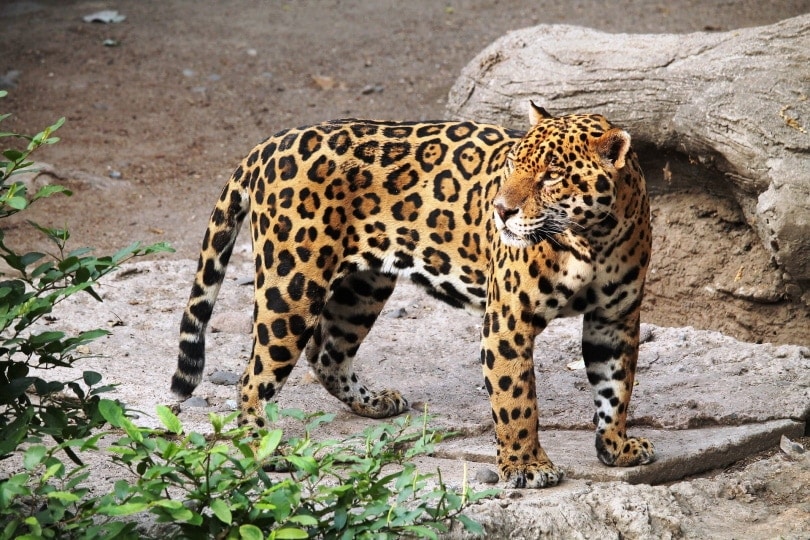
| Top Speed | 50+ mph |
| Body Weight | 120–210 pounds |
| Average Height | 27–30 inches |
| Average Lifespan | 12–16 years |
| Originally From | Amazon rainforests/Americas |
And what about a jaguar? How fast can this predator run? For a fully-grown, healthy “jag”, it doesn’t take long to reach 50 miles per hour on a regular day. When trying to catch an escaping prey with its claws, this cat can even go a bit faster than that. It’s a sprinter by nature, though, and runs out of breath fairly quickly.
However, since jaguars weigh almost twice as much as cheetahs, that’s quite an amazing achievement. Besides, they have a similar body structure with a long tail, strong legs, and mighty grip. Native to the Amazon rainforests, jaguars are excellent swimmers and climb trees better than most felines.
10. Lion
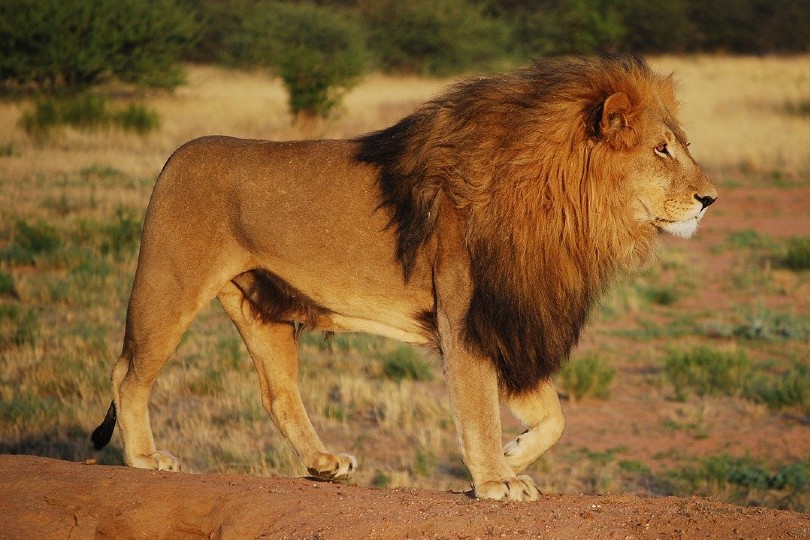
| Top Speed | 45–50 mph |
| Body Weight | 280–420 pounds |
| Average Height | 26–40 inches |
| Average Lifespan | 8–18 years |
| Originally From | Africa/India/Eurasia |
The king of the jungle is almost as fast as jaguars and will keep up with it on a good day. But long chances aren’t its cup of tea. While lions do run at 50 miles per hour, they need frequent breaks. Still, that’s quite an impressive speed, and the lion’s limbs have a big role in that. Although all their four legs are quite strong, the hind legs are slightly shorter than the front ones.
That’s why these big cats are sprinters, not marathon runners. They prefer to get as close to the prey as possible and only then attack.
11. Cougar
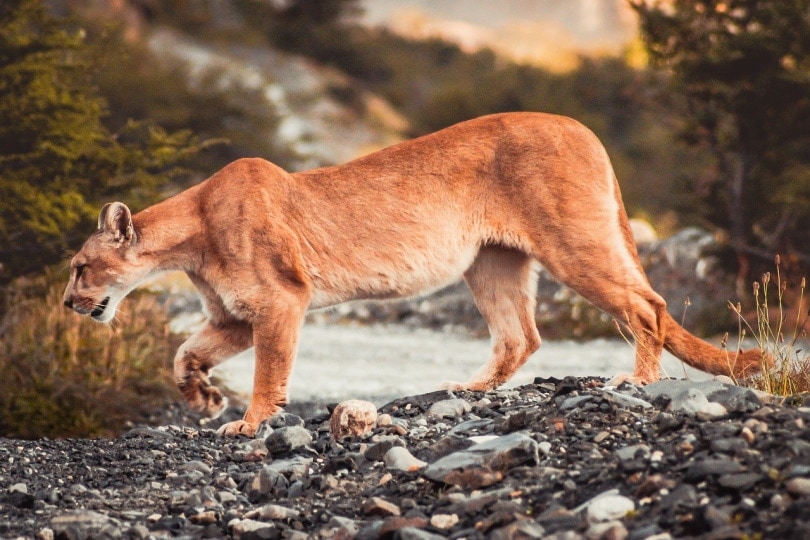
| Top Speed | 40–50 mph |
| Body Weight | 80–220 pounds |
| Average Height | 24–36 inches |
| Average Lifespan | 8–20 years |
| Originally From | The Americas |
Cougars have roughly the same height and weight as jaguars but are just a smidge slower. On even terrain, they are capable of reaching 50 mph and keeping up with jags, but, on average, these cats rarely go over 40–45 mph. On the bright side, cougars are more flexible than most wild felines and often strike their prey in a long jump. The large paws and strong rear legs aid in that.
Also, like cheetahs and jaguars, cougars have very long tails (30–35 inches).
12. Serval
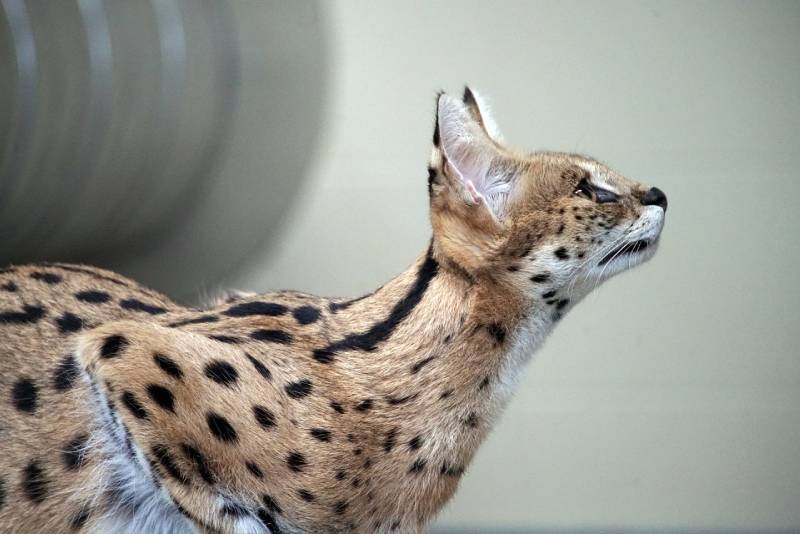
| Top Speed | 40 mph (50 on short distances) |
| Body Weight | 20–40 pounds |
| Average Height | 17–24 inches |
| Average Lifespan | 10–20 years |
| Originally From | Africa |
Earlier, we mentioned servals as the parent breed for Savannah cats. But can they hold their own in the wilderness? On short distances, they are known to push 50 mph, but, for the most part, servals like to stick 40–45 mph. Their slim bodies, sturdy joints, tall legs, and big, perky ears turn them into top-notch hunters. But for wild cats, servals are small compared to cheetahs and lynxes.
For this reason, they’re sometimes adopted as pets. We would recommend against that, though, because these predators will always long for the wilderness.
13. Tiger
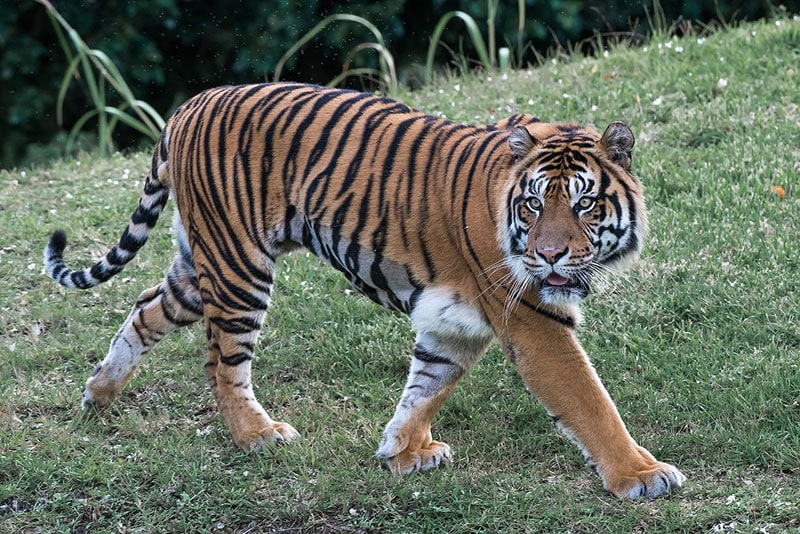
| Top Speed | 35–40 mph |
| Body Weight | 140–680 pounds |
| Average Height | 30–42 inches |
| Average Lifespan | 10–22 years |
| Originally From | Southeast Asia |
Tigers are the largest and heaviest felines on the planet, with a max body weight of 680 pounds! That’s why their top speed of 40 mph is so impressive. Tigers are also quite flexible and athletic and can cover up to 30 feet in a single jump or reach 16 feet into the air. However, tigers have limited stamina, and, just like lions, they are big stalkers, not chasers.
And there’s one more thing that tigers have in common with lions: they’re both apex predators.
14. Leopard
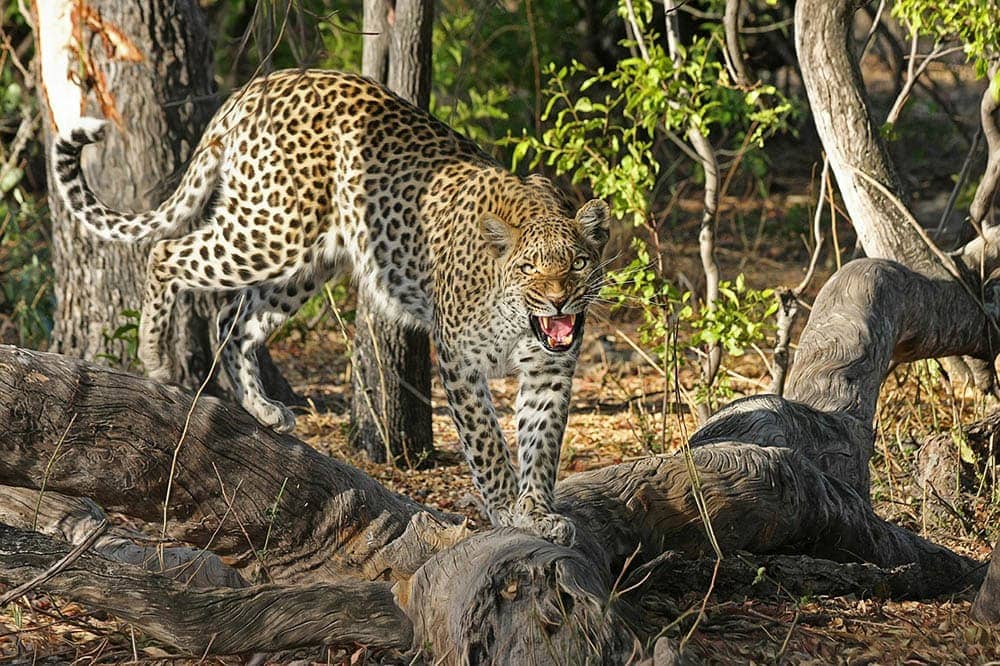
| Top Speed | 30–36 mph |
| Body Weight | 45–160 pounds |
| Average Height | 23–38 inches |
| Average Lifespan | 12–17 years |
| Originally From | East Africa/South Asia |
Diversity: that’s how leopards stay alive and thrive. They’re not as fast as some of the other wild cats and may be too slow to catch the swiftest prey. So, they compensate for that with other talents, including swimming, jumping, and climbing. Also, these felines are known for “stashing” their food high up on trees so that no other predator can get it.
Leopards are capable of reaching and maintaining a speed of 36 mph.
15. Lynx (Eurasian)
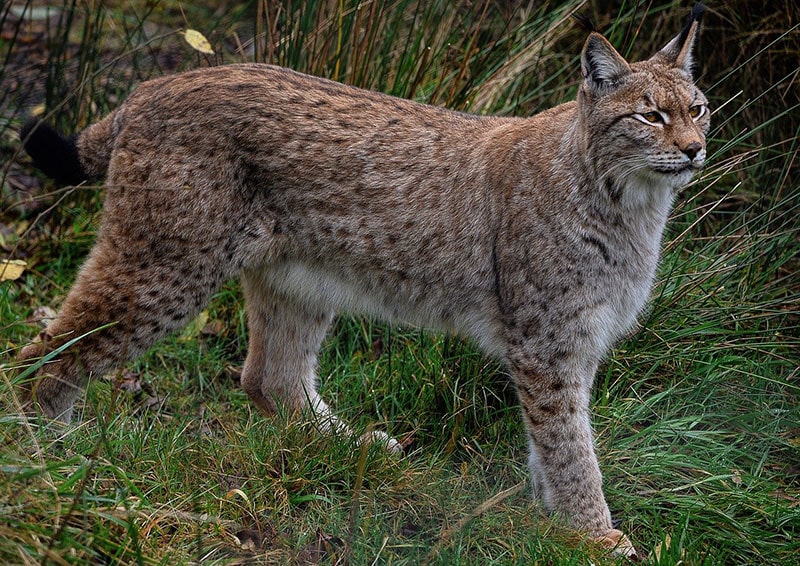
| Top Speed | 30 mph |
| Body Weight | 18–68 pounds |
| Average Height | 24–32 inches |
| Average Lifespan | 10–18 years |
| Originally From | Europe/Siberia/Central Asia |
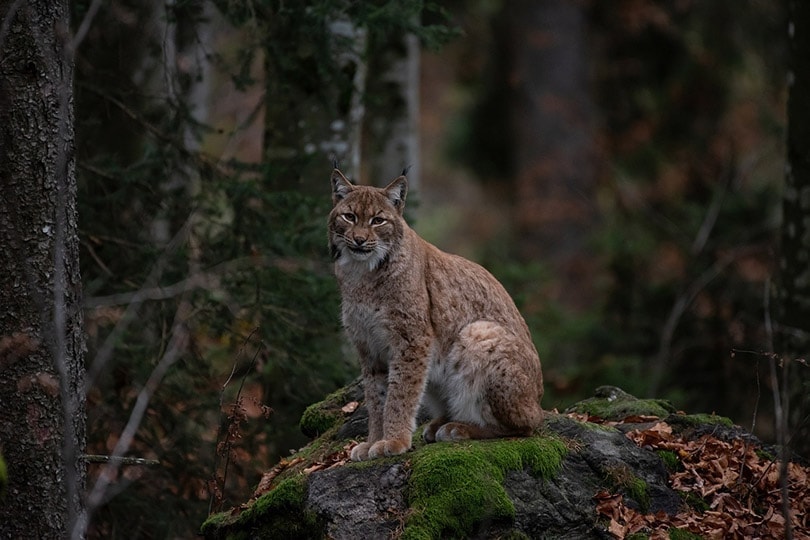
Lynxes are amazing creatures, known for their ability to tackle much larger and heavier animals. That’s right: this medium-sized wild cat is not only very fast (it covers up to 30 miles in one hour) but also quite strong. With that, since the lynx isn’t the most enduring predator, it relies on the element of surprise to attack and kill a bird, hare, mouse, or squirrel.
Conclusion
A cat that’s stalking its prey is a sight to see. Quick reflexes allow felines to “zoom in” instantly and deliver a killer blow. Yes, speed and flexibility are a cat’s most powerful tools. And, as we learned today, Egyptian Maus can run at the speed of 30+ mph, while cheetahs easily reach 75 mph.
That said, a weak cat that’s too slow to catch anything will be in big trouble. Thankfully, our fur babies have us to take care of them. So, don’t forget to check your furry bud and feed it. Also, when you see it jumping up and down the shelves or rushing through the house, just know that it’s honing its hunting skills!
Sources
Featured Image Credit: Danita Delimont, Shutterstock
Get Hepper In Your Inbox


Pet care tips from our vets and experts, straight to your inbox.
You may opt-out at any time. View our Privacy Policy for more information.

Nicole is a lover of animals of all sizes but is especially fascinated with the feline variety. She’s the proud mom of Baby, a Burmese, and works every day so he can relax in the sunshine or by the fire. She’s always had a cat in her home and has spent countless days with others, observing behaviors and softening up even the grouchiest of the lot. Nicole wants to share her kitty expertise with you so you and your cat can live happy, healthy, and care-free.
Join the conversation
Ask a question, share your story, or send private feedback.