Hepper is reader-supported. When you buy via links on our site, we may earn an affiliate commission at no cost to you. Learn more.
Folliculitis in Dogs: Causes, Signs & Treatments (Vet Answer)

In this article
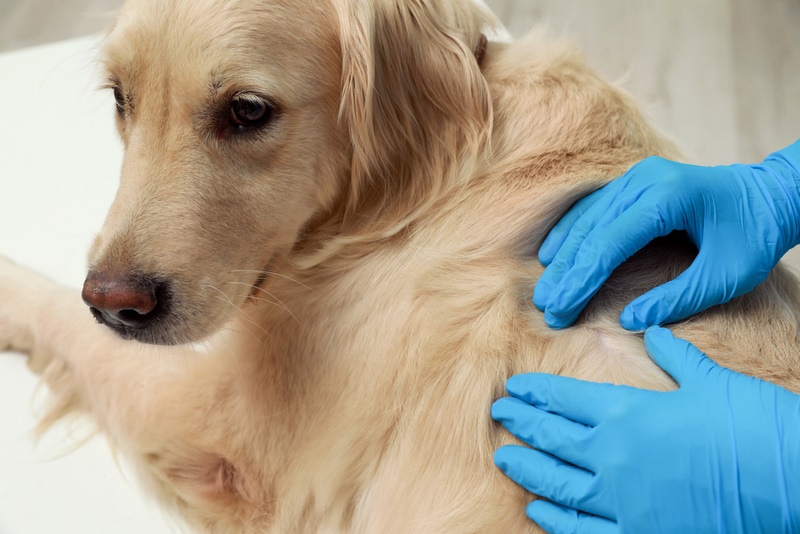
Folliculitis is a common skin condition in which the hairs (follicles) become inflamed. It's caused by certain bacteria and is characterized by the appearance of pustules/papules or pimples around the hair follicles. It causes excessive itching, which leads to intense scratching, irritation, swelling, and hair loss in the affected area.
If your dog shows signs of folliculitis, it's recommended to take them to the veterinarian for a correct diagnosis and adequate treatment.
In this article, you will learn what folliculitis is, its clinical signs and causes, and how to care for a dog with folliculitis.

What Is Folliculitis in Dogs?
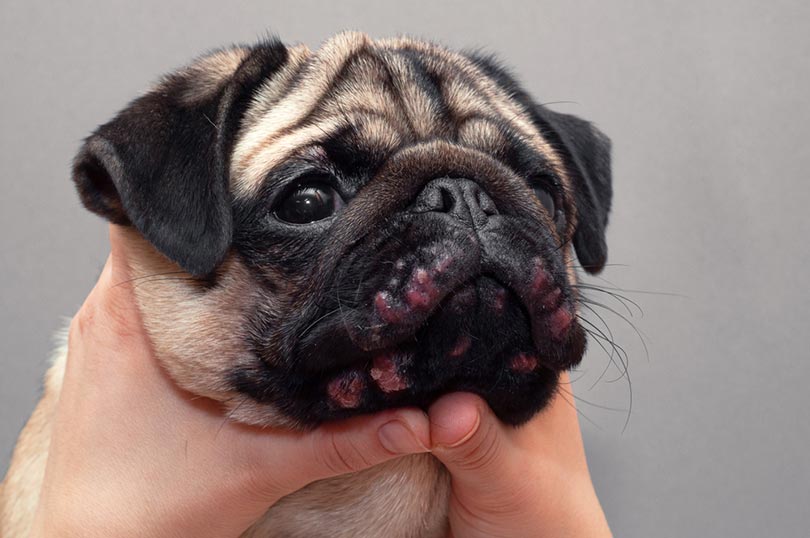
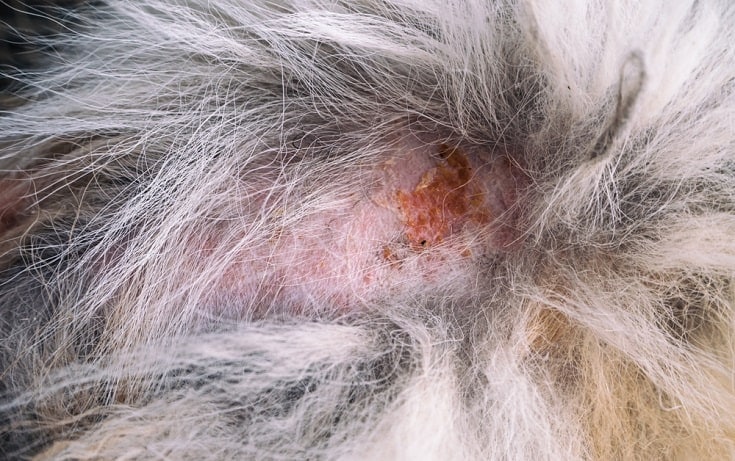
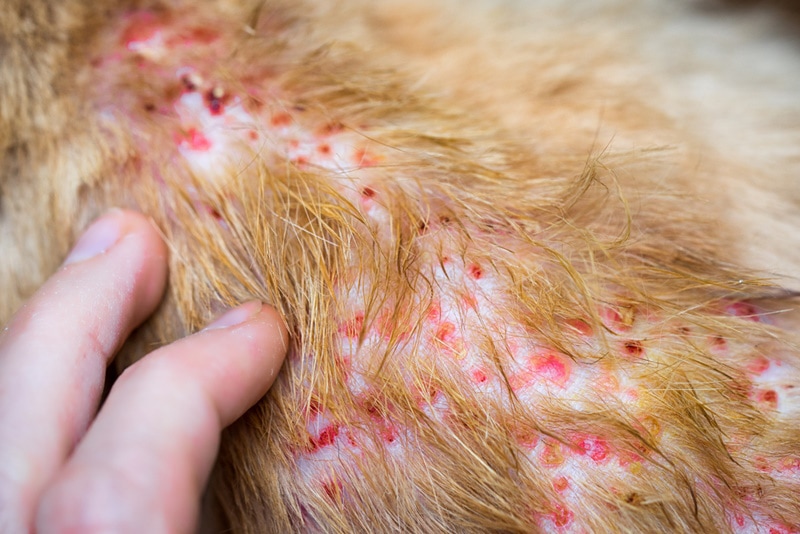
Folliculitis is a dermatological condition characterized by the inflammation of the hair follicles. It's manifested by the appearance of red dots and small visible swellings on the surface of the skin. In some cases, pustules (pimples) with whitish or white-yellow ends filled with pus appear. This condition usually develops when dogs suffer from another condition, such as allergies.
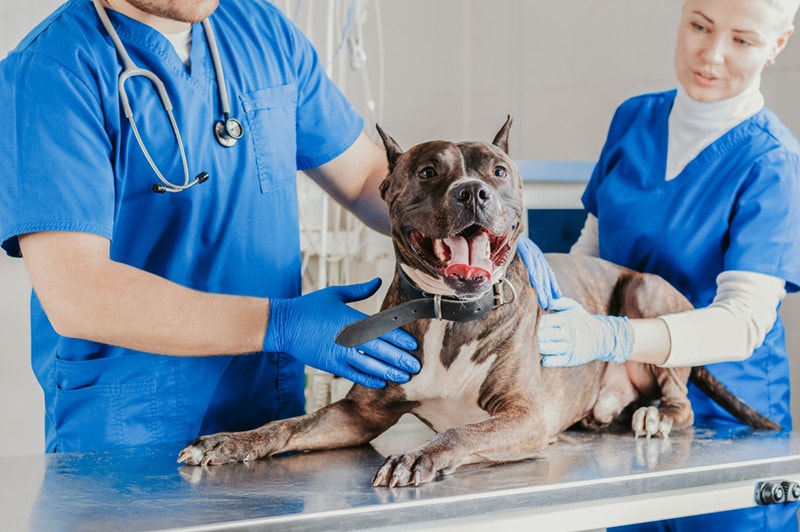
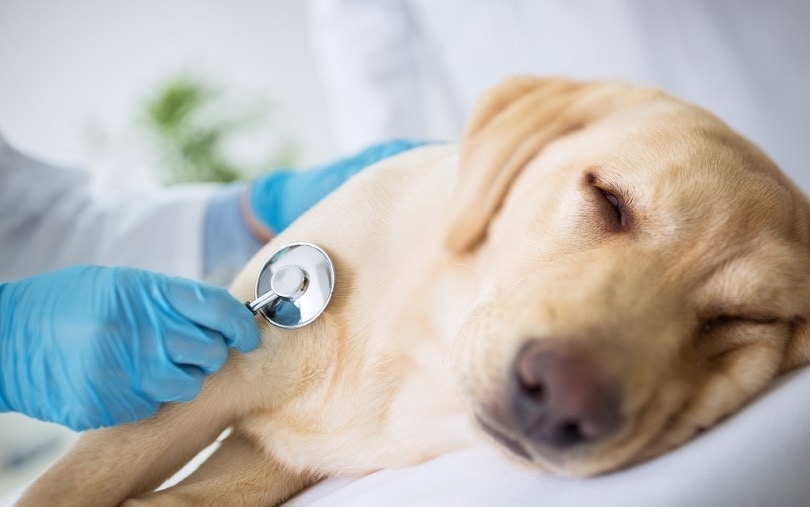
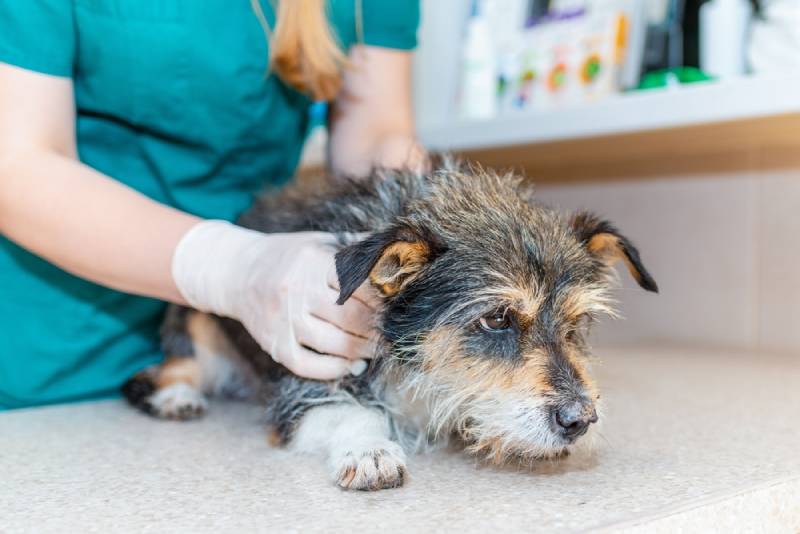
Folliculitis can be diagnosed at a general exam while the vet checks wounds, swellings, and crusts that appear on the surface of the skin. For the successful treatment of folliculitis, the veterinarian will recommend special antiseptic or antibacterial solutions or shampoos, oral antibiotics, or antibacterial ointments to improve your dog's clinical signs. It is also necessary to address and treat the main condition that led to the development of folliculitis.
What Are the Signs of Folliculitis in Dogs?
The clinical signs of folliculitis are specific and can direct the vet immediately to a correct diagnosis. The main signs of folliculitis include:
- Redness
- Swelling
- Hair loss
- Excessive itching and scratching
- Papules/pimples on the skin
- Hyperpigmentation
- Wounds
- Crusts
- Pain in the affected areas
If your dog suffers from folliculitis, small red bumps that look like acne will appear on their skin. These bumps are called papules. When they fill with pus, they are called pustules.
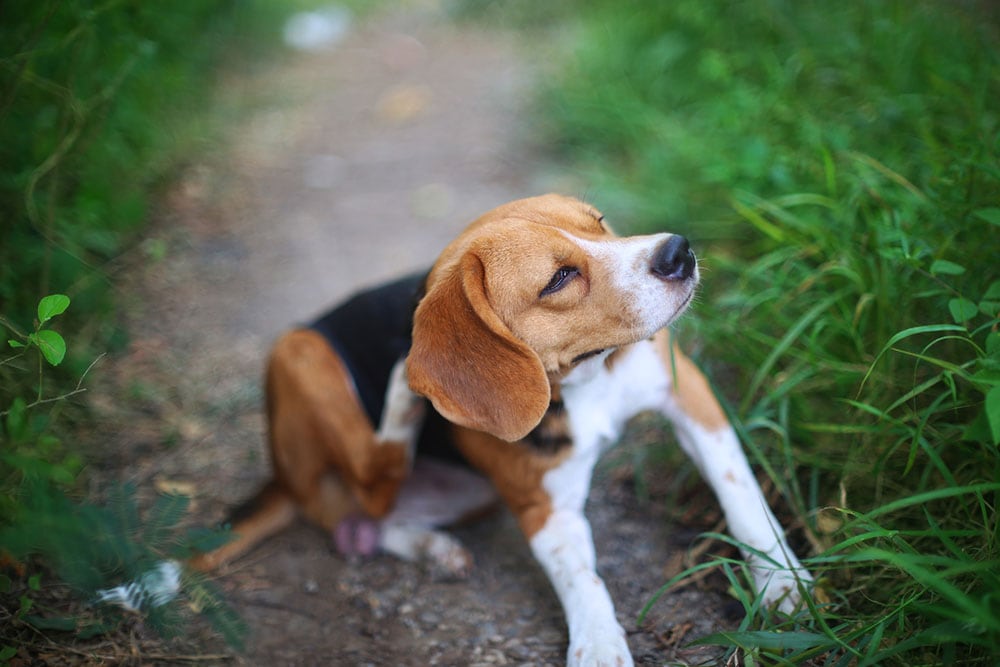
Folliculitis causes excessive itching and pain in the affected area. Due to this, your dog will scratch and bite intensely, which will likely result in hair loss. When the pustules dry up or break due to excessive scratching, open wounds and crusts will occur. The color of the skin in the affected area can also change, becoming darker.
What Are the Causes of Folliculitis in Dogs?
In most cases, folliculitis in dogs is caused by Staphylococcus bacteria. However, it can also occur due to other causes, such as:
- Other bacterial infections
- Viral infections
- Fungal infections, such as ringworm
- Parasites, such as fleas, ticks, or mites
- Trauma to the skin or hair
- Systemic diseases, such as thyroid abnormalities or immune dysfunction
For these reasons, it is recommended to deworm your pet and apply antiparasitic substances for the prevention of fleas and ticks. Your dog can pick up external parasites from the outside environment or other pets. A complete deworming of your pet is recommended, ideally once every 3 to 6 months.
Also, note that certain bacteria naturally coexist on the skin of a healthy dog (e.g., Staphylococcus). But when the immune system is weakened, as happens in the case of allergies, these bacteria multiply in excess and can lead to folliculitis or skin infections.

How Is Folliculitis in Dogs Diagnosed?
The diagnosis is typically established following a medical evaluation, which includes a general examination and a review of the medical history of your dog. Testing may also include a microscopic examination of skin scraping. Through this exam, the veterinarian can see if the folliculitis is caused by parasites, such as mites.
In the case of bacterial or fungal infections, the veterinarian will collect a sample and send it to the laboratory for a bacterial and/or fungal culture. The culture will tell the vet what pathogen they are dealing with. The vet will also collect blood and urine samples to assess if there are any abnormalities in your dog's body.
Since folliculitis can become unbearable for your dog due to excessive itching, it is advisable to see the veterinarian as soon as possible for a correct diagnosis and appropriate treatment.
How Is Folliculitis in Dogs Treated?
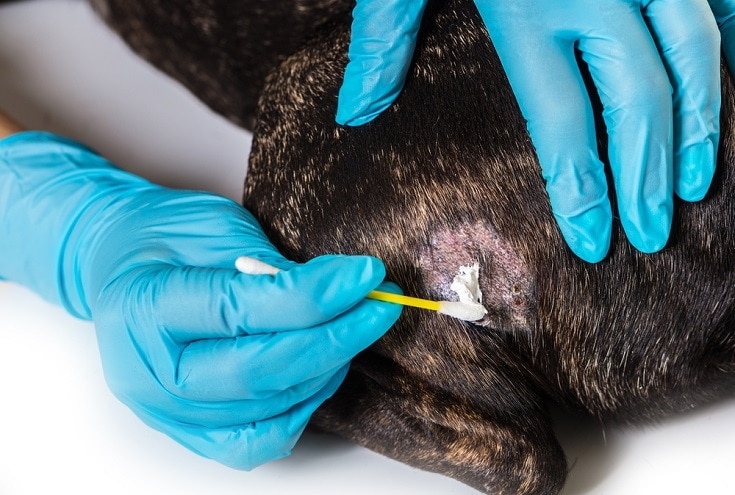
The treatment must be administered on the recommendation of the veterinarian. In most cases, it consists of applying sprays or solutions to the skin and bathing your dog with special shampoos. In the case of bacterial folliculitis, the vet will prescribe oral antibiotics and antibiotic ointments.
Shampoos have the role of improving the clinical signs of folliculitis, such as redness and swelling. The sprays usually contain antibiotics or antifungals and steroids, which have the role of relieving inflammation.
The main condition that led to the development of folliculitis will also be addressed.


How to Prevent Folliculitis in Dogs
It is said that prevention is better than cure, so here is what you need to do to prevent folliculitis:
How Do I Care For a Dog With Folliculitis?
If your dog has been diagnosed with folliculitis, here is what you can do to help them:

Frequently Asked Questions (FAQ)
Does Dog Folliculitis Go Away?
Folliculitis is a skin condition common to dogs, and you should not panic. Although it causes intense itching and discomfort, folliculitis in dogs can be treated. The treatment consists of applying special solutions and ointments with antibiotics on the skin and bathing your dog with certain shampoos. In certain cases, oral antibiotics may also be recommended. To successfully address this condition, take your dog to the veterinarian from the first clinical signs.
How Can I Treat My Dog's Folliculitis at Home?
For the treatment to guarantee healing, it is recommended to contact the veterinarian. However, there are several remedies that you can try at home. These include antibiotic ointments, antibacterial or antifungal shampoos, or supplements with omega-3 fatty acids, which improve skin health. However, if the clinical signs do not improve in a short time, contact the veterinarian.

Conclusion
Folliculitis is a common condition that if properly treated, does not bring significant complications. The process by which small skin irritations appear begins with the infection of the hair follicles. The most common is bacterial folliculitis, which is characterized by the appearance of white bumps filled with pus. Folliculitis causes pain, excessive itching, and discomfort. Your dog will scratch and bite intensely, which will lead to hair loss in the affected areas. Based on the clinical signs and medical history of your dog, the veterinarian will establish the diagnosis. The condition is treatable, and the treatment consists of applying ointments and solutions to your dog's skin, bathing with antiseptic, antibacterial, or antifungal shampoos, and in some cases, administering oral antibiotics.
Featured Image Credit: New Africa, Shutterstock
Get Hepper In Your Inbox


Pet care tips from our vets and experts, straight to your inbox.
You may opt-out at any time. View our Privacy Policy for more information.
Iulia Mihai is a veterinarian with more than 13 years of experience in pet pathology, laboratory, and cancer. She studied at the University of Agronomical Sciences and Veterinary Medicine of Bucharest, Romania Iulia earned a master’s degree in equine and pet pathology and studied epithelial cancer for her Ph.D. Dr. Mihai's passions for internal medicine and parasitology inspired her to volunteer at the faculty’s clinic in her third year of college. She has worked in a couple of veterinary clinics over the years as an internal medicine specialist, and loves to write and educate pet parents about pet nutrition, behavior, and diseases.
Iulia is a passionate veterinarian with a strong affinity for veterinary parasitology, internal medicine, and laboratory. She is excited to share her experience and knowledge with pet owners around the world through her writing and hopes to educate people on pet nutrition, diseases, and behavior.
Education
Iulia graduated from the University of Agronomical Sciences and Veterinary Medicine, Bucharest, Romania, in 2012 and has a Master’s degree in Small Animals and Equines Pathology and is certified in HAACP food safety system implementation. Iulia started her Ph.D. in epithelial cancer in dogs and cats in 2013. Her research is published in national and international veterinary journals.
Experience
Dr. Iulia has been a veterinarian for more than 14 years. She is experienced in animal pathology and laboratory and has experience with exotic animals, such as pet rats and ferrets. She also has skills in the field of clinical pathology, laboratory, microscopy, cancer, and imaging.
Join the conversation
Ask a question, share your story, or send private feedback.