Hepper is reader-supported. When you buy via links on our site, we may earn an affiliate commission at no cost to you. Learn more.
Hair Follicle Tumors in Dogs: Causes, Signs & Treatments (Vet Answer)

In this article
Imagine relaxing on the couch, petting your pup, and feeling something unfamiliar. Is that a lump? Before you panic, it might help to know that 60% to 80% of all skin tumors in dogs are benign (i.e., not cancerous).1 This includes hair follicle tumors, which account for approximately 5% of canine skin tumors.2
However, surgery is often recommended and ideally performed while the tumor is small. Therefore, a good general rule is to have any new lump on your pup checked out by your vet sooner rather than later.

What Are Hair Follicle Tumors?
As their name suggests, hair follicle tumors are tumors arising from hair follicles. Tumors are lumps that form when abnormal cells reproduce in an uncontrolled way, and follicles are pores (openings) in the skin that hair grows from.
Interestingly, our canine friends’ hair follicles are designed differently from ours! Humans generally have singular follicles, meaning each hair grows from its own follicle. Dogs have compound follicles, which contain a primary hair surrounded by up to 15 smaller hairs.
Follicles are actually pretty complicated structures made up of multiple layers of epithelium. Different types of hair follicle tumors arise from different layers.
Examples of hair follicle tumors that occur in dogs are:
- Trichoepithelioma
- Pilomatricoma
- Trichoblastoma
- Infundibular keratinizing acanthoma
Try not to let the big names scare you! As we already mentioned, most hair follicle tumors in dogs are benign and do not pose much of a risk to your dog’s health. Malignant versions of these tumors do exist, but fortunately, they are rare.
What Are the Signs of Hair Follicle Tumors in Dogs?
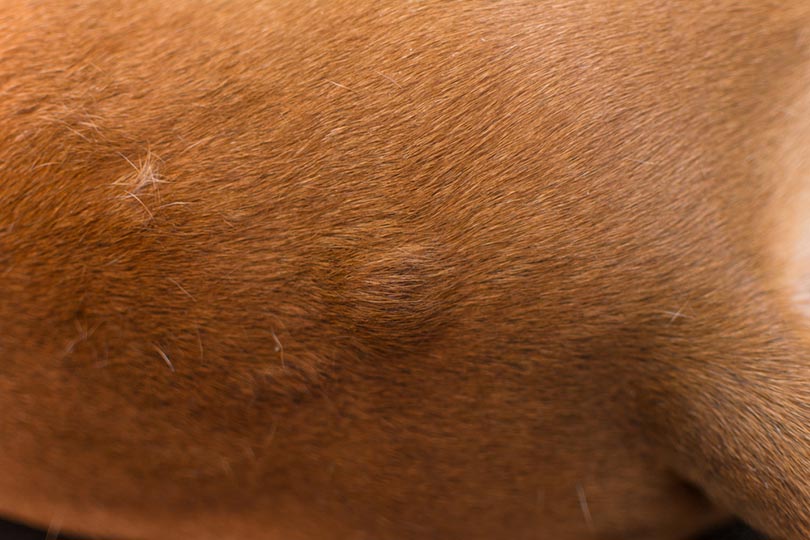
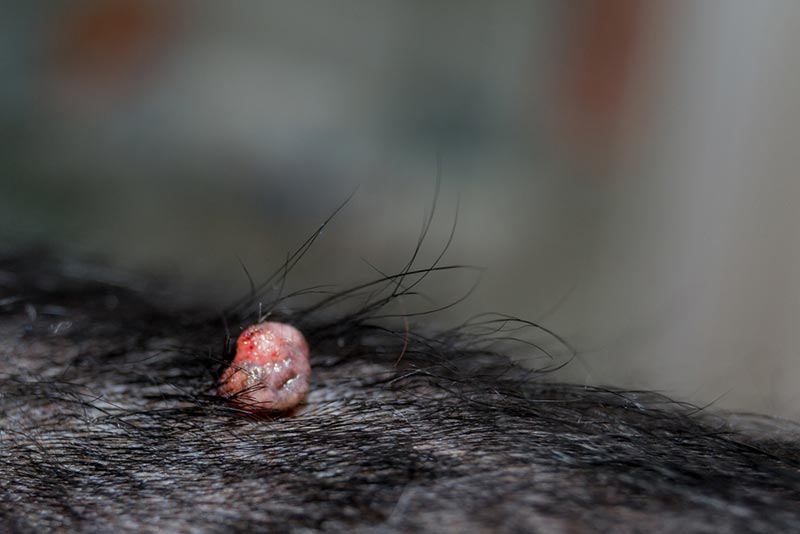
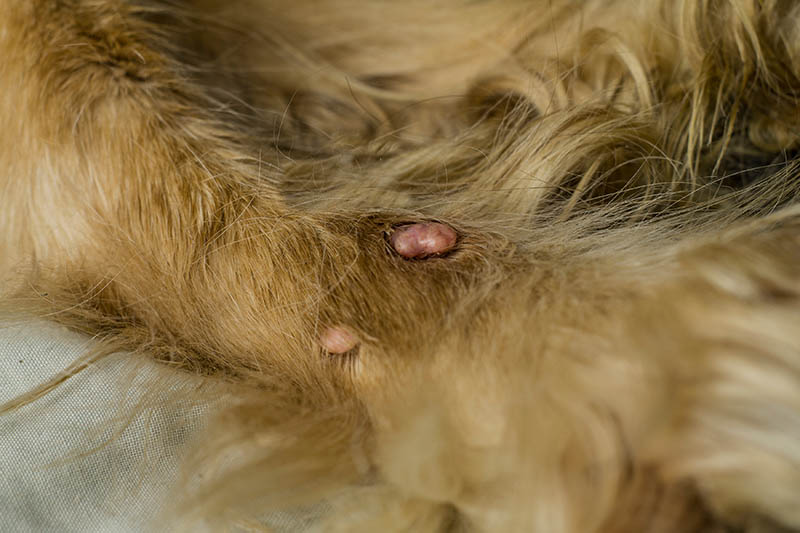
The main sign of a hair follicle tumor is a lump on your pup’s skin. It may be small or large. The skin over the lump might look fairly normal, or it could be discolored, irritated, and raw.
Unfortunately, there’s no “classic” appearance that allows hair follicle tumors to be distinguished from other types of skin tumors based on their appearance.
How Are Hair Follicle Tumors Diagnosed in Dogs?
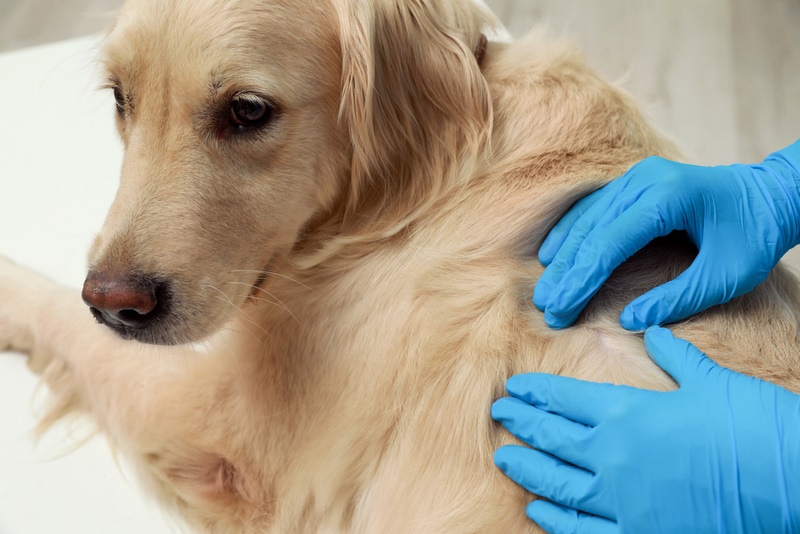
If you find a new lump on your dog’s skin, the best thing to do is schedule an appointment with your veterinarian. Please do not expect that they will be able to determine what the lump is simply by looking at it! Surgical removal of all or part of the tumor for histopathology is needed for an exact diagnosis.
Before surgery, your vet might recommend tests like:
- Impression smear: Gently pressing a glass microscope slide against the surface of the tumor to see what kinds of cells are present (most useful if the skin has broken open)
- Fine needle aspirate (FNA): Using a needle and syringe to try and draw some cells out of the tumor, which can then be examined under a microscope
While these tests may not be able to confirm exactly what type of tumor you are dealing with, they can help determine:
- How urgently you should consider surgery
- How aggressive the surgeon should be about removing surrounding “healthy” tissue along with the tumor to ensure complete excision
After the tumor is removed, your vet can send it to a lab for histopathology. This involves “fixing” the tissue in formalin, slicing it very thinly, and applying special stains before examining it under the microscope. In addition to providing an exact diagnosis, this helps determine whether the tumor is benign or malignant.
In the rare instance that a hair follicle tumor is malignant (i.e., at risk for metastasis), your vet may recommend additional “staging” tests to determine whether cancer cells have spread to other parts of the body. These may include bloodwork, collecting cells from lymph nodes, chest radiographs (x-rays), and abdomen ultrasound.

What Causes Hair Follicle Tumors in Dogs?
Unfortunately, we do not know exactly what causes hair follicle tumors in dogs. As with many other types of tumors, there are likely multiple things that contribute to their development. These probably include genetic, environmental, and lifestyle factors.
Some breeds seem to be predisposed to certain types of hair follicle tumors. Examples are listed below, in no particular order.
Trichoepithelioma
- Bassett Hound
- Bullmastiff
- Golden Retriever
- Irish Setter
- English Springer Spaniel
- Standard Poodle
Pilomatricoma
- Kerry Blue Terrier
- Wheaton Terrier
- Bichon Frise
- Bouvier des Flandre
- Standard Poodle
Trichoblastoma
- Wirehaired Pointing Griffon
- Kerry Blue Terrier
- Wheaton Terrier
Infundibular Keratinizing Acanthoma
- Norwegian Elkhound
- Lhasa Apso
- Belgian Sheepdog
- Bearded Collie
It is important to note that dogs who have had a hair follicle tumor are prone to developing more in the future (even if the first tumor was removed successfully and completely via surgery).
How Do I Care for a Dog With a Hair Follicle Tumor?
The treatment for hair follicle tumors is usually surgical removal. This is best done when the tumor is still small, which increases the likelihood that your vet will be able to remove the tumor completely with clean “margins” (borders of normal, healthy tissue).
In the case of benign hair follicle tumors, surgery is usually all that’s needed. Your veterinarian will send the tumor to a laboratory for histopathology to determine precisely what it is and whether it is benign or malignant.
Rarely, hair follicle tumors can be malignant. They may invade the surrounding tissue or even spread to other parts of the body (metastasize). If your veterinarian determines that your pup’s tumor is malignant, they may refer you to a veterinary oncologist to discuss options for follow-up treatment (like radiation) if it is something you are interested in pursuing.
How Can I Protect My Pup Against Hair Follicle Tumors?
Unfortunately, because we do not know the exact cause of hair follicle tumors in dogs, there is no specific action you can take to prevent your pup from developing them.
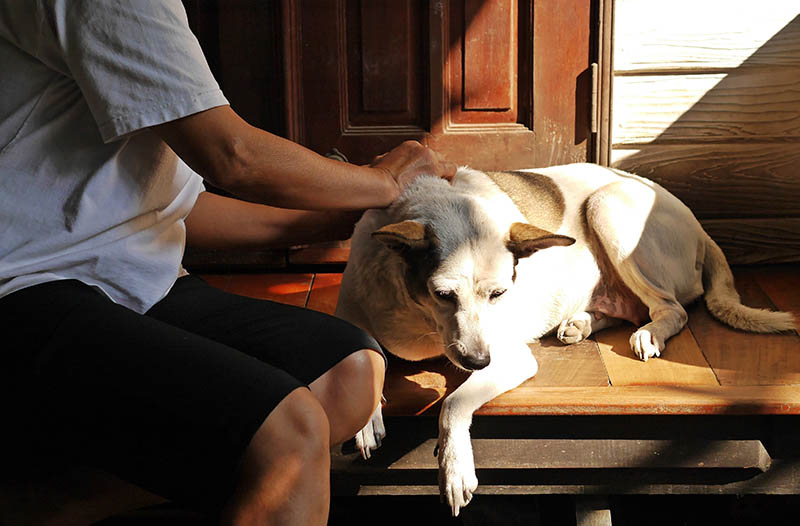
If your pup’s breed is considered at higher risk, it is a good idea to examine their skin regularly for lumps and bumps. If you notice anything new, have it checked out by your vet right away.
Frequently Asked Questions
How Common Are Hair Follicle Tumors in Dogs?
Hair follicle tumors are reported to make up approximately 5% of skin tumors in dogs.
Are Hair Follicle Tumors Painful for Dogs?
Hair follicle tumors do not generally seem to be painful unless the skin becomes raw and open.
What Happens if Hair Follicle Tumors Are Not Treated?
The consequences of not treating a hair follicle tumor depend on whether it is benign or malignant, which, unfortunately, can only be determined by performing histopathology on the tumor after it is surgically removed.
Luckily, most of the tumors are benign and unlikely to affect your pup’s overall health unless the skin breaks open, in which case they may become a source of discomfort and possibly infection.
The rare few that are malignant can potentially cause serious health consequences if they spread to other parts of your dog’s body.
Conclusion
Fortunately, most skin tumors in dogs (including hair follicle tumors) are benign. If you ever notice a new lump on your dog’s skin, we recommend having it checked out by your vet sooner rather than later.
That way, if surgery is recommended, it can happen while the tumor is still small and give your pup the best chance of a complete cure.
Sources
Featured Photo Credit: ARVD73, Shutterstock
Get Hepper In Your Inbox


Pet care tips from our vets and experts, straight to your inbox.
You may opt-out at any time. View our Privacy Policy for more information.
Dr. Sharon (as she is known by her clients) has had an intense love for animals for as long as she can remember. She grew up in Guelph, Ontario and fulfilled her childhood dream by obtaining her Doctor of Veterinary Medicine (DVM) degree from the Ontario Veterinary College in 2009. She has since found joy working in a variety of small animal clinics, focusing on cat and dog care. She loves sharing her expertise and empowering pet owners to take the best possible care of their fur babies!
Sharon currently lives in beautiful British Columbia with her husband, daughter, and Parker, her loveable Great Dane. When she’s not at work, she enjoys clogging, photography, and exploring the outdoors with her family.
Dr. Sharon (as her clients call her), was raised in Guelph, Ontario, and has loved animals for as long as she can remember. She fulfilled her childhood dream when she obtained her Doctor of Veterinary Medicine (DVM) degree. Sharon now lives in British Columbia, Canada with her husband, daughter, and Parker, their loveable Great Dane. When she’s not working, she enjoys clogging, photography, hiking, and camping with her family.
Education
Dr. Sharon obtained her DVM in 2009 from the Ontario Veterinary College in Ontario, Canada.
Experience
Dr. Sharon loves sharing her knowledge and empowering people to take the best possible care of their fur babies, which she has been able to do through her work. She has practiced in a variety of small animal clinics since graduating, with a main focus on cats and dogs.
Check out some of our top posts written by our veterinary team:
Why Does My Dog Snore? Should I Act?
My Cat Ate Paint! Our Vet Explains What to Do Now
How Common is Heartworm in Cats? 7 Things to Know About Heartworm Disease
Join the conversation
Ask a question, share your story, or send private feedback.