Hepper is reader-supported. When you buy via links on our site, we may earn an affiliate commission at no cost to you. Learn more.
How to Read German Shepherd Body Language (9 Signs Explained)
In this article
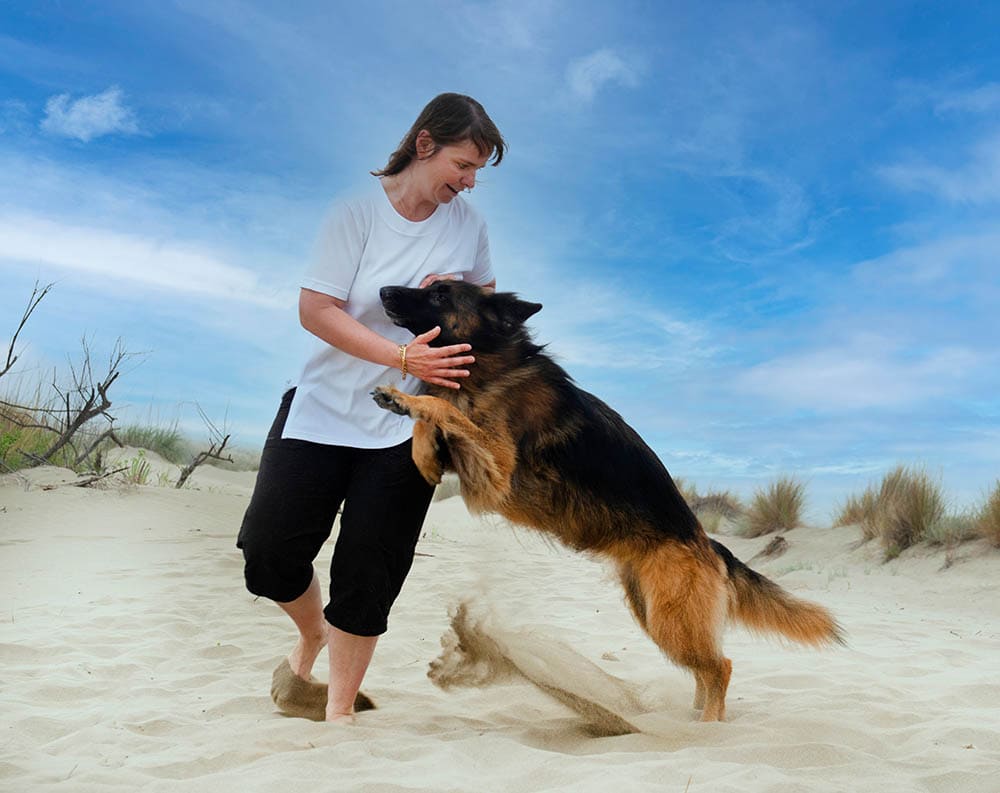
German Shepherds don't communicate with words and phrases like we do, but they have an extensive range of body signs and movements that you can learn to decode to communicate better. Of course, every dog is different, and the time you spend with your pet can help you understand its specifics. This guide covers the most frequent body language among our canine friends, particularly the German Shepherd. It should help you recognize their emotions and requests. So, are you ready to become the next dog whisperer?

Some German Shepherd Body Postures to Know
To begin with, here are some of the most easily recognizable postures in your canine companion:
1. Wants to Play
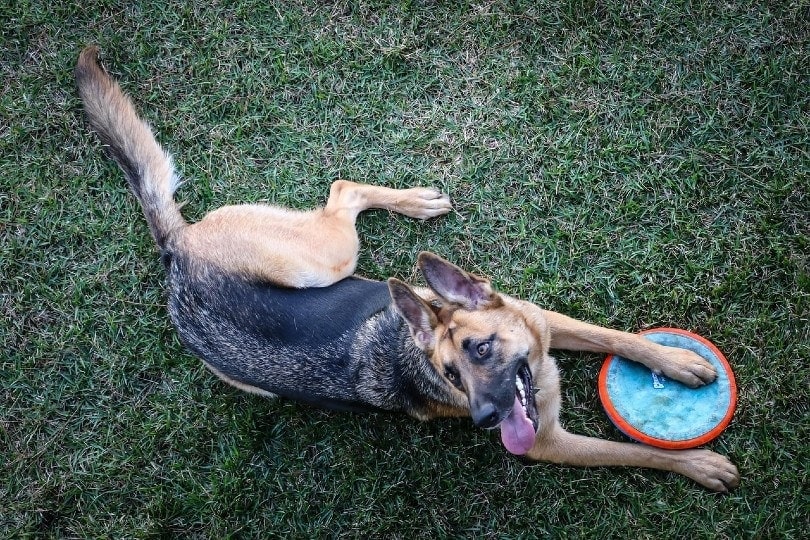
- Their pupils are dilated.
- Their tail is held upwards and wags from side to side.
- Their ears are pricked up.
- Their mouth is often open, tongue hanging out.
- Their front legs are bent, and the front of their body touches the ground.
- Their posterior is raised.
2. Alert
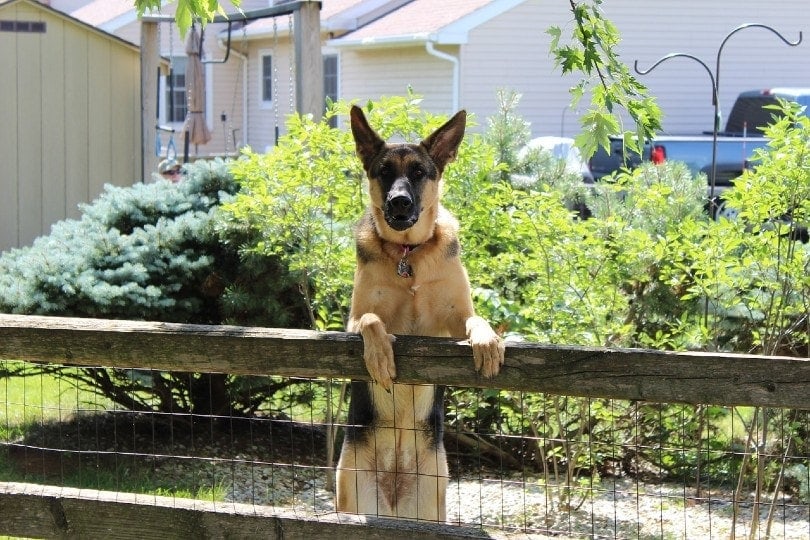
- Their eyes are wide open.
- Their tail is horizontal, in line with the body, and it can wiggle gently from side to side.
- Their ears are pricked up as if trying to get closer to the sound that disturbs them.
- Their mouth is closed.
- Their body is tilted slightly forward, on the tips of their paws.
3. Relaxed
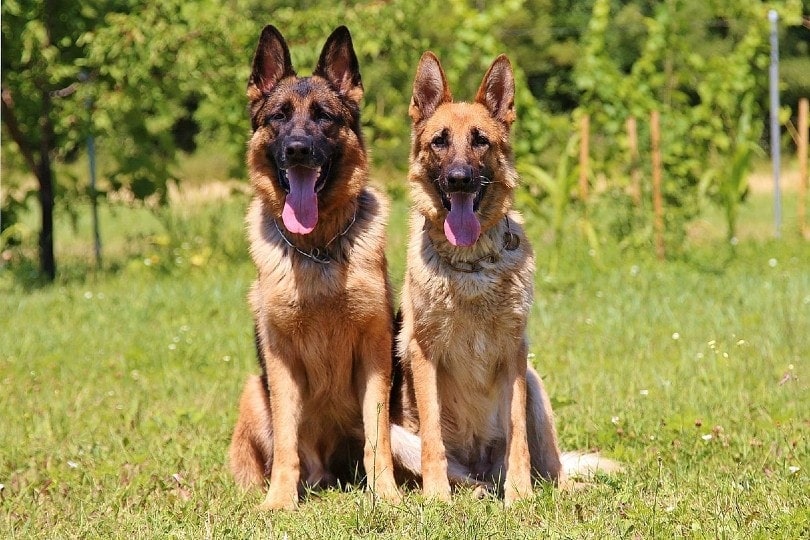
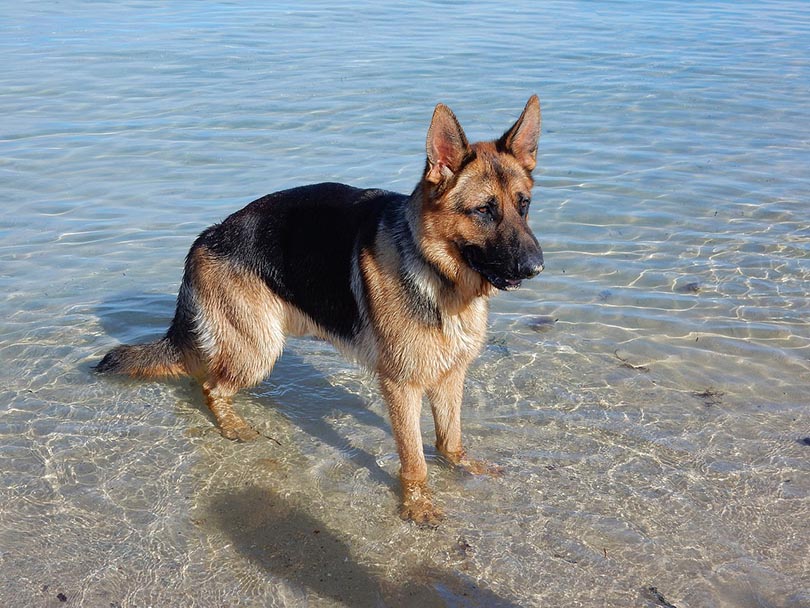
- Their ears are in their natural position.
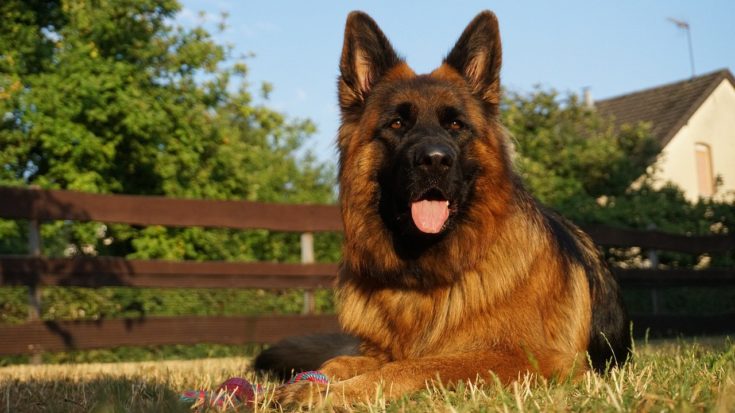
- Their mouth is slightly open, tongue hanging out.
- They hold their head high.
- Their tail is down and it does not wag (or very little).
- They sit flat on their paws.
- They stand up straight without any pressure on their limbs.
4. Afraid
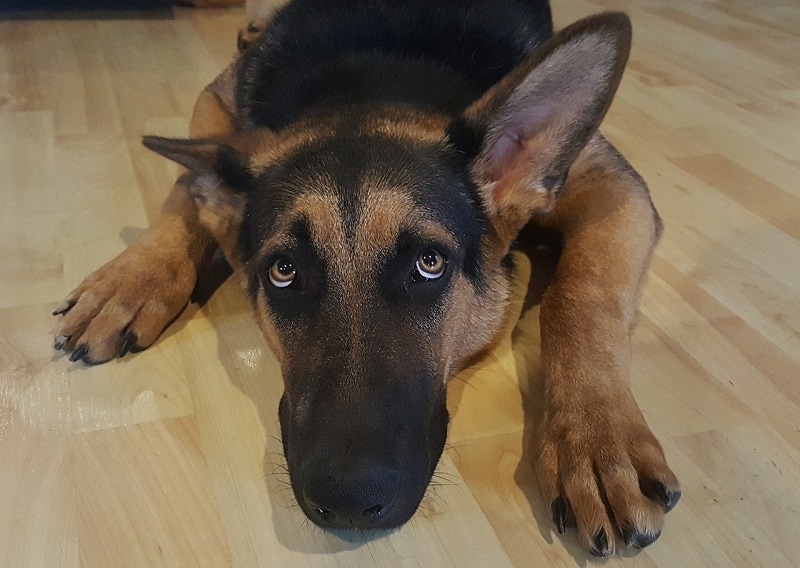
- Their hair stands on end on their back.
- Their pupils are dilated.
- Their tail is between their legs.
- They wrinkle Their muzzle.
- They tuck the corners of their mouth back.
- Their lips are slightly open, and they sometimes bare their teeth.
- Their ears are flattened towards the back of their head.
- Their body is lowered slightly to the ground, as if trying to take up as little space as possible.
5. Getting Aggressive
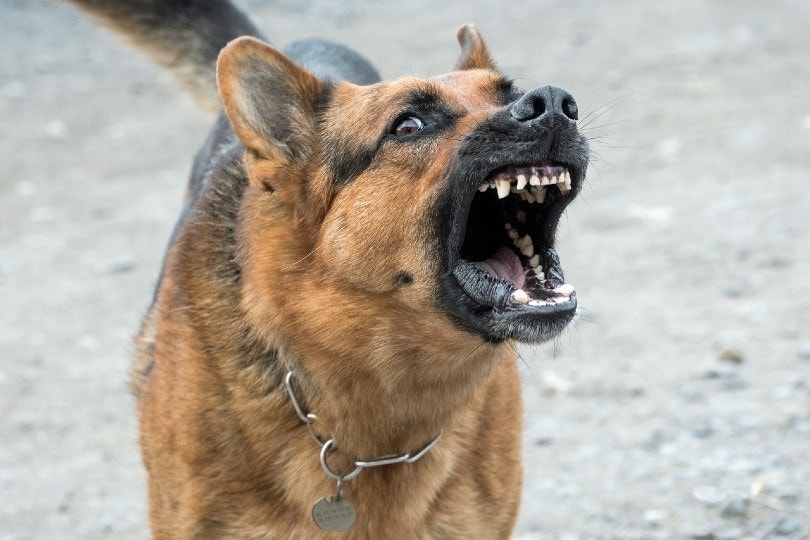
- Their hair stands on end on their back.
- Their tail is pricked back and very stiff. It can sometimes vibrate or move slowly from side to side, always staying stiff.
- Their ears are set apart, forward, and very stiff.
- Their mouth is open, and they show their teeth and gums.
- Their legs are very stiff and tilted slightly forward.
- Their body is also tilted forward.

Additional Signs to Know
Your pup can speak with their entire body, but sometimes, it is only one of their limbs (tail, ears, legs, etc.) that can tell you about their state of mind. Here are a few moves to remember (but there are many more):
6. Tail
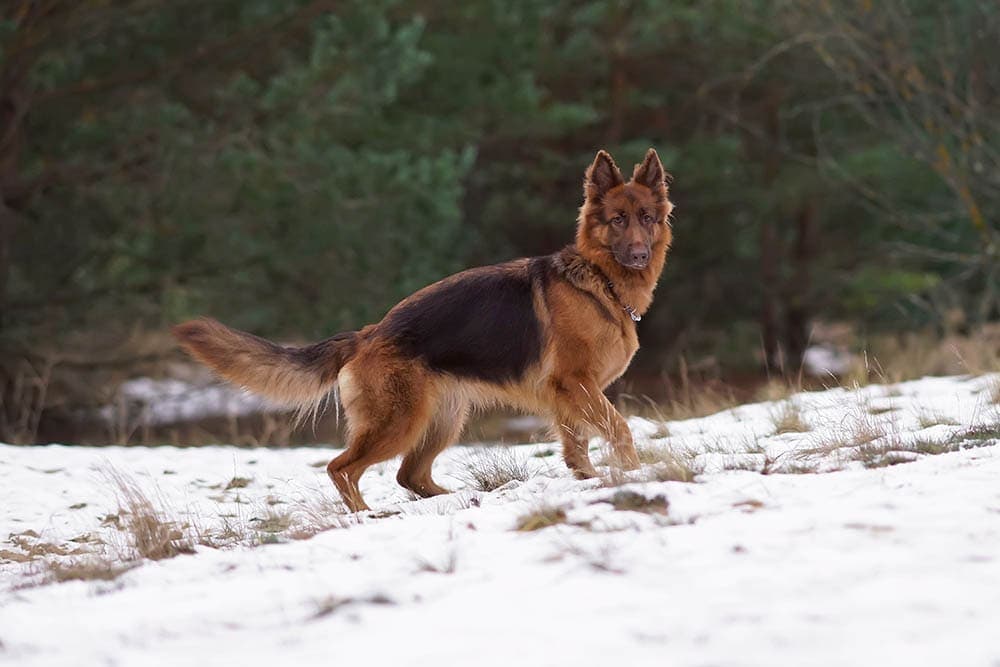
- Stirs slowly, pointing downwards: They have not understood what is expected of them.
- Move very quickly from left to right, directed downwards: They have understood your order and are ready to obey you.
- Stirs uncontrollably in all directions: They are very, very happy!
7. Posture
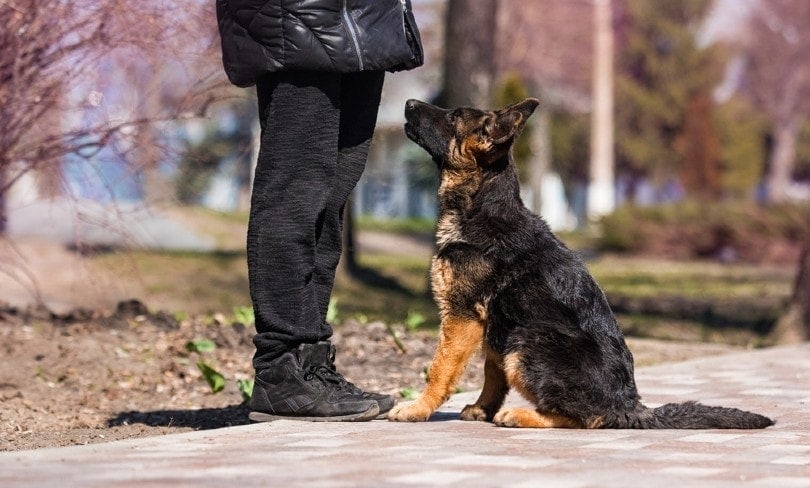
- They lie on their back: They are totally submissive.
- They lift only one paw: They don't quite understand what's going on (or they have sniffed an unfamiliar scent).
- They place their head or paw on you: They demand attention (or a treat).
8. Stare
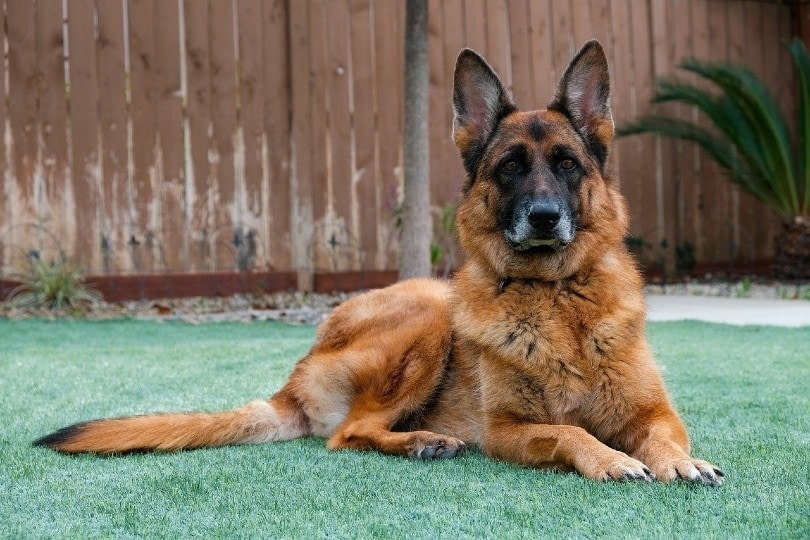
- They repeatedly blinks when looking at something: They want to play with the object in question.
- Their eyes look in all directions, except towards you: They submit, or they have understood their mistake (after a reprimand, for example).
9. Mouth
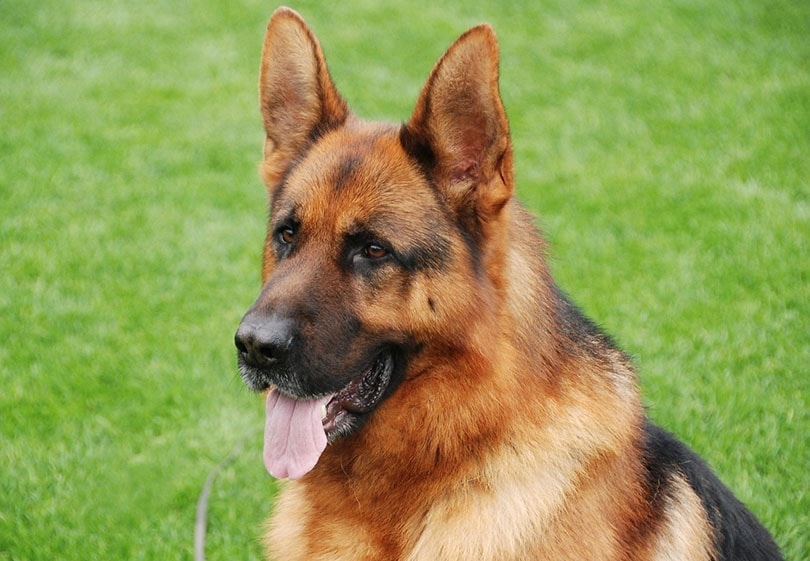
- They yawn: This can be a sign of stress or worry (to be assessed depending on the situation).
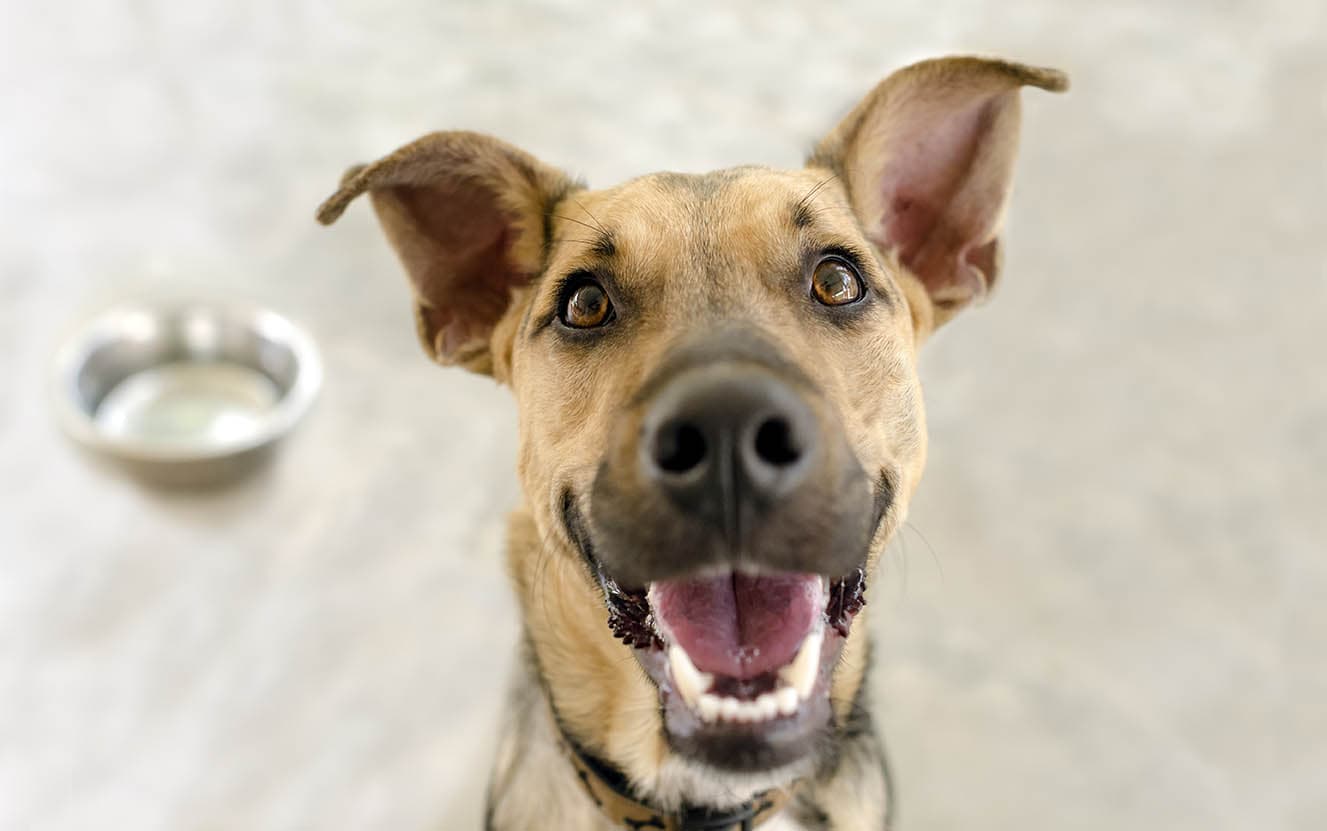
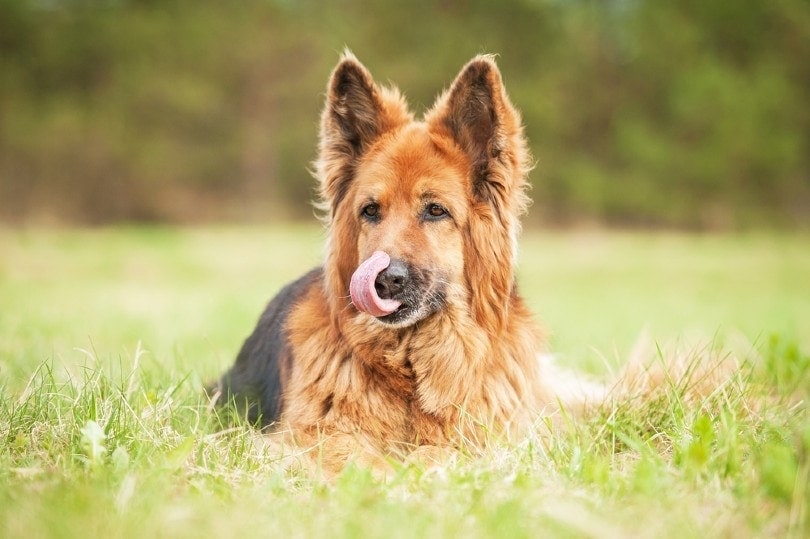
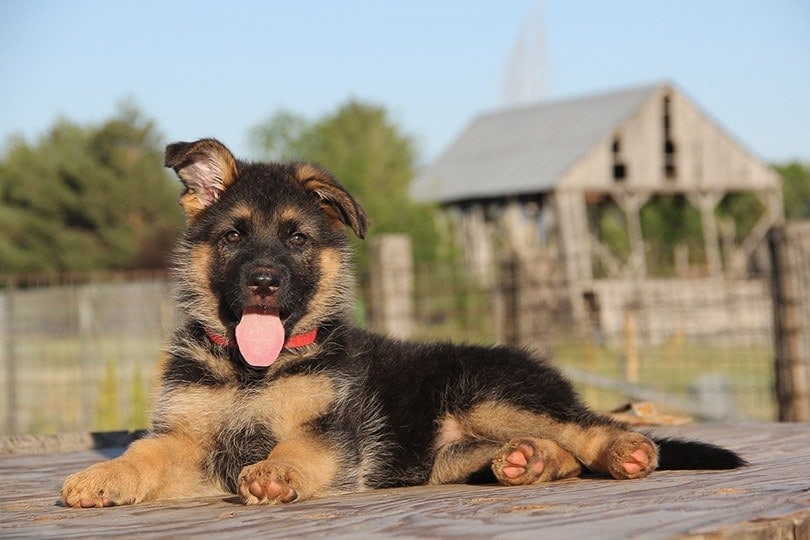
- They look like they're smiling, their tongue sticking out a little: They're happy, or they want to play.
- Closed lips, head tilted slightly forward: They are attentive and interested in what is happening in front of them.
- They lick you: It is a sign of friendship or appeasement. In puppies and young dogs, this can also be a way of letting you know they are hungry.

Bonus: How Your German Shepherd’s Body Language Can Tell You They're in Pain
Observing your German Shepherds body language can also tell you about their health. Obviously, some of these signs aren't hard to spot — if they have a sprained leg, they'll show it by moaning and hopping, just like we would with a sprained ankle. However, non-verbal gestures can be a bit subtle.
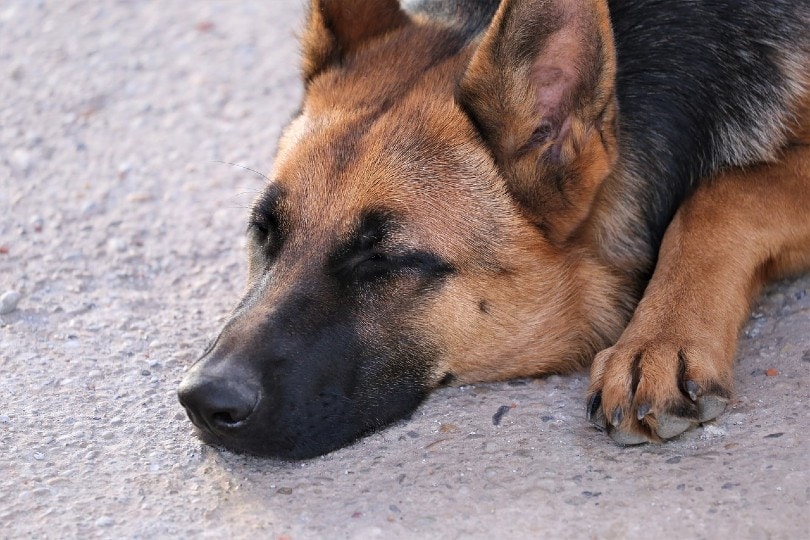
Indeed, if your dog is in pain, they may be showing physical and behavioral signs:
Physical Signs
- Whining: If your dog whines or complains in your presence or when alone and this is not a habit, they may be having pain or discomfort. Some dogs cry out loud in the anguish of the pain.
- Licking: A dog in pain will tend to lick the limb or the part of their body that is painful. This attitude, often overly compulsive, is meant to be calming. If you notice this behavior, check that your animal is not injured. If there are no outward signs, the pain may be internal, or they may even have obsessive compulsive disorder (OCD).
- Restlessness: A dog in pain doesn't always know what position to sit in. They tend to get up, lie down, or sit down, changing their position regularly, as if they were looking for the one that causes them the least amount of pain.
- Whale eyes: If your dog is ill, their gaze changes and expresses their suffering. They have a sad look and can have red eyes or dilated pupils. Also, they may rub their eyes or try to close them.
- Gasping: If your dog starts to pant excessively, they may be suffering from internal pain in their lungs or heart or have a feeling of poor breathing.
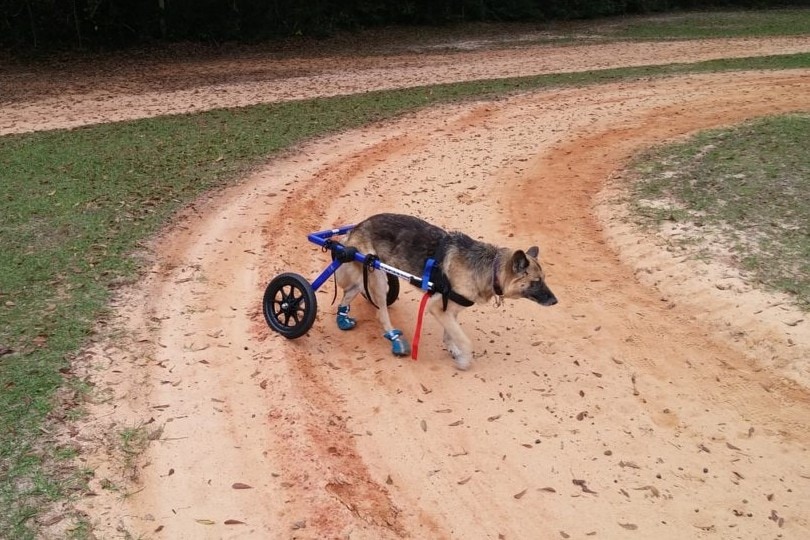
- Limping: If your pet limps, it is a sign of pain in a limb. Limping can be due to pain or a fracture, but also to the formation of bone cancer or osteosarcoma.
- Low tail: A dog in pain will tend to keep their tail and head down.
Behavioral Signs
- Fatigue and lethargy: If your pet is in pain, they may appear downhearted or tired. They can be prostrate, isolate themself in a quiet and secluded place or, on the contrary, constantly solicit your attention.
- Loss of appetite: If your dog sulks at their bowl or refuses to eat, this is a worrying sign, especially if it is their usual diet that they enjoy. This loss of appetite can have many origins, such as stress or worry about a change, or it can result from pain or illness that prevents them from moving around or having enough to eat.
- Aggression and irritability: A dog in pain may refuse to be approached or touched. If this happens suddenly when it is not normal for your pet, you need to be concerned. Your dog may also growl to show you that they are refusing contact because of the pain. They may also refuse to go out, follow you, or play.
What to Do When These Signs Appear
Don't let the pain set in. If your dog is not used to complaining or if you find that their behavior is suddenly changing, you need to take action because a dog is much more resilient than humans. If in pain, it is because they are in more pain than we could endure.
The first thing to do is to consult your veterinarian. The specialist will seek to effectively relieve pain for the comfort and well-being of the animal but also to determine its origin. This is because dogs can be in pain from an injury or a fracture and from illness.

Final Thoughts
Obviously, your German Shepherd also communicates through their voice: barking, whining, growling, and other howls can tell you what they're feeling. It is through patience and time that you will learn to decipher their language perfectly, or almost. And after a few years in their company, you will have no secrets from each other!
Featured Image Credit: TanyaCPhotography, Shutterstock
Get Hepper In Your Inbox


Pet care tips from our vets and experts, straight to your inbox.
You may opt-out at any time. View our Privacy Policy for more information.

Genevieve, a biologist and science writer, who harbors a profound affection for capuchin monkeys, pumas, and kangaroos. This passion has led her to travel extensively, volunteering and working at wildlife rehabilitation centers in Bolivia, Guatemala, Canada, and Australia. Now residing in Argentina as a Canadian expat, Genevieve enjoys the view of horses and cows greeting her from the vast plains outside her home office window. She proudly cares for three rescued dogs—Lemmy, Nala, and Pochi—and a playful kitten named Furiosa. Sharing her extensive knowledge and love for animals brings her immense joy and fulfillment.
Join the conversation
Ask a question, share your story, or send private feedback.