Hepper is reader-supported. When you buy via links on our site, we may earn an affiliate commission at no cost to you. Learn more.
Guinea Pig Eye Infection: Vet-Approved Signs, Causes, & Treatment


In this article
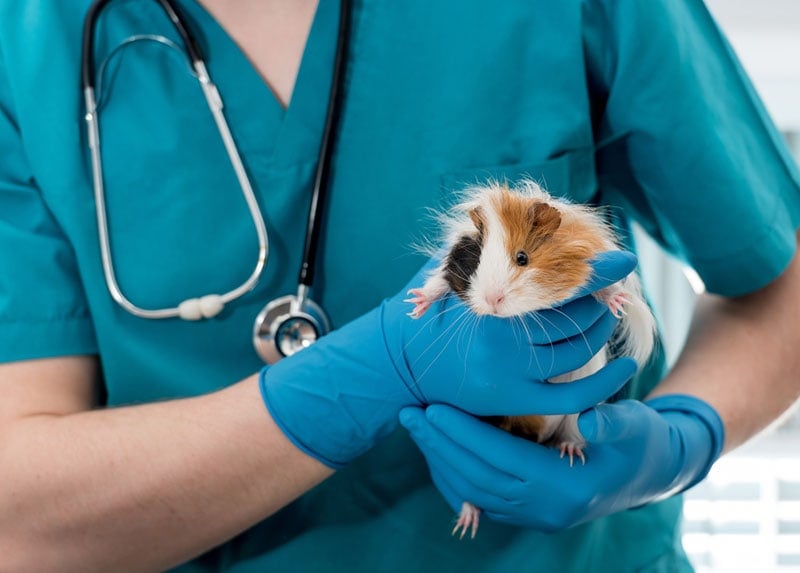
Guinea Pigs are prey animals which means they will usually try to hide any signs of illness or infection, which can make it very difficult to identify or diagnose illness. However, eye infections are usually quite easy to identify. Signs usually include squinting or closing of the eye, red eyes, inflammation, and eye discharge.
Guinea Pigs are prone to eye infections which can be caused by hay poke, bacterial or fungal infections, and even dental problems. Oral antibiotics and eye ointments are the most common treatment options. If you do believe your piggy has an eye infection, it is important to get them to the vet as soon as possible so they can decide on the best course of action.
Read on for more details about types, causes, and possible treatments for Guinea Pig eye infections.

What Is Guinea Pig Eye Infection?
Infections occur when some kind of microorganism enters and causes harm to the body. In the case of Guinea Pig eye infections, bacteria or fungus can get into the eye or near the eye and cause damage ranging from swelling to ulcers. Guinea Pigs are quite prone to eye infections and there are several known causes. While most infections are not normally serious, they should be checked promptly to avoid the infection getting worse and leading to serious eye defects.
What Are the Signs of Guinea Pig Eye Infection?
Signs of an eye infection can vary according to the type, cause, and severity, but may include some or all of the following:
- Cloudy eyes – Cloudy or milky eyes can be a sign of corneal ulcers, which are typically caused by some kind of trauma (being poked with a piece of hay, for example).
- Discharge – Ocular discharge can be yellow or green in color and while it might be a sign of conjunctivitis, it could be something more serious so you should get it checked out as soon as possible.
- Watery eyes – Watery eyes are not necessarily a sign of infection. Your piggy may have rubbed their eye or caught it on a piece of straw. However, it could also be a sign of infection, especially if accompanied by other signs.
- Closed eyes – If your Guinea Pig has one or both eyes closed, this usually indicates considerable pain, or it may indicate inflammation of or around the eye.
- Crusty eyes – Crusty eyes are a sign of infection, and the crust is usually formed by a discharge that has dried. The crust may be hard, or it may be sticky.
- Red around the eyes – As well as the eyes themselves, eye infections can affect the area immediately around the eyes, including causing swelling and reddening of the area.
What Are the Causes of Guinea Pig Eye Infection?
Sore eyes and some of the signs above can be caused by a foreign object like dust, dirt, or hay getting stuck in the eye. This can cause watering, which is the eye’s natural defense and an attempt to wash the object out of the eye, and it can lead to inflammation. If the object causes damage to the eye, it can also lead to infection.
Other possible causes include:
How Do I Care for a Guinea Pig with an Eye Infection?
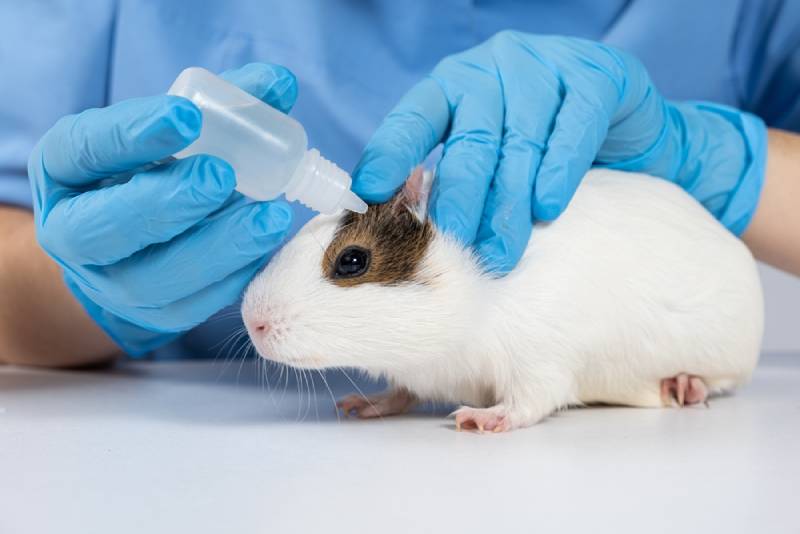
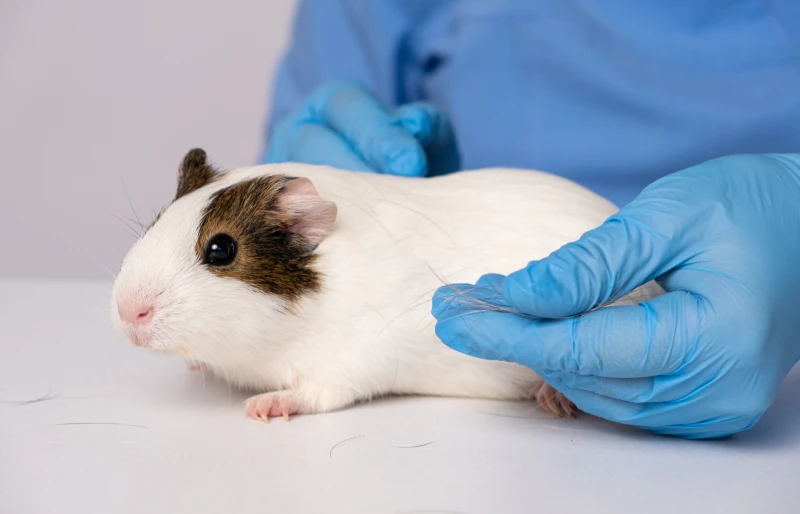
Monitor your Guinea Pig to see whether the signs get worse, improve, or change, and contact a vet. The problem may be minor, but if it is a serious problem and you wait before speaking to a vet, it could lead to long-term damage. Treatment will depend on the type and cause of infection.
Minor and simple bacterial and fungal infections can sometimes be treated by applying eyedrop medication. Ulcers can be treated with a combination of eye ointment and antibiotics, but if it is a bad ulcer, your Guinea Pig may have to undergo an operation under a general anesthetic. For dental and respiratory problems, the underlying cause of the infection needs to be determined and treated. This could mean the surgical treatment of a tooth, for example, before treating the infection with antibiotics.
It isn’t possible to avoid all possible causes of eye infections, but you can take some steps to help reduce the risks. Ensure you clean out your Cavie’s cage frequently and make sure that you break up any fights if you have two or more Guinea Pigs living together and sharing a cage. Also, ensure that you take your piggy to the vet if they are showing signs of possible infection because it is easier to treat during the early stages of infection.
Frequently Asked Questions (FAQs)
Can You Use Salt Water for a Guinea Pig Eye Infection?
You should always seek veterinary assistance for eye problems, as soon as possible. If your vet recommends using salt water to wash the eye, you can purchase sterile saline or add 1 teaspoon of salt per liter of water and use a syringe or dropper to carefully wash the eye and under the eyelid. This can help remove any foreign object that is caught in the eye and can help the natural moistening of the eye, too.
Can You Use Optrex Eye Drops on Guinea Pigs?
Unless your vet recommends using Optrex eye drops, we wouldn’t recommend using them. Optrex is designed primarily for human use and not specifically for Guinea Pigs so it could do more harm than good.
Why Does My Guinea Pig Have a Gunky Eye?
Conjunctivitis is the most common cause of watery eyes, and it can cause discharge which, when it dries, gets gunky or crusty. Conjunctivitis is relatively easy to treat, and your vet will probably recommend that you take your Guinea Pig in to have them check the eye and prescribe the necessary treatment.
Conclusion
Guinea Pigs are prone to eye infections and other eye problems. These can range from bacterial infections to corneal ulcers or tumors. They can be caused by foreign objects in the eye or even dental or respiratory problems. Treatment varies according to the type and cause of infection but will usually include antibiotics, ointment, or removing the foreign material and leaving it to recover.
You should seek veterinary advice as soon as possible with eye complaints because if it is something serious and you don’t get the right treatment, it could cause lasting and irreparable damage.
Related Read: Do Guinea Pigs Have Eyelids? Eye Anatomy Explained
Sources
Featured Image Credit: Garna Zarina, Shutterstock
Get Hepper In Your Inbox


Pet care tips from our vets and experts, straight to your inbox.
You may opt-out at any time. View our Privacy Policy for more information.
Nicole is a lover of animals of all sizes but is especially fascinated with the feline variety. She’s the proud mom of Baby, a Burmese, and works every day so he can relax in the sunshine or by the fire. She’s always had a cat in her home and has spent countless days with others, observing behaviors and softening up even the grouchiest of the lot. Nicole wants to share her kitty expertise with you so you and your cat can live happy, healthy, and care-free.
Join the conversation
Ask a question, share your story, or send private feedback.