Hepper is reader-supported. When you buy via links on our site, we may earn an affiliate commission at no cost to you. Learn more.
Turtle Eyes: 5 Common Health Issues to Watch Out For (Vet Answer)

In this article
Turtles keep a lot of their body out of sight from us. When we need to know if something is up with them, we rely on signs of issues with the body parts we can access. One of the most common spots a turtle owner will see a problem with is their turtle’s eyes, but just because it seems like something is wrong doesn’t mean we know what the issue is, at least not without a little help.

Signs of an Eye Issue in Turtles
Eye issues with turtles often start with swollen eyelids. The eye itself may become cloudy or have discharge, and the turtle may be squinting or holding it closed entirely. Eye discharge may be clear, white, green, or even red; if it dried, there could be significant crusting around the eye.
Sometimes it may seem like the eye's surface isn’t smooth, almost like there’s a divot. The eye may become small, large, or protrude abnormally.
Turtles having trouble with their eyes often also have nasal discharge or lesions in their mouth that may look red or even bleed. Their appetite can wane, as can their energy levels.
Turtles in pain often hide, spending more time in their shells and hideaways, doing their best to protect themselves while trying to heal.
The 5 Common Turtle Eye Issues
1. Infection
Eye infections may be bacterial, viral, or fungal in nature. Each tends toward some signs more than others, but you can't tell the difference from the signs alone. A turtle with swollen eyelids, cloudy eyes, or eye discharge may very well have an infection, and you should reach out to a veterinarian if you see this.
The vet can take a culture swab sample from your turtle to find out what type of infection they have and then start the appropriate treatment. Antibiotics are used for bacterial infections, antivirals for viral infections, and antifungals for fungal infections.
Fungal or viral infections frequently lead to secondary bacterial infections, so more than one treatment type might be needed.
Antivirals aren't quite as effective as antibiotics and antifungals, but luckily supportive treatment usually helps a turtle overcome these infections with time.
2. Vitamin A Deficiency
Also known as hypovitaminosis A, vitamin A deficiency is quite common in turtles. The hallmark sign of this is swollen eyelids, and it may be present at the same time as many other eye issues since it tends to be the underlying cause of other eye diseases. Eye discharge, lethargy, discharge from the mouth, and abscesses are all also signs of this issue.
The source of a vitamin A deficiency for turtles is poor diet. Low-quality or expired commercial turtle diets, fruit and veggie options that aren’t nutritionally balanced, or only feeding meats can all lead to low vitamin A levels in a turtle.
Adjusting your turtle’s diet to get it back on track can help heal their eyes in mild cases. In most cases, a veterinarian is needed to check for signs of secondary bacterial infections and to potentially give an injection of vitamin A for better results.
3. Trauma
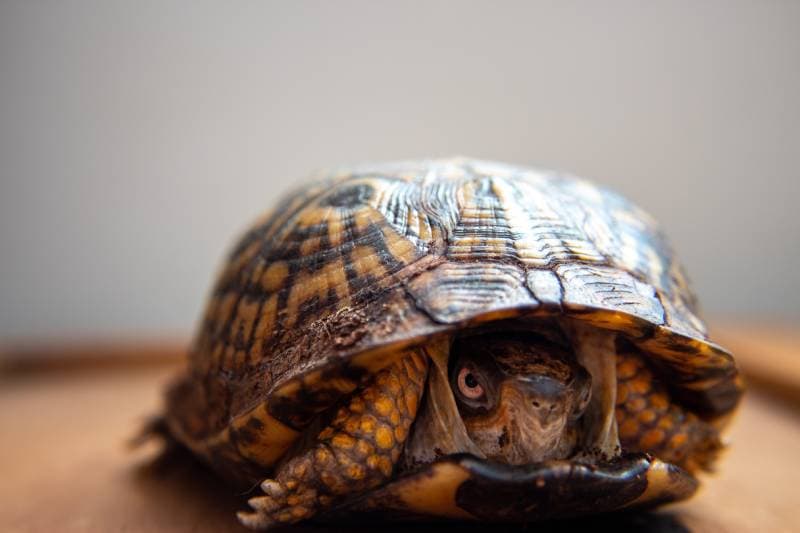
Turtles rely on their sight for hunting and movement more than anything else. This, unfortunately, also means they tend to lead with their head when they find something of interest. Accidentally hitting the eye with protruding items in their enclosure isn’t an uncommon issue.
If a turtle has trauma to the eye, something called a corneal ulcer can develop. This is a defect of the surface of the eye globe, and if it isn’t treated in an appropriate and timely manner, this defect can get deeper, potentially even leading to the rupture of the eyeball.
Even if you can’t see a defect on the surface of the eye, other signs of a corneal ulcer include squinting the eye, discharge, and cloudiness.
A veterinarian can use a special, non-painful eye stain to confirm the presence of a corneal ulcer and then prescribe appropriate eye drops to fix it.
Other more significant eye traumas may have bleeding in the area or abnormal positioning of the eye. Depending on the severity, some eyes can still be treated; others may need to be removed, so it’s best to have this assessed with a vet as soon as you realize something has happened to the eye.
4. Poor Water Quality
For aquatic turtles, if there’s a problem with their eyes, there’s almost always a problem with their water. If it isn’t being cleaned properly, through either a filter or water changes, holds spoiled food, isn’t the right temperature, doesn’t have the right parameters such as removing chlorine, and more, the water will then proceed to stress the turtle.
A stressed turtle undergoes immunosuppression and becomes predisposed to infections. They can go off food, become lethargic, and develop eyelid swelling or any other signs of infection.
As soon as you notice an eye issue with your aquatic turtle, it’s time to perform a water change and critically assess if their tank water is optimal for their health. If they improve after the water change, then you’re good to go. If a secondary issue has set in, they may still need assistance from a veterinarian to heal back up.
5. Abscesses
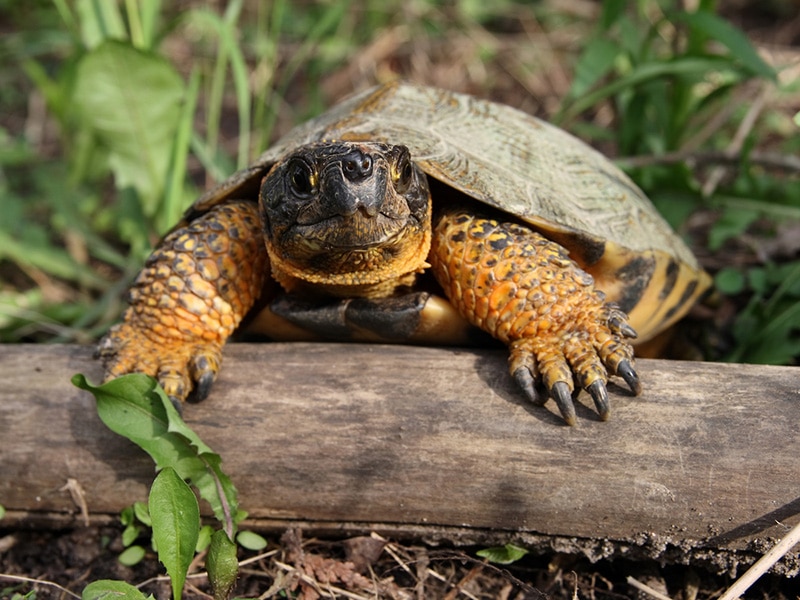
An abscess is an encapsulated collection of bacteria and dead white blood cells. In people, that collection of nasty gunk is usually pus, but in reptiles, including turtles, their abscesses contain caseous material, which is a thick, white to yellow, cottage cheese-type consistency.
In mammals, we have an enzyme that can break down the contents of an abscess and reabsorb it. In reptiles, they lack this enzyme. Instead, to get rid of an abscess, it must be cut open and emptied surgically.
Abscesses affecting the eyes in turtles will most commonly be ear abscesses. Low vitamin A levels and poor water quality increase the chances of a turtle developing an ear abscess. This abscess grows behind the eye and can cause the eyelids to swell and the eye to bulge.
Abscesses related to the tissues immediately behind and associated with the eye are also possible though less common.
Even after emptying the abscess, most turtles will also need to take antibiotics for a couple weeks, and the underlying cause will need to be corrected.

How Do I Care for a Turtle With Eye Issues?
Regardless of the cause, there are three things you should do as soon as you notice a problem with your turtle’s eyes.
Treatment for eye issues may include oral medications or eye drops, more frequent water changes, diet adjustments, stress relief, surgery, and more. Depending on the diagnosis, your veterinary team will provide you with everything you need to know about your next steps.

Frequently Asked Questions (FAQs)
Can I use human eye drops on my turtle?
While many prescription-level human eye drops are also used for turtles, few over-the-counter options are safe. Additionally, specific eye drops treat specific conditions, and sometimes using the wrong one can make things a lot worse, so never use human eye drops without consulting a veterinarian first.
How do I give my turtle vitamin A?
For general upkeep, dark, leafy greens are a great source of vitamin A that should be a regular part of a turtle’s diet.
Why are my turtle’s eyes red and puffy?
This can happen for many reasons but is usually due to vitamin A deficiency or an eye infection.
Conclusion
Even though turtle eye issues are common, the good news is they’re usually treatable. The most common causes of eye issues are poor water quality and vitamin A deficiency from diet-related nutritional deficiencies, so always check in on the husbandry for your turtle first if you notice an issue.
Safe medication for eye problems in turtles usually needs to come from a veterinarian, so be sure to reach out if your turtle shows signs of eye disease.
Featured Image Credit: DAndreev, Shutterstock
Get Hepper In Your Inbox


Pet care tips from our vets and experts, straight to your inbox.
You may opt-out at any time. View our Privacy Policy for more information.
Dr. Maria Zayas writes for Hepper, sharing practical advice and expert insight for cat owners.
Join the conversation
Ask a question, share your story, or send private feedback.