Hepper is reader-supported. When you buy via links on our site, we may earn an affiliate commission at no cost to you. Learn more.
How Do Cats Jump So High? Exploring Their Physiology (Vet-Verified)


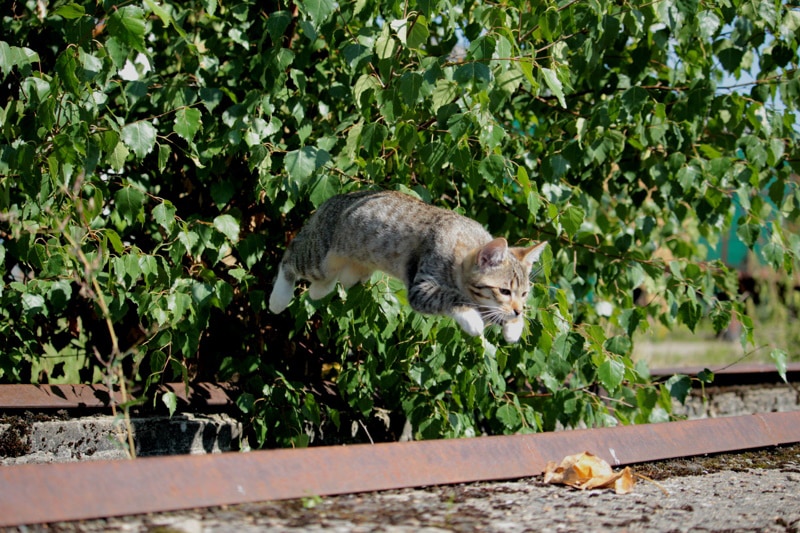
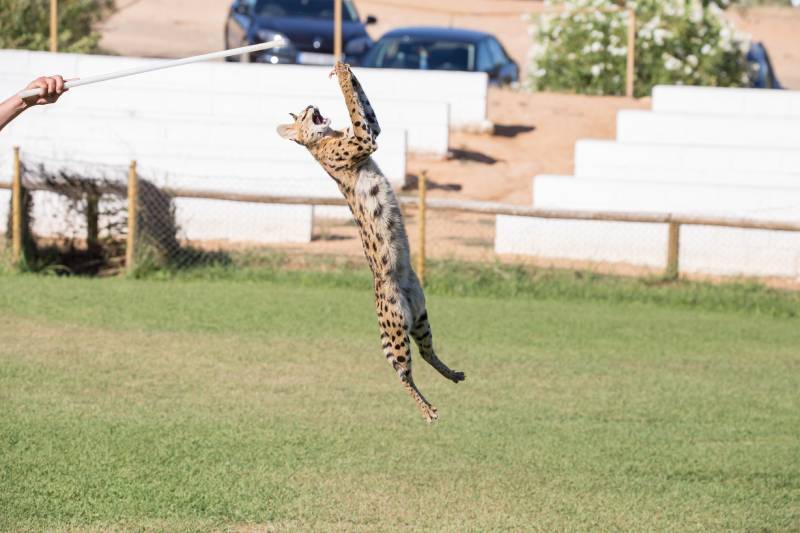
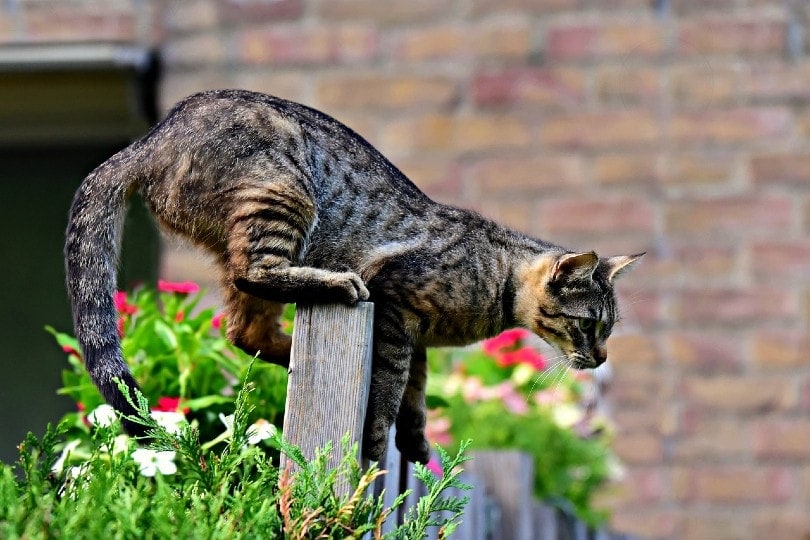
In the animal kingdom, cats stand out for their impressive ability to jump high and far. They can leap up to six times their body height in one bound and can reach heights of over five feet. But how do they manage to achieve such amazing feats? The primary factor in a cat’s jumping abilities is the strength and power of its muscles.

The Physiology Behind a Cat’s Incredible Jumping Ability
To understand how cats jump so high, we must first explore the unique physiology that makes it possible. It’s rather remarkable when you learn of everything that goes into a cat’s impressive agility.
Muscles
Most mammals have muscles composed of two different types of fibers. These are slow-twitch fibers and fast-twitch fibers.
Slow-twitch muscle fibers, or Type I fibers as they are commonly known, power endurance activities like running and climbing. Fast-twitch or Type II muscle fibers, on the other hand, are used for short bursts of strength, such as sprinting and jumping.
Cats have a high proportion of fast-twitch muscles compared to other animals, which gives them excellent physical abilities.1
But it’s not solely the type of muscles; it’s how many. Cats have more than 500 muscles in their body.2 If that weren’t impressive enough, cats use these numerous muscles when they jump. So, it’s not surprising that cats can leap as high and as far as they do!
Bones
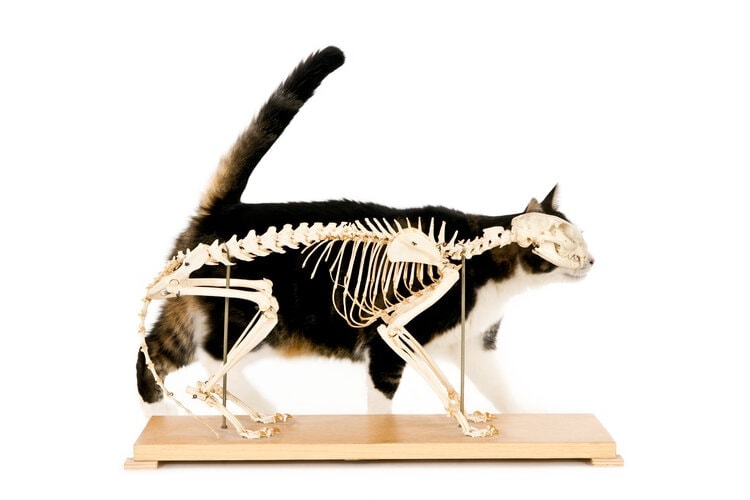
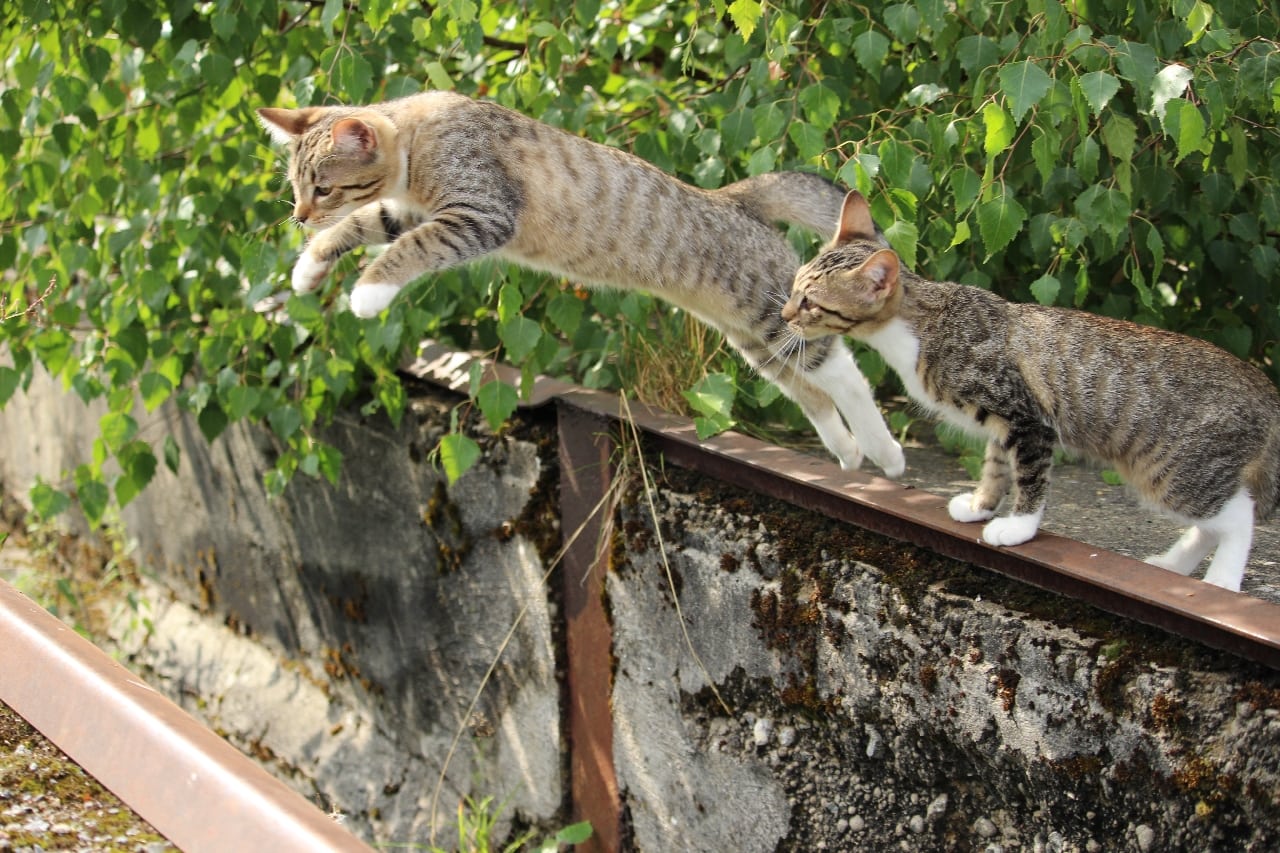
Another important factor contributing to a cat’s leaping prowess is its bone structure. Unlike humans, cats have incredibly flexible spines, which allow them to extend far beyond their normal range of motion when they jump.
This flexibility helps them avoid strain on the spine during long jumps, enabling them to gain maximum height with each leap rather than spreading the impact out amongst multiple smaller jumps.
In addition to this flexibility, cats also possess shorter and lighter bones when compared to humans and other animals; this reduces inertia, which allows the cat greater control over its movements while in midair and further enhances its overall jumping capability.
Tendons
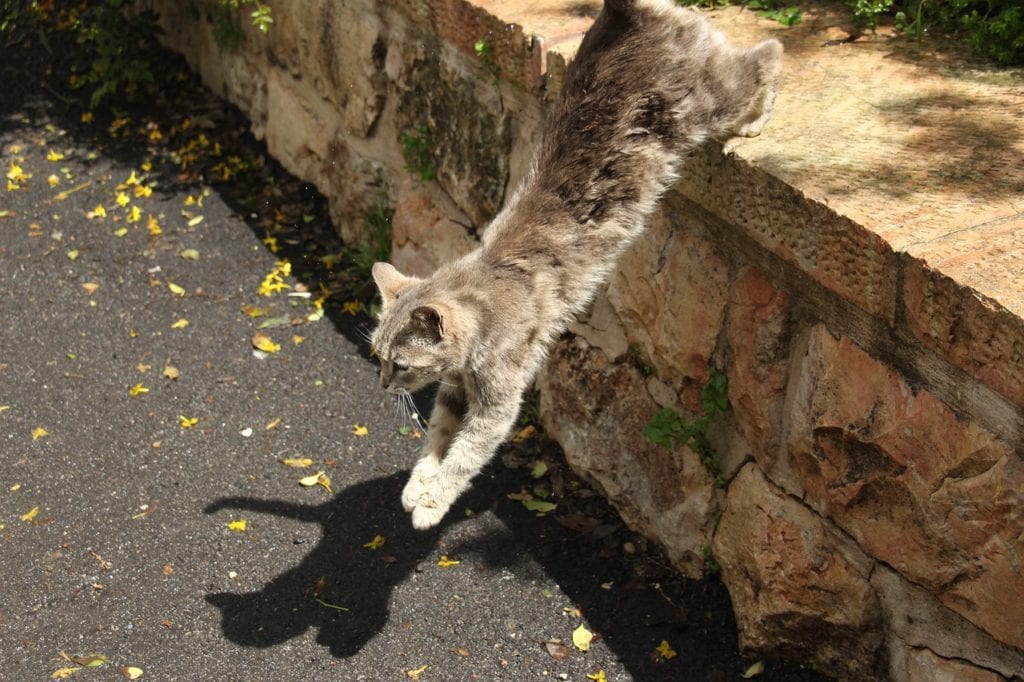
Finally, cats’ tendons help contribute to their excellent jumping performance as well. For instance, a cat’s Achilles tendon stores elastic energy and helps propel the cat upward during a jump.
This gives them extra flexibility when taking long strides or leaping from higher ground into lower ground, allowing them to cushion the impact on their legs after landing from extreme heights and distances with ease.
Taken together, these structural adaptations give cats some of the strongest jumping capabilities in the animal kingdom, enabling them not only to safely travel through difficult terrain but also to escape from predators who might be chasing after them!
Whether you’re a cat lover or simply interested in animal physiology, it’s clear that understanding how cats manage such incredible feats can teach us a great deal about both feline anatomy and our own knowledge about physical mechanics.
Essential Cat Care Tips for Your Feline Friend
Taking care of a cat can be both enjoyable and rewarding, but it’s important to make sure your feline friend is safe and healthy. Here are some essential tips for cat care:
By following these simple guidelines, you will ensure that your cat stays healthy, happy, and safe all year round!
Conclusion
Thanks to their anatomy of muscles, bones, and tendons, cats can launch themselves into the air with extraordinary capabilities. This facilitates them to extend far beyond what is considered normal for most creatures—a feat that never ceases to amaze onlookers!
“Sources”
Featured Image Credit: Piqsels
Get Hepper In Your Inbox


Pet care tips from our vets and experts, straight to your inbox.
You may opt-out at any time. View our Privacy Policy for more information.
Nicole is a lover of animals of all sizes but is especially fascinated with the feline variety. She’s the proud mom of Baby, a Burmese, and works every day so he can relax in the sunshine or by the fire. She’s always had a cat in her home and has spent countless days with others, observing behaviors and softening up even the grouchiest of the lot. Nicole wants to share her kitty expertise with you so you and your cat can live happy, healthy, and care-free.
Join the conversation
Ask a question, share your story, or send private feedback.