Hepper is reader-supported. When you buy via links on our site, we may earn an affiliate commission at no cost to you. Learn more.
How Far Can Cats Fall Without Hurting Themselves? Vet-Reviewed Facts & FAQ



In this article
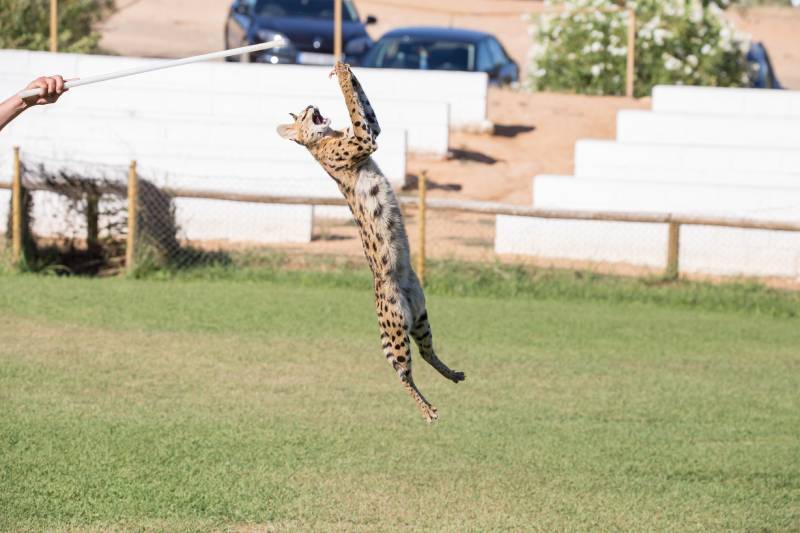
If you’re a cat owner, you are likely familiar with cats jumping and climbing as high as they can go. The higher the better for some cats. You may have even seen a cat misjudge a jump and fall, landing, and walking away unscathed. We’ve all heard the saying, “Cats always land on their feet.” But is this really true? How high is too high for cats to fall before they get hurt?
It’s important to note that this is something that should never be tested by you. Do not ever push or drop your cat to see how far they can fall. This article will explain everything you need to know. When cats fall, they can right themselves so that they can land with minimal injuries. Being dropped or pushed doesn’t give them that opportunity. You could seriously injure or kill your cat.

Feline High-Rise Syndrome
Each time a cat falls from any distance, they are at risk of getting hurt. Most people assume that cats can fall from any height and be fine, always landing on their feet. This isn’t true.
However, cats do possess the ability to land on their feet in many cases. Even if they do, they can still suffer other injuries, such as broken jaws, teeth, and limbs. Surviving the fall doesn't mean they will walk away unharmed. There are cases where cats don’t survive the falls, as well.
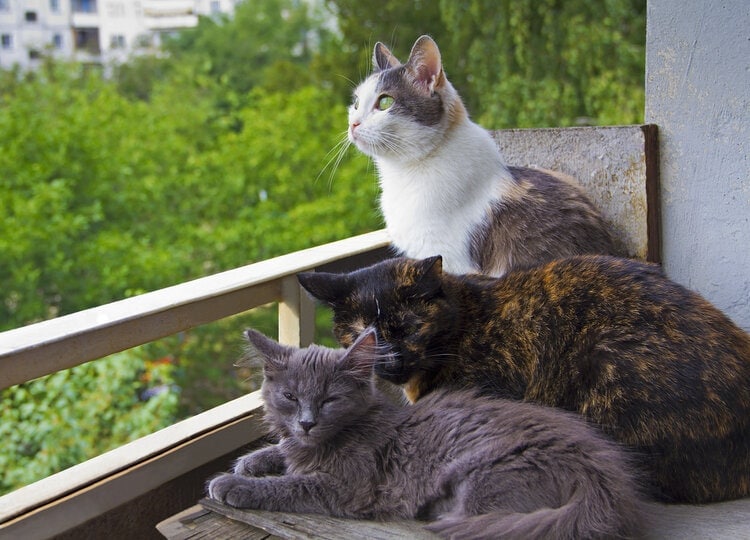
Feline High-Rise Syndrome is the phenomenon and set of injuries cats can suffer when they fall from great heights. This is usually seen when cats fall from open windows in high-rise buildings. Cats enjoy lounging on windowsills. If the window is open and there is a faulty or missing screen, cats can easily fall out. Cats that live in apartments with balconies or unscreened windows are the most at risk.
Righting Reflex
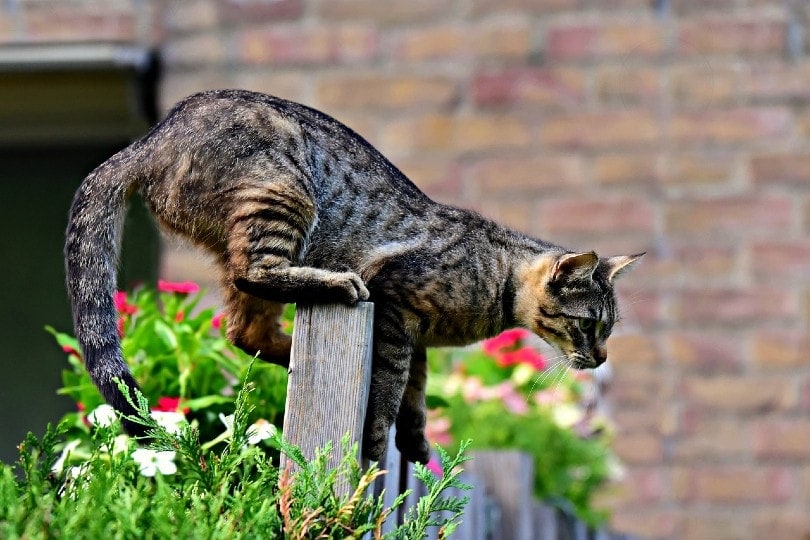
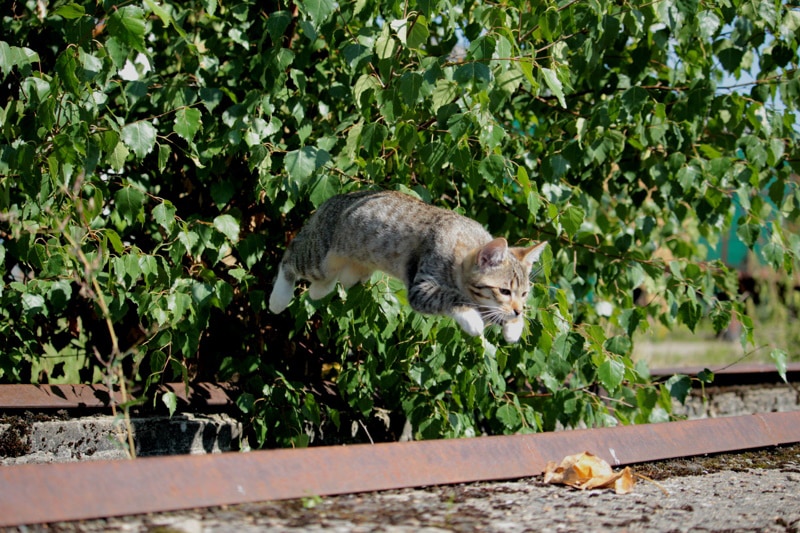
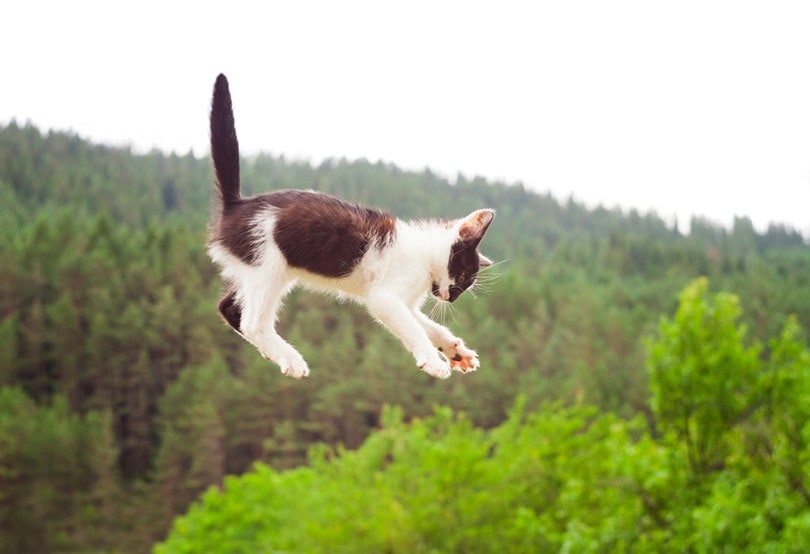
Cats possess a righting reflex which allows them to twist and align their bodies during a fall. When cats choose to jump down from a great height, like a counter or the top of their cat tree, they make it look easy. They gracefully leap and then land on their feet.
When cats jump or fall, they use their sight and balance system to rotate their upper bodies to face downward. The rest of their body follows and they can twist and maneuver in a matter of seconds during a fall to ensure the least amount of injury to themselves. This is the Righting Reflex.
Cats have a balancing system in their inner ears known as a vestibular apparatus. This enables them to determine which direction they’re facing while in the air. In addition to the righting reflex, cats have light bone structures and bodies covered in thick fur that can slow their fall and cushion their impact.
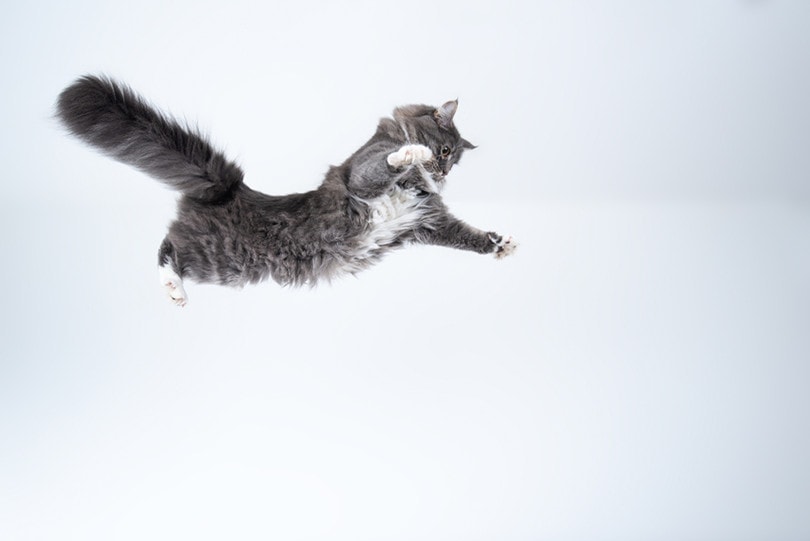
Some cats can flatten themselves out, creating a parachute effect that slows their fall even more.
Righting Reflex Process
The righting reflex happens quickly. If you see it, you may not even notice what’s happening. Here’s the process of the righting reflex during a cat’s fall.
While this process may occur, it doesn’t always guarantee a cat won’t be injured. The distance the cat fell and the cat’s condition at the time of the fall will affect the outcome.
How Far Can a Cat Fall Without Injury?
A study from the Journal of the American Veterinary Medical Association suggests that in falls of more than seven stories, cats have a lower injury rate. It studied 132 cats over 5 months that suffered from High-Rise Syndrome. While 90% of these cats survived their falls, 37% of them required emergency life-saving treatment.
The study states that cats have more time during a fall over seven stories for their righting reflex to kick in and help them land. Falls less than seven stories can result in more injuries with less time for the cat to land properly.
However, a 2001 study showed more severe injuries with falls over seven stories, but there was still a high survival rate overall.
Falling in the Home
When cats fall in the home, perhaps from a counter or refrigerator, this isn’t likely to injure them. It can happen, depending on how they fall and their landing surface, so you should always check to make sure your cat is okay. Watch for limping, trouble breathing, or behavioral changes that could indicate injury.
Typical house cats can leap about 8 feet. If they fall from this height, they shouldn’t suffer any extreme injuries. Always monitor your cat after a fall to see if they are showing any painful signs.
Falling From a Balcony
If a cat falls from a second-floor balcony, the risk for injury increases. However, there are reports of cats falling from greater heights and surviving without serious injuries. A 16-year-old cat fell 20 stories without breaking a bone. He was unconscious but survived. Stories like this don’t always mean every cat will be as lucky.
Falling From a High Rise
Falls from high rises are always dangerous for your cat or any other animal. But cats have more time to use their righting reflex during longer falls than shorter ones, giving them a higher chance of survival. The cat can relax, spread their limbs, and prepare for impact.
Even if the cat lands on their feet, they are still at risk for internal injuries and shock. They are more likely to survive the fall, but it doesn’t mean they will always walk away without any damage.
Which Cats Are the Most Vulnerable?
Healthy, active, and young cats are the most likely to survive falls from any distance. Overweight, older cats are more at risk for injuries because they can’t use their righting reflex quickly enough. Senior cats and kittens also have weaker bones, making them vulnerable to impacts.
Landing surfaces make a difference in the cat's survival rate, as well. Softer surfaces give them more of a cushion. Bushes or trees that break their fall could be what saves their lives.

Are Cats Scared of Heights?
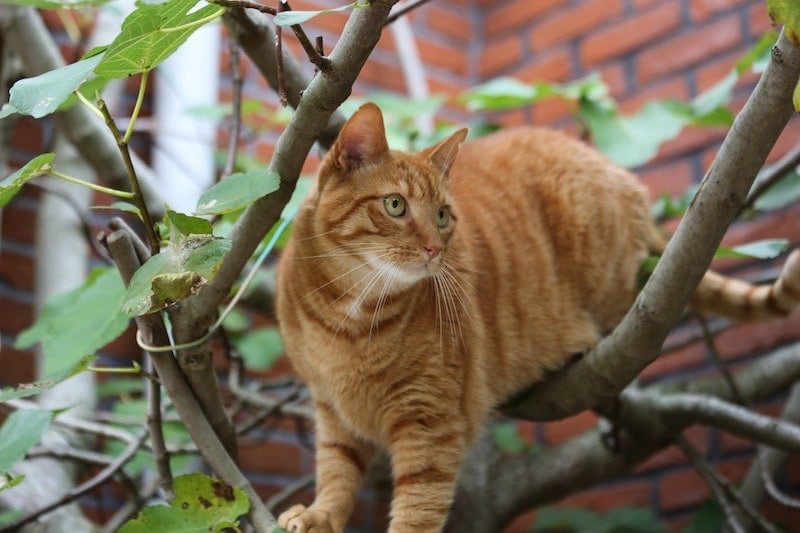
Most cats love to be as high up as they can reach. This is mostly instinct for them. Cats like to keep an eye on their surroundings. Height also gives them the advantage to watch for prey. Many cats find relaxing up high to be comforting, as it provides them with privacy and a safe spot to remain undisturbed as they nap.
Observing the world from up high also makes your cat feel safe. They can plan an exit should they need one, and many predators can’t reach them. Being up high gives them a feeling of dominance.
Cats can climb easily and some do it just because they enjoy it. Cats don’t have the same fear of heights that some humans have. They feel safer and more comfortable up high rather than being vulnerable down on the ground.

Final Thoughts
While there’s no exact distance a cat can fall without injuring themselves, the risk of injury may decrease the longer they fall. Two cats can fall the same distance and experience different injuries. There is no guarantee that each cat will always land on their feet.
The righting reflex works during a fall to help cats align their bodies and land on all four feet, but this doesn’t always work perfectly. The distance the cat falls, their age, their health status, and their landing surface all affect the cat’s chances of survival.
If you live in a high rise, make sure to keep your windows closed if they don't have screens. Make sure that all screens are secure. While many cats survive falls from great heights without being seriously injured, it’s always best to limit the risk of injury and keep your cat safe.
Featured Image Credit: Nils-Jacobi, Shutterstock
Get Hepper In Your Inbox


Pet care tips from our vets and experts, straight to your inbox.
You may opt-out at any time. View our Privacy Policy for more information.
Genevieve, a biologist and science writer, who harbors a profound affection for capuchin monkeys, pumas, and kangaroos. This passion has led her to travel extensively, volunteering and working at wildlife rehabilitation centers in Bolivia, Guatemala, Canada, and Australia. Now residing in Argentina as a Canadian expat, Genevieve enjoys the view of horses and cows greeting her from the vast plains outside her home office window. She proudly cares for three rescued dogs—Lemmy, Nala, and Pochi—and a playful kitten named Furiosa. Sharing her extensive knowledge and love for animals brings her immense joy and fulfillment.
Join the conversation
Ask a question, share your story, or send private feedback.