Hepper is reader-supported. When you buy via links on our site, we may earn an affiliate commission at no cost to you. Learn more.
How Do Sled Dogs Help Humans? History & Benefits
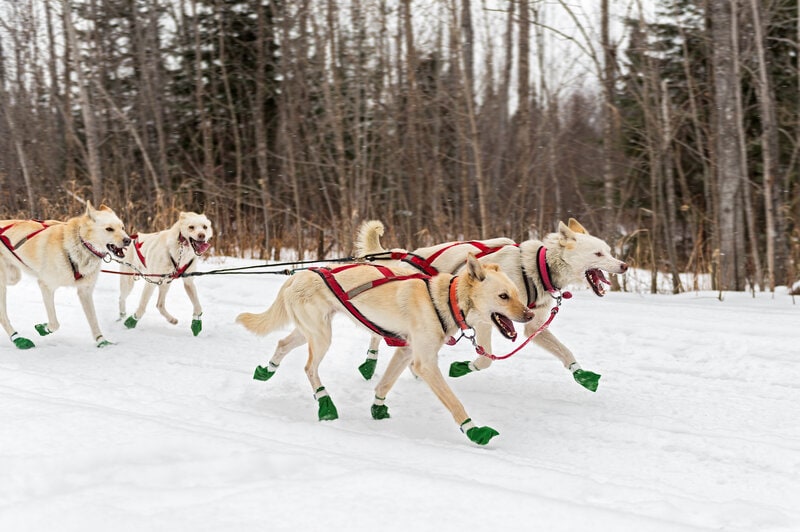
Our relationship with canines goes back 20,000–40,000 years in Europe.1 Our pets didn’t evolve from wolves but share a wild ancestor with them.2 However, it wasn’t until about 9,500 years ago that archaeologists found the first compelling evidence of mushing in the Arctic.3 Canines were interbreeding with Siberian wolves, suggesting the origins of our modern-day sled dogs.
Life in these challenging areas meant several adaptations for humans and dogs. They include an ability to subsist on a starch-poor, fat-rich diet. Sledding is an energy-demanding activity, after all. But how exactly did we take dogs and combine them with sledding to make our lives easier? It is thought by many experts that humans living in the areas surrounding the North and South Poles would have been unable to survive without the assistance of sled dogs. These animals allowed humans to move and hunt even when the weather made it too difficult to do so on foot.

Transportation
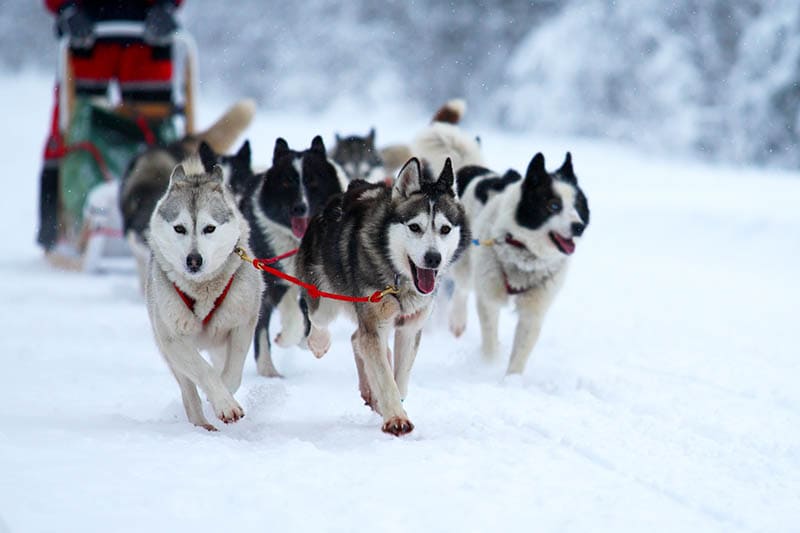
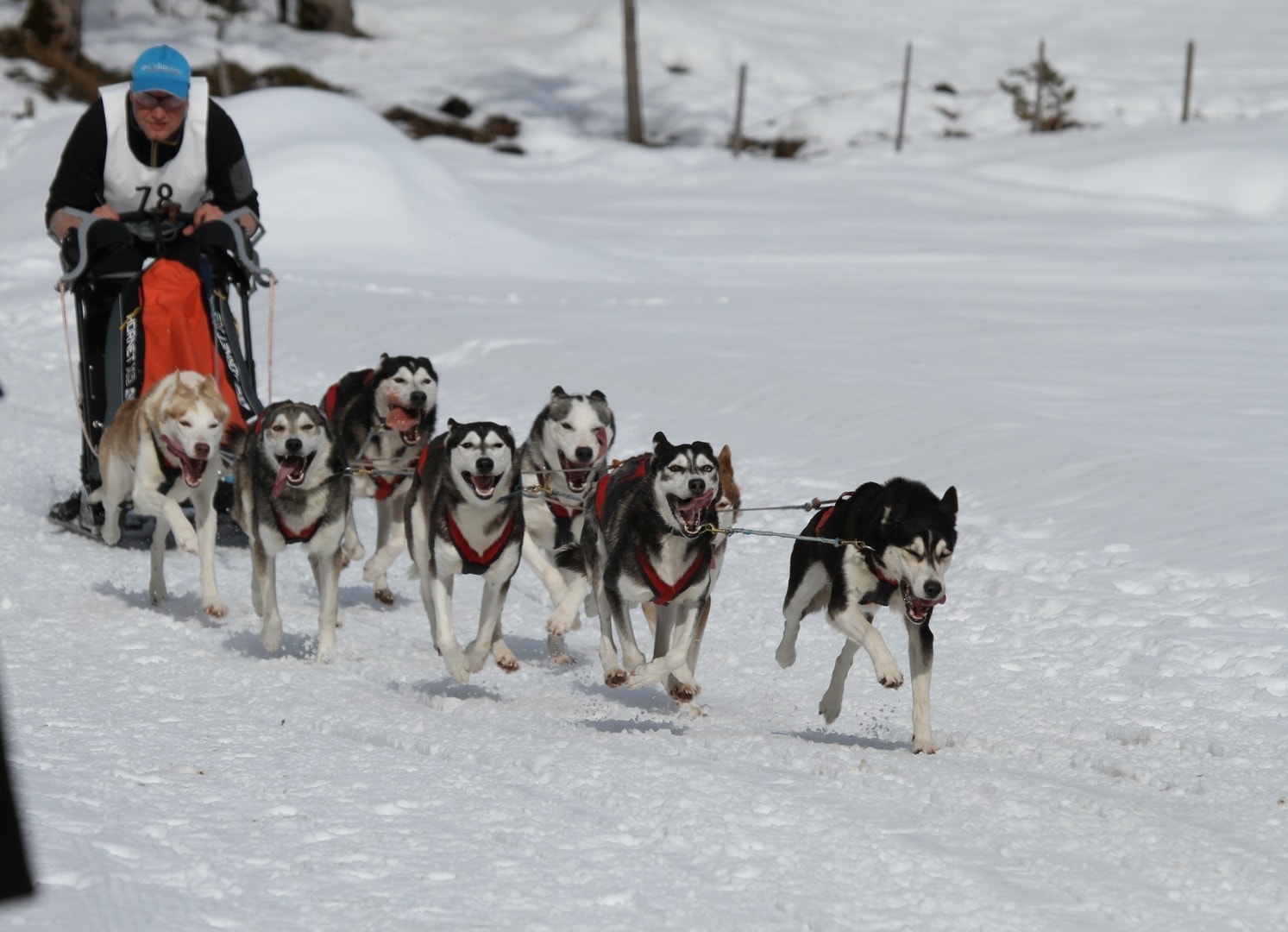
Dog sledding or mushing is probably one of the most well-known ways these animals help humans. A classic example comes from the January 1925 “Race for Mercy” in Nome,4 Alaska. A diphtheria outbreak had gripped the town, which was icebound 7 months out of the year. Sled dog proved invaluable when a team led by the sled dog Balto delivered the life-saving serum to Nome.5
Sled dogs also help humans hunt and carry game across the tundra in these extreme climates. Many parts of these northern areas don’t have roads and infrastructure, making these canines critical for survival during the cold months. They also allowed people to transport food and other goods. They delivered the mail. The Canadian Northwest Mounted Police had them. These dogs also had other jobs.
Exploration
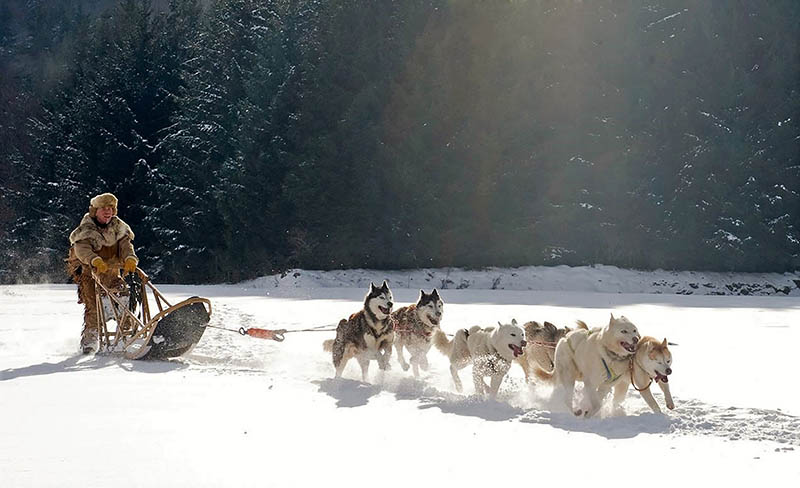
Many experts believe that humans living in the circumpolar regions couldn’t have survived without sled dogs. They allowed people to travel and hunt when climatic conditions made it impossible by foot. These canines opened new frontiers for exploration in the South and North Poles. Norwegian explorer Roald Amundsen made his mark with the South Pole.
The story of the North Pole is murkier, although sled dogs played an integral role. A lack of definitive evidence prevented President William Howard Taft from crediting Robert Peary as the discoverer. Another earlier claim by Dr. Frederick A. Cook complicated matters. Unfortunately, it also suffered from a similar hindrance.
We can say, however, that Minnesotan Ralph Plaisted reached the North Pole in 1968—in a snowmobile.
Advantages Over Snowmobiles
You may think that snowmobiles have rendered sled dogs unnecessary on these fronts. However, we challenge you to think again. These canines won’t break down like a snowmobile possibly can. And if it does, you’re in dire straits. At least the sled dogs could keep you warm until help arrived. They can also help protect against predators if you’re stranded for a while.
Canines also have a distinct advantage when it comes to moving over the terrain. They’re not likely to run into an icy lake. Dogs have better motion sensitivity than humans. They can also see better in low-light conditions than we can and are very fast. For example, Alaskan Huskies can reach speeds up to 28 mph. They can also run for long distances, averaging about 10 mph. Sled dogs won’t run out of gas.
Sled dogs can often go places where no other form of transportation could. That makes them well-suited for rescue operations where horses couldn’t go. They can handle the cold and the environment like no other animal can. While your life may not depend on sled dogs, other people need these animals to fulfill their needs that nothing else can.
Recreation
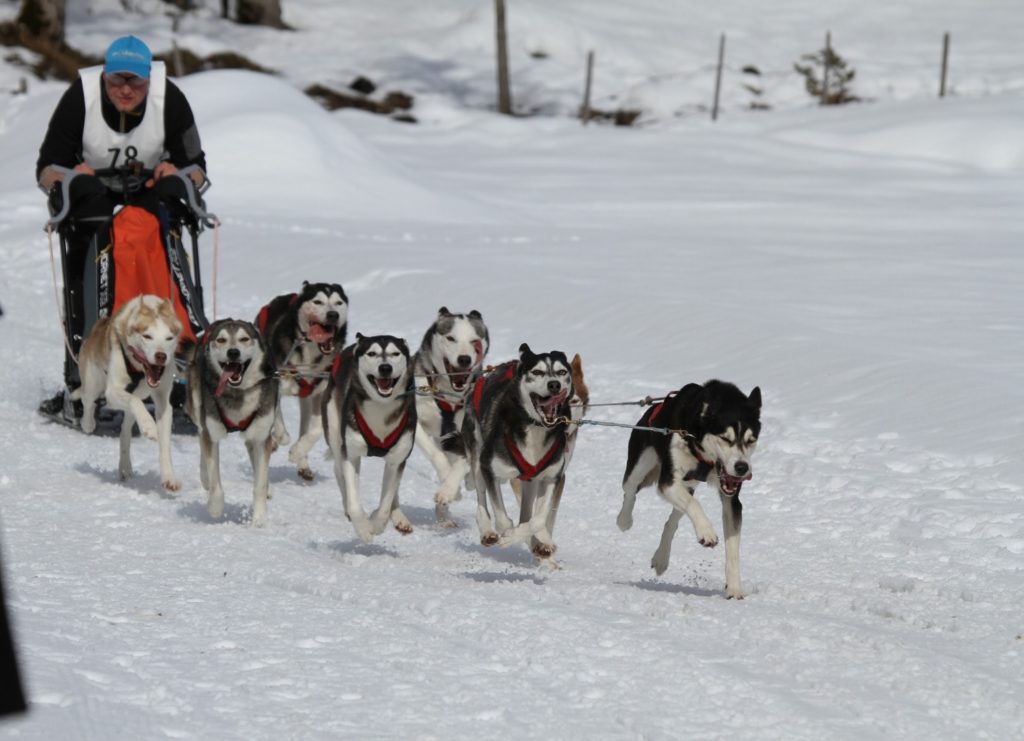
These pups were also an integral part of the Gold Rush. The sled dogs made an impression on the miners who relied on them. It’s no coincidence that the canines proved invaluable in other places. So popular became the sport that it became a part of the 1932 Lake Placid Olympic Games. These canines ushered in a new era for dog sledding.
It’s hard to talk about sled dogs and not mention racing. People like to go fast, and canines are happy to oblige, starting in 1850 in Winnipeg, Manitoba. Of course, the most famous event is the Iditarod Trail Sled Dog Race. It began in March 1973, ironically enough, in Nome, Alaska. The grueling endurance race is roughly 1,000 miles long through some of the most arduous terrain.
Dog sledding has evolved into other forms of recreation. You’ll find local festivals, like the Lake Minnetonka Klondike Dog Derby. Mushers lead eco-tours and camping trips for hardy individuals looking for a unique vacation experience. It’s still a vital form of transportation in northern areas. Interestingly, it’s a traditional sport that retains many of its original uses and canine commands.
Benefits for the Dogs
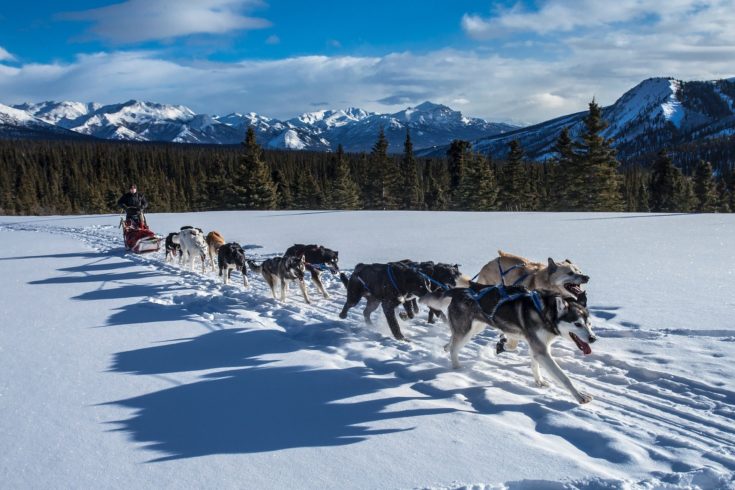
Organizers for events like the Iditarod take great pains to ensure the welfare of all the canine participants. Understanding it from the dogs’ perspective is also essential. They are intelligent animals, selectively bred for this purpose. These pups need a job that sledding provides. Remember that their physiology makes them well-adapted to this sport. They can handle the physical demands like champs.
Conclusion
Dog sledding has been a part of human culture for thousands of years. It was—and is—a vital part of surviving in an extreme environment. These canines make it possible with their endurance and unique adaptations to this lifestyle. The relationship between humans and dogs has many fascinating chapters. This one provides more evidence of how much we’ve come to depend on our canine BFFs.
You might also be interested in: How Much Weight Can Sled Dogs Pull? Canine Facts & FAQs
Sources
https://journals.plos.org/plosgenetics/article/info%3Adoi%2F10.1371%2Fjournal.pgen.1004016
https://www.livescience.com/2898-iditarod-dogs-endurance-secret-revealed.html
https://www.cmnh.org/CMNH/media/CMNH_Media/Balto/2022-01-26version.pdf
https://www.smithsonianmag.com/history/who-discovered-the-north-pole-116633746/
https://www.petmd.com/dog/general-health/how-do-dogs-see-world
https://www.vetstreet.com/our-pet-experts/meet-eight-of-the-fastest-dogs-on-the-planet
https://www.naiaonline.org/articles/article/sled-dogs-are-part-of-human-culture-and-history
https://www.klondikedogderby.com/
Featured Image Credit: Geoffrey Kuchera, Shutterstock
Get Hepper In Your Inbox


Pet care tips from our vets and experts, straight to your inbox.
You may opt-out at any time. View our Privacy Policy for more information.

Chris is an experienced pet writer specializing in science topics, with a particular passion for health and the environment. She has been a writer for over 15 years and lives with her husband and three cats in Michigan.
Beyond writing about cats and dogs, Chris loves to learn about wine. She has WSET 1 and 2 certifications and is currently pursuing her Certified Wine Specialist Award (CSW).
Join the conversation
Ask a question, share your story, or send private feedback.