Hepper is reader-supported. When you buy via links on our site, we may earn an affiliate commission at no cost to you. Learn more.
How Guide Dogs Are Trained: Service Canine Facts & FAQ
In this article
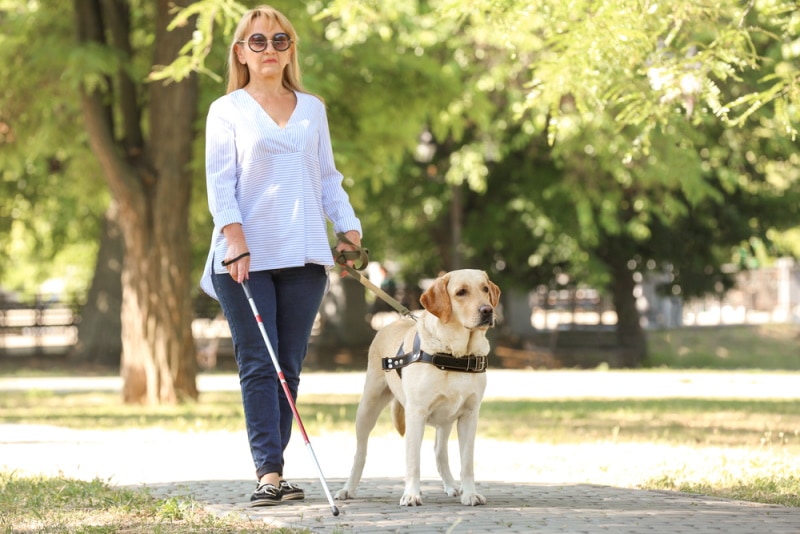
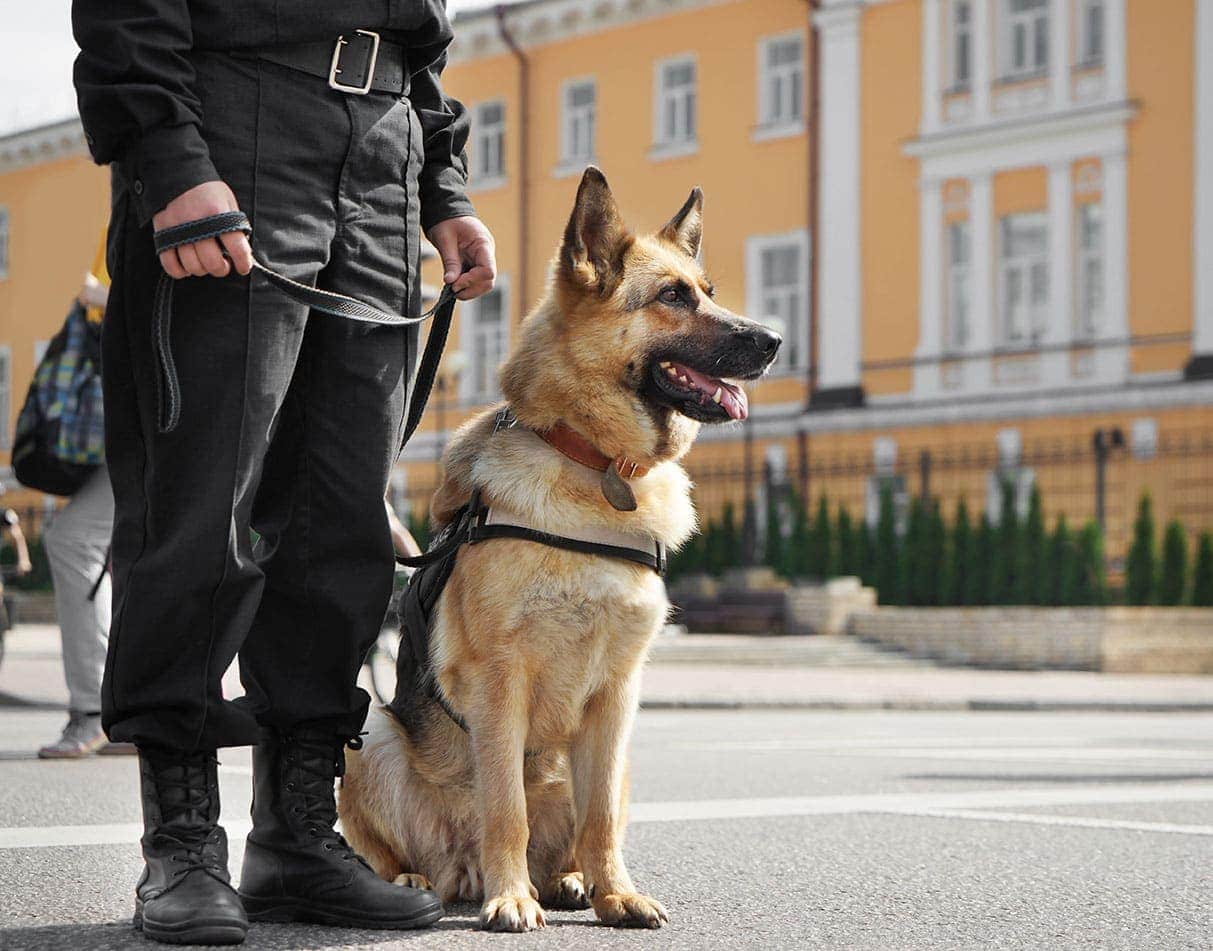
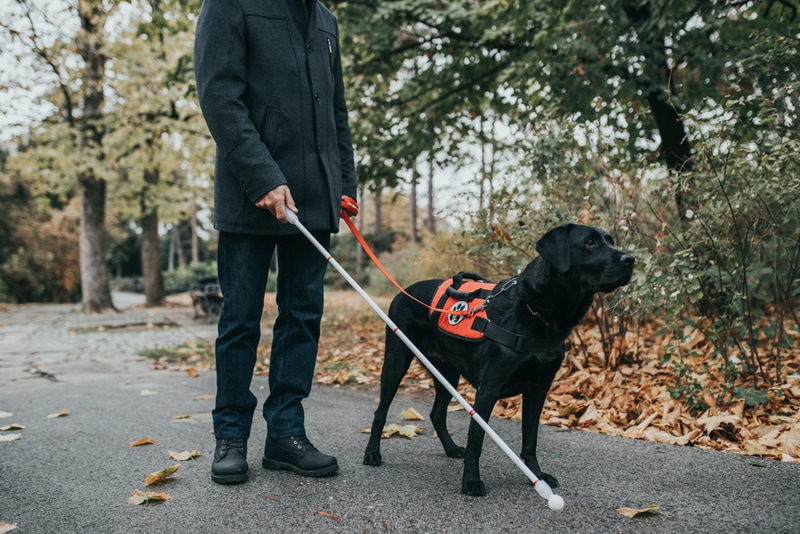
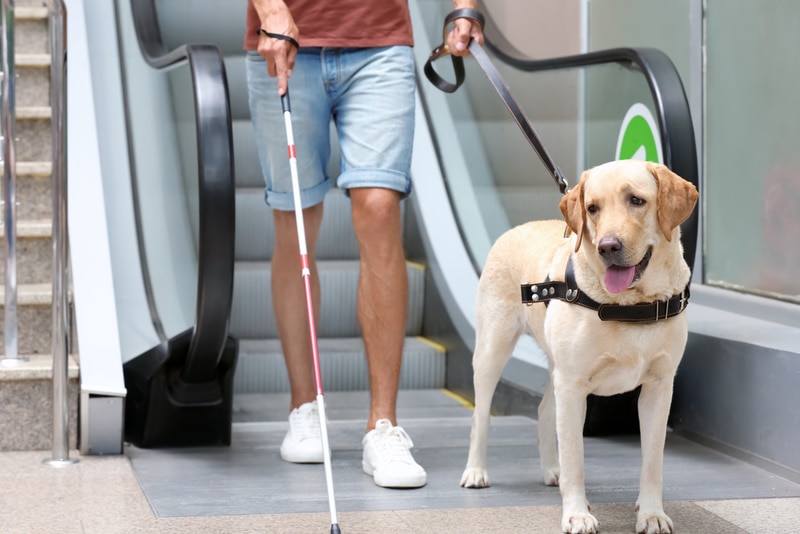
Dogs are heroes to humans in many ways, but few are as well-known as seeing eye dogs, otherwise known as guide dogs. These dogs assist blind or visually impaired people to help them live more independent lives.
Training a guide dog is no small feat, but it’s worth the effort to help the people who need them. Let’s take a look at how guide dogs are selected and trained, as well as how they can help their humans.

How Are Guide Dogs Selected?
Guide dogs have a lot of responsibility, including preventing dangerous situations. Nearly all guide dogs are selected from birth to shape their development, which is why organizations that provide guide and service dogs tend to rely on in-house breeding programs to select the best candidates for future breeding.
In theory, any dog could be a guide dog, but several dog breeds are regarded as more suitable for the work. Usually, retrievers are the top choice since they’re loyal, personable, and obedient, but many breeds have the traits to be successful as guide dogs.
These dogs must be smart, especially when it comes to “intelligent disobedience.” This means that dogs are mostly obedient, but if they are given an unsafe cue, they are taught to disobey it. For example, these dogs must have the situational awareness to ignore a cue to step out into a busy street.
Guide dogs must also be friendly and comfortable in a variety of situations, including situations with other dogs, people, children, and small animals, but they must not be distracted easily. A desire to please and a good work ethic are also desirable.
Starting Training

For most training programs, prospective guide dogs are left with their mothers and littermates for the first six to eight weeks. There’s no formal training at this time, but they develop important social skills from being with their siblings and mother.
At around two months, the puppy will be placed with a puppy raiser. Depending on the organization, the puppy raiser ensures the dog grows up in a loving environment with basic obedience and proper socialization. This socialization doesn’t just mean meeting people or dogs but spending time in distracting environments with different sights, sounds, and smells.
This important foundation gives the puppy skills that will be needed for a guide dog, such as sociability and confidence in a range of different environments.
Official Guide Dog Training
Once the dog is ready for formal training, it’s added to a team of instructors with about eight dogs. These groups include a mix of different breeds and temperaments to ensure the right match for potential clients.
All formal training begins by reinforcing the basics. The trainers work to build on the skills taught by the puppy raisers, including loose leash walking, sitting calmly, and following basic obedience commands like sit and stay.
Reinforcing basic obedience is important. This not only ensures the dog has these foundational skills but that those skills will transfer to a new handler. Guide dogs are trained by professionals for placement with a blind or visually impaired person, so it’s imperative that they follow their commands from someone other than their handler.
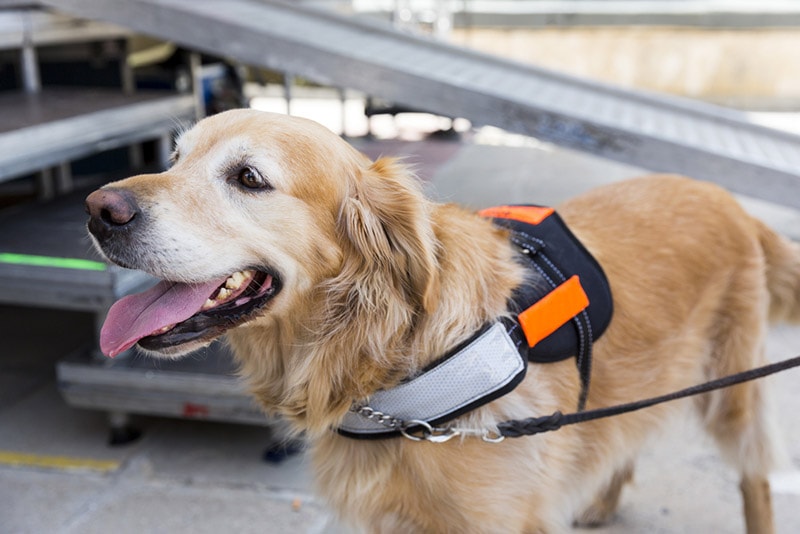
Dogs will also have an introduction to the equipment they’ll have as a guide dog, such as the guide harness. Some of the introductory guide dog skills, like stopping at a curb before crossing the street, are reinforced in this period.

Basic Training
In basic training, trainers begin to build on the foundational skills with tasks like avoiding obstacles, walking in a straight line, and stopping for traffic. The dog may learn additional specialized skills like finding an empty chair in a busy room.
Eventually, the dogs are transitioned into a group class where they will have their training tested with and without distractions. They also undergo a veterinary exam.
Intermediate Training
With the basic skills under its belt, the guide dog will move onto intermediate training to develop skills in an urban environment while navigating obstacles. This is also when the dog will learn intelligent disobedience.
For example, guide dogs must recognize that they can fit under an obstacle that may be too low for their owner, such as a low-hanging tree branch, and guide their handler around it. Intelligent disobedience is also important with traffic, as a visually impaired person could cue the dog to walk into oncoming traffic.

Advanced Training
The most challenging aspect of training guide dogs is the advanced training stage. This is when the dog’s skills are truly tested in complex situations with busy streets, difficult obstacles, and multiple moving vehicles.

Matching a Dog and Handler
When the dog’s training is complete, they are matched with their prospective owner. Applicants submit a video of their usual environment to help trainers match the ideal dogs for the applicant’s challenges.
Prior to going to a forever home, dogs receive a final health exam and a training exam to make sure all their skills are solid. Possible applicant-dog matches are brought together with trainer guidance to make sure the dog is the right fit and teach the handler how to interact with the dog.
Guide Dogs for Visually- and Hearing-Impaired Individuals
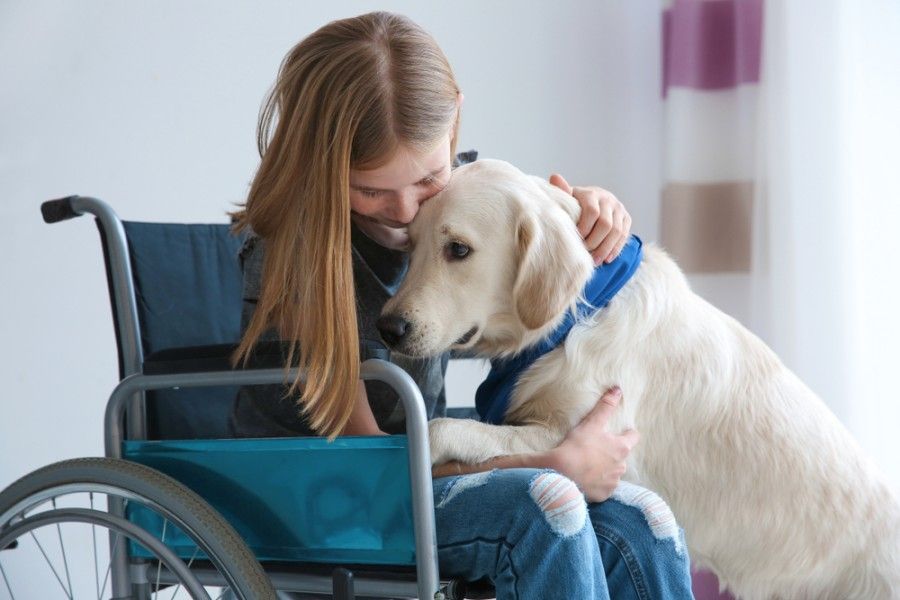
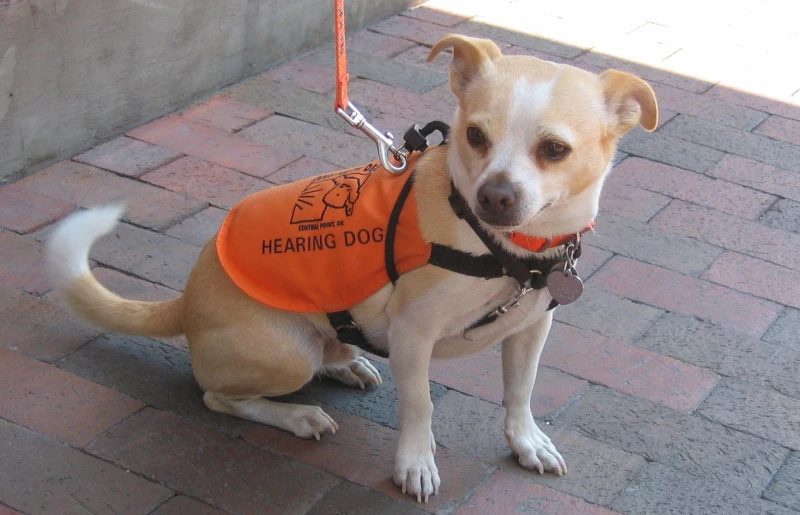
Some guide dogs learn cross skills to adapt to the needs of people with visual and hearing impairments. These dogs must learn not only the guide dog skills but additional interventions like alerting to a sound like a doorbell.

How Long Do Guide Dogs Work?
Guide dogs work until they’re about 8 to 10 years old, but it can vary. When their time is complete, they are retired into loving foster homes to relax for the rest of their days as thanks for their years of service.
That’s not to say that these dogs don’t get a break during their work period, however. When they’re “off the clock,” guide dogs get tons of love of attention. They know that when their harness goes on, it’s all business, but their free time is for playing, cuddling, sleeping, or just being a dog.

In Conclusion
Guide dogs go through extensive training to serve their blind or visually impaired owners. Not all dogs make it through the program, but the ones that do are matched with the perfect owner to have a fulfilling work life. Once they’ve provided this vital service, guide dogs are taken out of commission and enjoy a pampered retirement.
Sources
Featured Image Credit: Africa Studio, Shutterstock
Get Hepper In Your Inbox


Pet care tips from our vets and experts, straight to your inbox.
You may opt-out at any time. View our Privacy Policy for more information.

Nicole is a lover of animals of all sizes but is especially fascinated with the feline variety. She’s the proud mom of Baby, a Burmese, and works every day so he can relax in the sunshine or by the fire. She’s always had a cat in her home and has spent countless days with others, observing behaviors and softening up even the grouchiest of the lot. Nicole wants to share her kitty expertise with you so you and your cat can live happy, healthy, and care-free.
Join the conversation
Ask a question, share your story, or send private feedback.