Hepper is reader-supported. When you buy via links on our site, we may earn an affiliate commission at no cost to you. Learn more.
How Long Does It Take for Dog Stitches to Dissolve? Vet-Approved Facts & FAQ


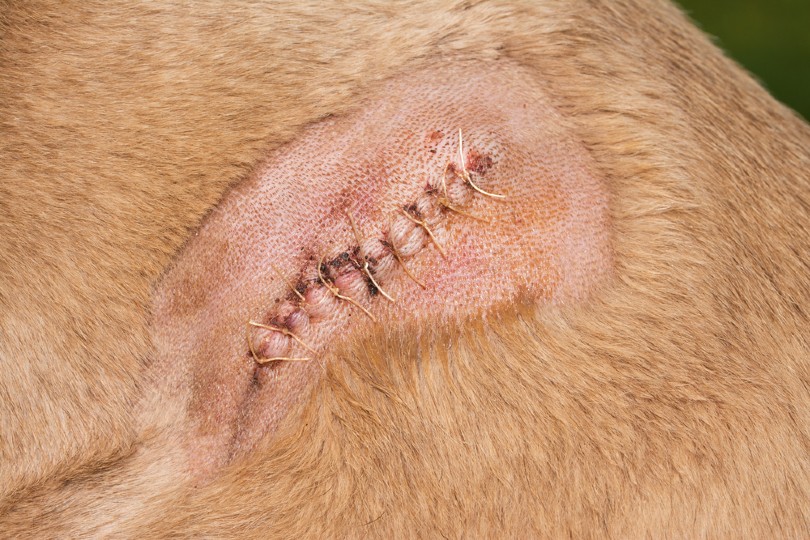
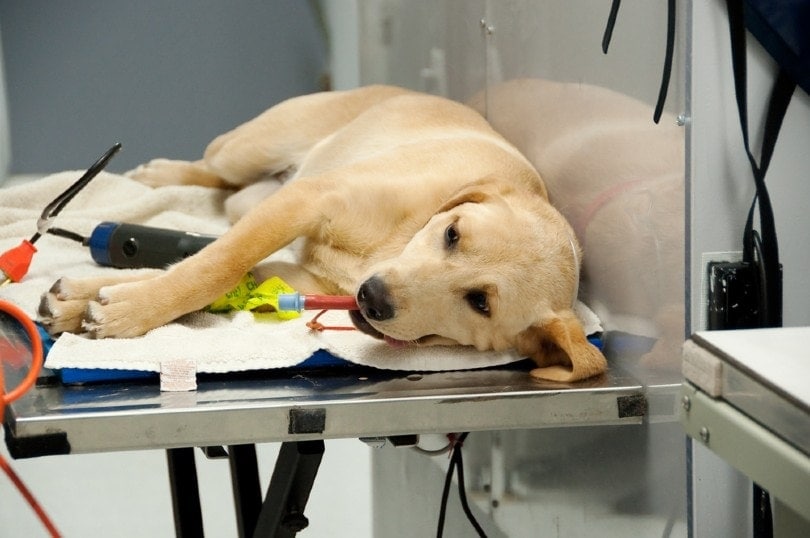
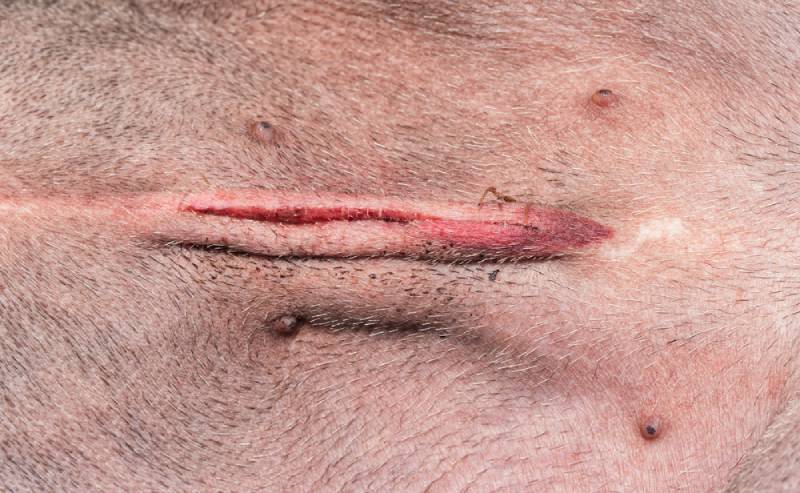
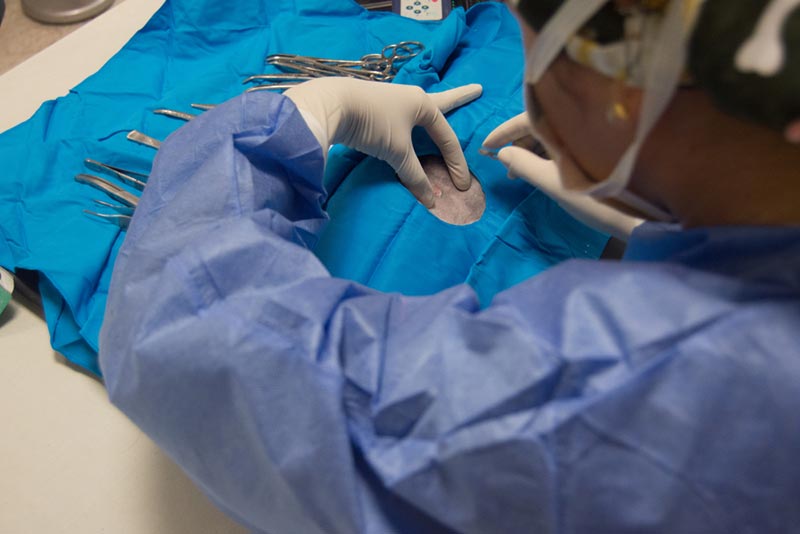
If your dog has recently had surgery, they likely have some form of internal and external stitches. You may also see stitches referred to as sutures. Internal stitches are placed to close blood vessels and internal surgical incisions, like those through muscle or from removing an organ, like during a spay. External stitches are placed to close the outermost portion of the incision, which is the part of the incision that you’re able to see afterward. How long should you expect your dog to have these internal and external stitches, though?

How Long Does It Take for Dog Stitches to Dissolve?
It can take dissolvable stitches up to 4 months to fully dissolve, but some will lose all their strength in as little as 2 weeks.
If dissolvable stitches are used externally, they’re not likely to last that long simply because they have the added stress of friction and moisture from the external environment. The stitches don’t have to fully dissolve to fall out; only the internal portion of the external stitches need to dissolve for the stitches to fall out, so you may see stitches on the ground as they fall out.
Internal stitches may fall out of place, but they’ll still be inside your dog’s body, so it will be up to the body to fully dissolve the stitches. These are the circumstances in which the dissolvable stitches may last up to 4 months.
There is a difference between the time taken for the suture to lose its tensile strength and the time taken for it to fully dissolve.

An Important Note About External Stitches
While many surgical procedures today use dissolvable internal stitches, it may be more common for external stitches that cannot dissolve to be used and may need to be removed 10–14 days post-operatively. It can be difficult to tell if stitches are dissolvable just by looking, so make sure to ask your vet when you pick your dog up from surgery whether the stitches need to be taken out.
The suture material used will be chosen by the veterinary surgeon depending on the body part being stitched, the reason stitches are needed, the suture material, handling factors, patient factors like temperament, and personal preference, amongst many other things.
Each clinic and vet will have their own policies with regard to follow-up appointments for routine surgeries, like spays and neuters. They may not request a check-up unless there is a need to remove the stitches. However, many surgeries require follow-up visits, even when there are no stitches that need to be removed, to check the wound has healed properly, ensure no sign of infections are present, and so forth.
Most vet clinics will clearly tell you what to expect, but they are human, and it’s possible for it to be forgotten or miscommunicated, so make sure to ask questions for clarification if needed. Keep in mind that even if your vet has historically used stitches that need to be removed, they may switch to dissolvable stitches based on the type of surgery or how friendly and cooperative an animal is.

In Conclusion
Your dog’s dissolvable stitches are unlikely to last more than a few weeks but could last up to 4 months. Make sure to ask your pet’s veterinarian when and if the sutures need to be removed. You probably won’t notice them at all, although sometimes people find external dissolvable stitches laying around after they’ve fallen out. Some dogs may experience localized swelling as their dissolvable stitches begin to break down. This usually isn’t cause for concern, but you should always let the vet who performed the surgery know you are seeing something unusual. This will allow them to let you know if you should be concerned or not.
You might also be interested in:
Does Pet Insurance Cover Surgery? Insurance Standards Explained
Does Pet Insurance Cover Emergency Visits? How Much Does It Cost?
Sources
Featured Image Credit: Sari ONeal, Shutterstock
Get Hepper In Your Inbox


Pet care tips from our vets and experts, straight to your inbox.
You may opt-out at any time. View our Privacy Policy for more information.
After nine years as a veterinary assistant, Brooke Billingsley transitioned to a career as a nurse in 2013. She lives in Arkansas with her boyfriend, sharing their home with three dogs, two cats, five fish, and two snails. A dedicated animal lover, Brooke has a special place in her heart for special needs pets, including a three-legged senior dog and a famous cat with acromegaly and cerebellar hypoplasia. Fish keeping is one of her hobbies, and she is constantly improving her knowledge to care for her aquarium pets. Brooke is an active yoga enthusiast, having obtained her 200-hour yoga teacher certification in 2020. She believes in the importance of continuous learning and dedicates time each day to developing new skills and expanding her knowledge.
Join the conversation
Ask a question, share your story, or send private feedback.