Hepper is reader-supported. When you buy via links on our site, we may earn an affiliate commission at no cost to you. Learn more.
How Long Does It Take to Train a Duck Dog? Expert Advice
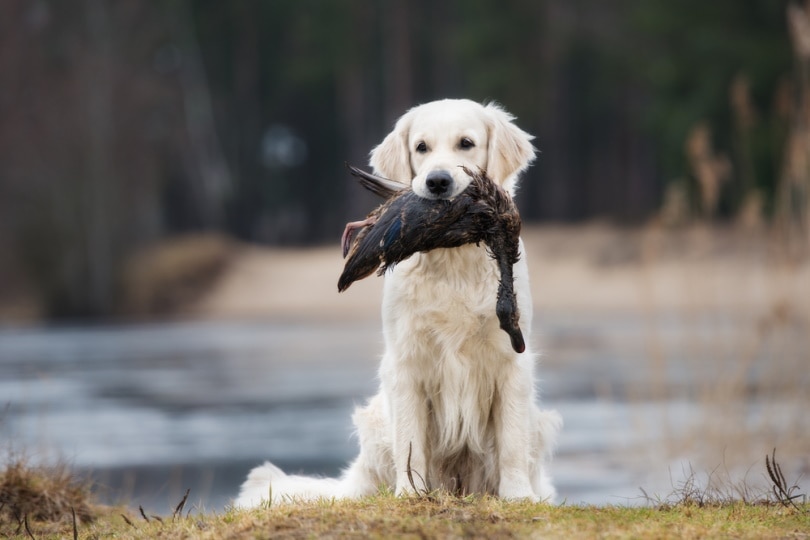
In this article
If you brought home a Labrador Retriever or Spaniel in hopes of turning it into a duck dog, it’s important to realize that it takes time and patience to train a duck dog. Depending on the time and effort you put into training, training a duck dog could take anywhere from 6–7 months to 16–18 months.
Some interventions can speed up the training, such as raising your dog in an environment surrounded by birds and lots of noises, but it also depends on your dog’s cognitive capabilities and your own skills for training. Here are some tips to get the most out of your training experience.

What Are Duck Dogs?
Retrievers are a type of gun dog that retrieves game for a hunter. These dogs may include Labrador Retrievers and Golden Retrievers, as well as lesser-known breeds like the Nova Scotia Duck Tolling Retriever.
A duck dog is simply a dog that’s proficient at hunting ducks. It may not be of a particular breed, but many fall in the gun dog category.
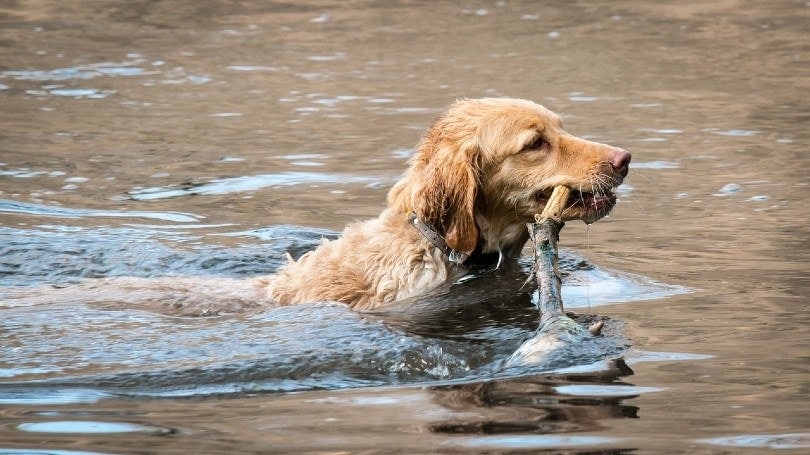
Use Slow, Short Sessions
You are excited about the hunt, but it’s vital that you take your time with your dog. Rushing the training could be detrimental to your pups. If the training is always hard and frustrating, your pup will only become more resistant and set you back further.
Remember, puppies under six months of age have short attention spans. You need to begin with short sessions and minimal repetitions—think 5-minute sessions with two or three repetitions.
This may feel painstakingly slow, but that’s ideal for holding your pup’s focus. It is better to put in a few minutes a day instead of training hard every day, not to mention that regular breaks help your dog better comprehend the training.
Until your dog reaches one year, keep the training short and stay flexible. If the training is going well and you’re getting results, call it a day. It doesn’t matter if you’ve only done a few repetitions—ending on a positive note will give you the best outcome.
Spend Time on Noise Proofing
One of the biggest aspects of duck dog training is sound. Your dog needs to get used to the sounds of birds in distress and guns, not to mention ambient sounds in the natural environment. You don’t want your dog to get distracted too easily.
Ideally, getting your dog used to surprise sounds should happen as soon as you bring it home. Slamming doors, loud laughter, banging pots and pans, and other sounds happening around your dog will make it comfortable quickly. Then, when you’re on a hunt with random booms and splashes, your dog will stay on task.
That said, DON’T deliberately scare your dog! These sounds should happen around your pup, not in its face, its ears, or nearby while it’s playing or sleeping.
Once your dog is used to the sounds in the house, you’ll need to test it in the natural environment. It’s best to bring a partner along and have them shoot a small pistol or pop gun while you throw a pigeon.
Your dog may react at first, but eventually, it will ignore the sound in favor of the pigeon. Once that happens, have the shooter move closer until the pistol can go off near you without any reaction from the dog.
This should happen in steps. Once the small “pop” of a pistol gets no reaction, you can move up to larger and louder guns using the same process.
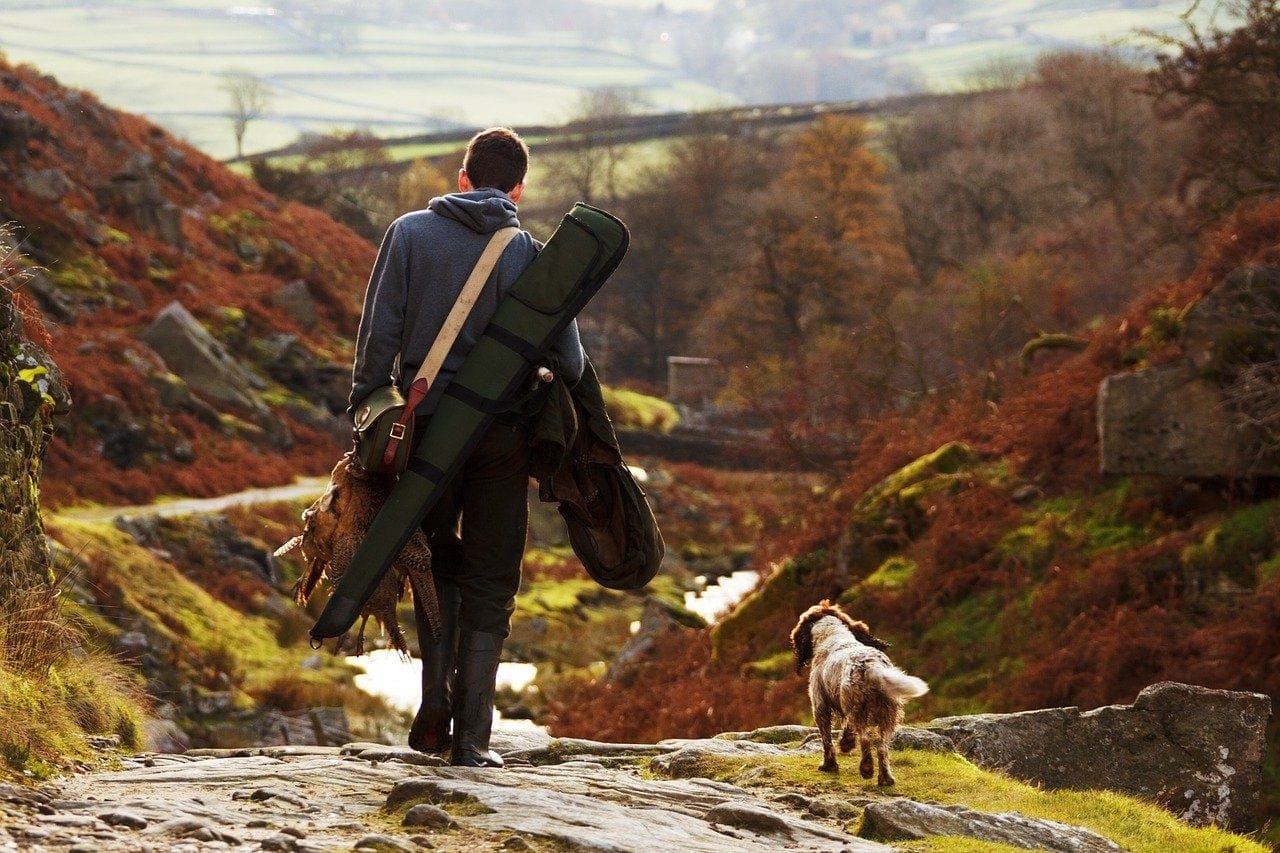
Build Up to the Full Hunt
If you get impatient and decide to expose your puppy to a full hunting environment before it is ready, you could suffer a significant setback. There’s nothing to be gained from throwing your puppy into an overstimulating situation like that, and you may only end up with a gun-shy, bird-shy, and potentially injured puppy for your trouble.
Build up to the training slowly. Start with basic obedience and wait until that is down pat before you introduce new stimuli, such as bird sounds and guns. Let your puppy learn as it matures and follow the appropriate steps for basic gundog training.
The basics include the following:
Dogs learn from association and repetition, which is why you need small steps and then tie everything together. You cannot skip the process. If you have a setback, step back and make something easier to build confidence.
Conclusion
When it comes to training your dog, whether to be a duck dog or virtually any other type of training, slow and steady wins the race. Taking your time now will pay off in consistent, reliable skill sets and a confident, driven dog, rather than an insecure dog that suffers frustration and setbacks.
See also:
Sources
Featured Image Credit By: otsphoto, Shutterstock
Get Hepper In Your Inbox


Pet care tips from our vets and experts, straight to your inbox.
You may opt-out at any time. View our Privacy Policy for more information.

Nicole is a lover of animals of all sizes but is especially fascinated with the feline variety. She’s the proud mom of Baby, a Burmese, and works every day so he can relax in the sunshine or by the fire. She’s always had a cat in her home and has spent countless days with others, observing behaviors and softening up even the grouchiest of the lot. Nicole wants to share her kitty expertise with you so you and your cat can live happy, healthy, and care-free.
Join the conversation
Ask a question, share your story, or send private feedback.