Hepper is reader-supported. When you buy via links on our site, we may earn an affiliate commission at no cost to you. Learn more.
How Many Claws Do Cats Have? Feline Anatomy Facts & FAQ (Vet Reviewed)



In this article
Have you ever looked at your cat and wondered how many claws they have? You could pick them up and count their claws yourself, but your cat certainly won't enjoy that, and they might even scratch you in the process!
But if you were to do that, you'd probably find that your cat has 18 claws, which can be a surprising number until you break it down paw by paw. So, how does your cat have 18 claws, and are there cats with more than 18?
We answer both those questions before diving into the reasons that you should never declaw a cat, along with a few tips to get them to stop scratching.

How Many Claws Does a Cat's Paw Have?
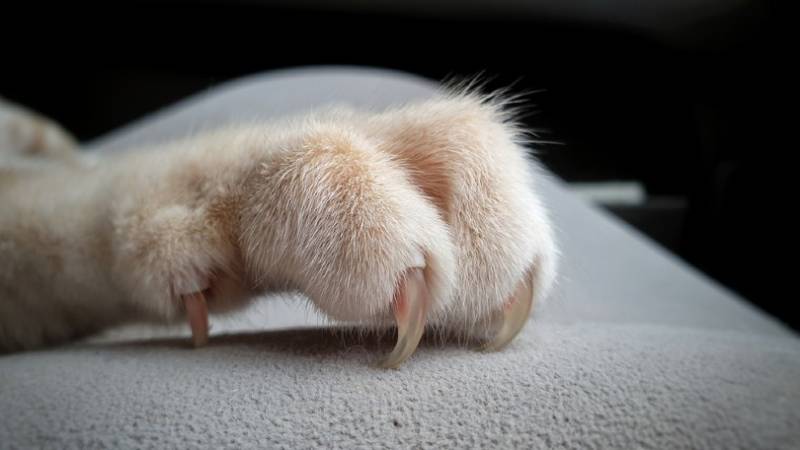
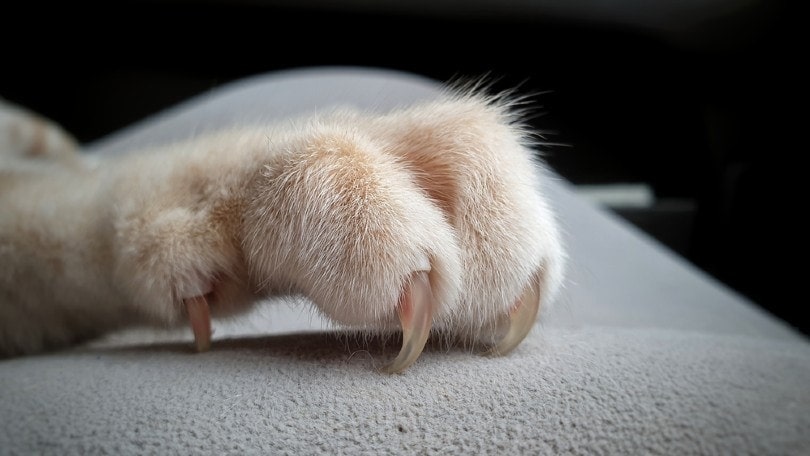
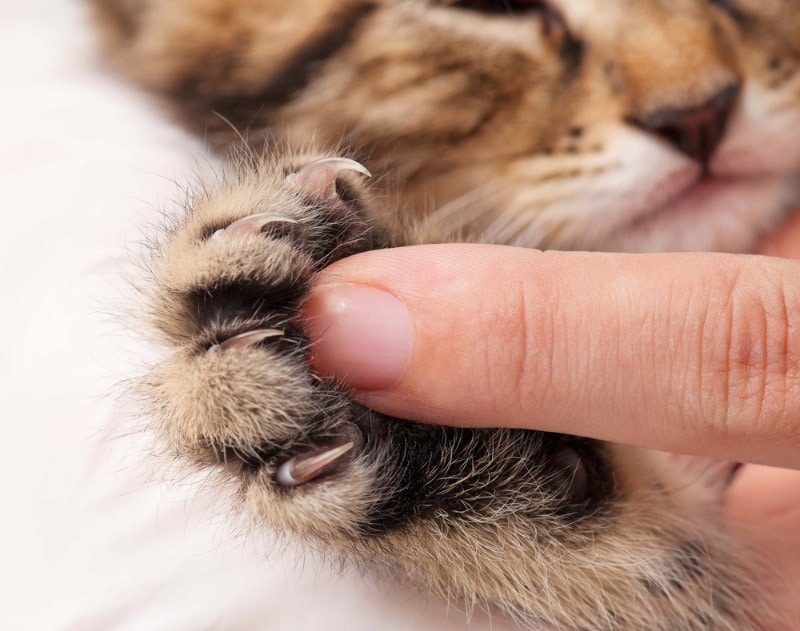
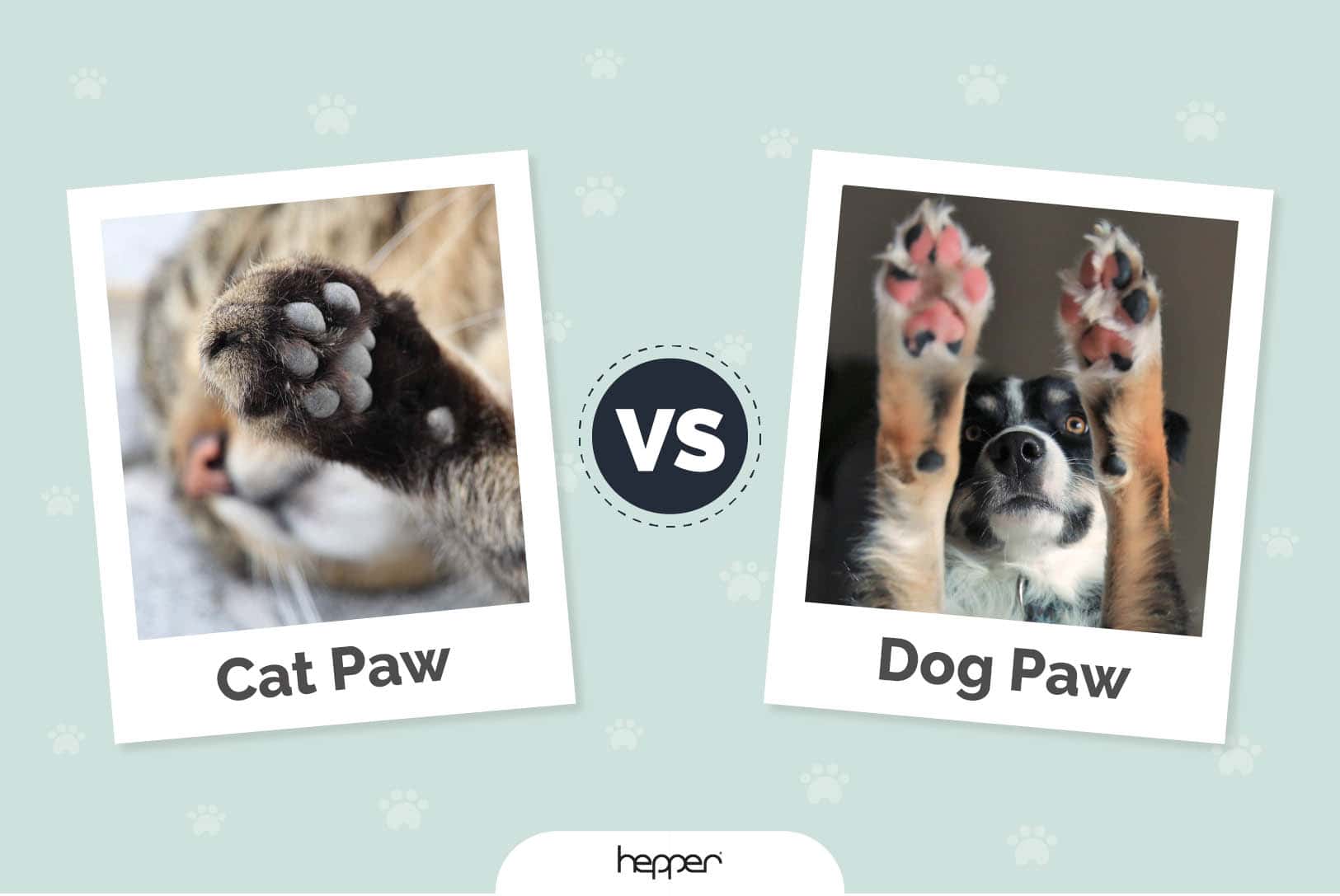
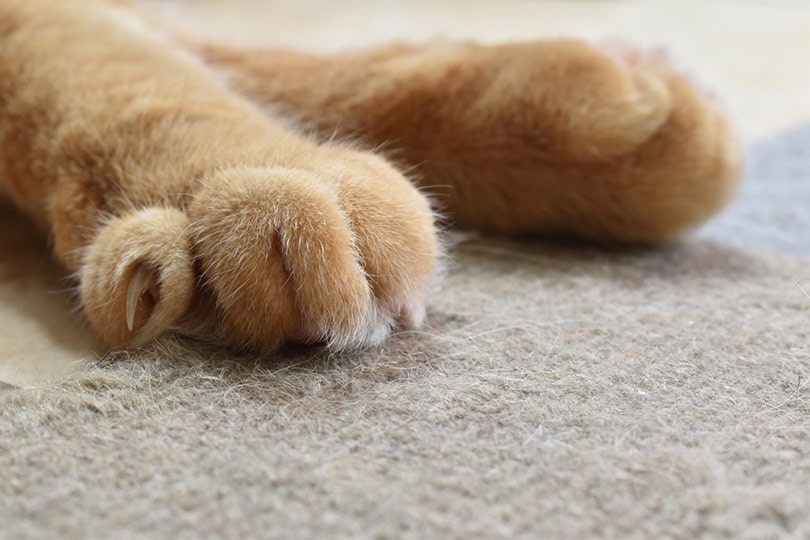
So, how does a cat have four paws and 18 claws? It's simple math: Both front paws have five claws each, and both rear paws have four each.
Why a cat has fewer claws on their rear paws isn't known, but it makes sense for them to have extra digits and claws on their front paws. They primarily use these for hunting and self-defense, and it's easier for them to use their front paws than their rear ones.

What Cats Have Six Claws Per Paw?
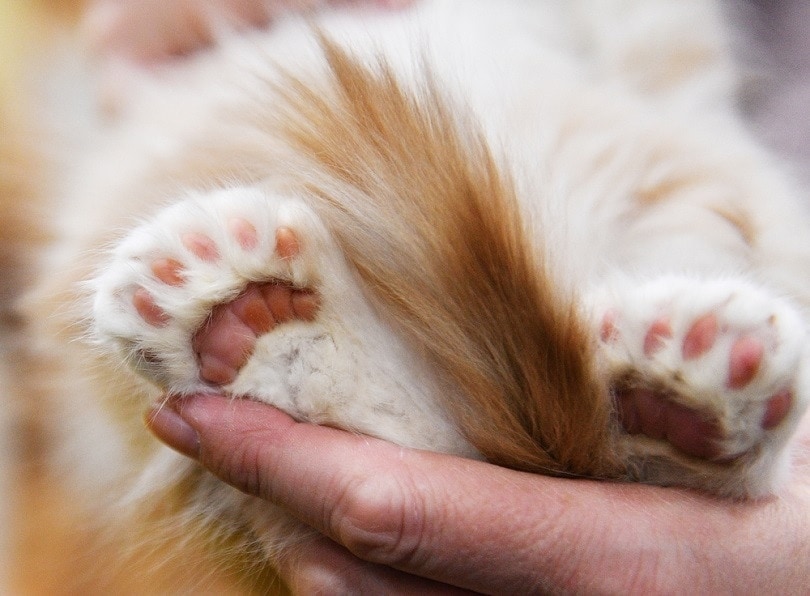
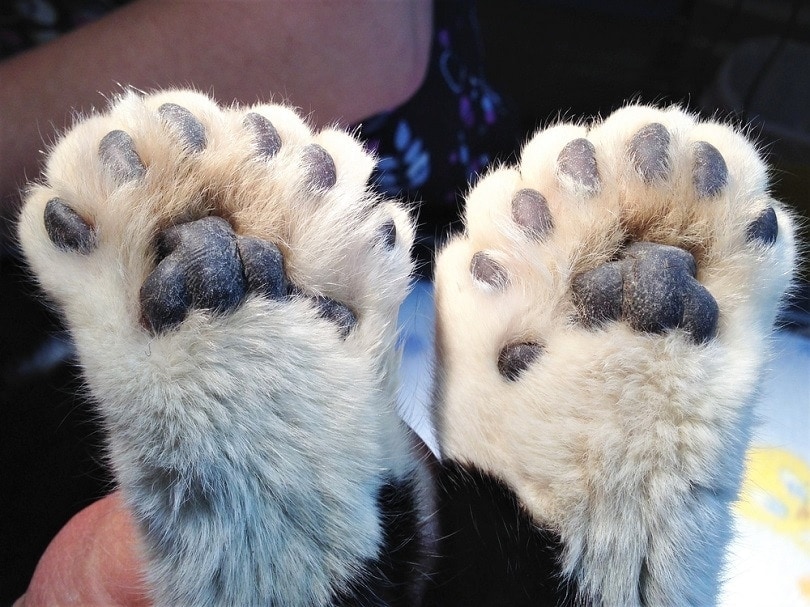
While almost every cat has five claws on the front paws and four on the rear ones, some cats have genetic mutations that give them an extra claw per foot. These cats are known as polydactyl cats.
Any type of cat can be a polydactyl, but it's relatively rare. Polydactyly is a genetically inherited trait. Today, most polydactyl cats are intentionally made that way by breeding two polydactyl cats together.
But even then, it's not a guarantee that every kitten will have the extra toes and claws.
Are Polydactyl Cats Unhealthy?
While their paws might look a little odd, there's nothing unhealthy about polydactyl cats. They suffer from the same health issues at the same rates as other cats.
But there is one huge exception to this: Sometimes, polydactyl cats will have their extra toes grow in at odd angles. This can create problems with either the foot or claw, and if it's severe enough, it can warrant medical intervention.
Why You Shouldn't Declaw a Cat
No matter how many claws your cat has, you should never take them to a vet to declaw them. Over 20 countries have banned the practice, and many cities and states in the United States are moving in that direction.
The reason you shouldn't declaw your cat is that their claws are attached to bones, and declawing your cat is similar to cutting off your fingertips.
Even after everything heals, your cat will be uncomfortable and might even experience pain. This elective surgery has the risk of infection, back pain, and even tissue death around their paws.
There's no reason to ever declaw your cat, even if their claws are wreaking havoc on your furniture and other household objects.
Trimming your cat's nails isn't the easiest task in the world, but a well-designed set of clippers can make all the difference. Our Hepper Cat Nail Clipper Set features two sizes of clippers with easy-to-clean stainless steel blades and a built-in safety guard to prevent accidental cuts. These clippers are comfortable to hold, nicely designed to work at tricky angles, and even include a bonus hidden nail file and a convenient pouch!

- Complete Set - These cat nail clippers include both a large and small pair, meaning it works well as a kitten claw trimmer when they're a small kitty, and then before you know it, as a cat nail cutter
- Razor Sharp Stainless Steel - The most comfortable cat nail clippers for indoor cats provide a fast and clean cut. And for rough residuals remaining, the free cat nail file included can smooth it all.
- Safety First - With a safety nail guard and locking spring, you can make sure every grooming cut is stress free for you, and pain free for your purry pal
Ways to Train Your Cat to Stop Scratching
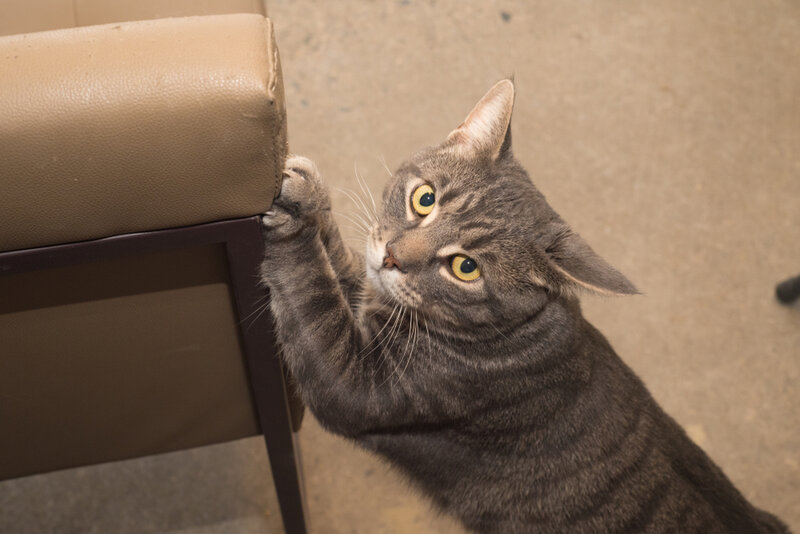
Cats need to scratch to control the length of their claws. There's no way around this behavior, so you need to give them a suitable outlet to do it.
Scratch posts come in many different shapes and sizes, and it's a good idea to place them in several locations while your cat learns that they're safe places to scratch. From there, training your cat to scratch in the right place is easy, but it takes a bit of work and persistence. All you need to do when your cat is scratching something that they shouldn't is pick them up and move them to the scratch post. The closer it is to the object that they're scratching, the better, which is why it's a good idea to have multiple scratch posts throughout your home.
While it can be frustrating watching them tear up things that they shouldn't be scratching, you need to refrain from yelling at them when they're doing so. If they associate scratching with something bad, they'll try to hide it from you, which means you won't be able to redirect them to the appropriate location. Since they need to scratch, they'll find somewhere to do it when you're not around.
We recommend checking out this helpful post to learn more tips to redirect your cat’s scratching needs.
The modern and functional design of our Hepper Hi-Lo Cat Scratcher provides a unique and desirable place for cats to scratch – and a necessary distraction from your furniture. The 3-position setup and the B-flute cardboard texture encourage your cat’s scratching tendencies, eliminating their impulse to claw upholstery, carpets, and curtains. We’re sure the Hi-Lo will increase the longevity of your belongings while providing a more functional and fun environment for your cat.

- Premium Materials - Hepper's cardboard scratcher is made with dense, B-flute cardboard, and a metal core. Encased in a 1/2" plywood frame with gloss coating. Stable and beautiful, use after use
- High, Low and Lower - A single cat scratch pad won't keep your cat engaged. 3 unique positions keeps them coming back, and back, and back again. Finally, something to get them away from the couch!
- Activates Muscles - The Hi Lo isn't just a cat nail file to stop the chief cat couch scratcher. The deep cat scratcher wave encourages maximum musculoskeletal activation for a healthier workout

Final Thoughts
Counting claws might not seem like a big deal, but just like cats, humans are curious. You might've been wondering if your cat has the right number of claws, and if they have 18, they do!
Any more claws means they also have more digital paws due to a genetically inherited trait, but chances are that there's nothing to worry about, as polydactyly does not create any problems for your feline friend.
See Also:
Featured Image Credit: rihaij, Pixabay
Get Hepper In Your Inbox


Pet care tips from our vets and experts, straight to your inbox.
You may opt-out at any time. View our Privacy Policy for more information.
Nicole is a lover of animals of all sizes but is especially fascinated with the feline variety. She’s the proud mom of Baby, a Burmese, and works every day so he can relax in the sunshine or by the fire. She’s always had a cat in her home and has spent countless days with others, observing behaviors and softening up even the grouchiest of the lot. Nicole wants to share her kitty expertise with you so you and your cat can live happy, healthy, and care-free.
Join the conversation
Ask a question, share your story, or send private feedback.