Hepper is reader-supported. When you buy via links on our site, we may earn an affiliate commission at no cost to you. Learn more.
Cat Paw vs. Dog Paw: Vet-Verified Differences (With Pictures)


In this article
While most of us spend plenty of time loving and enjoying our pets, when was the last time you took a step back to look at their anatomy? Some areas are more visible than others, but it’s the smaller things that can make the biggest difference.
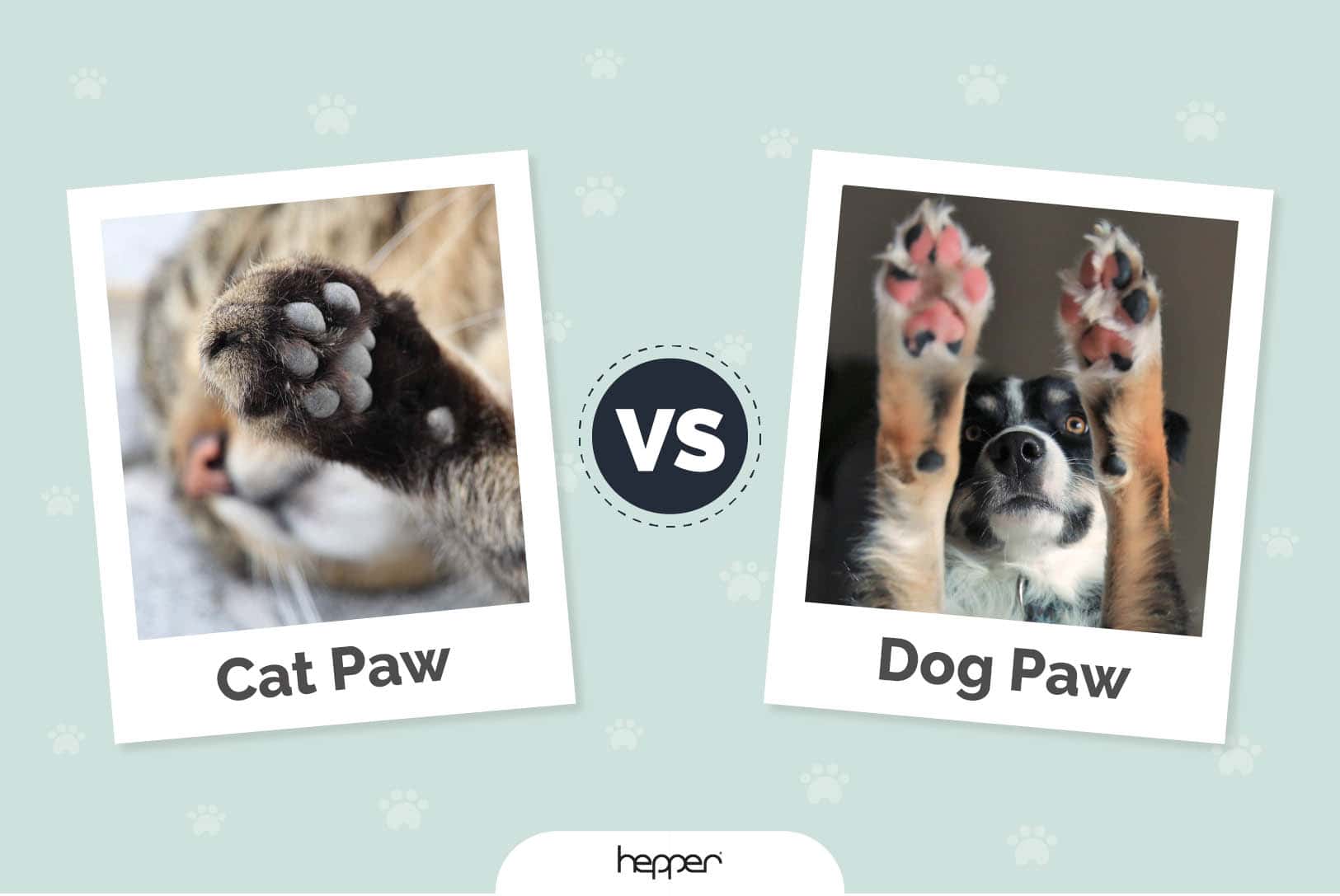
Their paws are the perfect example of this. While cat and dog paws are similar in many ways, they’re also extremely different in ways that benefit both species. But how exactly do they compare?

At A Glance
Overview of Cat Paws
While you might not think twice about your cat’s paws, they’re incredibly versatile and useful tools at your cat’s disposal. We’ve highlighted a few key characteristics about their shape, pads, and uses for you here:
The Shape
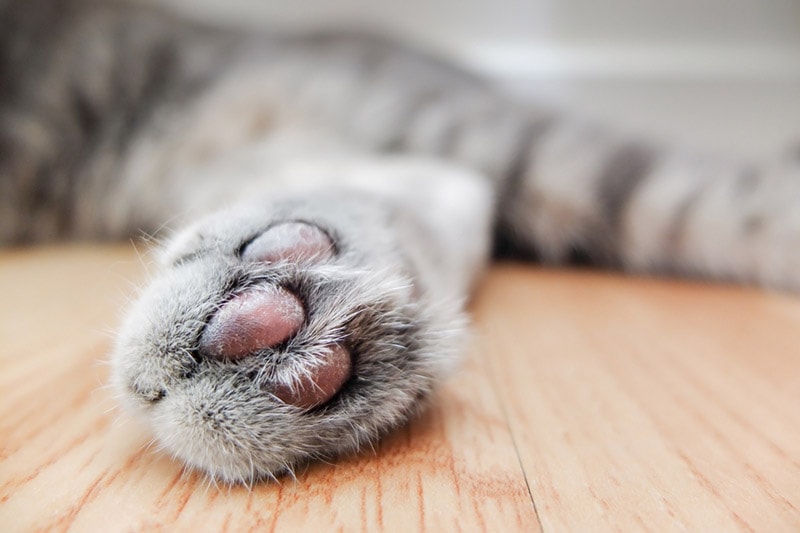
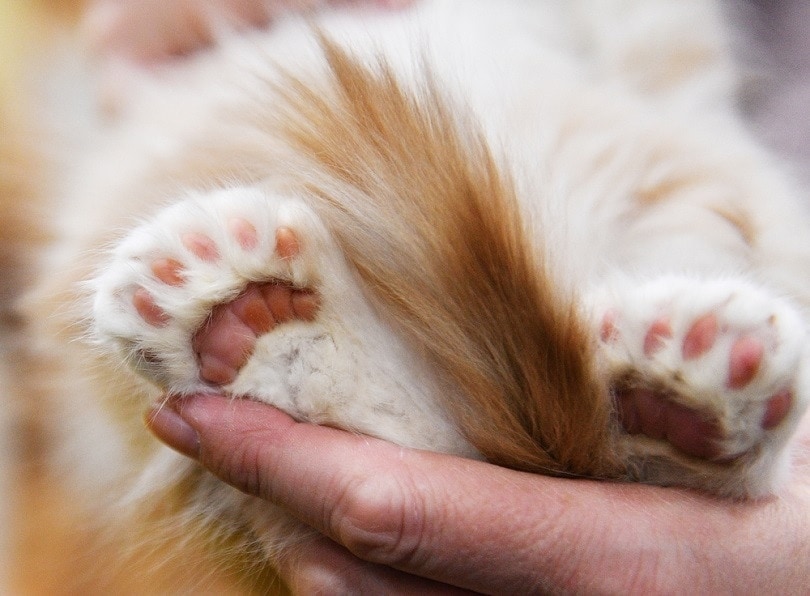
A cat’s paws typically have an extremely circular shape with tear-drop-shaped pads. If you draw a line down the middle of the paw from front to back, you’ll notice that it’s almost identical to the size of a line you would draw horizontally across the pad.
This shape gives the cat a bit more control when they’re climbing uneven terrain since it allows them to increase the amount of contact between the surface they’re climbing on and the pad.
The Pads
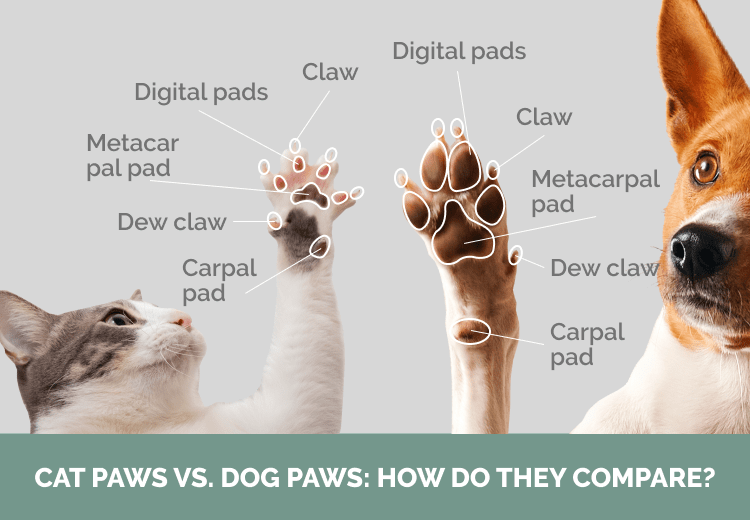
If you look at the bottom of a cat’s paw you’re going to notice “pads” on the bottom that act as a cushion for them as they walk around. They also act as shock absorbers whenever your cat jumps or sprints around. A cat’s front paws have five digital pads on each toe, a round metacarpal pad in the middle, and a carpal pad further up the leg.
Their rear paw pads are similar to their front paw pads, except their hind paws don’t have a carpal pad and have fewer digital pads (four). The digital pads have an oval shape, while the metatarsal pad is usually an irregular shape.
The metatarsal pad shape consists of three large lobes on the back edge near the heel, and two lobes on the pad near the front edge. The surfaces of all of a cat's paw pads are very soft to the touch. This allows cats the ability to silently sneak up on their prey without drawing attention to their ambush.
How Cats Use Their Paws
Cats use their paws in a variety of ways. First, they use their paws to climb, grabbing onto things with their claws if they start to lose their balance or if they need a better grip on something.
The muscles in their paws and further up their legs give cats incredible acrobatic abilities, allowing them to jump, pounce, and sprint. At the same time, their soft round pads make their footsteps very quiet, providing them stealth when they ambush.
Cats also use their paws as a loofah of sorts when they groom themselves — they lick the paw and then rub it over their face. Not only this, but cats also use their paws to dig around as they use their litter box, and to cover their waste after they're done using it.
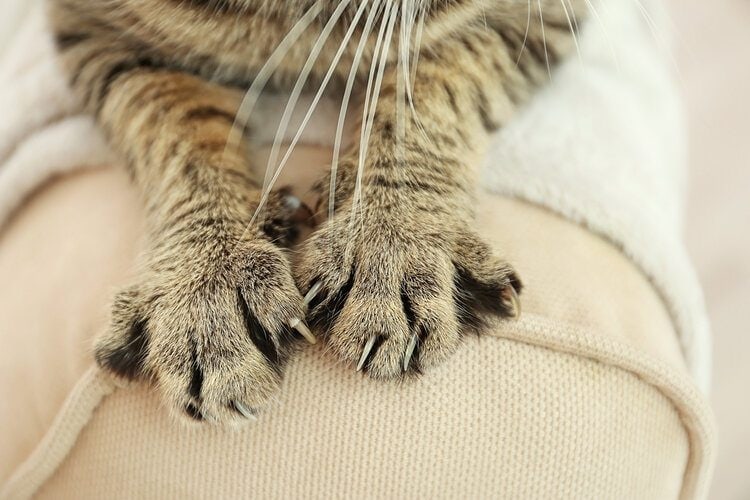
Additionally, your cat's paws contain sweat glands which assist in thermoregulation by allowing your cat to sweat if it feels hot. In between each individual claw are other glands that cats use for scent marking. These scents can't be noticed by us but can be picked up by other cats. Cats also have whiskers near their carpal pads on their forepaws. Whiskers are specialized hairs that a cat uses for sensory information and navigating their environment, similar to how an insect would use their antennae.
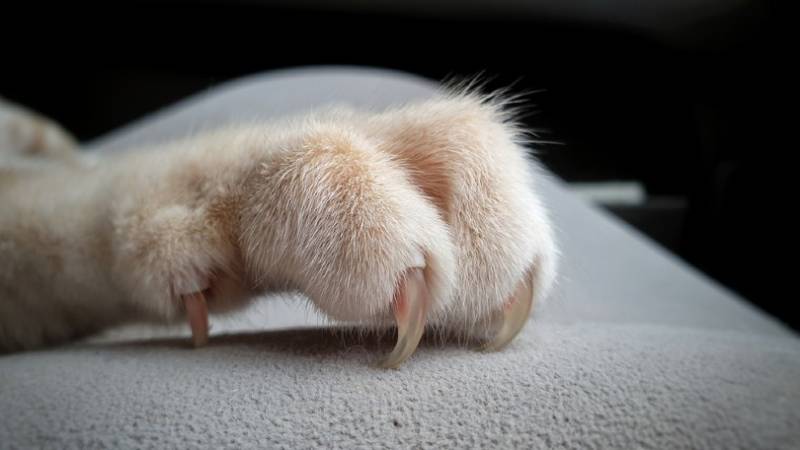
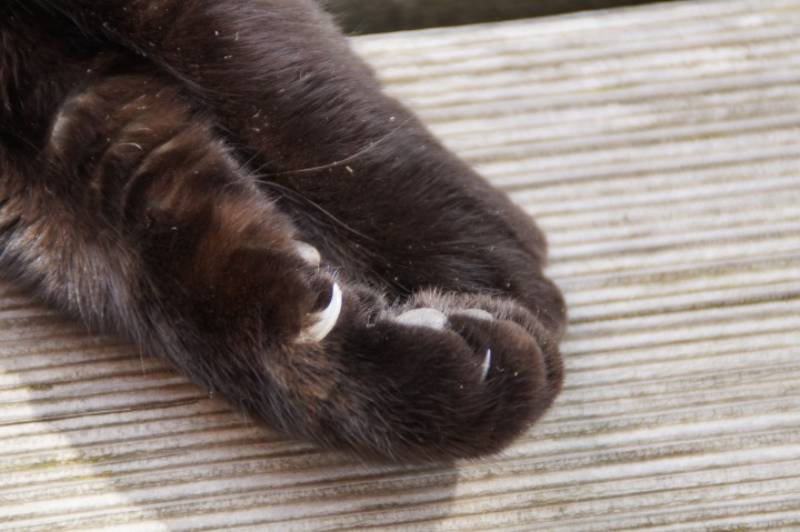
In addition, cats also use their paws as a defense mechanism and as a hunting tool. Their claws are razor-sharp, and they use them to trap their prey or slash at the animal trying to attack them. While domesticated cats don't need their claws to hunt, wild cats rely on them to not only grab prey but to latch on to animals that are trying to escape their ambush.
Whenever threatened, a cat may use their claws for defense by swiping at a perceived threat.
Overview of Dog Paws
Cat and dog paws are similar in a lot of ways, but they’re far from identical! We’ve highlighted the basics of a dog’s paw shape, pads, and how they use them for you below. After reading about the same thing for cat paws, you should be able to point out a few differences along the way!
The Shape
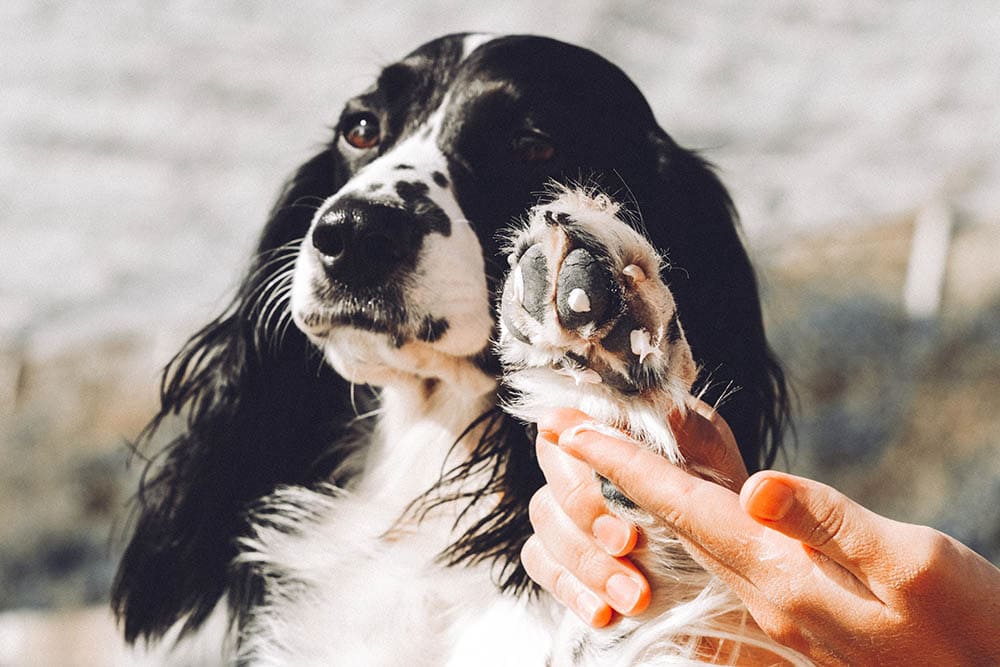
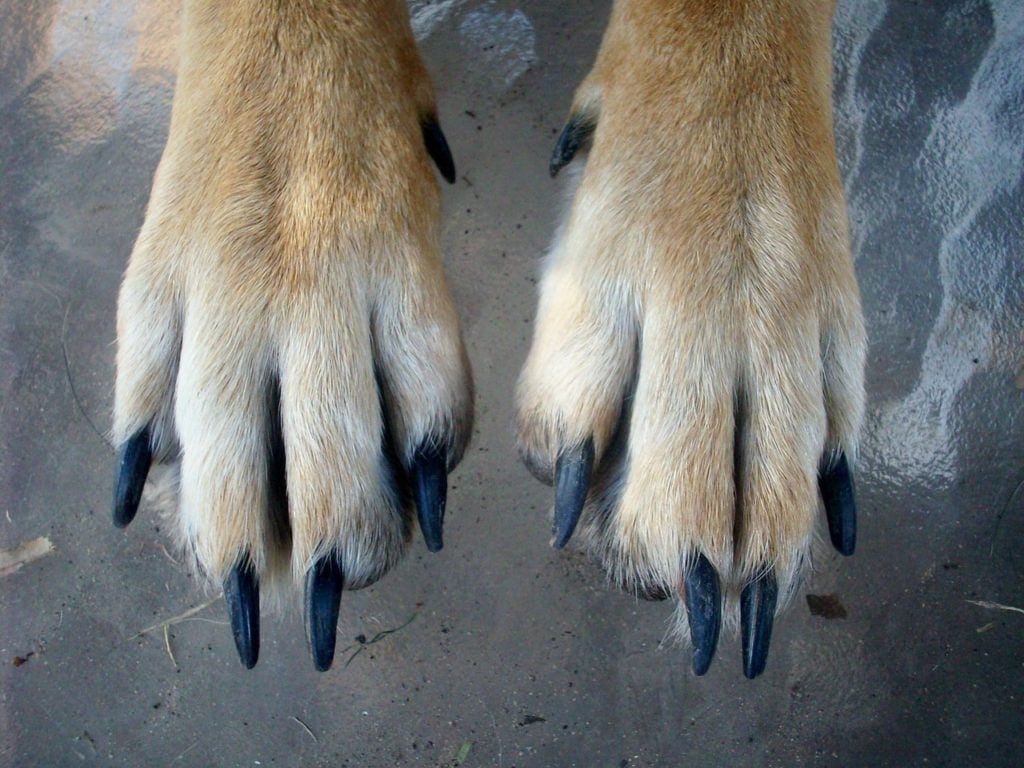
While a cat’s paw is a more circular shape, a dog’s paw is more of an oval. The larger part of a dog’s paw faces the same direction they are, giving them more balance while standing on the ground.
Since dogs don’t climb on things the same way cats do, the additional balance and traction they get while standing on the ground are far more beneficial than what they would get by having circular paws.
The Pads
The pads on the bottom of a dog’s paws serve the same purpose as a cat’s, they provide a cushion for your dog while they walk around. Dogs have seven pads on their front paws, five digital pads near each toe, a metacarpal pad behind that, and a carpal pad further up the leg.
Their rear paws have all the same pads as the front paws, except the rear paws do not have a carpal pad. They also have just four digital pads on each rear paw. The pads on a dog’s paw are described as heart-shaped or triangular, and this is true for the digital, metacarpal, and metatarsal pads. A dog's paw pads are often quite rough to the touch.
How Dogs Use Their Paws
In some ways, dogs use their paws the same way a cat does. For starters, dogs also sweat through their paws, allowing them to cool down a bit. Moreover, dogs use their paws to dig holes and maneuver around objects.
Like cats, they also possess scent glands in their paws which they use to leave messages for other dogs.
In other ways, dog paws have unique features that cat paws don't possess. While cats are excellent at ambushing prey and being very agile, dogs are built for endurance. The rough pads on their paws make dogs excellent at pursuit chases, as the protection is needed when running long distances at high speeds.
Dog paws aren’t quite as versatile as cat paws when it comes to hunts, but you will spot dogs using their paws and legs to hold onto different objects when chewing on them. Unlike cats, dogs cannot retract their claws. Their claws are tougher and help them with weight bearing while they walk or run.
What Are the Differences?
Note
While cat and dog paws are similar in a lot of ways, there are some clear-cut differences you should be aware of. First, while there’s certainly a difference between the size of cats, it’s not quite as extreme as the difference with dogs.
Most cats are around the same size, and you can’t say that about dogs. Because of this, the size of paws on dogs tends to vary quite a bit more than with cats.
Next, if you look at the pads on dogs and cats, you’ll notice a few differences too. While both cats and dogs have the same number of pads and are in the same locations, the pads on cats tend to have an oval or round shape, while the pads on dogs have a triangle or heart shape.
This matches the overall difference in the shape of the paws. Cat paws are more circular to help them while climbing, while dog paws have a more oval shape which they can push off from for more explosive movements on the ground.
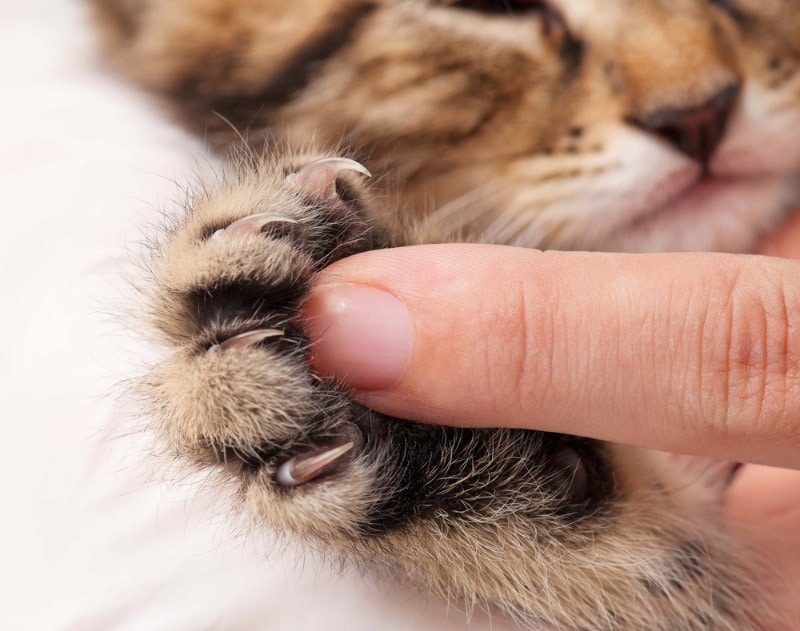
Finally, while all these are interesting and unique differences, perhaps the most notable difference between a cat’s paws and a dog’s paws comes down to the claws. A dog’s claws are always out, and while they’re thick, strong, and somewhat sharp, they’re nowhere near as sharp as a cat’s claws.
Cat claws are razor-sharp and actually retract into their paws when they aren’t using them. This is a good thing because if their claws were always out, you wouldn’t want a cat climbing on you to curl up in your lap!

Summary
Whether you’re a dog person or a cat person, there’s no denying that they both have some cool and unique paws!
There are a ton of similarities between the paws of both animals, but there are also plenty of differences you should be aware of. Hopefully, now that you know a little more about each one, you can appreciate them a bit more.
Featured Image Credit: Jumpstory
Get Hepper In Your Inbox



Pet care tips from our vets and experts, straight to your inbox.
You may opt-out at any time. View our Privacy Policy for more information.
Nicole is a lover of animals of all sizes but is especially fascinated with the feline variety. She’s the proud mom of Baby, a Burmese, and works every day so he can relax in the sunshine or by the fire. She’s always had a cat in her home and has spent countless days with others, observing behaviors and softening up even the grouchiest of the lot. Nicole wants to share her kitty expertise with you so you and your cat can live happy, healthy, and care-free.
Join the conversation
Ask a question, share your story, or send private feedback.