Hepper is reader-supported. When you buy via links on our site, we may earn an affiliate commission at no cost to you. Learn more.
How Much Do Bichon Frises Shed? Facts & Grooming Tips
In this article
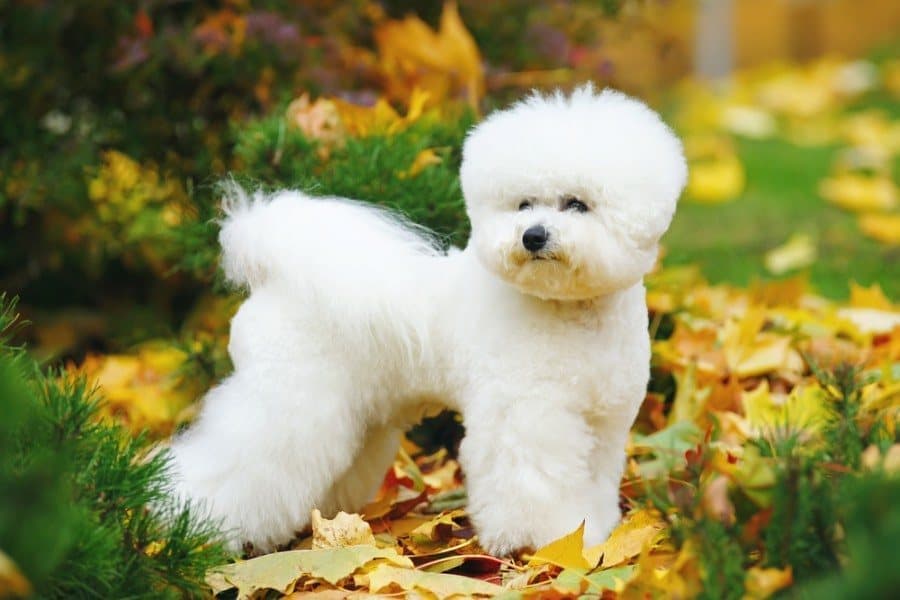
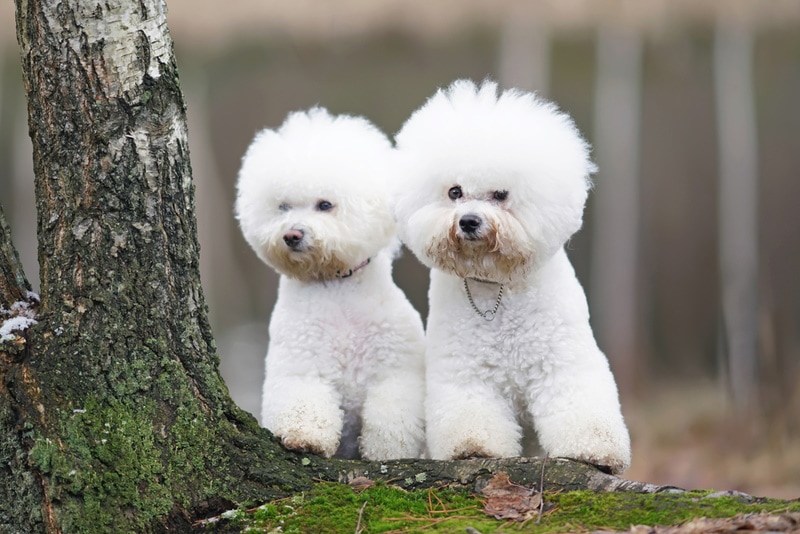
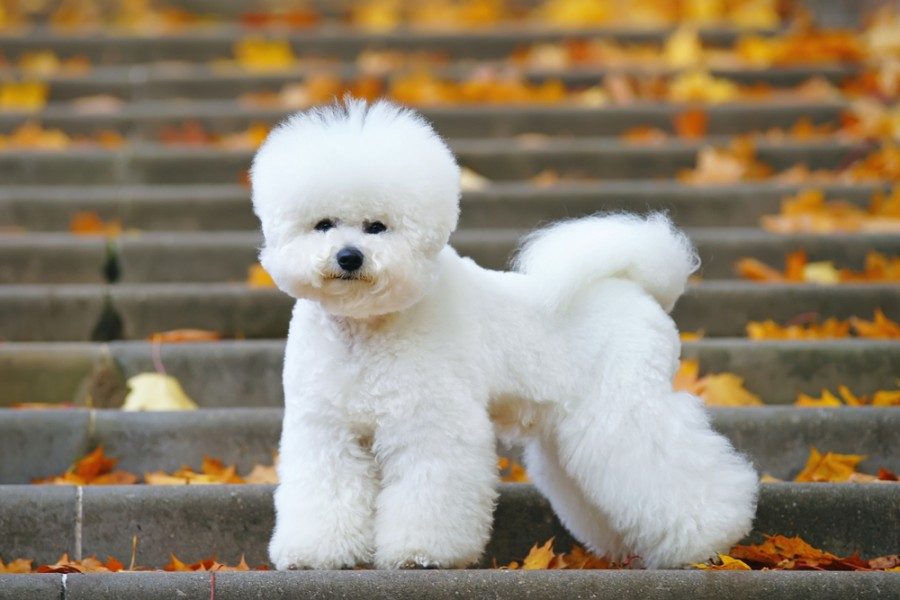
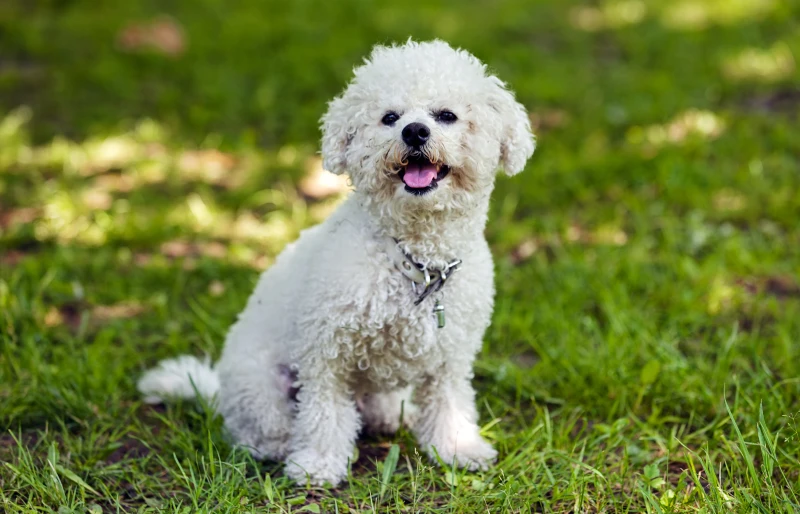
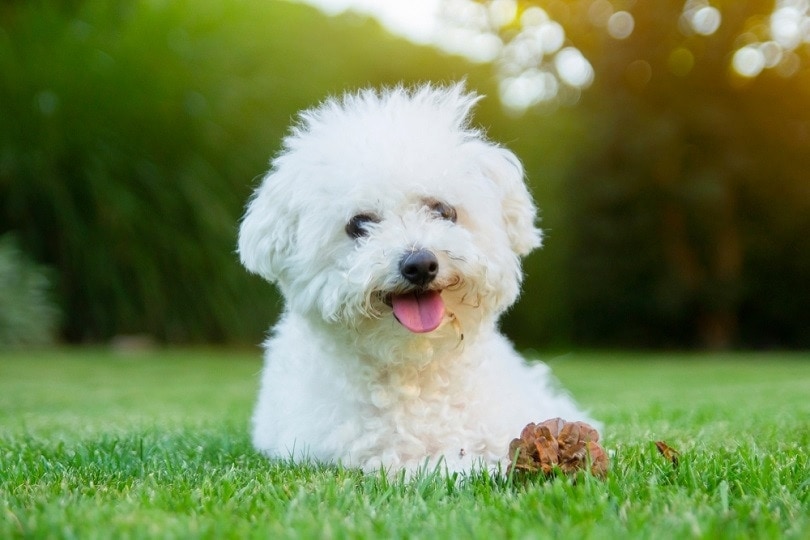
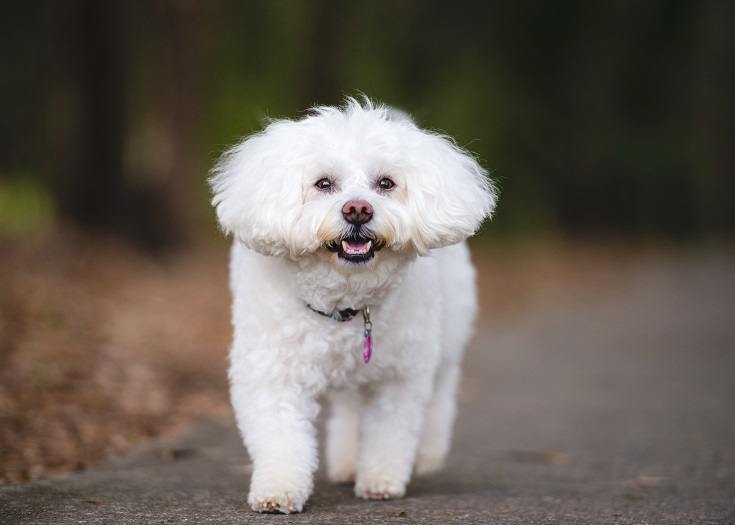
The Bichon Frise is a cheerful and lovable dog breed that belongs to the Bichon type dogs like the Bolognese, Havanese, and Maltese. This relatively small dog features a charm, beauty, and personality that is unrivaled, simply adding joy to any household that they live in. To top it off, this breed doesn’t shed much and is considered a hypoallergenic dog breed by the AKC.
Bichons are suitable for people looking for a canine companion that is less likely to cause allergies. However, though they might be considered a low-shedding breed, their thick powder puff coats require a lot of maintenance to keep them shiny and healthy.
This article will discuss the Bichon Frise shedding so that you can determine if it’s the right breed for your family. Read on to learn more.

Bichon Frise Shedding
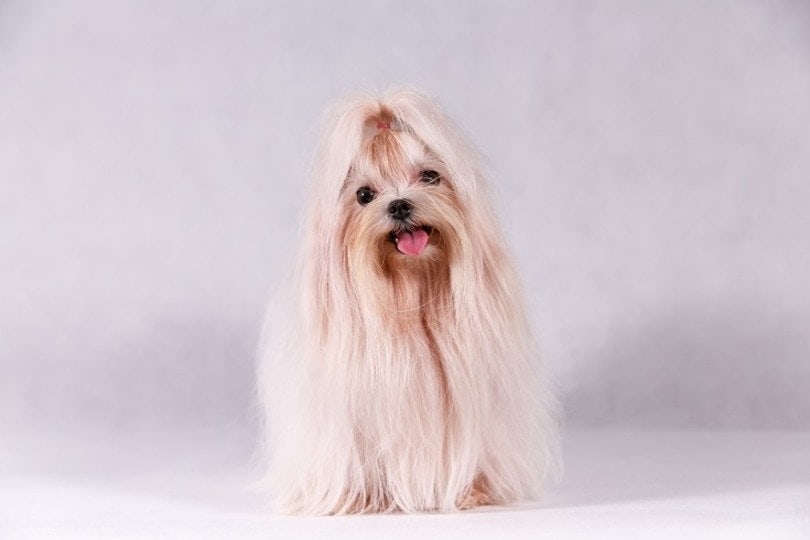
As earlier mentioned, the Bichon Frise is a relatively low-shedding breed. In fact, it is given a 1/5 shedding level rating and even classified among the least shedding dogs on the planet alongside all bichon dog varieties and smaller dog breeds like Shih Tzus and Poodles.
However, this doesn’t mean that they do not shed at all.
All fur-covered dogs shed their hair or molt at some point in their lifetime. However, when these ones do shed, due to their coat texture, the loose hair barely ever gets caught up inside their coat. Therefore, instead of the loose hair falling off their bodies and sticking on your furniture or falling on your floors, most of it ends up on the grooming brush.
The amount that the Bichon Frise sheds mostly depends on the specific breed and more particularly, the rate at which the fur grows, stops growing, and finally falls out. This process is referred to as the hair growth cycle- the more delayed it is, the longer the fur can grow and the less your dog will shed.
When this is combined with the fact that the Bichon Frise is a very small dog breed, very little of their hair gets to fall off in comparison to large dog breeds. So, overall, there will not be a lot of fur in your home, especially if you keep up with their grooming needs.
The dog is ideal for people that have the time for regular coat trimming and brushing or the resources to hire a professional groomer.

The 3 Reasons Bichon Frises Could Shed Excessively
In some instances, this breed can experience excessive molting or shedding, which is usually caused by poor diet, allergies, or even fleas among other causes. If you notice that your dog is shedding heavily or you have concerns regarding its shedding, consult your local vet for advice.
Below are some of the main reasons why the Bichon Frise might shed excessively.
1. Underlying Illnesses
Usually, a dog's fur coat can tell you more about its overall health. Several health and medical conditions can lead to excessive shedding in your dog. Thus, you should always be on the lookout for symptoms that might indicate that your mutt is in poor health and provide your dog with the right treatment plan before things escalate.
Common symptoms include:
Most of these symptoms are brought on by conditions such as:
Fortunately, most of these health issues are treatable, but if left unattended they can rapidly worsen and put your dog's life at risk. You can implement lifestyle changes to improve your dog’s quality of life.

2. Nutritional Imbalances
A healthy coat is usually a result of various important foods and nutrients. The most popular recommendations are omega-6 and omega-3 fatty acids. However, even these nutrients cannot guarantee that your Bichon Frise will have healthy skin and coat.
On the other hand, trendy supplements may make bold promises in regard to providing your dog with a healthy coat but the only sure way of ensuring your Bichon Frise gets all the required nutrients is to offer a healthy and balanced diet.
The constitution of a healthy and balanced diet will vary from one breed to another. However, traits such as energy level, size, and specific deficiencies will play a huge role when making the perfect diet for your Bichon Frise.
Moreover, a dog's nutritional requirement changes throughout its lifetime.
3. Stress
There are several reasons why your Bichon Frise might be stressed. The most likely ones include canine separation anxiety, boredom, loud noises, aging, and new people, pets, or places. When your dog experiences these stress factors, it is likely to shed more than normal.
The only way to reduce the shedding is to address these stress points.

How to Groom Your Bichon Frise
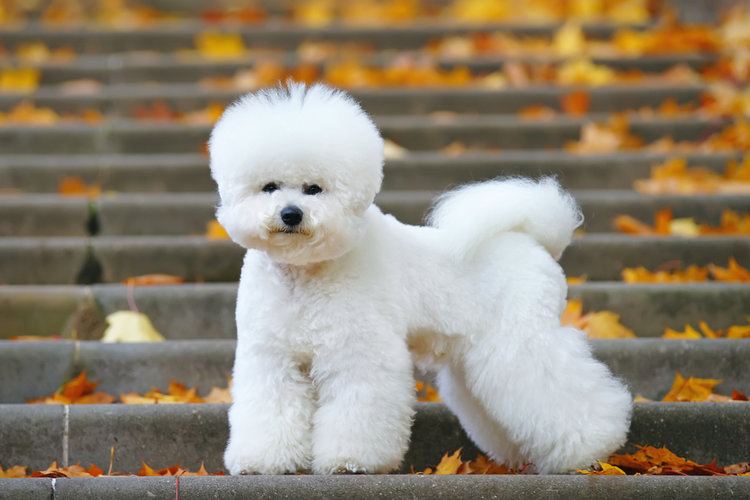
Granted, the Bichon Frise might not shed a lot, but their fur coat is very high maintenance. It can be quite challenging to keep up with the Bichon Frise grooming requirements because they feature a double coat, i.e. an outer hair layer and a fur undercoat.
The undercoat tends to be dense and soft, which helps the dog insulate itself in hot and cold conditions. The outer layer, which is sometimes called the guard coat, is more coarse, puffy, and curly looking. The combination of the two coats makes the grooming efforts more tasking than in other typical dog breeds for a few reasons.
- For starters, due to the length and texture of the outer coat, it is highly prone to tangles and mats. This can be attributed to the fact that most of the hair that the dog sheds is trapped inside the undercoat. So, you need to regularly brush your dog to remove the mats which can be quite uncomfortable and painful for your Bichon Frise.
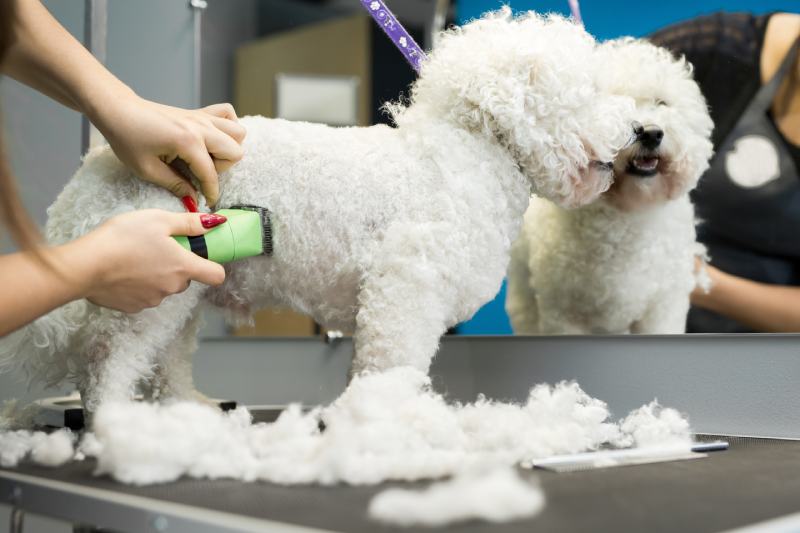
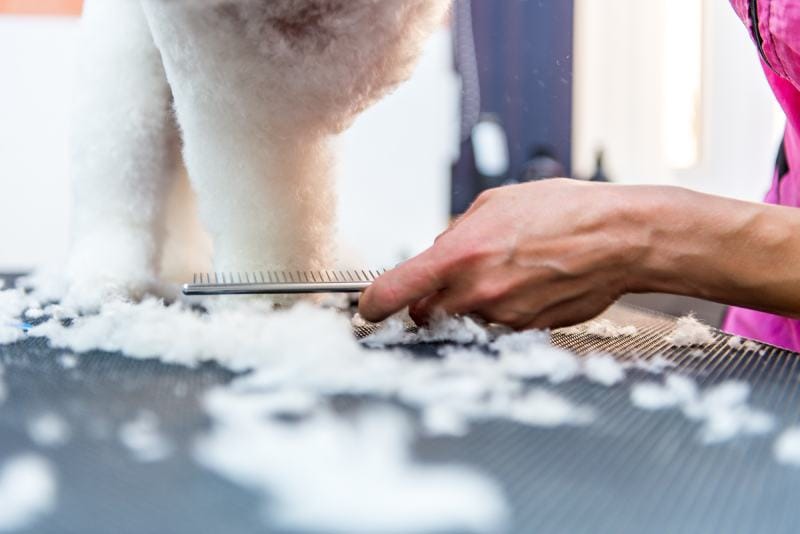
- Second, since the dog's hair keeps on growing, not only does it require frequent brushing, but it also needs trimming every couple of months to keep it at an appropriate length. Sure, trimming might simplify brushing, but it is a very strenuous affair. This is probably why most Bichon Frise owners opt to take their mutts to professional groomers every month.
So, you can either learn how to properly groom your dog by yourself or outsource to a professional. Just make sure that its coat is brushed a few times a week, preferably daily to keep the coat matt-free. Also, it's best to start grooming your Bichon Frise immediately after it develops its adult coat, usually after reaching one year old.
Can You Shave Your Bichon Frise?
While you can trim your dog's fur coat to a reasonable length, it’s never recommended to completely shave a dog with an undercoat right down to the skin. You can only do so at the behest of your veterinarian.
The undercoat plays a vital role in protecting your dog from things like sunburns. Sure, some people might assume that Bichon Frise lacks an undercoat, but the AKC clearly states that this breed does feature one. If your Bichon Frise doesn’t have one, then it’s probably a mixed breed, because all purebreds have one.


Conclusion
The Bichon Frise is an adorable, playful, and intelligent dog that makes a great family companion. They are suitable for people looking for a low-shedding breed that features a hypoallergenic coat. Be that as it may, you should keep in mind that no dog is truly hypoallergenic.
As much as Bichons don’t shed much, they feature two coat layers that require some time and effort to keep up with their grooming needs. This makes it a high-maintenance breed. Yet, if you don't mind keeping up with the grooming requirements, the Bichon Frise can be a very lovely addition to your home.
Sources
Featured Image Credit: Helen Sushitskaya, Shutterstock
Get Hepper In Your Inbox


Pet care tips from our vets and experts, straight to your inbox.
You may opt-out at any time. View our Privacy Policy for more information.

Nicole is a lover of animals of all sizes but is especially fascinated with the feline variety. She’s the proud mom of Baby, a Burmese, and works every day so he can relax in the sunshine or by the fire. She’s always had a cat in her home and has spent countless days with others, observing behaviors and softening up even the grouchiest of the lot. Nicole wants to share her kitty expertise with you so you and your cat can live happy, healthy, and care-free.
Join the conversation
Ask a question, share your story, or send private feedback.