Hepper is reader-supported. When you buy via links on our site, we may earn an affiliate commission at no cost to you. Learn more.
How Often Should I Walk My Dog? Canine Health and Wellness
In this article
If you’re getting ready to welcome a new dog into your life, you probably have many questions about how to care for your pet properly. You know that your pup will need daily exercise, but how often should you walk your dog? On average, most dogs need about a 20–30 minute walk each day, but this may vary quite a bit based on several factors.
In this article, we’ll discuss which considerations could impact how often you walk your dog. You’ll also learn some safety tips to keep in mind when exercising your pup and the health benefits of daily exercise for your dog.

Factors That Help Decide How Often to Walk Your Dog
Size
Generally, larger dogs need and can tolerate more exercise than small dogs. A 6-pound Chihuahua won’t be able to walk as far as a 60-pound Labrador Retriever, nor do they need to do so to stay fit. However, the size of a dog doesn’t always indicate its activity level either, so you’ll need to consider other points and figure out how often to walk them.
Breed
Your dog’s breed or mix will significantly affect how often they need a walk. Working, herding, and hunting breeds tend to have more energy and may need as much as 2 hours of exercise per day. Walking may not be enough to tire them out, either!
Smaller breeds vary quite a bit in their activity level. For example, Terrier breeds aren’t very big but often have endless energy. Giant breeds, like Mastiffs, tend to have lower activity levels compared to their physical size.
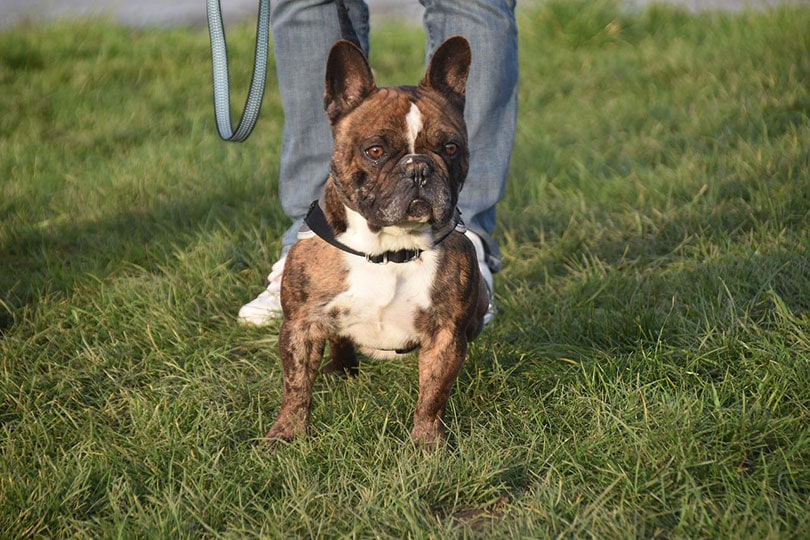
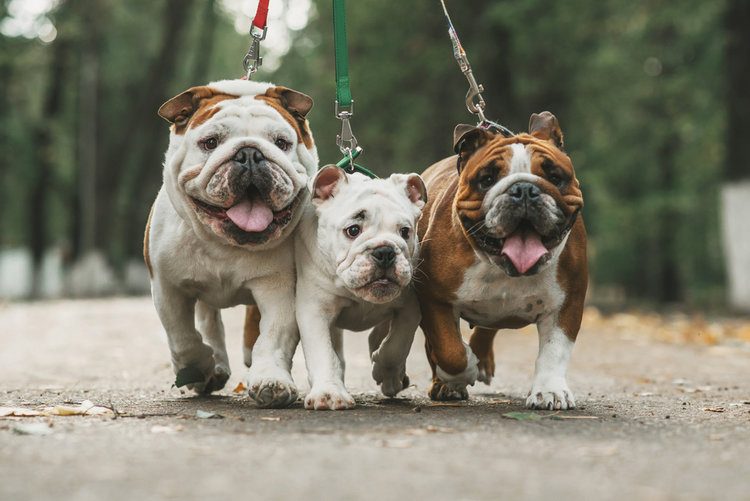
Some breeds won’t tolerate as much physical activity because of their body type. Flat-faced breeds like Bulldogs and Pugs often tire more easily and can even have trouble breathing if they walk for too long.
Physical Condition
Your dog’s physical condition is another critical factor in determining how often you should walk them. Overweight dogs may struggle to walk even the minimum recommended amount per day.
Dogs recovering from illnesses or surgery shouldn’t be walked as often, and those with arthritis or back problems will also be limited in their exercise tolerance. Other medical conditions can impact how often you walk your dog, so it’s best to check with your vet to help develop an exercise routine for them.
Age
Older dogs tend to have more medical conditions than younger ones, so your pup’s age will also factor into how often you should walk them. Puppies and younger dogs are generally the most energetic and tolerant of frequent walks. Middle-aged dogs may start to slow down or keep the same activity levels, so you’ll need to pay close attention to your pet during this life stage.
Physical activity is still beneficial for older dogs if their health allows it. You just may not be able to walk them as often. Again, talk with your vet about a good exercise goal for older dogs and observe your pet closely during walks to gauge their tolerance level.

Safety Tips When Walking Your Dog
Start Slow
If your dog is still growing or isn’t in good physical shape, it’s important not to overdo it with daily walks. Young dogs, especially giant breeds whose joints develop slowly, are prone to injuries from overexertion.
Just like you wouldn’t jump straight from never exercising to running a 5k, your dog needs to build physical strength and stamina. Overweight dogs need exercise to help lose weight but will need to start with shorter and slower walks to avoid injury.
Monitor how your dog feels and acts after your walks. They should be tired but not sore and exhausted. Gradually increase the length or number of your walks until you achieve just the right balance of activity.
Check the Weather
All dogs, especially flat-faced breeds, should be exercised with caution in hot weather. Dogs can suffer heatstroke from being too physically active in high temperatures. Consider shorter walks or exercise your dog early in the morning before it gets too hot.
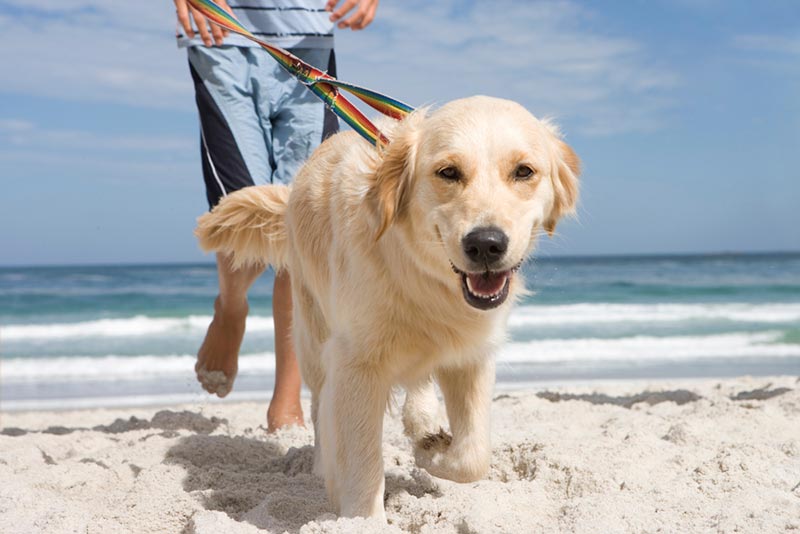
Both hot pavement and icy sidewalks can injure your dog’s paws during walks. Protect your dog’s feet with booties in the winter, and avoid walking them on hot sand or asphalt.
Stay Alert and Be Considerate
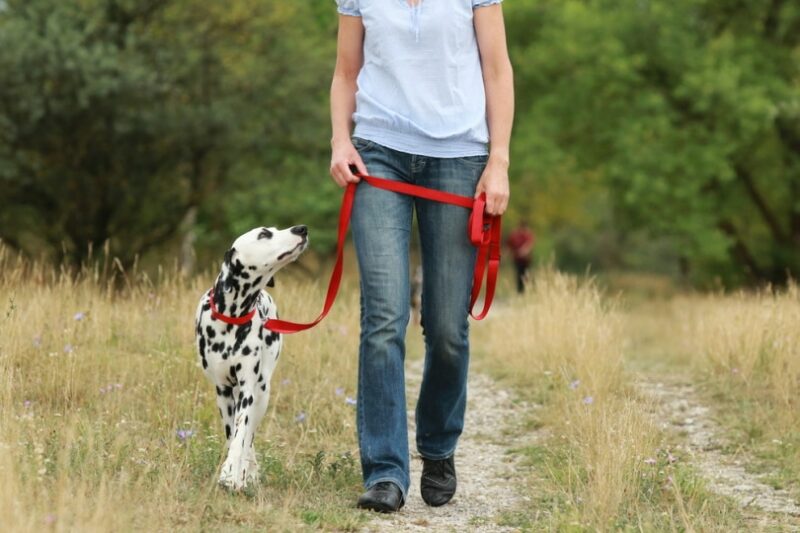
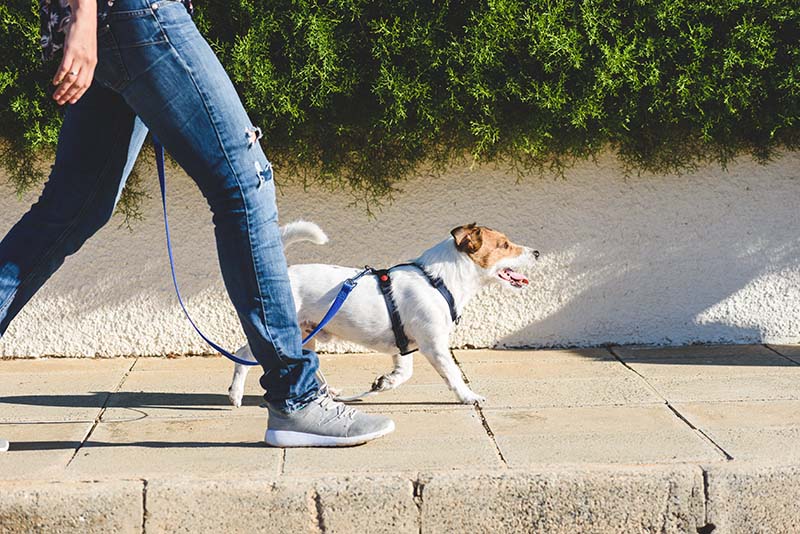
When walking your dog, keep them on a leash for safety unless you’re in an enclosed area. Be alert and aware as you walk, especially for other pups running off-leash. Don’t let your dog bark or lunge at other pets or people.
Even dogs on a leash can come across hazardous substances on the ground to chew or eat. Keep an eye on your dog as you walk, and be on the lookout for dangerous items they might grab.
Benefits of Walking Your Dog
No matter how often or how long you walk your dog, the activity offers multiple benefits to you and your pup.
Benefits to Your Dog
Regular walks help keep your dog physically fit and at a healthy weight. Activity helps burn energy and keeps your dog mentally stimulated. Dogs are more likely to engage in destructive and obsessive behaviors without regular exercise.
Walking helps keep your dog’s joints moving and muscle mass intact. This is especially vital for older dogs with arthritis and other mobility issues. Exercise aids with the proper function of your dog’s other body systems, such as digestion.
Benefits to You
Walking your dog also forces you to exercise yourself, which has many of the same health benefits as it does for your pet. Lower blood pressure and cholesterol are all proven benefits of regular walking with your dog.
While walking your dog, you also experience increased opportunities to meet and socialize with other people and pet owners. This can help improve mental health and decrease anxiety and loneliness. Older people are especially likely to experience benefits from owning and walking a dog.
Conclusion
How often you walk your dog will vary based on its health, age, size, and breed. For many of us, it may also depend on how much time we have to walk our dogs. As you research which breed or mix is best for your lifestyle, knowing how much time you’ll need to devote to walking your dog is a crucial consideration. As we discussed, dogs who don’t get regular exercise may suffer physical and mental issues. If you’re worried you won’t have enough time to walk your dog, consider other options like hiring a dog walker or enrolling your pup in doggy daycare.
See Also:
Featured Image Credit: Freepics4you, Pixabay
Get Hepper In Your Inbox


Pet care tips from our vets and experts, straight to your inbox.
You may opt-out at any time. View our Privacy Policy for more information.

A lifelong lover of all creatures great and small, Elizabeth got her first cat at 5 years old and at 14, she started working for her local veterinarian. After spending more than 20 years working as a veterinary nurse, Elizabeth decided to step away to become a stay-at-home parent to her daughter. Now, she is excited to share her knowledge with our pet parents. Elizabeth lives in Iowa with her family, including her two fur kids, Linnard, a husky mix and Algernon, the worldʻs most patient cat. When not writing, she enjoys reading, watching soccer, and spending time outdoors with her family.
Join the conversation
Ask a question, share your story, or send private feedback.