Hepper is reader-supported. When you buy via links on our site, we may earn an affiliate commission at no cost to you. Learn more.
How to Apologize to a Cat: 6 Helpful Tips

Forgiveness is part of our daily lives—it is even written and recommended in many sacred books. However, the process of accepting your mistakes, lowering your ego, and extending an apologetic arm is difficult.
Now imagine you have done something to a cat and want to apologize. This can be extremely tricky, as you can well imagine. Will you seek forgiveness? If you plan to do so, then you are on the right track. The following tips will break down the complicated process into a few simple steps.

The 6 Tips for Apologizing to a Cat
1. Read Their Body Language
A cat extensively uses body language other than meowing, purring, or hissing to communicate. Understanding what it is trying to communicate may give you an insight into its current state of mind.
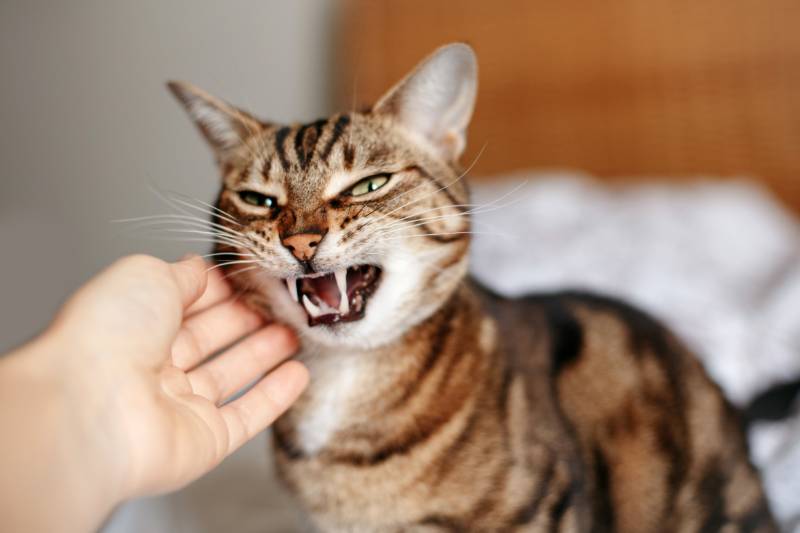
So how do you study a cat's body language? An angry cat will raise its whiskers, bare its teeth, and wrinkle its nose. Don't approach it—instead, leave it alone for some time to cool down.
If a cat raises its fur and extends its claws, it is in an attacking position and may pounce at you in case you move too close. A cat uses its ears to judge its surroundings. When the ears are at a normal erect position, the cat is relaxed or attentive. When the ears are curled against the skull, and the cat is crouching down, it is in an uncomfortable position.
Lastly, an agitated cat will swivel and twitch its ears in rapid succession. But sometimes, twitching ears may not always mean nervousness.
2. Pick a Good Time
Now that we have talked about how to use body language to determine when the cat is unsettled, when is the best time to approach it? Depending on how you offended the cat, it may run away or defend itself. These are two different scenarios and require different timing.
A scared cat will keep running away when you approach it. To fix this, approach the cat calmly when crouching down. It will be less likely to feel intimidated.
While a scared cat will keep running away, an angry one will defend its position. Be patient for around 2 hours—usually the time it takes an aggressive cat to calm down. When the time is right, approach it silently and leave an escape route. The escape route is important because rather than fighting, an angry cat will run away.
3. Speak to Your Cat
It is easy telling a human that you’re sorry because they have the ability to comprehend your words at an intimate level. The same may happen with a cat—you only need to find the right choice of words.
Animal psychologists have proven that cats recognize their names. Calling your cat by its name will hopefully distract it from emotions. However, when calling a cat, use a soft, calm voice. Again, shouting and using a high-frequency voice will not help you. Nobody loves to be shouted at, and nor do cats.
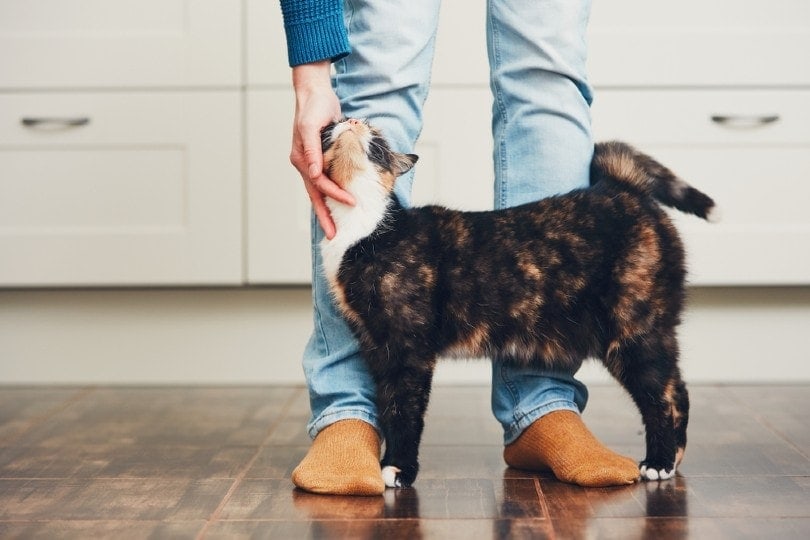
Once the animal has calmed down, it is your job to rebuild the trust. Nothing does this better than petting. Use a pet brush to scratch it slowly on the back. When the cat is in a good mood, it will raise its back to reduce the distance between the brush and its body. This is a positive sign.
Stroke the area between the ears and eyes. This part of the skull has a dense concentration of nerve endings. So, when touched, the feeling is pleasurable.
4. Play With the Cat
Compared to mature cats, kittens spend most of the day playing. But at 12 months, individual personalities become apparent. Some will continue with the playful nature, while others will settle down for a less demanding and gentle lifestyle.
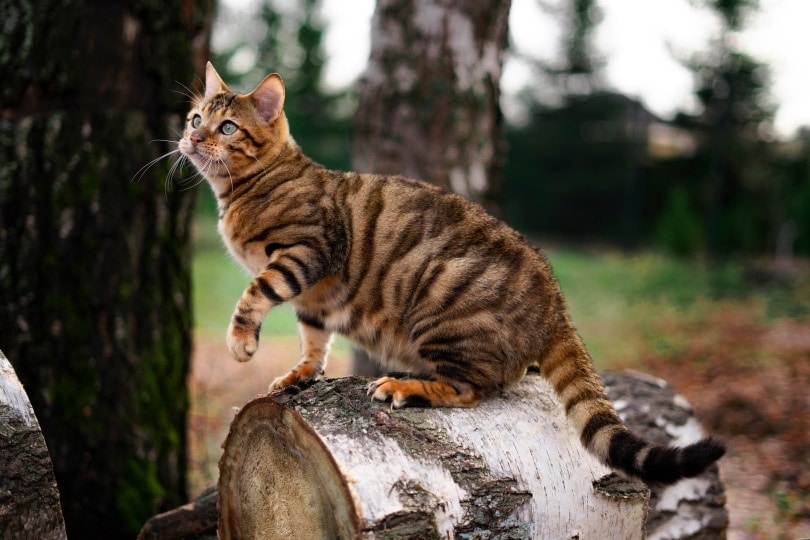
Before playing with your cat after a mistake, take a deep dive into its personality. Cats with playful personalities include Abyssinian, Siamese, and Bengal.
To play with a cat, try the following tips:
5. Attention is Important
Cats are affectionate animals, and they expect humans to be the same. But due to our busy schedules, we often forget to attend to pets. If you have been extremely busy for some time, you may notice your cat giving you the cold shoulder.
Fix this by spending long hours together. It may be sleeping, reading a book, or watching a movie while the cat is relaxing on your lap.

6. Seek Expert Advice
If your efforts to solve issues with the cat are all in vain, seek expert advice. Some veterinarians or animal psychologists may be able to help.
Summary
While we try as much as possible to relate well with our cats, mistakes happen and you may need to consider an apology.
To apologize to a cat, identify the mistake, get the timing right, and consider spending more time with it. However, do not approach or try to apologize to a cat with raised fur, extended claws, and ears curled against the head. Let the cat calm down before attempting to interact.
Related read: How Does a Cat Say Sorry? Feline Behavior Explained
Sources
https://faqcats.com/why-do-cats-raise-their-back-when-you-pet-them/
https://www.hillspet.com/cat-care/behavior-appearance/how-to-calm-aggressive-cats
https://www.loc.gov/everyday-mysteries/zoology/item/how-do-cats-communicate-with-each-other/
https://www.legalmatch.com/law-library/article/animal-bite-accident-statistics.html
Featured Image Credit: U__Photo, Shutterstock
Get Hepper In Your Inbox


Pet care tips from our vets and experts, straight to your inbox.
You may opt-out at any time. View our Privacy Policy for more information.

Nicole is a lover of animals of all sizes but is especially fascinated with the feline variety. She’s the proud mom of Baby, a Burmese, and works every day so he can relax in the sunshine or by the fire. She’s always had a cat in her home and has spent countless days with others, observing behaviors and softening up even the grouchiest of the lot. Nicole wants to share her kitty expertise with you so you and your cat can live happy, healthy, and care-free.
Join the conversation
Ask a question, share your story, or send private feedback.