Hepper is reader-supported. When you buy via links on our site, we may earn an affiliate commission at no cost to you. Learn more.
How to Check a Cat’s Heart Rate: Vet-Approved Tips & Tricks


In this article
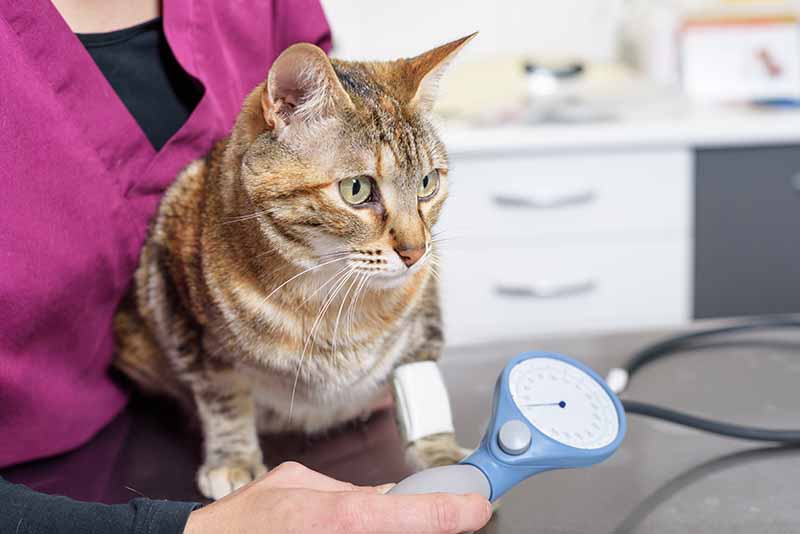
As a pet owner, you might be curious about knowing if there are ways to check your cat's heartbeat at home. Keeping a log of your cat's heartbeat and pulse might prove useful and can sometimes help catch a disease in its early stages. However, many people aren’t sure how to check their cat’s heart rate. If you’re in this situation, keep reading as we provide you with a step-by-step guide to doing just that.

Before You Begin
Before you attempt to take your cat’s temperature, gathering your tools and supplies can be helpful.
Equipment Needed to Check Your Cat's Pulse
Before deciding to take your cat's pulse, please be mindful of the following:
- If you suspect a heart-related emergency in your cat, do not spend time taking their pulse at home. Instead, prioritize taking your cat to a veterinarian as soon as possible.
- Accurately measuring a cat's pulse at home is tricky, and will be especially difficult if your cat is overweight.
- If you have a stethoscope, properly calculating your cat's pulse might still be challenging, especially if they're purring heavily.
- For doubts about your cat's cardiac health, you should always consult a veterinarian. The information provided by pulse alone is not enough to make a diagnosis for heart issues.
The 5 Steps for Checking Your Cat's Heart Rate
1. Choose a Quiet Environment
Choose a quiet and peaceful area to check your cat’s pulse. The best choice is somewhere your cat likes to be so they are comfortable, and you should have a helper with you, but keep all other distractions out of the room. Other people or pets might cause the cat to get up or be distracted while trying to get a heart rate, so let your family know what you are doing so they can keep things quiet.
2. Calm Your Cat
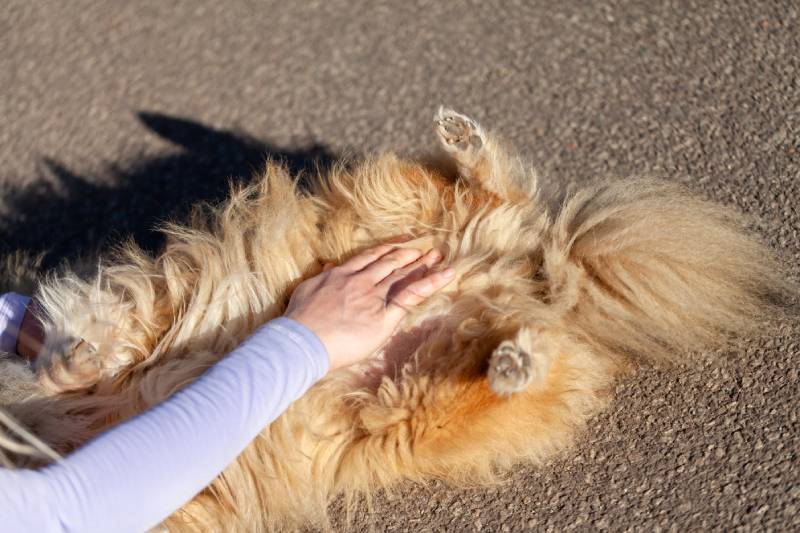
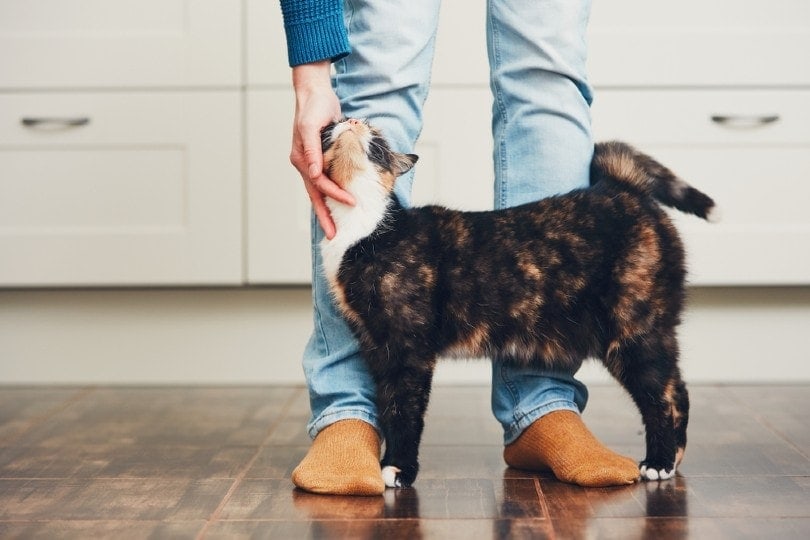
If possible, your cat should be calm and relaxed when you check their heart rate. Try gently stroking their fur or speaking softly to make them more comfortable.
3. Locate the Cat’s Heartbeat
There are several ways to find your cat's pulse. These are the easiest methods for taking your cat's pulse at home:
- Gently place a finger on your cat's inner thigh. You may have to gently maneuver your finger through your cat's fur until you feel contact with their skin. You may be able to feel a gentle thumping with your finger in this area. Specifically, this is where the femoral artery is located, which is the artery you would be feeling for a pulse. It may take some time and practice to determine how much pressure you need to apply before you can pick up a pulse. Start off by placing your finger as lightly as possible and gently increase the pressure until you feel a rhythmic, thumping sensation.
- Gently place a finger on your cat's left chest, at the point where their left elbow meets the body. This spot is known as the point of maximal impulse (PMI) and is one of the best locations to appreciate a pulse. However, it may still be tricky to appreciate a pulse if your kitty is overweight or obese. If your cat is in a healthy weight range and you can feel their ribs, you can gently count the ribs to find your way to the heart. Cats have 13 pairs of ribs. Begin by feeling the last rib and work your way up towards ribs 7, 6, 5, and 4. You should be able to detect the pulse with your finger in this area.
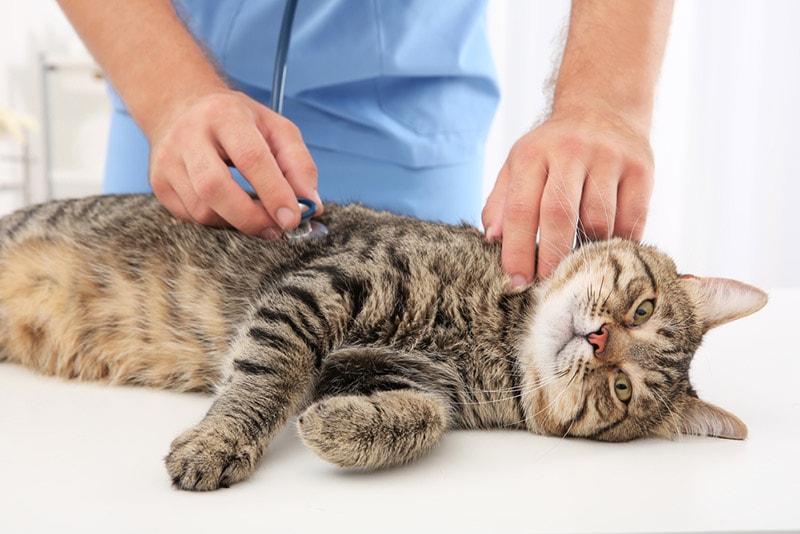
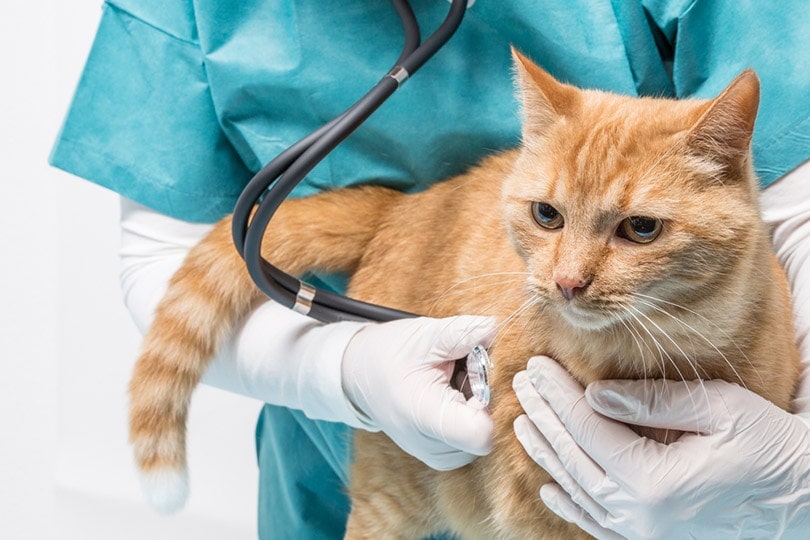
- If you have a stethoscope, you can repeat the procedure listed above. Ensure you follow the instructions on the stethoscope box to use the device properly. Though using a stethoscope is the easiest way to detect your cat's pulse, you may struggle to identify a pulse if your cat purrs excessively during the procedure.
- A fourth way to determine a pulse is by gently placing your finger on the lower neck to feel for a jugular pulse, from your cat's jugular artery. Again, use gentle pressure while attempting. Like the other anatomical sites, this one will be difficult to find if your kitty is overweight or obese.
4. Count the Heartbeats
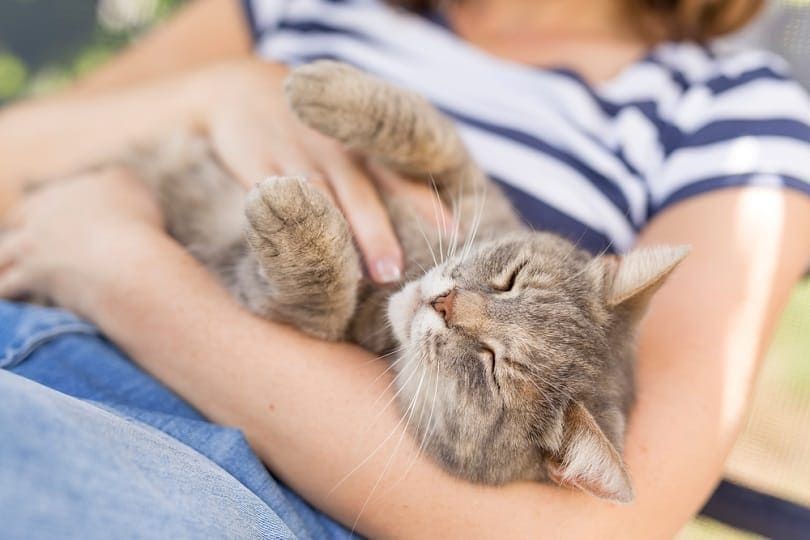
Once you locate the cat’s heartbeat, you must count the beats that you feel or hear. Use your watch or timer to help you count the heartbeats for either a minute (60 seconds) or however long your cat cooperates. If your cat cooperates for a minute, the number would be their beats per minute (BPM).
If your cat stopped cooperating before the minute finished, multiply the number you recorded with an appropriate factor to determine their beats per minute. For example, if your cat cooperated for 15 seconds, multiply the number by 4. Likewise, if your cat cooperated for 30 seconds, multiply the number by 2.
5. Repeat
To get an accurate BPM, it’s important to take the reading more than once. While your cat isn’t likely to sit through multiple attempts, you can try to check their heart rate once per day for at least a few days. Try taking the readings at the same time each day. Please be mindful that the readings from one anatomical location might be different from another. For example, you may get different measurements from the femoral artery when compared to your cat's jugular artery.
When you take your cat's pulse every day, try to get a feel of the strength of the pulse. If you notice your cat's pulse appearing stronger or weaker than usual, schedule an appointment with your veterinarian, as these could indicate an underlying health issue. If you can't find a pulse in a location where you could previously find it easily (also known as an absent pulse), immediately rush your cat to a veterinarian.
Determine the Normal Heart Rate
A normal heart rate for a cat is between 120 and 140 beats per minute, though a heart rate of up to 160 beats per minute can be normal in kittens or very active cats. Therefore, when counting the heartbeats, you should expect to reach a number of 30 or higher, with an average of about 2 heartbeats per second.
Other Interesting Facts About a Cat’s Heart
- A cat’s heart rate is generally faster than that of a human. While a human’s resting heart rate typically ranges between 60 and 100 beats per minute, a cat’s heart rate can be as high as 120 to 140 beats per minute.
- A cat’s heart rate can reach 240 beats per minute under extreme stress or fear.
- A cat’s heart rate can slow down during sleep or periods of relaxation.
- Kittens have a higher heart rate than adult cats.
- A healthy cat’s heart rate should stay consistent and not fluctuate too much.
- Regular monitoring of a cat’s heart rate can help detect potential health issues.
- Medical conditions that can affect your cat’s heart rate include heart disease, hyperthyroidism, and anemia.

Final Thoughts
By following these steps, you can easily check your cat’s heart rate at home. Always handle your cat gently and carefully to ensure their comfort and safety. Choose a quiet place without distractions, and wait until your cat is calm and relaxed before searching for their pulse. Once you have it, count the beats for either a minute or for however long your cat cooperates with you and multiply the number with an appropriate factor to determine their beats per minute. A healthy adult cat’s heart rate should be 120–140 and remain consistent. Contact your vet if you feel like the number is high or low, or if you are having difficulty assessing your cat's pulse and are doubtful about their health status.
Sources
Featured Image Credit: Anna Hoychuk, Shutterstock
Get Hepper In Your Inbox


Pet care tips from our vets and experts, straight to your inbox.
You may opt-out at any time. View our Privacy Policy for more information.
Nicole is a lover of animals of all sizes but is especially fascinated with the feline variety. She’s the proud mom of Baby, a Burmese, and works every day so he can relax in the sunshine or by the fire. She’s always had a cat in her home and has spent countless days with others, observing behaviors and softening up even the grouchiest of the lot. Nicole wants to share her kitty expertise with you so you and your cat can live happy, healthy, and care-free.
Join the conversation
Ask a question, share your story, or send private feedback.