Hepper is reader-supported. When you buy via links on our site, we may earn an affiliate commission at no cost to you. Learn more.
How to Dry a Cat After a Bath: 5 Easy Vet Approved Tips


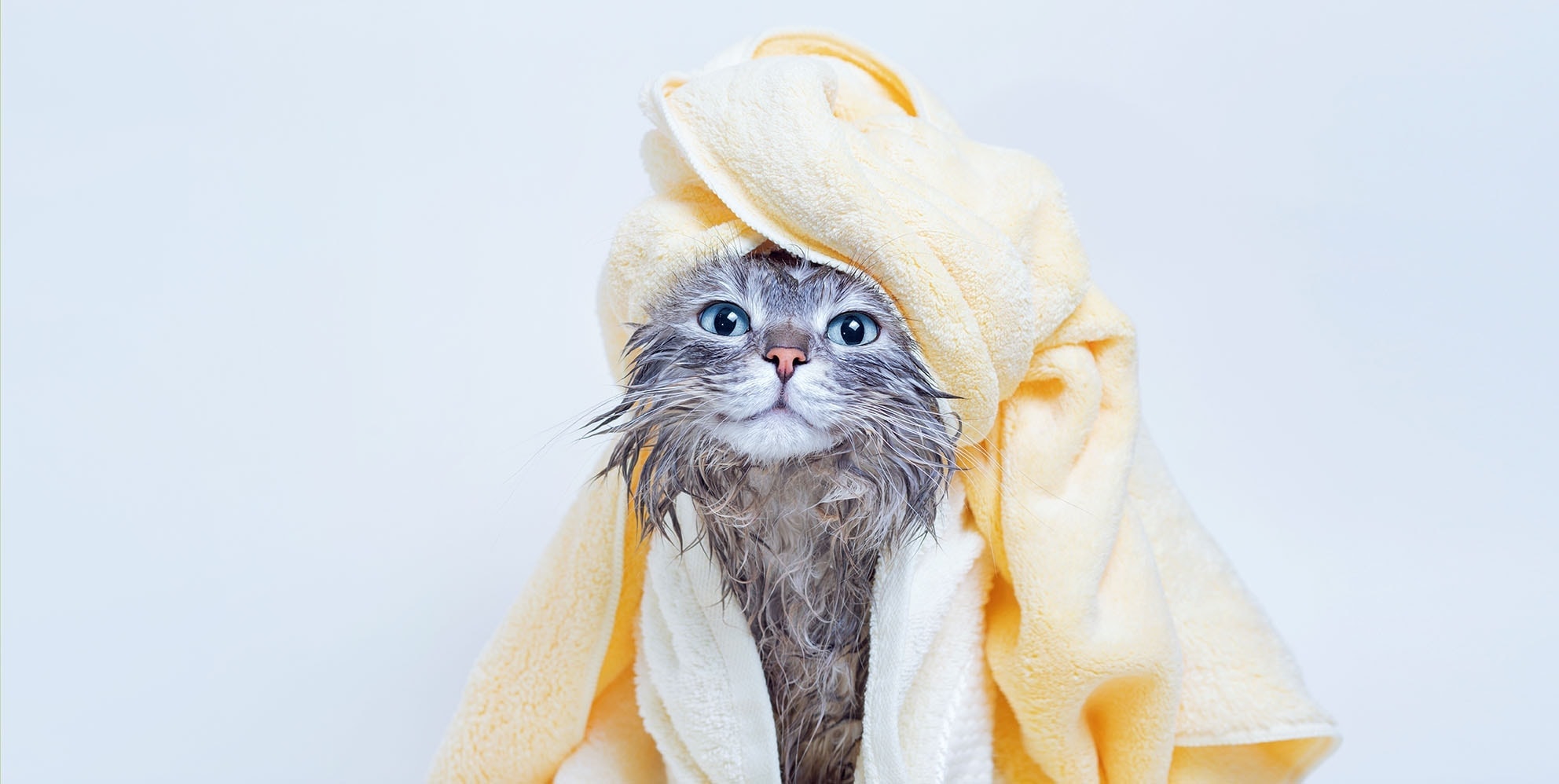
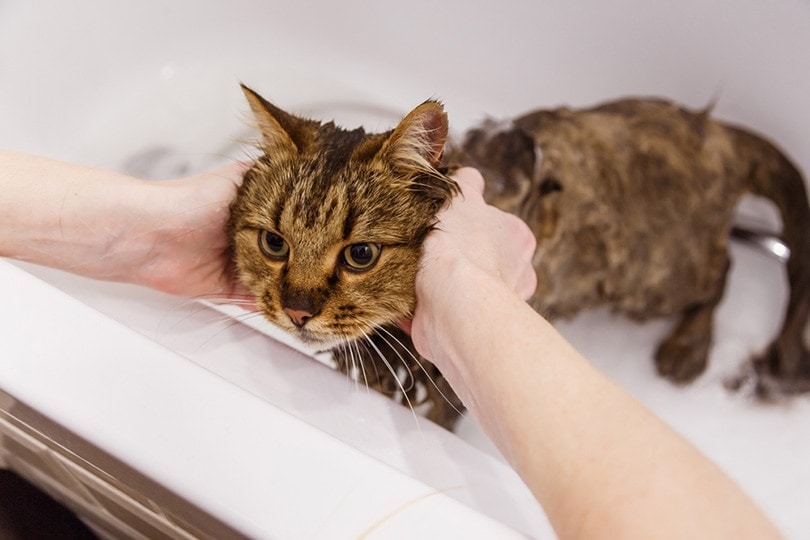
Most people believe that cats don’t need baths; they can wash themselves easily. This belief is valid for most, but not all cats are capable—or care enough—to groom themselves adequately. While cats are known for being meticulously clean, factors like age and illness can influence whether a cat can still groom themselves properly. When cats can’t groom themselves, you’ll have to give them regular baths to ensure that they stay clean. Bathing your cat is already hard.
So, let us help make getting them dry a little easier. Here are five steps you can follow to make drying your cat as easy as pie.

Preparations
Before the bath starts, you’ll want to get your drying materials ready. This way, your cat can go directly from the bath to being dry. It reduces the amount of time your cat spends wet and uncomfortable and increases the chance that they’ll be more agreeable if they need a bath again in the future.
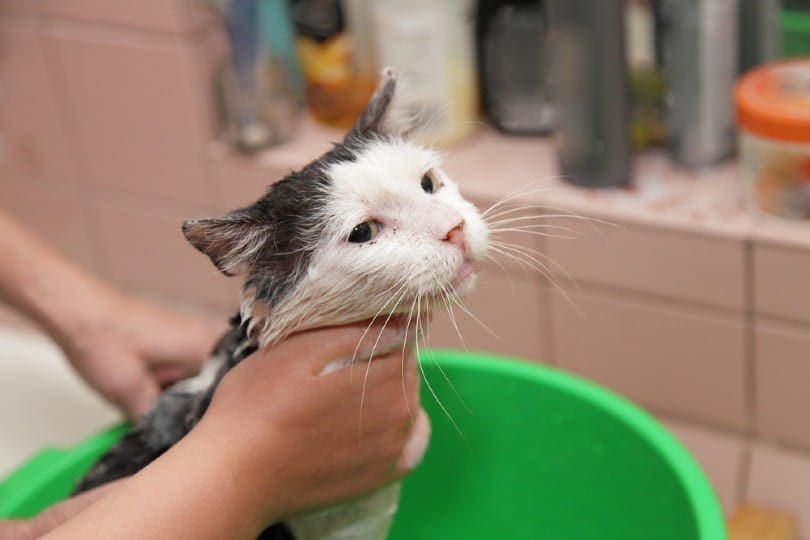
Start by determining whether your cat is small enough to be bathed in the sink. The less water your cat is exposed to, the more agreeable they’ll be before, during, and after the bath.
The 5 Steps to Dry a Cat After a Bath
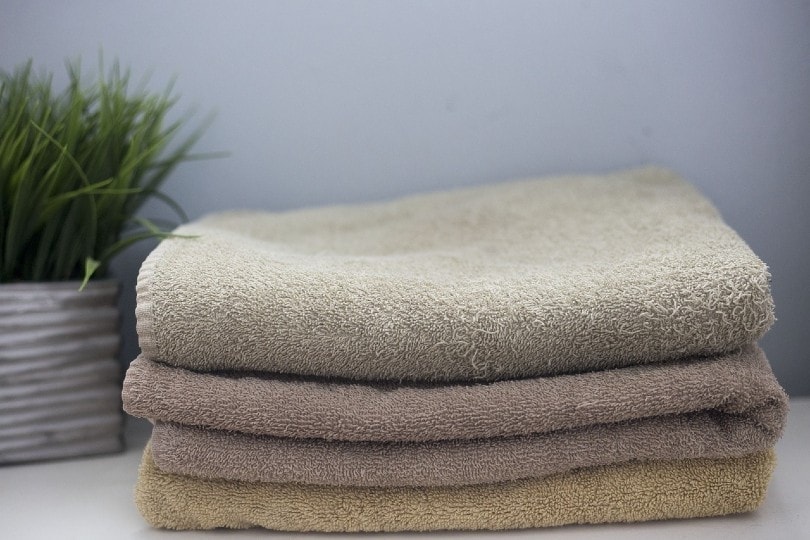
1. Spread Out a Towel Next to the Sink or Bathtub
If your cat is small enough to bathe in the sink, do so. The less and shallower the water, the easier time your cat will have adjusting to being washed. Placing a towel directly next to the point of bathing helps your cat transition right from the bath to being dry and warm.
Make sure you use an old towel so you aren’t worrying about whether your cat will tear up the towel in their frenzy to get out of the bath. Also, remember that towels won’t work as well on long-haired cats since their coats retain more water than short-haired cats. So, you won’t get as much mileage with long-haired cats and will have to let them air dry.
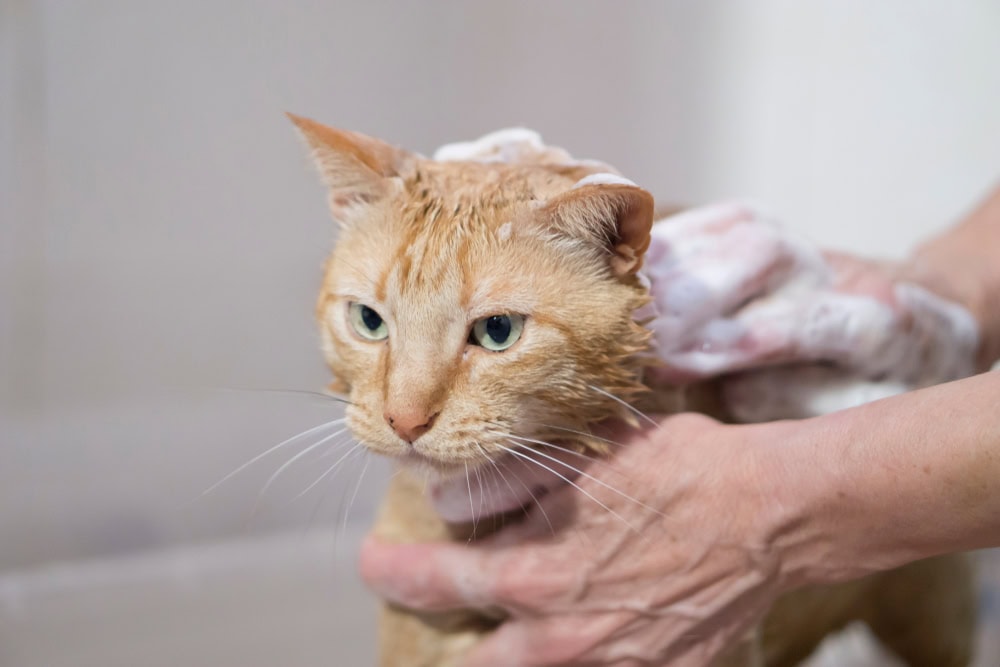
Once you’ve got the drying station spread out, you’ll want to bathe your cat. This process can be difficult and stressful for all the participants. Getting it done as fast as possible will help your cat build positive connections to bath time.
2. Place the Cat on the Towel and Cover Them
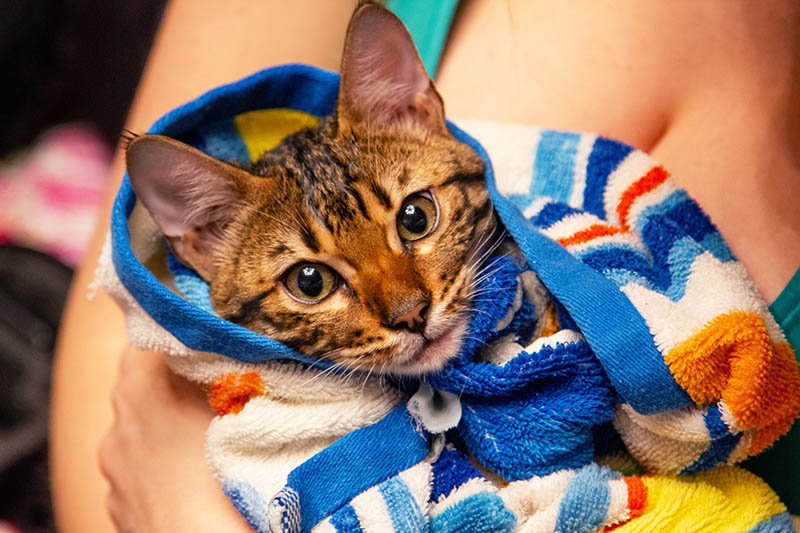
Your cat is going to be cold and wet. Getting them warm should be your first order of business. Our modern house cats have ties back to their heritage in the desert and aren’t used to having wet fur. Also, being wet can induce hypothermia1 in severe cases. So, get your cat nice and warm.
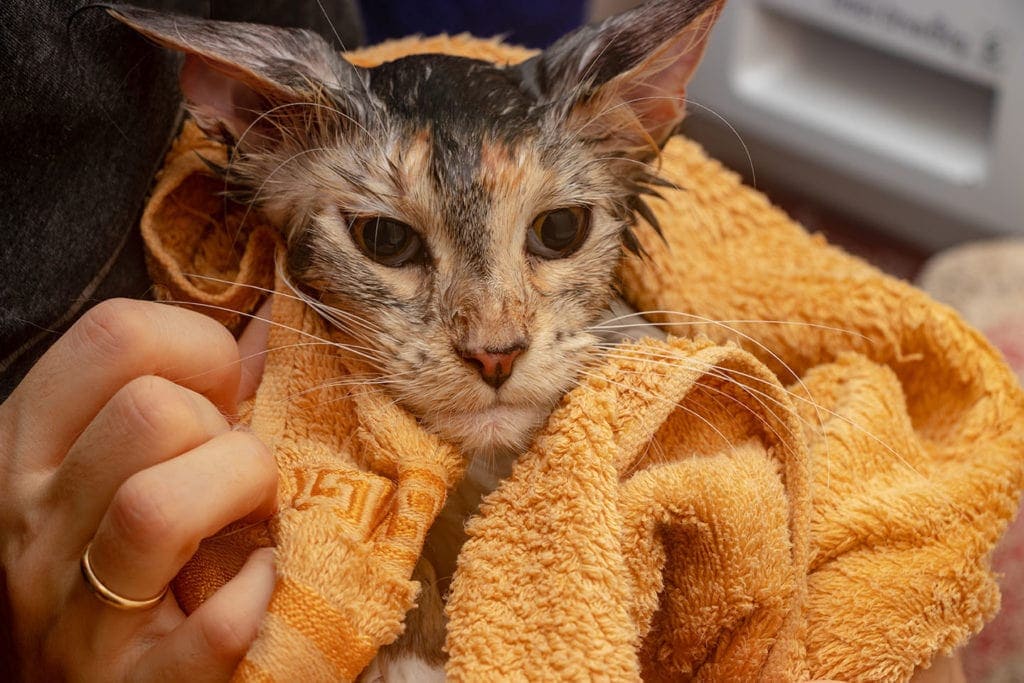
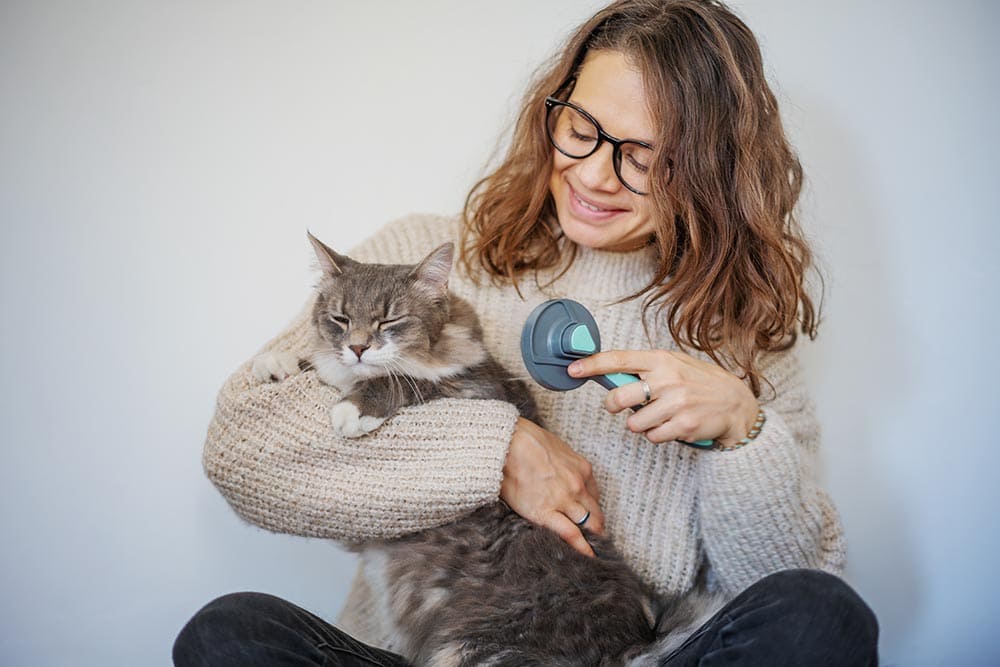
3. Sit With Your Cat on Your Lap and Let Them Get Comfortable
Remember that your cat is going through something very stressful and allow them to adjust and calm down from the experience. Your cat will look to you for comfort, so stay calm and show them that this situation isn’t a big deal.
4. Press Dry Your Cat
Gently squeeze the towel against the fur so that the towel absorbs the water in the skin. Don’t rub the towel back and forth, as that can cause the skin to become tangled and matted. Instead, blot the coat with the towel to remove the water. Keep doing this until the cat’s hair is damp but not dripping wet.
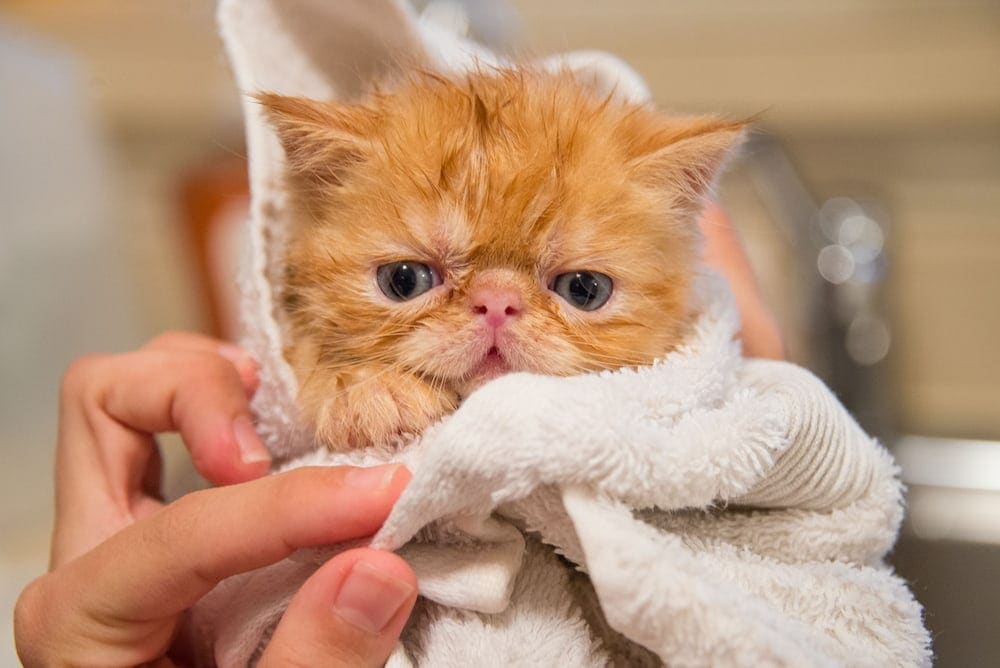
5. Move the Cat to a Quiet, Warm Room
Since your cat just went through a very stressful ordeal, you’ll want to make sure that your cat gets some peace and quiet to decompress. Turn up the heat or set up a small space heater for your cat and leave them in the quiet room with a warm, dry blanket to lay on while their fur finishes drying.
Don’t use a hairdryer to dry your cat’s fur. The sound of the hairdryer might scare your cat, and they could become aggressive or erratic in their fear. Professional groomers use stand dryers, but these machines are specifically designed for use on pets and feature cycles that are intentionally gentle, efficient, and quiet in ways that a hairdryer could never hope to mirror.

Why Do Some Cats Hate Water?
It’s hard to say precisely what makes cats so averse to water. They can’t just talk to us about it and tell us why they hate it. Scientists think that they hate water for two main reasons: lack of exposure and disliking the feeling of being wet.
The domestication of cats was thought to have begun around 7500 BC in what would become modern-day Egypt. That means cats have lived in the lap of luxury for over 9,000 years. That lap of luxury means they no longer had to cross bodies of water to get to new hunting grounds, secure territory, and evade predators. Nine thousand years without those critical lessons means that cats haven’t had exposure to water, and most creatures are afraid of things they’ve had no exposure to.
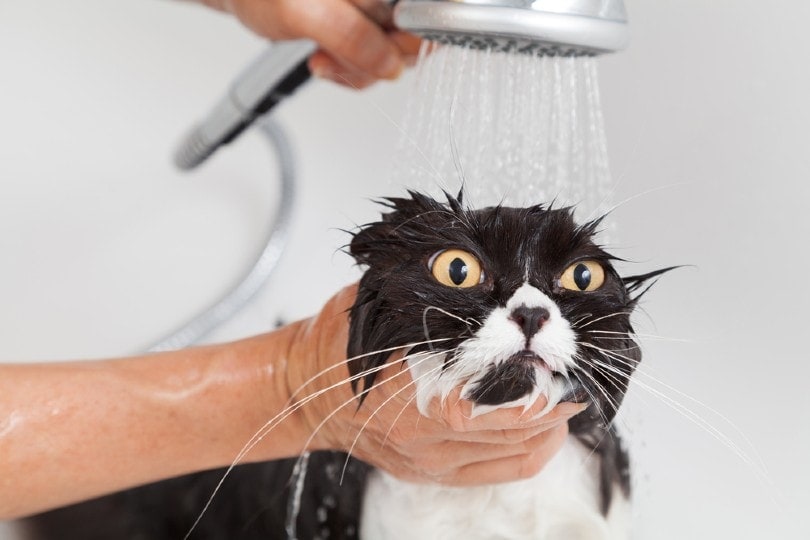
Additionally, being wet is generally regarded as uncomfortable. You know that feeling you get when you step into a puddle on your feet? That mucky, gross feeling of a wet sock is how your cat feels on their whole body when they’re wet. Being wet also presents unique survival challenges. Wet cats are less agile and will have more difficulty hunting prey and escaping from predators since their wet fur is heavier than dry fur.
If you keep these feelings in mind, it will help your cat feel more comfortable with baths. While it may be cute that your cat jumps away when you drip some water on their head after washing your hands, they have genuine reasons for disliking being wet, and being compassionate to their feelings during bath time will help them calm down and act more agreeable.
Conclusion
Bathing your cat is no small task. Cats generally resist being cleaned, making things very difficult for their owners who must put up with their combative behaviors. Luckily, drying out a wet cat isn’t as hard as it may seem from the outside. Drying your cat in a low-stress environment helps them understand that bath time doesn’t have to be scary!
Featured Image Credit: KDdesignphoto, Shutterstock
Get Hepper In Your Inbox


Pet care tips from our vets and experts, straight to your inbox.
You may opt-out at any time. View our Privacy Policy for more information.
Nicole is a lover of animals of all sizes but is especially fascinated with the feline variety. She’s the proud mom of Baby, a Burmese, and works every day so he can relax in the sunshine or by the fire. She’s always had a cat in her home and has spent countless days with others, observing behaviors and softening up even the grouchiest of the lot. Nicole wants to share her kitty expertise with you so you and your cat can live happy, healthy, and care-free.
Join the conversation
Ask a question, share your story, or send private feedback.