Hepper is reader-supported. When you buy via links on our site, we may earn an affiliate commission at no cost to you. Learn more.
Why Does My Cat Like Damp Towels? Vet-Reviewed Feline Behaviour


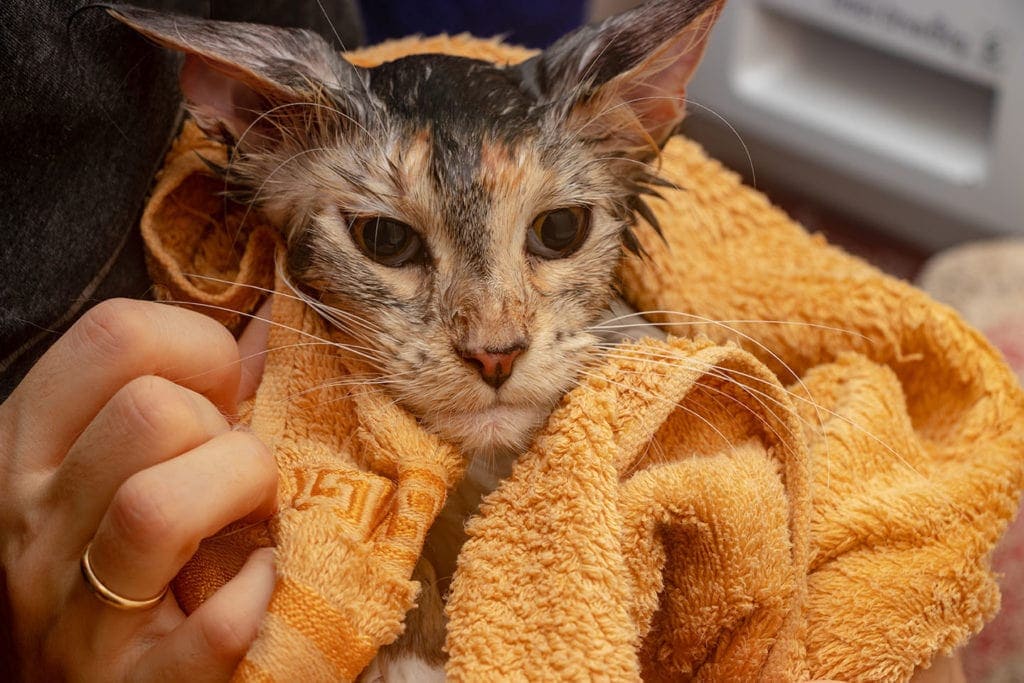
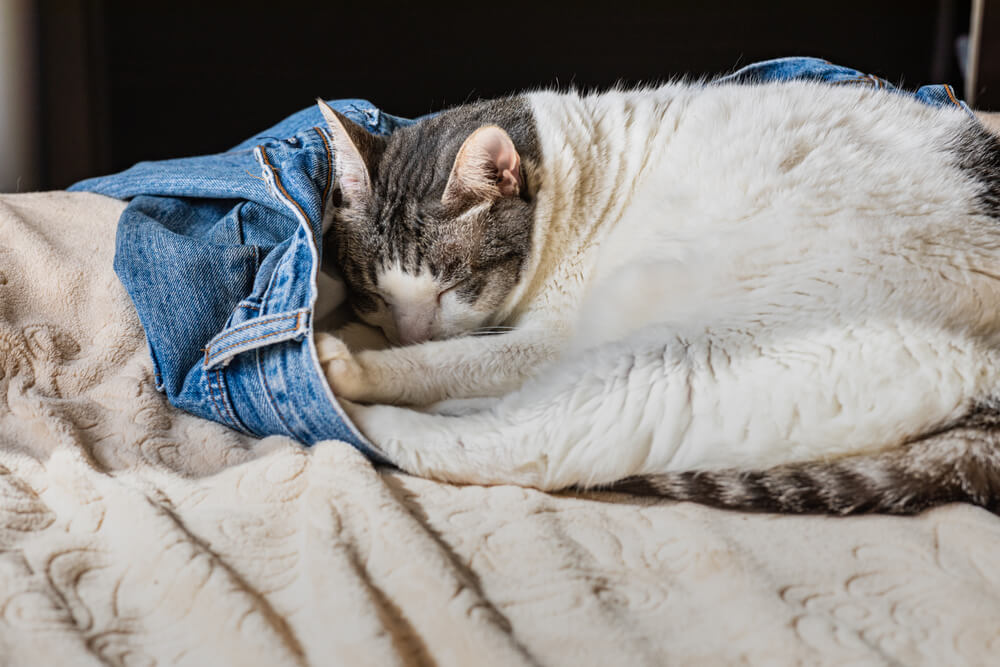
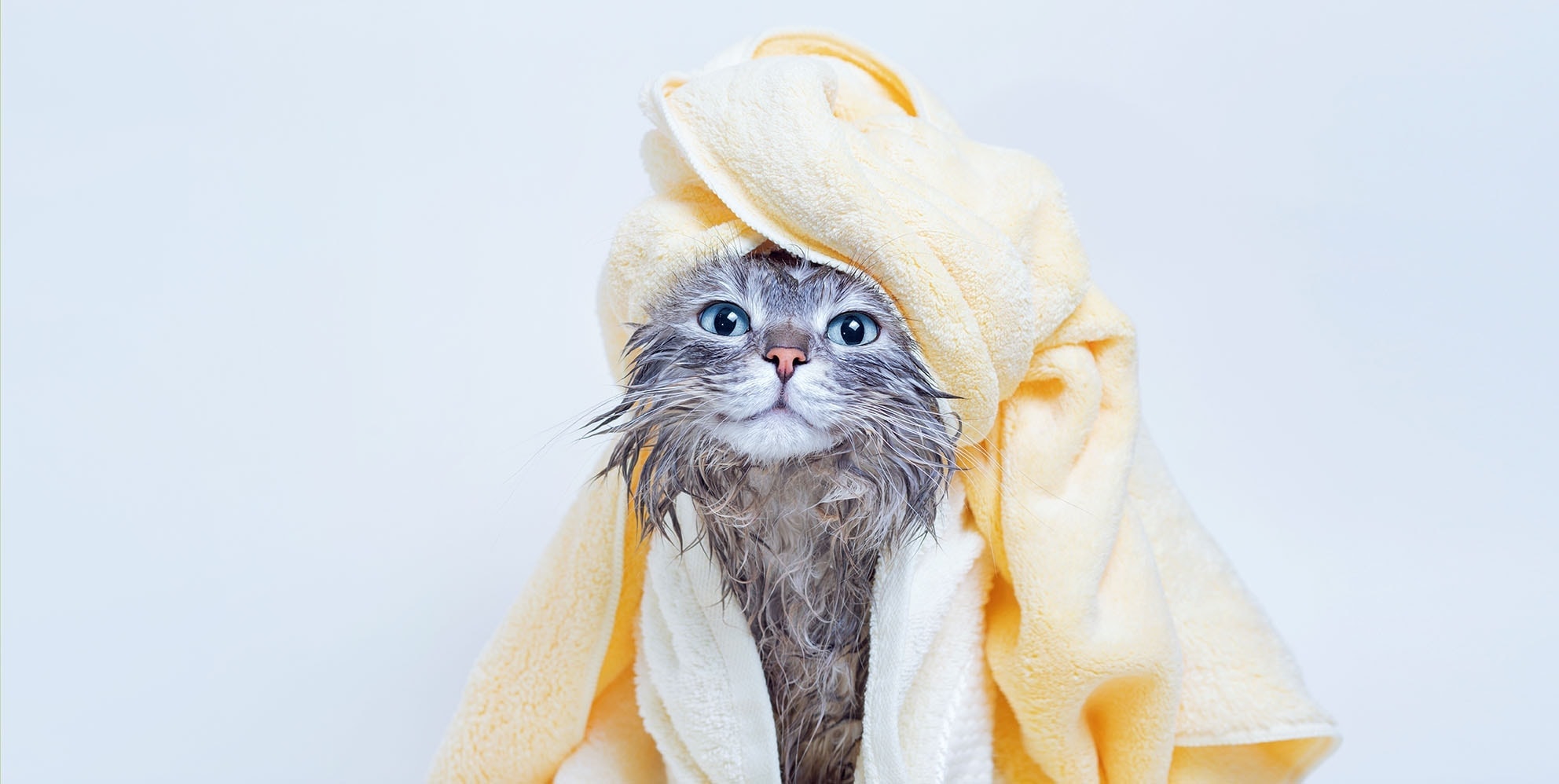
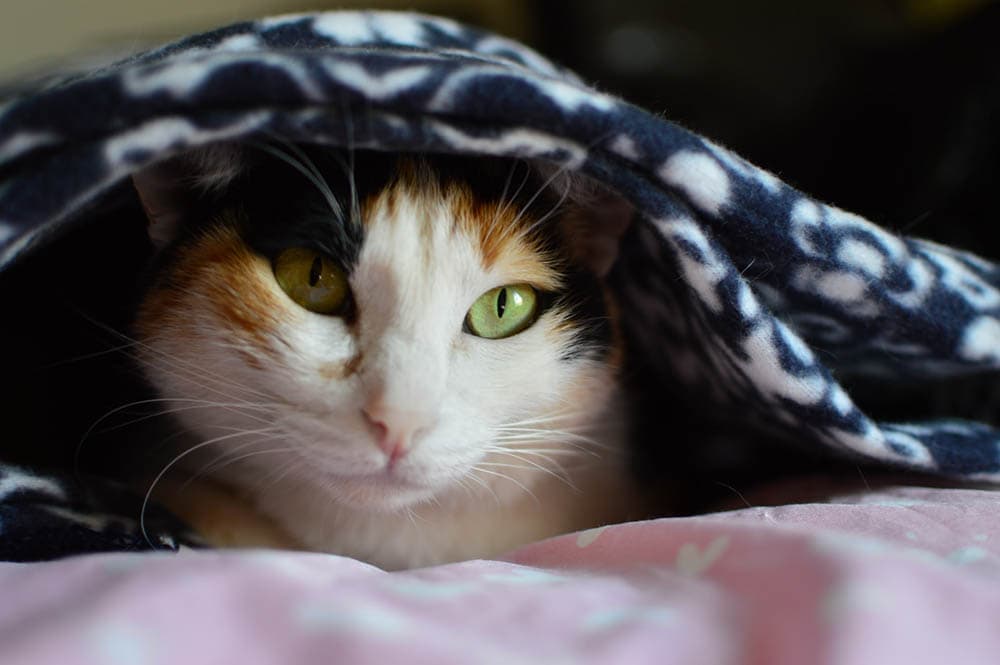
Anyone familiar with the phrase “if I fits, I sits” knows that cats often choose the oddest locations to curl up for a snooze. However, if your cat loves to roll around on your damp, discarded bath towels, you might be curious about the attraction. Well, as it turns out, your cat probably doesn’t like the damp towels as much as they are drawn to the scent left behind on them, although they may enjoy their warmth and texture.
In this article, we’ll discuss a cat’s sense of smell and why the importance of scent to our feline friends attracts them to your damp towels. We’ll also address what to do if your cat doesn’t just like your towels but starts peeing on them.

The Cat’s Sense of Smell
While dogs might get all the recognition when it comes to using their noses, research suggests that cats also have a very good sense of smell.1 Bloodhounds are considered superior when it comes to the number of scent receptors, but there aren’t any studies comparing the cats and dogs as species, and it’s difficult to draw conclusions about whose scent is superior.
Scent serves as one of the communication methods for cats. Kitties use scent marking to claim their territory and to learn about each other. Cats have scent glands on their feet, cheeks, and under their tails.
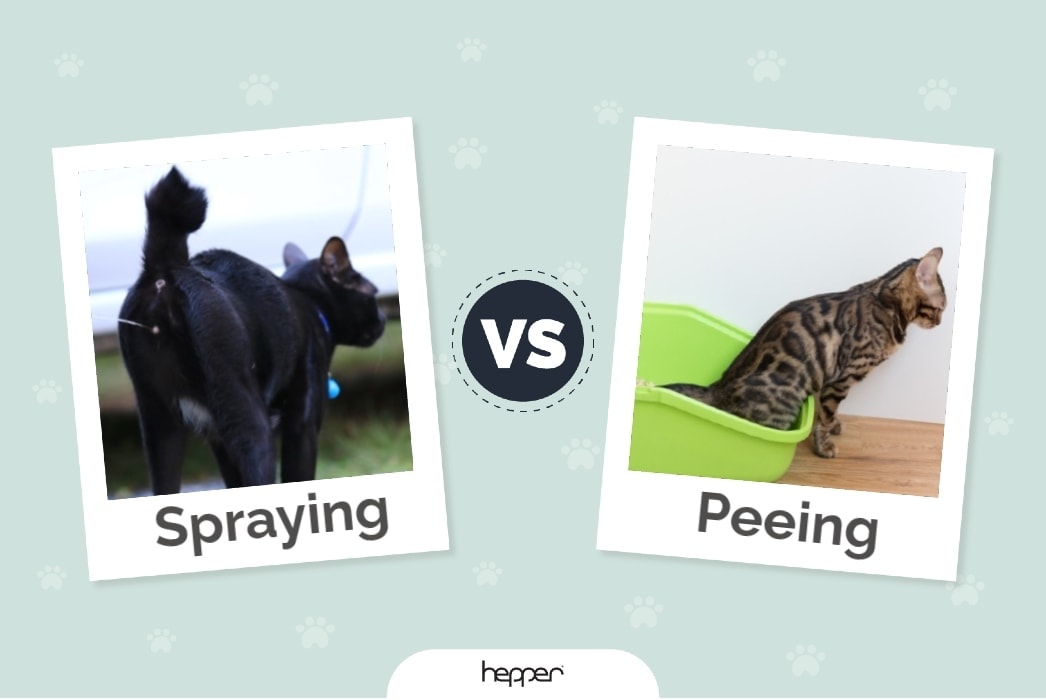
They can scent mark with urine or by rubbing their faces on objects (or on you).
Damp Towels Smell (To Your Cat!)
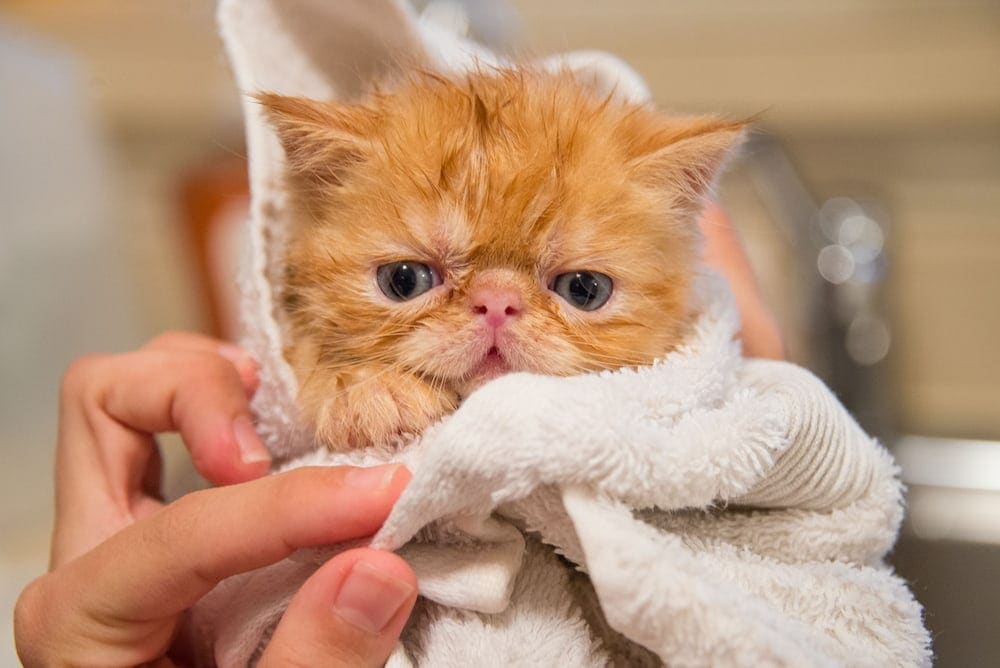
If you leave towels hanging without washing them, they’ll also smell strongly to you. However, damp towels and dirty laundry are attractive to your cat because they smell like you, alongside being warm and cozy.
Familiar scents help cats feel secure in their environment by reducing stress and anxiety. Your damp towel made contact with your skin and hair, leaving it bursting with your scent.
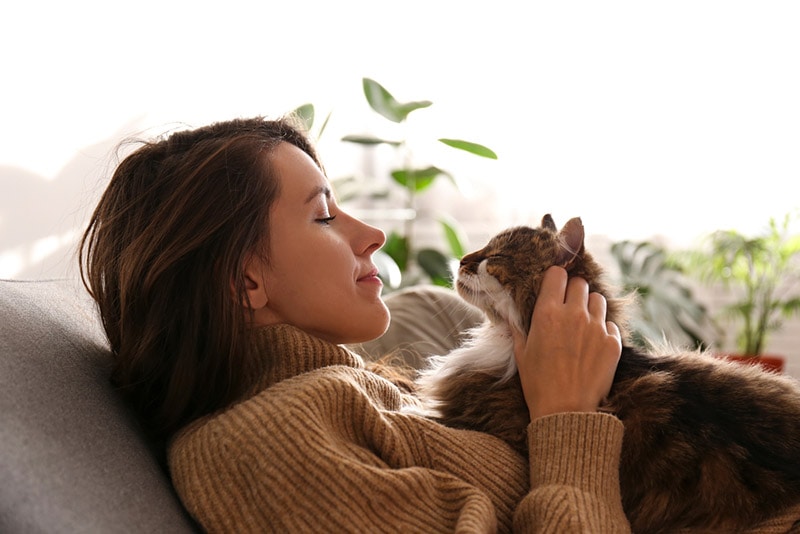
When your cat rolls or sleeps on the towel, the presence of your scent can help them feel close to you. They may also be adding their own scent to the towel, claiming it and you as their own.
Besides the scent, they may enjoy the texture and the warmth from it.
Ok, but Why Is My Cat Peeing on My Damp Towel?
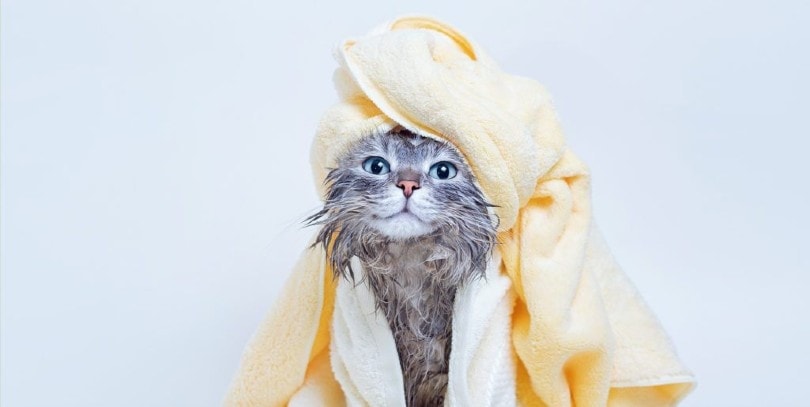
Sometimes, a sweet attraction to your damp towels can turn sour if your cat starts peeing on them. Why does this behavior occur, and what can you do about it?
Your cat could be peeing on your towel as a way to mark territory. If your pet feels stressed by adding a new cat or person to the household, they may overcompensate by trying to stake their claim in the face of the intruder. Peeing on the towel may be one way your cat tries to mark you as their own.
However, peeing on a damp towel may be a small sign of a larger issue with inappropriate urination. Cats urinate inappropriately for behavioral and medical reasons. The first step is ruling out a medical cause, such as a urinary tract issue.
If your vet gives your cat a clean bill of health, it is time to investigate the potential behavioral causes of the peeing. Stress caused by household changes is a significant source of inappropriate urination. Your cat may also be having a territorial dispute with another cat in the home.
Make sure you have enough beds, toys, bowls, and litter boxes for all cats to feel cared for and eliminate the need to compete for resources. Give all cats one-on-one attention every day, and ensure your cat has a safe space to retreat from guests, children, or home renovations.
Consider using a cat pheromone product to reduce overall stress levels in the house. If you can’t seem to solve the riddle of your cat’s inappropriate urination, ask your vet about prescribing anxiety medications or providing a referral to a behavioral specialist.
Conclusion
While it may be irritating to find cat hair on your damp towels constantly, you can at least take comfort in knowing your kitty leaves them as a sign of love. If your cat starts peeing on your towels, don’t delay addressing the problem, especially if you suspect a medical cause. Urinary issues can worsen quickly and even lead to life-threatening blockages, especially in male cats.
Sources
Featured Image Credit: Vikentiy Elizarov, Shutterstock
Get Hepper In Your Inbox


Pet care tips from our vets and experts, straight to your inbox.
You may opt-out at any time. View our Privacy Policy for more information.
A lifelong lover of all creatures great and small, Elizabeth got her first cat at 5 years old and at 14, she started working for her local veterinarian. After spending more than 20 years working as a veterinary nurse, Elizabeth decided to step away to become a stay-at-home parent to her daughter. Now, she is excited to share her knowledge with our pet parents. Elizabeth lives in Iowa with her family, including her two fur kids, Linnard, a husky mix and Algernon, the worldʻs most patient cat. When not writing, she enjoys reading, watching soccer, and spending time outdoors with her family.
Join the conversation
Ask a question, share your story, or send private feedback.