Hepper is reader-supported. When you buy via links on our site, we may earn an affiliate commission at no cost to you. Learn more.
How to Bathe a Cat: 5 Easy Steps (With Video)
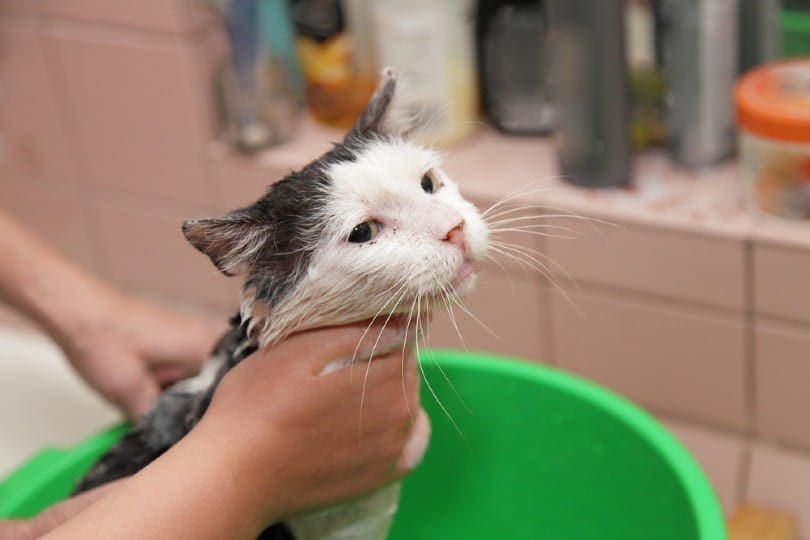
Cats are naturally clean animals. They take a lot of pride in grooming themselves several times a day. They rarely need to be bathed by their owners. But occasionally, your cat might need some assistance with getting clean. While outside, they might have rolled or brushed against something pungent that clings to their fur. Maybe they need to be bathed with medicated shampoo for fleas. Regardless of what variables have caused your cat to need to be bathed, you want to make sure that it's not stressful either for the cat or yourself. This article goes over how to bathe a cat without getting scratched in 5 easy steps.

The 5 Easy Steps For Bathing a Cat
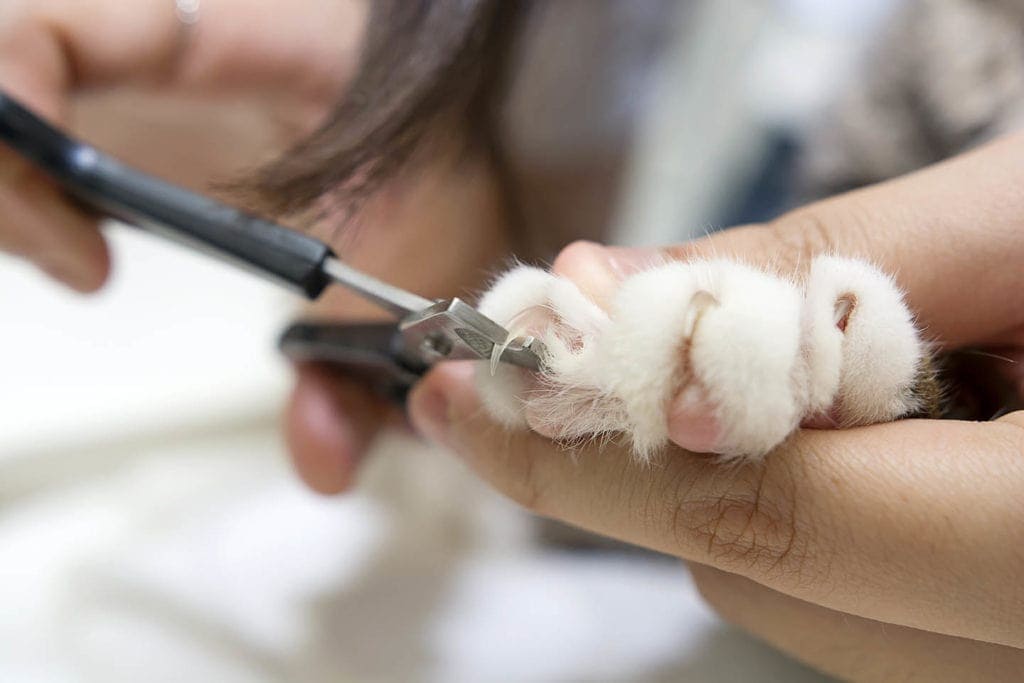
1. Trim Your Cat's Claws Before Bath Time
While this might be easier said than done, giving the claws a trim before bathing them is an important step. Like our fingernails, cats’ claws grow continuously, making it recommended that you trim your indoor cat’s claws every 2 weeks. Outdoor cats’ claws do not need to be trimmed as much because they use their claws on branches and tree trunks. Indoor cats need some assistance to prevent their claws from getting too long, as sharp and long claws can be uncomfortable for their pads.
2. Prepare the Bathing Area Early
You want to have everything ready before you start putting your cat in the bath. If you need to let go of your cat to grab something you need, it might escape and cause chaos! Have plenty of towels on hand, a cup or pitcher for rinsing, and cat shampoo within reach. You can even have a few of their favorite treats to offer as an incentive to continue being bathed. Sometimes, it's okay to use bribery with your cat! If you are using a basin or plastic tub, have a rubber mat or towel underneath to prevent it from moving. If your cat tries to climb out, the mat or towel will help keep the tub in place.
3. Check the Water Level and Temperature
It's not a good idea to put your cat in more than 3 inches of water. A high water level will stress your cat out, and you will most likely get scratched! Instead, have the water level between 2-3 inches. This level is shallow enough for your cat to feel less stressed and enough water for you to use to get your cat clean. The water temperature should be lukewarm. Temperatures that are too hot or cold will upset your feline.
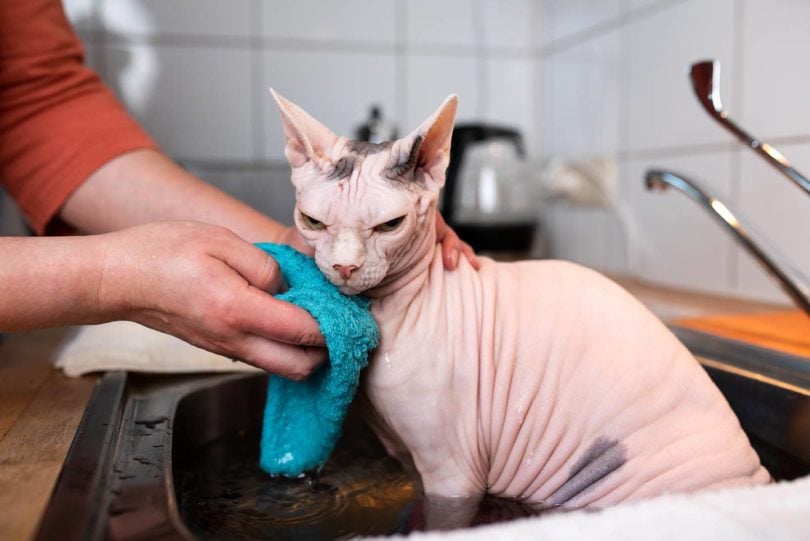
4. Begin to Bathe Your Cat Gently
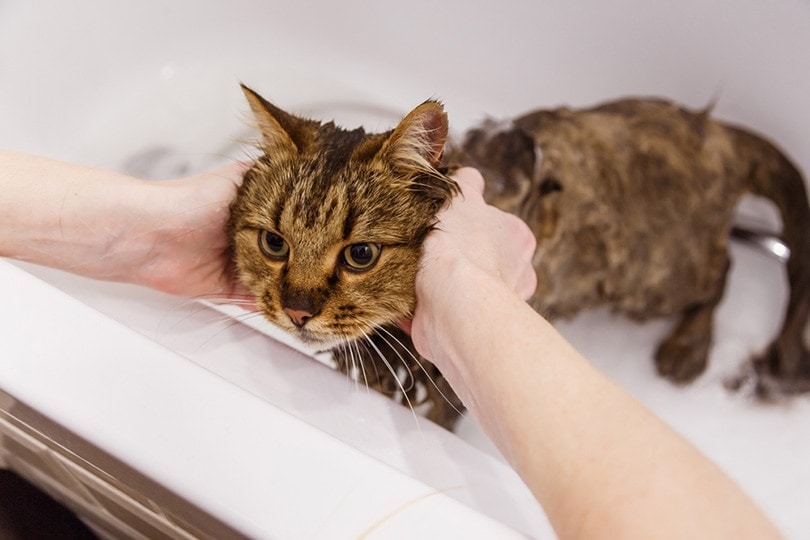
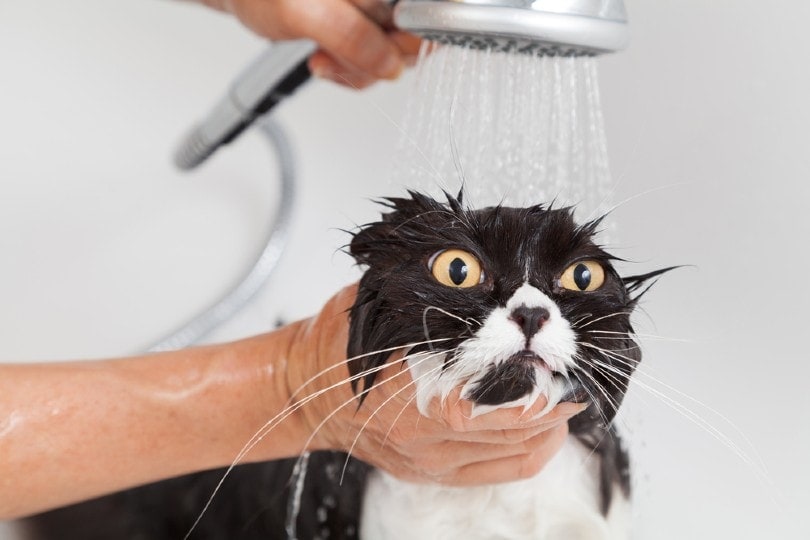
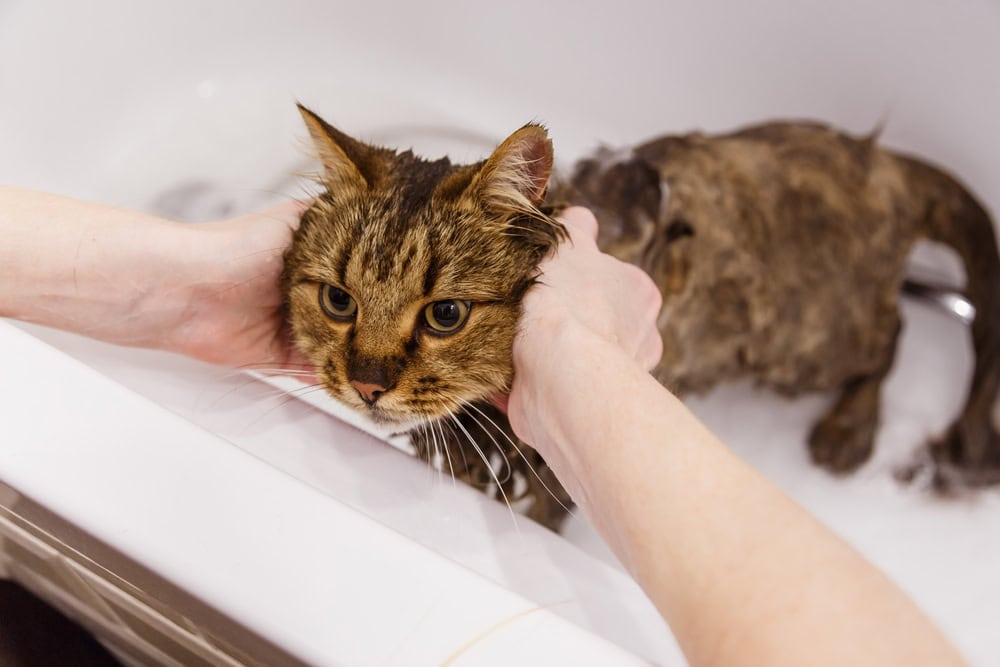
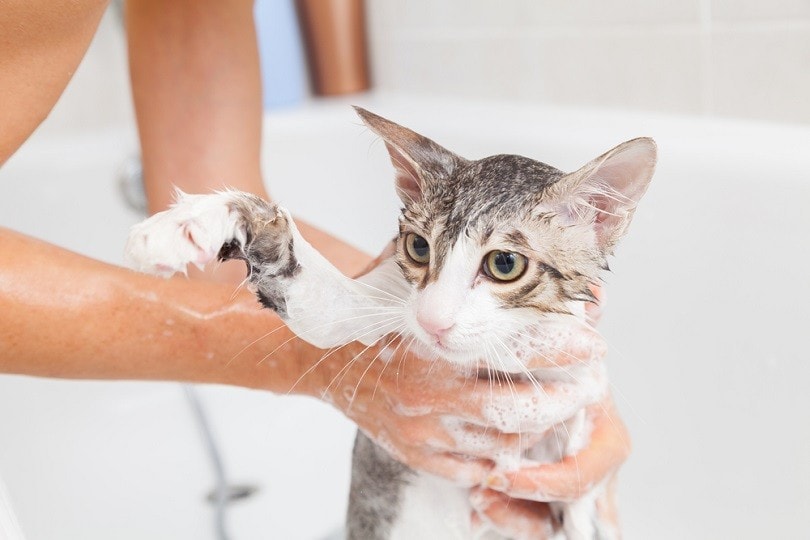
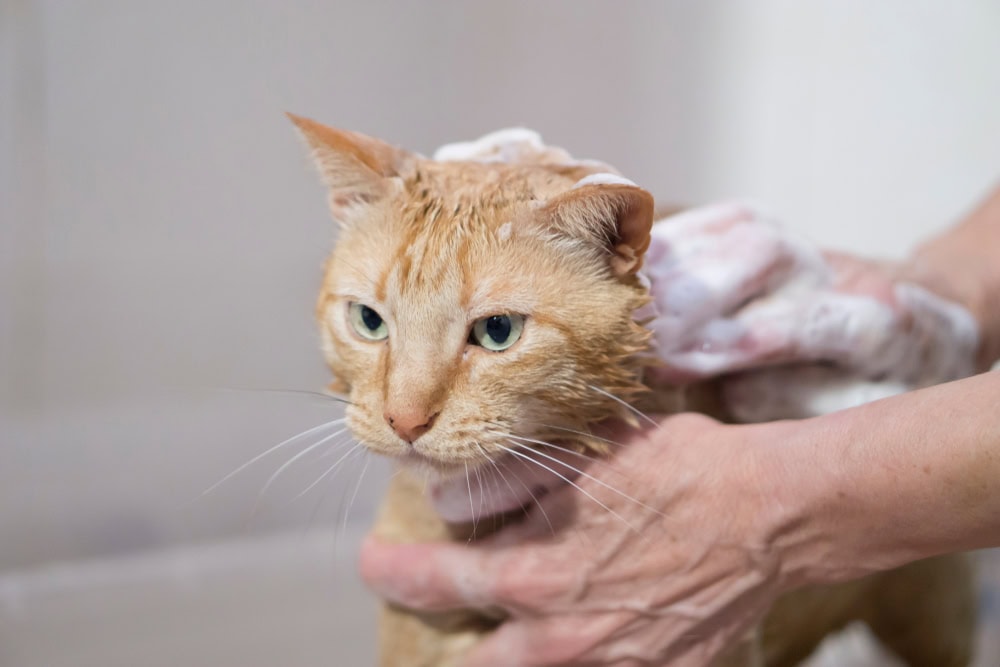
Once you have your cat in the sink or tub, now comes the hard part: the actual bathing. It's recommended to use cat-specific shampoo and gently lather your cat from its neck to its tail. Don’t forget to scrub its belly gently and under its arms. Never try to shampoo your cat’s head and face. The shampoo can get into their eyes and ears. Also, trying to rinse the shampoo off the cat’s head can get water in their ears, causing discomfort. Instead, use a soft, damp cloth to clean your cat’s head and ears. Damp cotton balls will also work for your cat’s ears.
5. Dry Your Cat
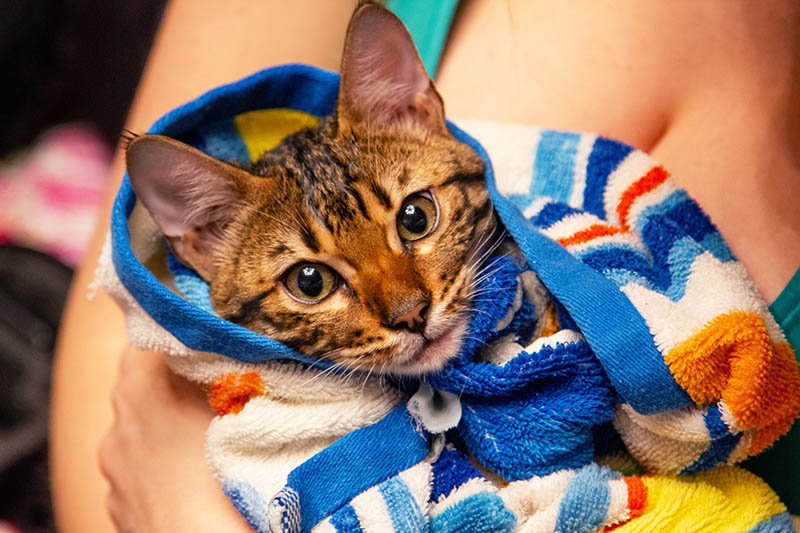
Since cats do not like loud noises, avoid using a hairdryer after the bath. However, if you have a long-haired cat, a hairdryer might be necessary. Before bathing your cat, play around with your hair dryer’s settings to feel which one will be suitable for your cat. For short-haired cats, have 2-3 clean towels ready to dry them in. Start with one towel, and when that one is damp, switch to a new dry towel. Keeping your cat warm will make them less anxious. Reward them with a treat as well. They have certainly earned it!
Other Helpful Tips:

Conclusion
For the most part, you might never need to bathe your indoor cat. Cats love to clean themselves without the need for assistance. But there are some situations where bathing is a healthy and hygienic thing to do for your cat. Fleas can be treated using cat-specific medicated shampoo. Maybe your overly curious cat met with something oily, sticky, or smelly outside. You might have a senior cat with arthritis who is not as flexible to groom themselves adequately. These are all situations where you should bathe your cat. Make the bathing experience less scratchy and stressful for your cat and yourself by remembering this article’s steps and tips.
See also:
Featured Image Credit: ilmarinfoto, Shutterstock
Get Hepper In Your Inbox


Pet care tips from our vets and experts, straight to your inbox.
You may opt-out at any time. View our Privacy Policy for more information.

Nicole is a lover of animals of all sizes but is especially fascinated with the feline variety. She’s the proud mom of Baby, a Burmese, and works every day so he can relax in the sunshine or by the fire. She’s always had a cat in her home and has spent countless days with others, observing behaviors and softening up even the grouchiest of the lot. Nicole wants to share her kitty expertise with you so you and your cat can live happy, healthy, and care-free.
Join the conversation
Ask a question, share your story, or send private feedback.