Hepper is reader-supported. When you buy via links on our site, we may earn an affiliate commission at no cost to you. Learn more.
How to Pick Up a Cat Like a Veterinarian: Vet-Approved Tips & Guide


In this article
It's hard to pick up a scared or injured cat without getting scratched or bitten, especially if they're not used to being handled. However, learning to pick up a cat like a veterinarian can help make the process safer and less stressful for you and your feline friend. This guide will walk, or paw, you through the steps to pick up a cat like a professional veterinarian.

Preparation
Be aware:
Before you try to pick up your cat, make sure you have everything you need. You'll need protective clothing, such as long sleeves and gloves, if you're concerned about being scratched or bitten. You may also need a cat carrier or a blanket to wrap the cat in once you've picked them up. It's also helpful to be calm and relaxed, as cats are sensitive to human emotions and may become agitated if they sense that you're nervous or anxious.
In addition, it’s advised to check for some signs to ensure that your cat doesn’t mind your approach. These include the following:
Signs a cat doesn't mind being approached:
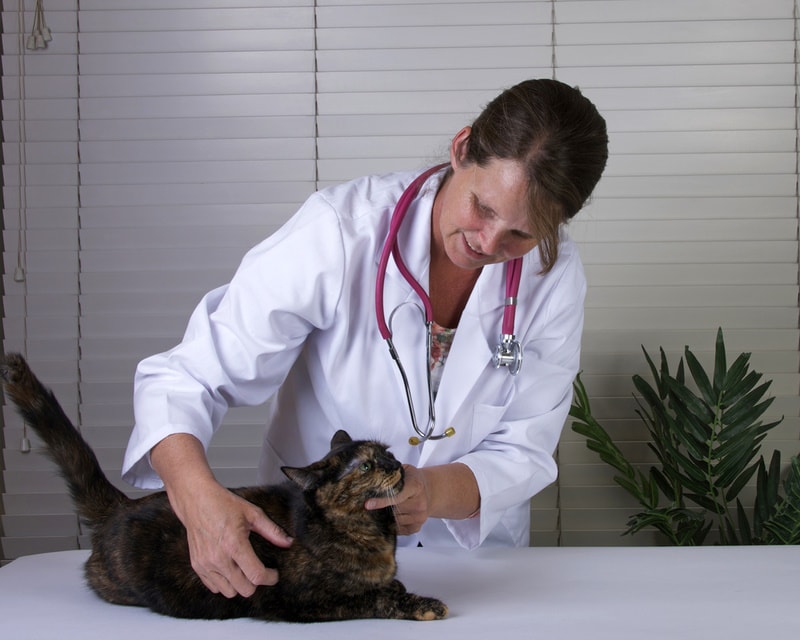
How to Perform the Two-Hand Pick-up Technique Like a Veterinarian
1. Approach the Cat Slowly
Approach the cat slowly and calmly, avoiding sudden movements that can startle them. Keep your hands at your sides or behind your back to avoid reaching toward the cat. Talk to the cat calmly, and soothingly, and allow them time to sniff and investigate you.
2. Position Yourself Correctly
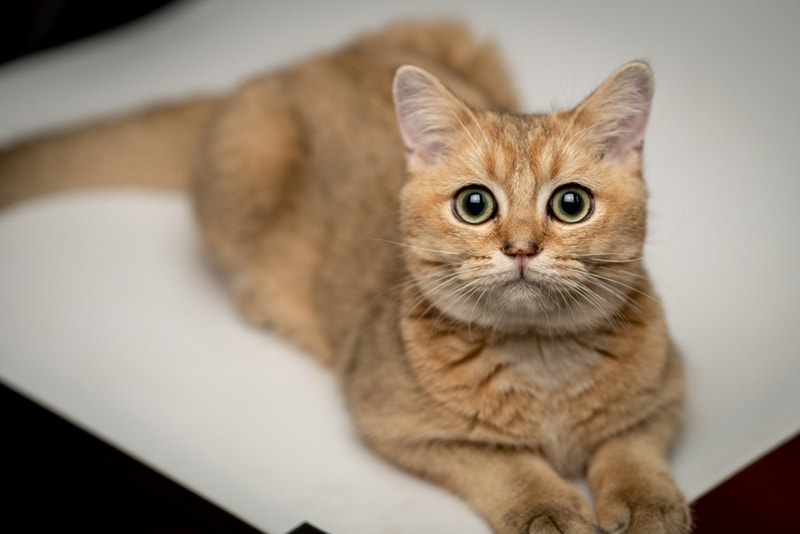
Position yourself correctly before attempting to pick up the cat. Make sure that you're on the same level as the cat and facing the same direction as them. Kneel down on one knee or sit down cross-legged to create a stable base and reduce the risk of falling.
3. Use a Two-Handed Technique
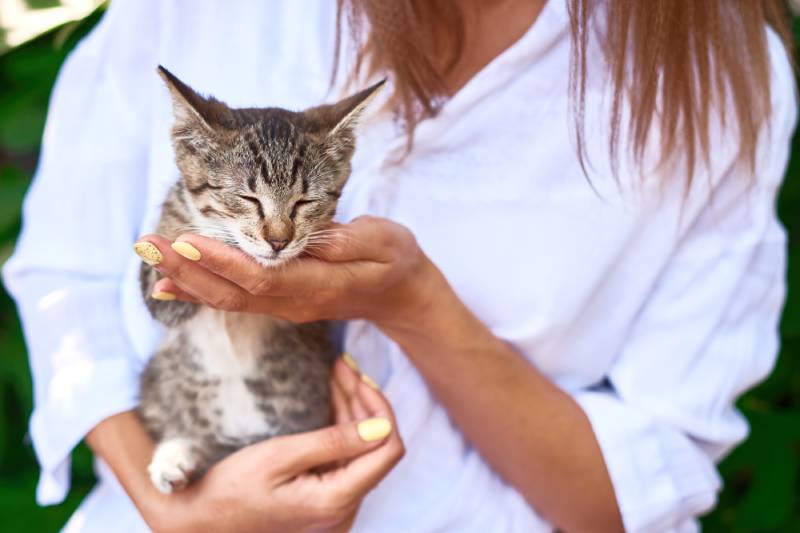
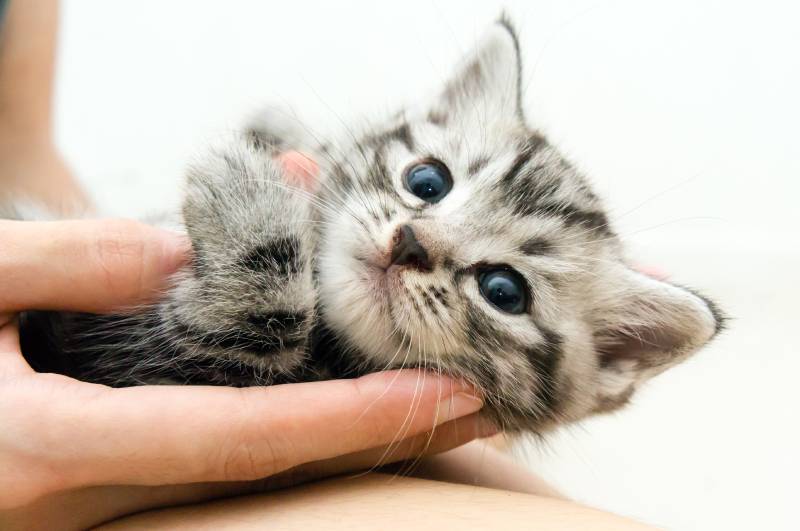
Use a two-handed technique to pick up the cat, which provides support and stability. Place one hand under the cat's chest, with your palm and fingers supporting their front legs, and the other hand under their hindquarters, with your fingers supporting their hind legs. Lift the cat slowly and smoothly, keeping them close to your body.
4. Hold the Cat Securely
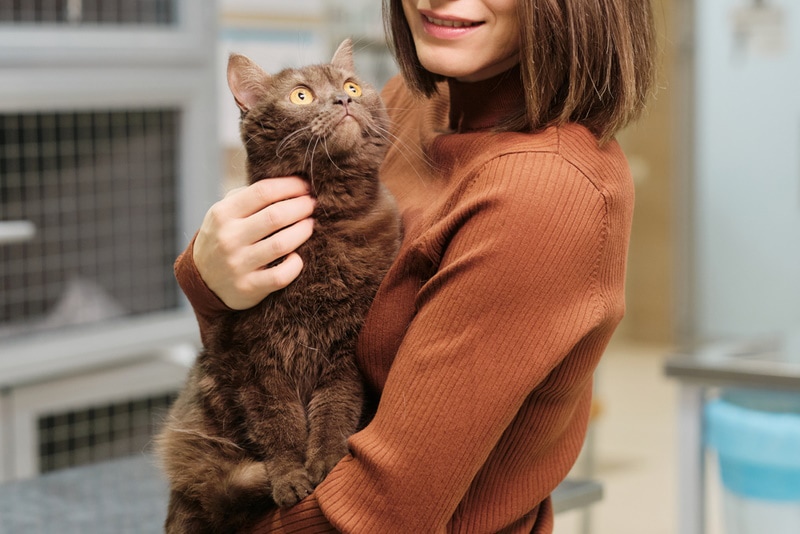
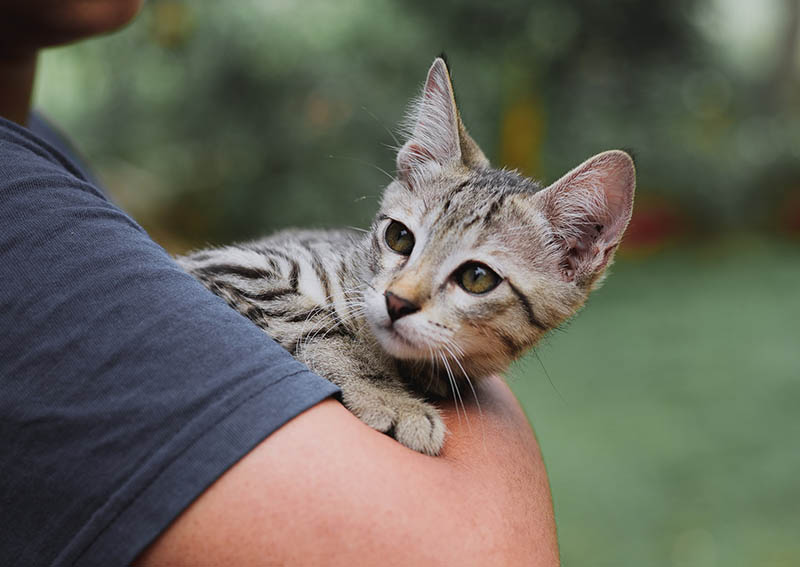
Hold the cat securely against your body, keeping them close to your chest. Use your hands to support their weight and prevent them from slipping or wiggling. Keep the cat's head and body in a straight line to prevent them from twisting or struggling.
A Note About Shoulder Cats
5. Avoid Over-handling
Avoid over-handling the cat, as this can cause stress and anxiety. Once you've picked up the cat, hold them only as long as necessary and put them down gently as soon as possible. Monitor the cat's body language and behavior to determine when they're ready to be put back down.


Frequently Asked Questions
Why do some cats hate being picked up?
Cats may hate being picked up for several reasons, including fear, anxiety, and discomfort. They may also feel vulnerable when off the ground, making them more likely to scratch or bite.
What should you do if a cat scratches you when you pick them up?
If a cat scratches you when you pick them up, wash the wound thoroughly with soap and warm or cool water and apply an antiseptic ointment. Monitor the wound for signs of infection and seek medical attention if necessary. If the cat that scratched you is stray or feral, you should promptly seek medical advice from a doctor, no matter how inconsequential the scratch may appear.
How do you put a cat down safely?
To put a cat down safely, slowly lower them to the ground while supporting their weight with your hands. Make sure that the surface where you're placing them is stable enough for them to land on. Also, make sure to avoid letting go too quickly or dropping them.
Can cats get stressed if you pick them up too often?
Yes, some cats can get stressed if you pick them up too often. Cats may become anxious or experience stress from being handled, which can lead to health problems. Always be mindful of the cat's body language and allow them time to explore independently without frequently handling or picking up.

What should I do if my cat is scared of being picked up?
If your cat is scared of being picked up, try to calm them down first by talking to them in a soothing voice and gently stroking their fur. If the cat is still feeling anxious, allow them time to acclimate to the environment before attempting to pick them up again. If this doesn't help, seek advice from your vet or an animal behaviorist for further assistance.
Are there any signs that a cat is about to bite or scratch when being picked up?
Yes, there are several warning signs that a cat is about to bite you or scratch you when being picked up. These include hissing, growling, swatting, and flattening their ears against their head. If you notice any of these, stop trying to pick the cat up. Allow the cat to explore independently until they are more comfortable. Understanding your cat's body language is key to a safe and successful picking-up experience.
Are there any medical conditions that can make it painful for my cat to be picked up?
Yes, there are several medical conditions that can make it scary or painful for a cat to be picked up. These include arthritis, joint pain, muscle stiffness, and other age-related issues. Always consult with your vet if you suspect that picking up your cat is causing them discomfort or pain. They may recommend lifestyle changes or medications to help relieve their symptoms.
Conclusion
Picking up a cat like a veterinarian takes practice and patience. Using a two-handed technique, correctly positioning yourself, and avoiding over-handling can help make the process safer and less stressful for you and your cat. Remember to approach your feline friend with calmness and patience and be prepared to adjust your technique to suit their unique needs or personality. With some know-how and practice, you'll pick up your cat like a pro in no time.
Sources
Featured Image Credit: lev.studio, Shutterstock
Get Hepper In Your Inbox


Pet care tips from our vets and experts, straight to your inbox.
You may opt-out at any time. View our Privacy Policy for more information.
Nicole is a lover of animals of all sizes but is especially fascinated with the feline variety. She’s the proud mom of Baby, a Burmese, and works every day so he can relax in the sunshine or by the fire. She’s always had a cat in her home and has spent countless days with others, observing behaviors and softening up even the grouchiest of the lot. Nicole wants to share her kitty expertise with you so you and your cat can live happy, healthy, and care-free.
Join the conversation
Ask a question, share your story, or send private feedback.