Hepper is reader-supported. When you buy via links on our site, we may earn an affiliate commission at no cost to you. Learn more.
How to Save Plants From Dog Urine: 4 Proven Methods
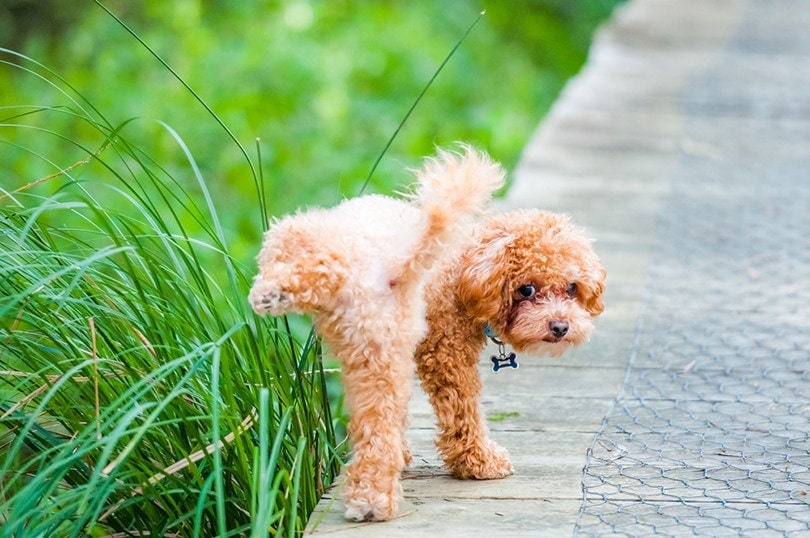
If your lawn is covered in unsightly yellow spots, it’s likely because of your dog peeing there. Dog pee can kill plants and grass, marring your emerald lawn. Dog urine contains many compounds that can harm your plants, such as urea and nitrogen.
While you might not be able to stop your dog from peeing in your yard completely, you can take some measures to prevent your dog from ruining your valued plants. Check out these four tips to save plants from dog urine.

The 4 Methods to Save Your Plants From Dog Urine
1. Designated Pee Area
| Difficulty: | Easy |
| Supplies/Tools: | Sand, gravel, or soil, fencing |
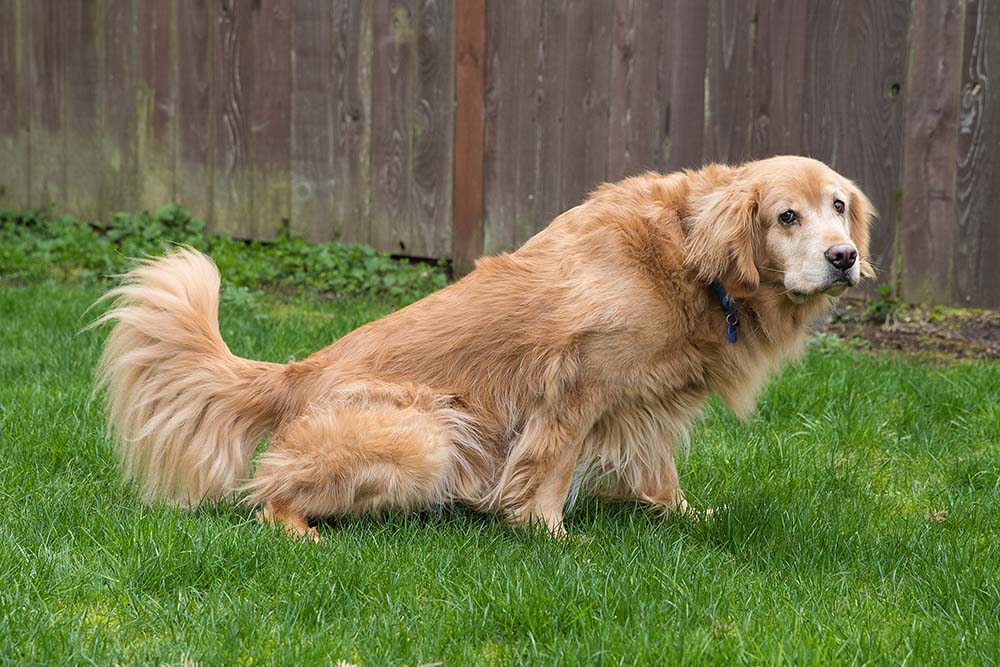
One of the best ways to keep your plants safe from dog urine is to simply create a pee area for your dog, keeping it away from your lawn and prized plants. You can fence off a small portion of your yard or garden to provide a place for your dog to go.
After doing its business, your dog is free to roam your yard and can enjoy playing in the grass. This method takes some training, fence installation, and laying down sand, soil, or gravel, but it’s worth the upfront effort to avoid treating your entire yard for urine marks.
Pros
- Easy to implement
- Provides freedom for your dog
- Low maintenance
Cons
- Upfront work
- Requires training
2. Dilute Urine Area
| Difficulty: | Easy |
| Supplies/Tools: | Hose or watering can |
If you prefer to give your dog the freedom to roam in your entire yard, you can address pee areas by watering them immediately to dilute urine and reduce the damage to your plants. Along these lines, it’s also vital to give your dog plenty of water to avoid dehydration and keep their urine diluted.
This method does require more work, however. To be effective, you must follow your dog around and water the urine spots immediately. If you have a yard to allow your dog free roam and fewer walks, following it around to water its pee spots somewhat defeats the purpose.
Pros
- Easy to implement
- Dilutes urine
- Minimal supplies
Cons
- Significant time commitment
- Impractical
3. Use Commercial Urine Treatments
| Difficulty: | Easy |
| Supplies/Tools: | Commercial urine treatment |
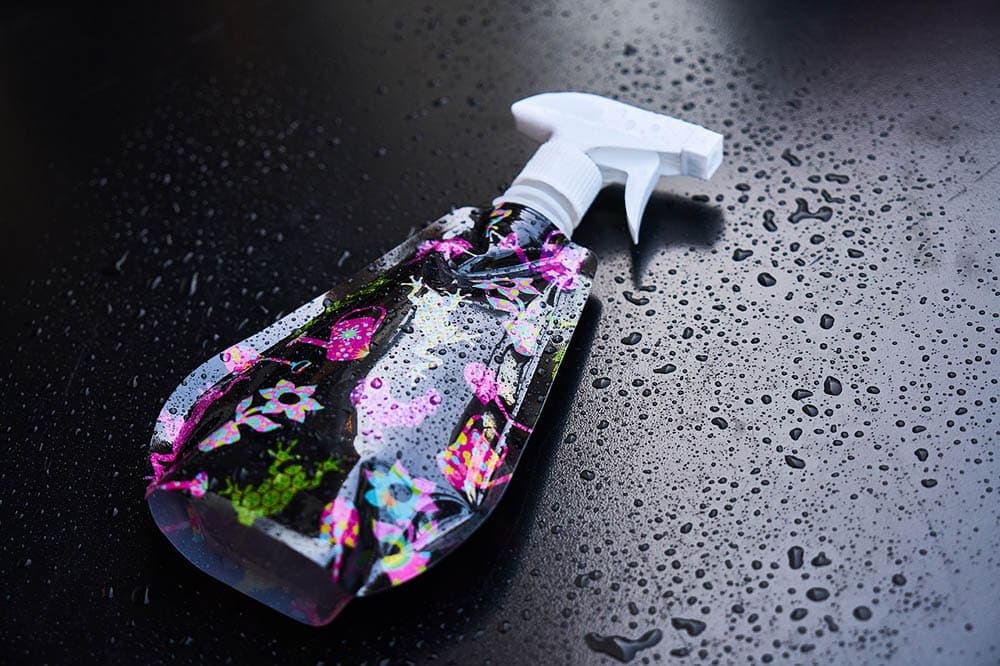
Several commercial urine treatments are on the market to break down the ammonia and other compounds in urine, which works better than water. All you have to do is buy one of these solutions and use it when your dog pees on your plants or lawn. For more convenience, some solutions are available in a concentrated tablet you mix with water yourself.
Keep in mind that you need to have this solution on you and follow your dog around, just like the watering method. This may not be practical, not to mention the cost of replacing the solution for the foreseeable future.
Pros
- Easy to implement
- Effective
Cons
- Significant time commitment
- May be expensive
- Impractical
4. Plant Urine-Resistant Plants and Grasses
| Difficulty: | Hard |
| Supplies/Tools: | Gardening supplies, replacement plants |
The most difficult method on the list, replacing your lawn and plants with urine-resistant options may solve the problem for good. Some plants are more vulnerable to urine, such as Kentucky bluegrass, while others are hardier and better able to withstand the effects of nitrogen and urea, such as Bermuda or ryegrasses. Some plants that can withstand urine are basil, oregano, and winter creeps.
This method involves a full overhaul of your current lawn and garden, which may be impractical. If you have more than one dog and you want to eliminate more time-intensive methods like treating your plants or fencing off areas of your yard, it may be the best option. Once planted, you can remove a lot of the maintenance for urine treatment on your lawn and garden with hardier plants.
Pros
- More long-term solution
- Low maintenance
- Ideal for multi-dog households
Cons
- Full yard overhaul
- Significant investment in time and money
Why Does Dog Urine Kill Plants?
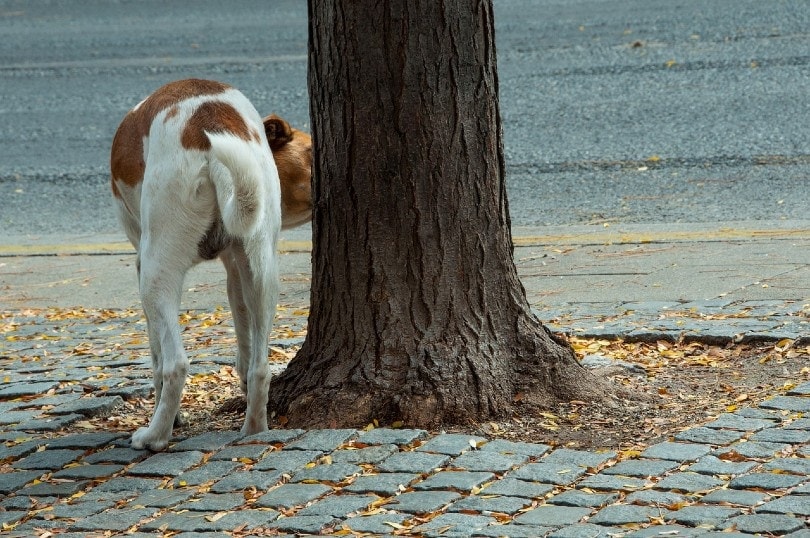
Dog urine contains many chemicals and compounds that can cause damage to your plants.
- Urea: This is the primary component that kills your plants and grass. Urea is formed after proteins are ingested, so it’s present in human urine as well. Dogs have a protein-rich diet, however, and higher concentrations of urea that can kill plants.
- Nitrogen: Nitrogen is often used in fertilizer, but your plants rely on a balance of nutrients to survive. The nitrogen in dog urine can create excess nitrogen in the soil, which may disturb this balance and kill the plants.
- pH Levels: Dog urine salts can affect the pH of the soil, making it too alkaline. This damages the plants’ roots and can kill them.
The compounds in dog urine that kill plants have a lot to do with their concentration, which is why methods like diluting urine or treating it with neutralizing compounds can be effective.
Conclusion
Urine scalds the grass from dogs peeing in your yard and can be unsightly, but you have a few options to fix the problem. From diluting the urine to designating a pee spot, you can give your dog the freedom to pee where it wants without damaging your lawn and plants.
Featured Image Credit: Ching Louis Liu, Shutterstock
Get Hepper In Your Inbox


Pet care tips from our vets and experts, straight to your inbox.
You may opt-out at any time. View our Privacy Policy for more information.

Nicole is a lover of animals of all sizes but is especially fascinated with the feline variety. She’s the proud mom of Baby, a Burmese, and works every day so he can relax in the sunshine or by the fire. She’s always had a cat in her home and has spent countless days with others, observing behaviors and softening up even the grouchiest of the lot. Nicole wants to share her kitty expertise with you so you and your cat can live happy, healthy, and care-free.
Join the conversation
Ask a question, share your story, or send private feedback.