Hepper is reader-supported. When you buy via links on our site, we may earn an affiliate commission at no cost to you. Learn more.
How to Stop Your Dog From Peeing in Their Crate: 8 Simple Steps
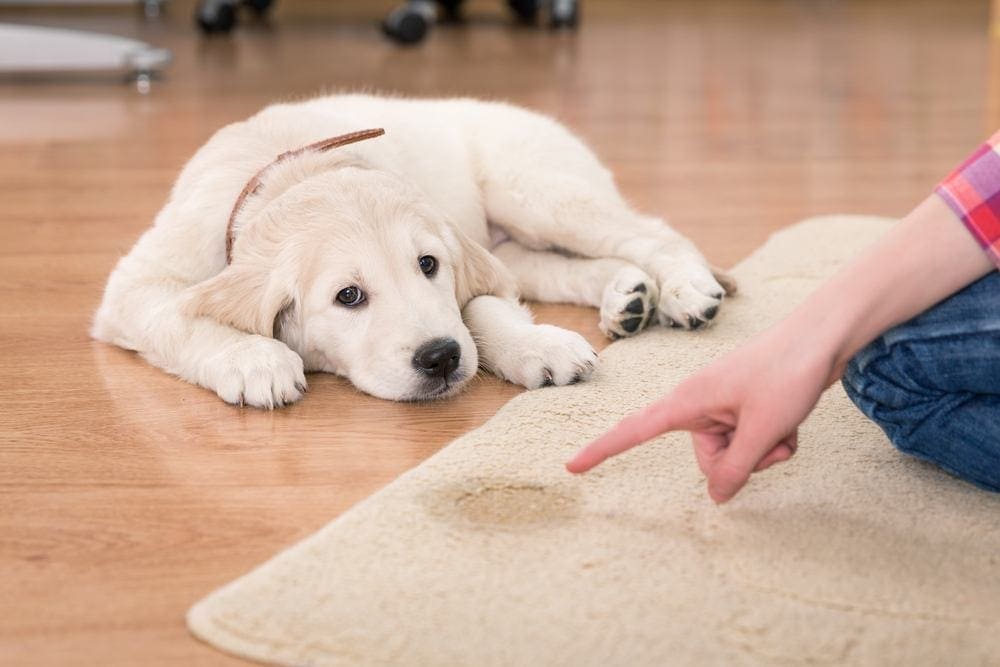
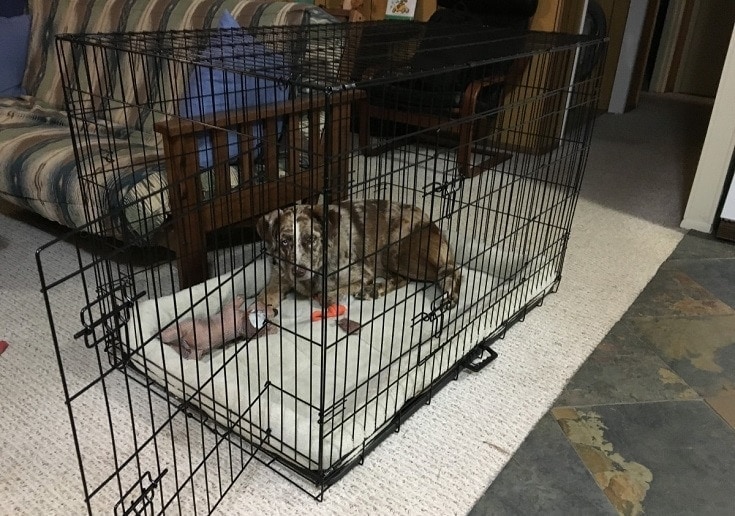
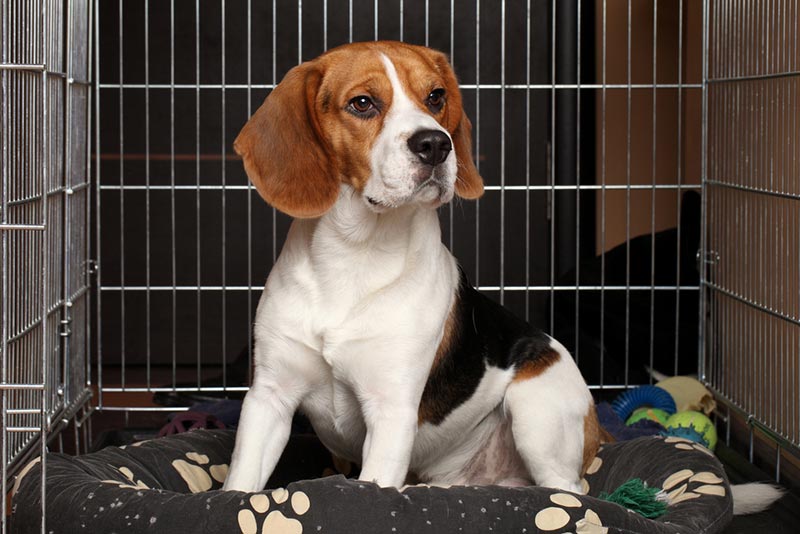
Housetraining a new puppy is not always a simple task, and in recent years, using a crate to help with this task has become quite popular. Crate training is a highly effective method of teaching your dog not to see your house as their toilet and to wait until you let them go outside before doing their business.
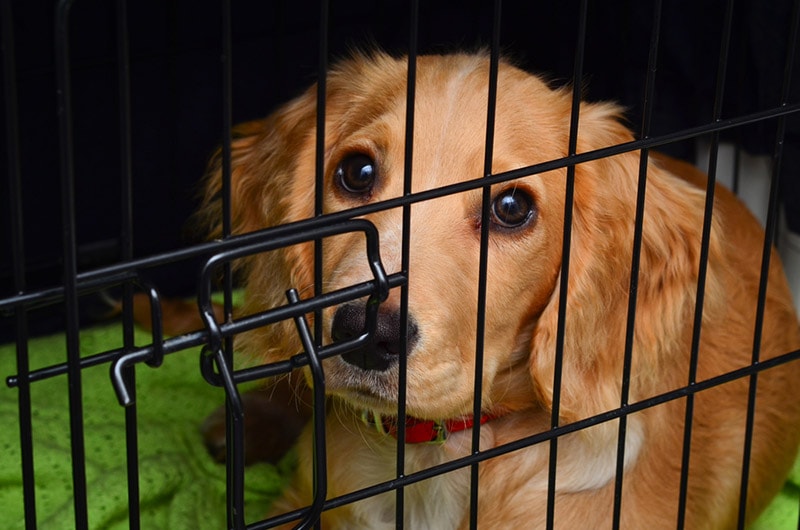
It works by teaching your dog that their crate is their bed and their secure space. Dogs naturally tend not to toilet in the places where they sleep. So, by taking your puppy outside as soon as they are released from their crate, they quickly learn that outside is where they should go potty, not inside their crate and not inside the house. However, this doesn't always work, and new puppies will have a few accidents. But what happens when these accidents keep happening, and how can you get your dog to stop peeing in their crate if it is starting to become a habit?
Here are eight steps to stop your dog from peeing in their crate.

The 8 Ways to Stop Your Dog Peeing in Their Crate
1. Check for an Underlying Medical Condition
The first thing that you need to check is whether there is an underlying medical condition that is causing your dog to pee in their crate before you let them out.
There could be many different medical reasons that your dog is needing to pee more often. Usually, you'll find that they aren't too serious, but rather than spending time trying to research the problem online, we recommend making an appointment with your dog's vet. They are the professional when it comes to your dog's health, and no amount of internet research will come close to having your vet check your dog over.
Besides, if your dog is sick, no matter how minor their condition, the sooner that your dog sees the vet, the sooner the problem can be addressed.
2. Give Your Dog More Toilet Breaks
It is just a fact of life that young puppies and older dogs usually need to go to the bathroom more often than adult dogs in their prime. So, once you've ruled out any underlying medical issues, the next obvious thing to consider is how often you are letting your dog out for a toilet break.
According to PetMD, puppies under the age of 12 weeks will need to toilet every 2 hours. This means that until they are at least that age, your puppy will need to go to the toilet several times throughout the night, and unless you get up to let them out, they will pee inside. As your puppy gets older, they will be able to hold it for longer.
As a general rule, consider the age of your puppy in months and add 1 to it to come up with a rough guide as to how often your dog will need to toilet. So, for example, a 3-month-old puppy will, on average, need to toilet every 4 hours. From about 6 months of age, your puppy should be able to wait all night, provided that they go just before bed.
At the other end of the scale, old dogs may also need to toilet more often. As your dog moves into their senior years, you may find that you need to get up during the night to allow them to go outside, to prevent them from having an accident in their crate.
3. Stick to a Regular Feeding Schedule
Most people feed their dogs twice a day, once in the morning and again at night. This is important because dogs tend to need to toilet shortly after eating. By sticking to a regular schedule, you can help develop a habit, avoid confusion, and reduce the likelihood of your dog having an accident in their crate or somewhere else in the house.
4. Ensure That Your Dog's Crate Isn't Too Big
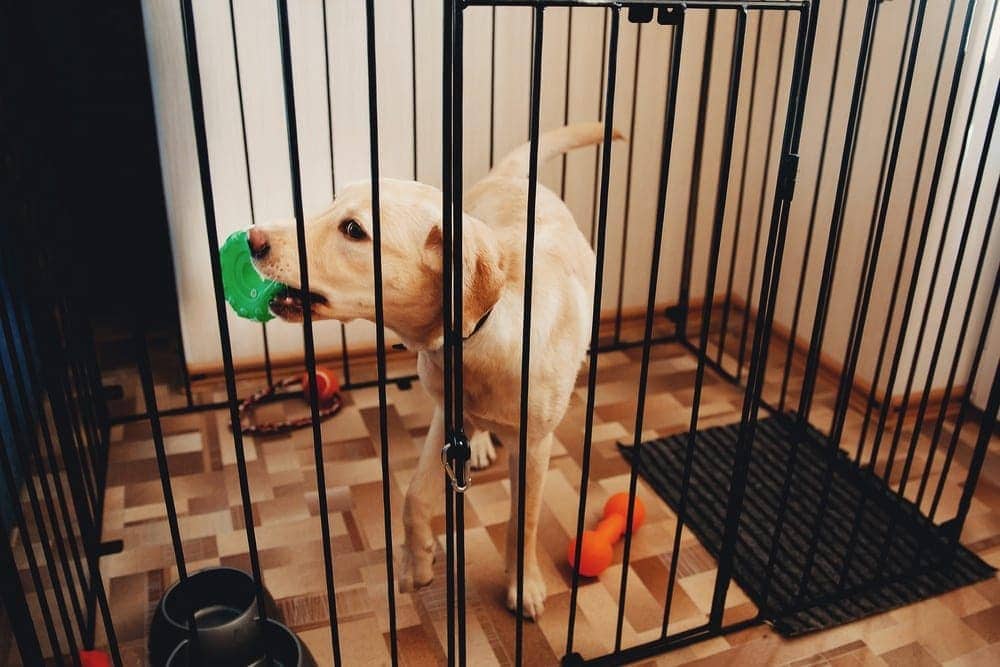
This can be a difficult one, as crates can be expensive, and when people buy one, it makes sense to get one that is large enough for your dog to grow into as they get older. The problem is that that if there is room in the crate that your dog isn't using as a bed, they will be more inclined to use this area to toilet, rather than holding on until they are taken outside.
One way to avoid the problem is to place a box or other solid object in the crate to take up some of the unused space. You can then remove this to provide more room as your dog grows.
However, if you have a dog that has been in the habit of toileting in their crate for a while, simply reducing the amount of space is unlikely to solve the problem on its own.
Related Read: 5 Types of Dog Crates & Their Differences
5. Introduce or Increase the Reward You Give Your Dog When They Get It Right
Part of the process of training a dog to toilet outside rather than in their crate involves rewarding them when they do the right thing, yet many people forget this. If you simply open the door and let your dog go outside, and then call them back in when they're done, your pet may not have connected the act of going outside to pee and getting a reward.
If this is the case, you should consider giving your dog a reward when they do the right thing and pee outside. The reward need only be a small dog treat. Still, once you incentivize the act of toileting outside, your dog will likely be much happier to play along.
It is important, however, that your dog gets the reward as soon as they go to the toilet outside, because you want them associating the act with the reward. To do this, you have two choices. The first involves you being outside with your dog and giving them the treat as soon as they've done their business. The second is to introduce a training clicker and teaching your dog to associate the clicker with earning a reward. By using the clicker, you can “click” the moment that your dog does the right thing, letting them know they have earned a reward, without having to be right there with them in the yard.
6. Adjust Your Own Expectations
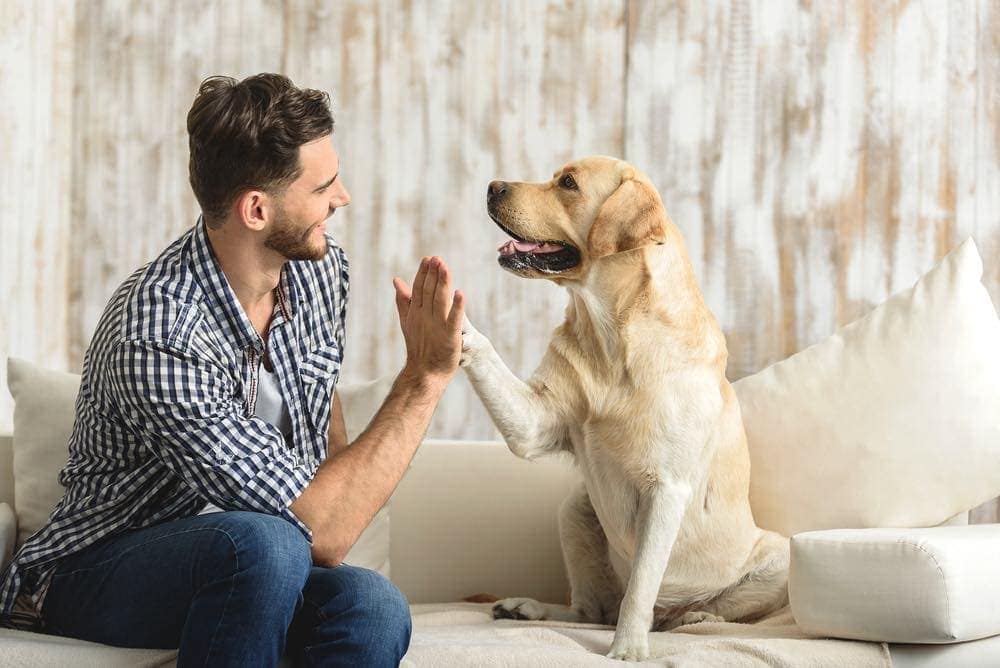
Sometimes as pet owners, we expect too much from our pets. Even the most well-trained dog will occasionally have an accident in their crate, and we need to understand that when this happens, it isn't always your dog's fault.
It's also important to consider whether there is something you have done or changed that may have impacted your dog's schedule. For example, if you have to leave your dog in their crate for an hour longer than normal once every few weeks, you shouldn't be surprised to find that they've had an accident by the time you come home and let them out.
Remember that if you push your dog beyond what they are physically capable of doing, no amount of extra training is going to help.
7. Set Up a Spy Cam to Monitor Your Dog
No, we're not advocating some sort of pet detective-style sting to catch your dog out, but rather that it may be worth your while setting up a camera to monitor how your dog reacts when you are not in the room or out of the house.
One of the major reasons that dogs suddenly start peeing in their crates is anxiety, and many dogs suffer significantly from separation anxiety when their owners go out. By having a camera in a place that you can either monitor live or play back and review later, you get a good idea of whether anxiety may have a part to play in your dog peeing inside.
If your dog is calm and happily rests and plays with their things while you are gone, you probably don't have a problem. However, if the footage shows your dog being visibly distressed, constantly trying to claw their way out of their crate, on just not resting or sleeping at all, your dog may be feeling distressed in your absence, and this could be the reason that they are peeing in their crate.
Dealing with separation anxiety can be difficult, particularly if you can't be at home with your dog all the time. If you suspect that this is a problem, we recommend getting in touch with a dog trainer or canine behavioral therapist and obtaining their professional help.
8. Consider Getting Rid of the Crate and Trying Something New
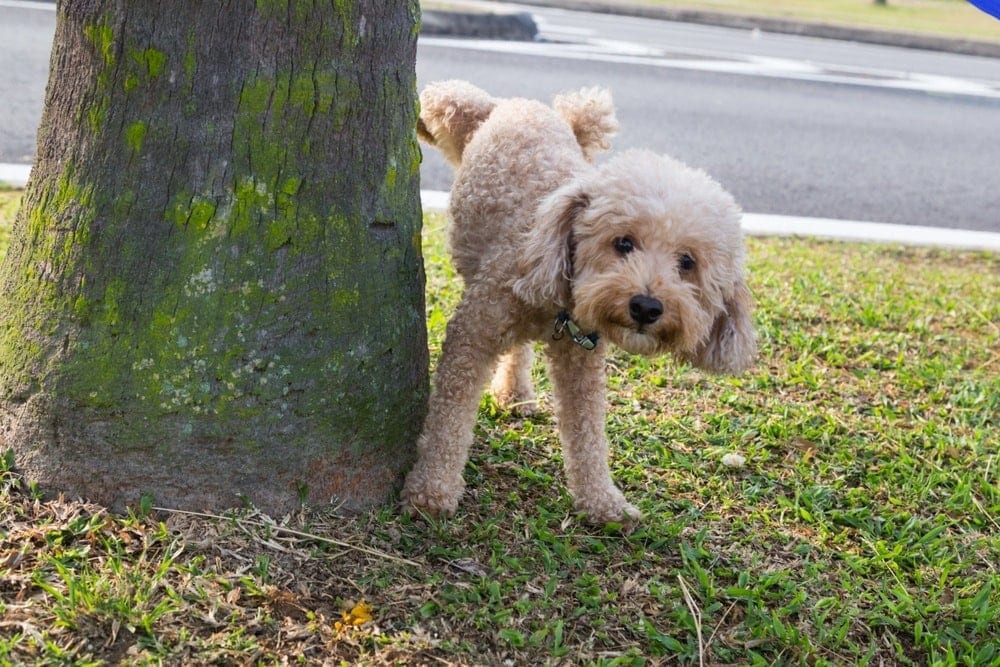
Not all dogs adapt well to being crated, and the simple fact that they are locked up in a confined space may be enough of an issue to be causing your dog's indoor peeing problem.
Instead, you may be able to use your internal doors, possibly supplemented by a child gate or two, to create a safe space within your house where you can let your dog roam about. This might mean confining them to a single room or just one part of the house, but if you've tried everything else, this may be the answer to your problem.
You may also want to consider engaging outside service providers, such as professional dog walkers or a doggie daycare facility, to provide love and attention to your dog while you are not home.
Final Thoughts
If your dog is peeing in their crate, the first step is to rule out any medical conditions especially if this is a sudden thing. Otherwise, you will need to back up and re-train your dog to toilet outside or in the appropriate place. It's also important to not leave your dog in the crate for too long at a time, because eventually, they will no longer be able to hold in. In this case, you may need to have someone come over to let your dog out to use the bathroom if you're going to be gone a long time.
Related Reads:
Featured Image Credit: Olimpik, Shutterstock
Get Hepper In Your Inbox


Pet care tips from our vets and experts, straight to your inbox.
You may opt-out at any time. View our Privacy Policy for more information.

Nicole is a lover of animals of all sizes but is especially fascinated with the feline variety. She’s the proud mom of Baby, a Burmese, and works every day so he can relax in the sunshine or by the fire. She’s always had a cat in her home and has spent countless days with others, observing behaviors and softening up even the grouchiest of the lot. Nicole wants to share her kitty expertise with you so you and your cat can live happy, healthy, and care-free.
Join the conversation
Ask a question, share your story, or send private feedback.