Hepper is reader-supported. When you buy via links on our site, we may earn an affiliate commission at no cost to you. Learn more.
How Long Can Dogs Hold Their Pee? Canine Bladder Control Facts
In this article
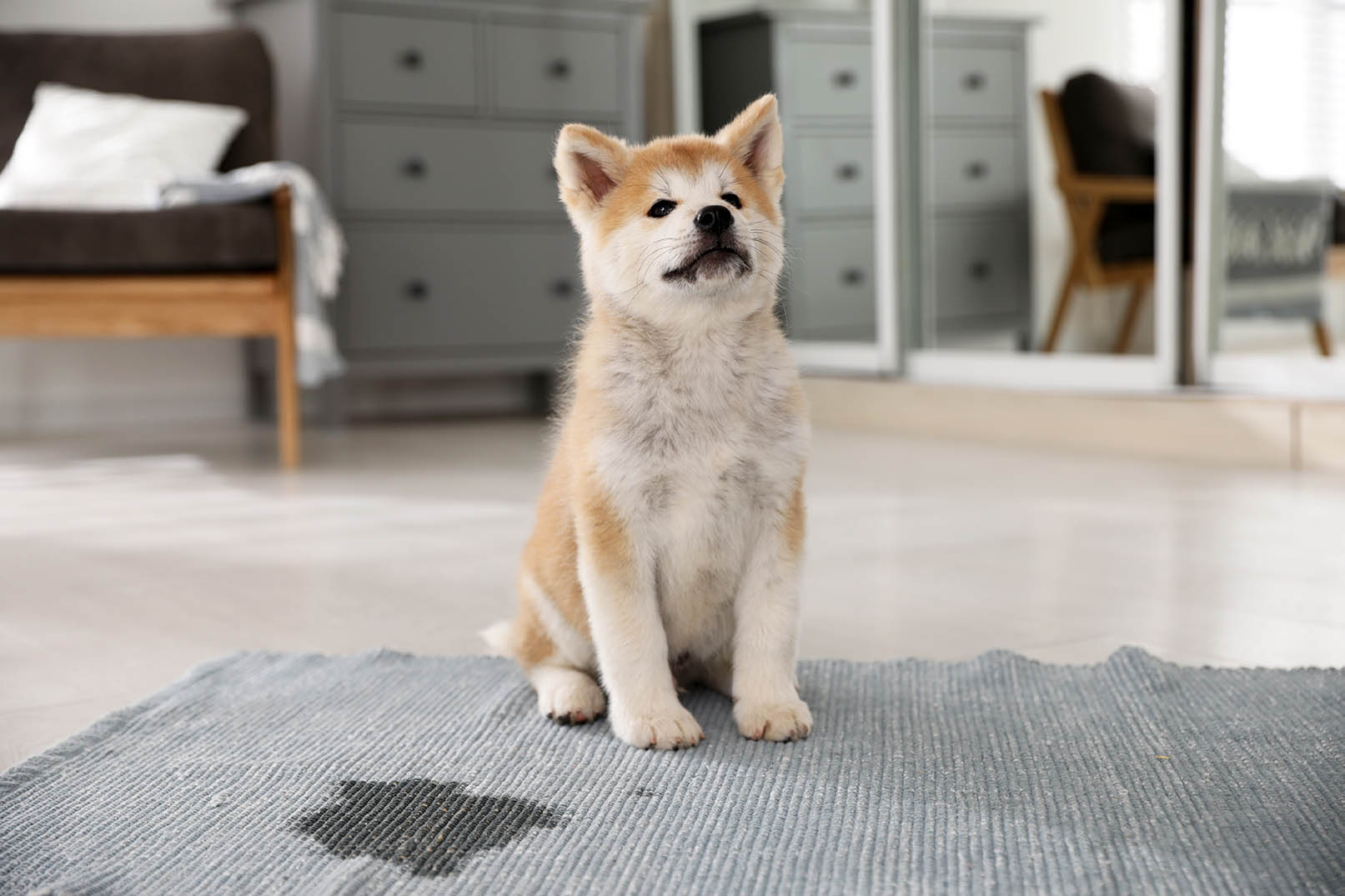
This is an important question, especially for dog owners who work all day or just want a good night’s sleep. So, what is the longest that your dog can go without going outside to answer nature’s call?
The absolute longest recommended for an adult dog is 6 to 8 hours, but this also depends on several factors: the dog’s size, age, health, and even diet. Let’s also not forget how uncomfortable it can be for anyone to have to hold their pee for a long period of time. So, there’s more to this question than meets the eye.
We look at the factors that can affect how long a dog can wait, so you can pick the best course of action that is best for you and your furry canine friend.

The Hard and Fast Rule
The thing is that there are no hard and fast rules when it comes to how long can a dog hold its pee. Every dog is unique, and any “rules” that you’ve heard regarding this topic are dubious.
For example, some believe that a puppy can hold on to their pee for as many hours plus one extra for how many months old they are. So, a 1-month-old puppy can hold on for 3 hours. For anyone who has ever had a 2-month-old puppy, you can probably say with confidence that this isn't that accurate.
Your best bet is following common sense and your own instincts. It’s practically impossible and unrealistic to make any kind of generalization about how long a dog or puppy can hold their pee.
Size Is a Huge Factor
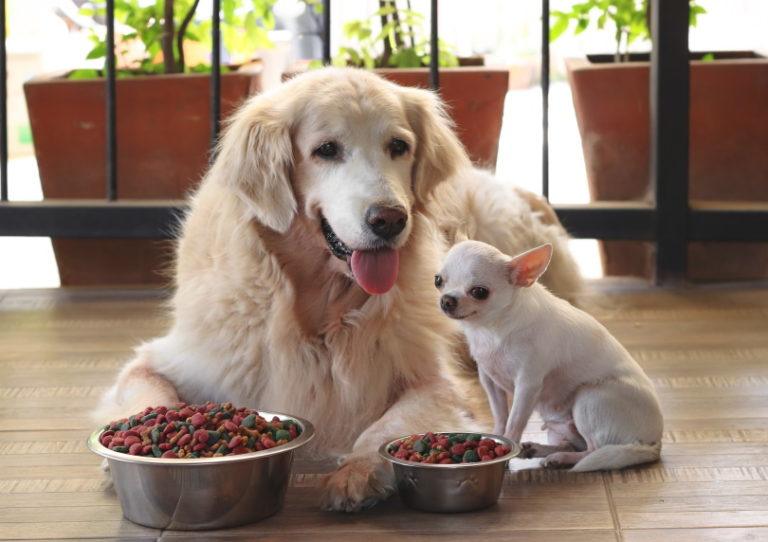
Larger dogs can hold their pee longer than smaller dogs. After all, the larger the dog, the larger the bladder, and tiny dogs have tiny bladders.
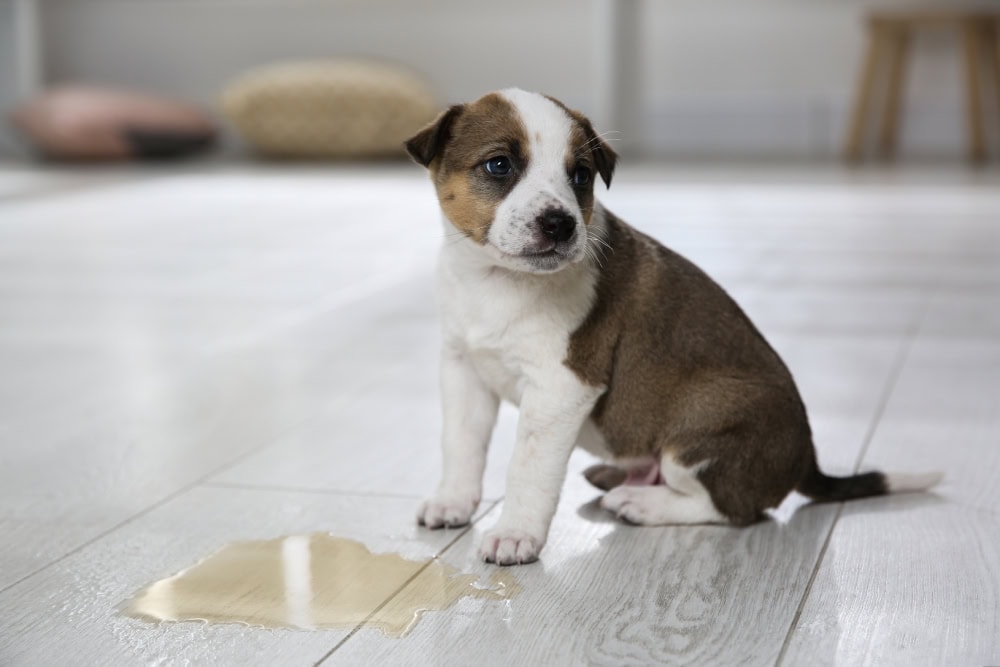
But it’s also safe to say that no matter how large the puppy, they still need frequent pee breaks. Regardless of size, vets recommend that every dog needs a minimum of three to five visits outside for a pee break every day.
There’s Also Age
Just like people, puppies and senior dogs have less control of their bladders and generally need to pee more often. The following are just general guidelines for the age groups, as not every puppy or dog will fit the mold of their age category.
Of course, age depends on the size of the dog too. Large breeds don’t live as long as small breeds. Small dogs tend to be seniors at around 11 years, medium dogs at about 10 years, large dogs at 8 years, and giant breeds at about 7 years.
Puppies (6 months or less)
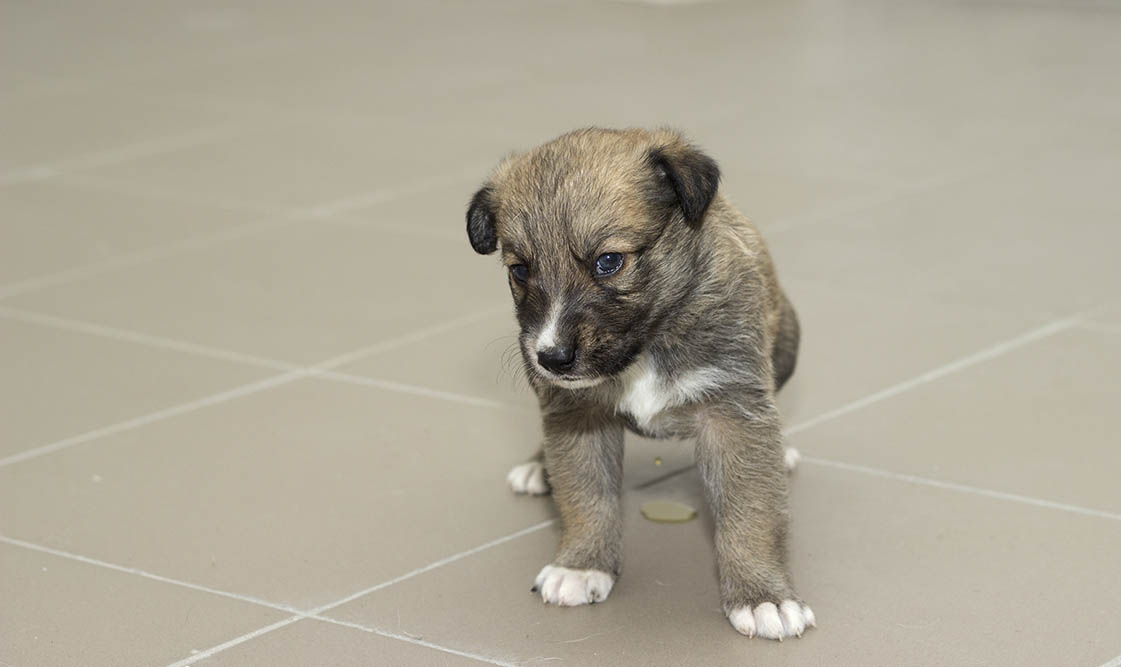
Puppies under 6 months can typically hold on for about 1–3 hours. Very young puppies need to be taken out every hour, particularly after eating and drinking water.
Puppies (more than 6 months)
As they get older, puppies can hold on a little longer. Between 6 months and 1 year, puppies can hold on for approximately 2–6 hours.
Adult (under 7 years)
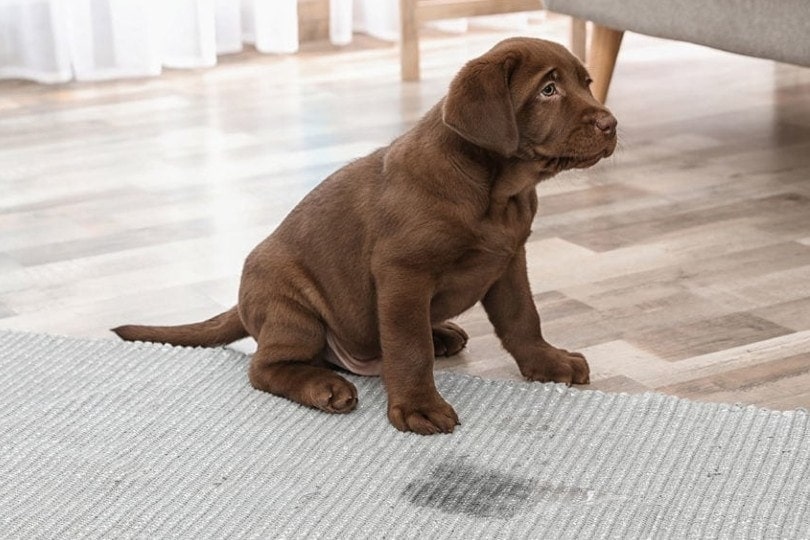
This is the average. Adult dogs between 1 and 7 years of age can usually hold on for about 6–8 hours.
Senior (7 to 11 years)
The ability to control their bladders starts to become more difficult as dogs enter their senior years. When they are about 7–11 years old, they might be able to hold their bladders for about 4–6 hours.
Senior (12 or more years)
By the time that dogs hit about 12 years of age, the time that they can wait reduces further to approximately 2–4 hours a day.
You’ll need to use the size of your dog and their age to figure out the numbers. Each dog will have their own unique set of factors.

A Dog’s Diet
How much, how often, and when your dog eats and drinks water will hugely impact how often a bathroom break is needed.
More moisture in your dog’s food can lead to potentially more frequent urination. So, if your dog eats canned dog food, rice, broths, or a raw food diet, these will definitely contribute to more bathroom breaks, whereas a diet comprised primarily of kibble will lead to fewer.
However, your dog’s health is more important than frequent pee breaks, as obviously, you want your dog to be fully hydrated. The extra moisture in a dog’s diet helps flush the body of toxins and bacteria and aids in digestion.
One of the main signs of a dehydrated dog is dark-colored urine. If your dog’s pee is a dark yellow, you’ll need to add more moisture to their food and ensure that there is enough fresh and clean water for them. Always speak to your vet if you’re concerned about your dog’s health and diet.
When Is It a Health Problem?
Some medications, like certain kinds of heart pills, can make dogs urinate more often. There are also health conditions that can cause frequent urination, such as kidney disease, cystitis, liver disease, and diabetes.
If your dog appears to be urinating more frequently than usual, pay attention to any other unusual signs. Are there any changes in the smell and color of the urine? Is your dog showing signs of pain or discomfort while peeing? Do they attempt to urinate but with little success?
These are all signs that there could be a health problem, and you should take your dog to the vet immediately.
Consequences of Making Your Dog Wait
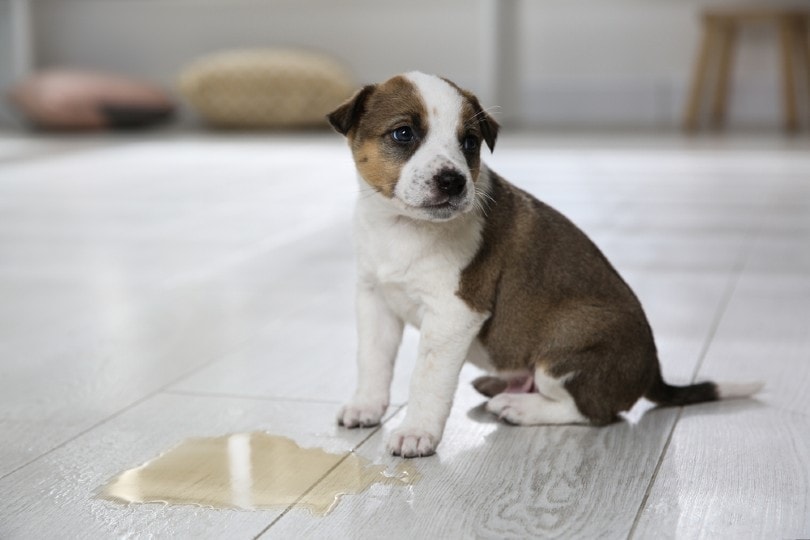
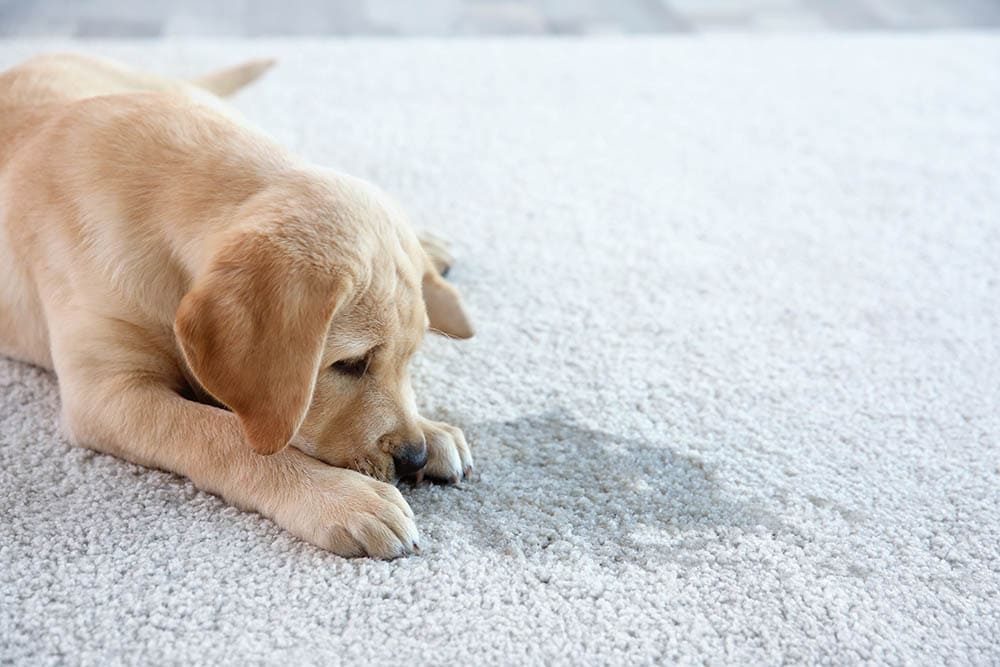
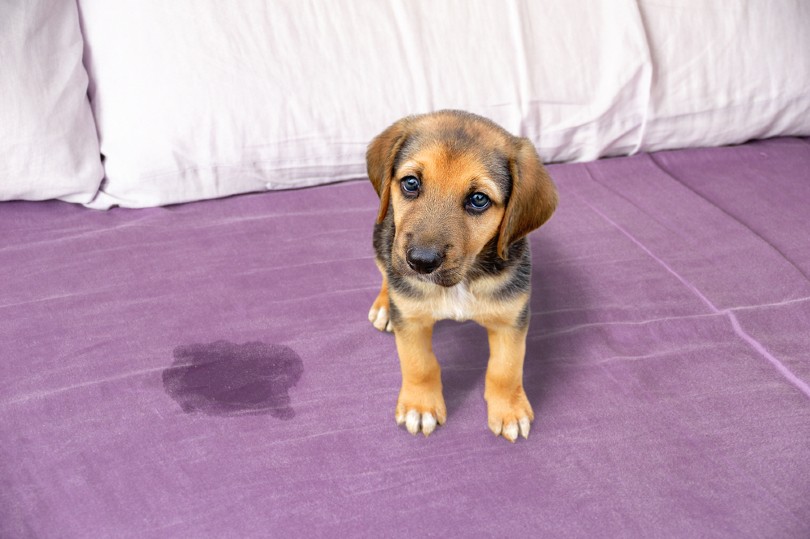
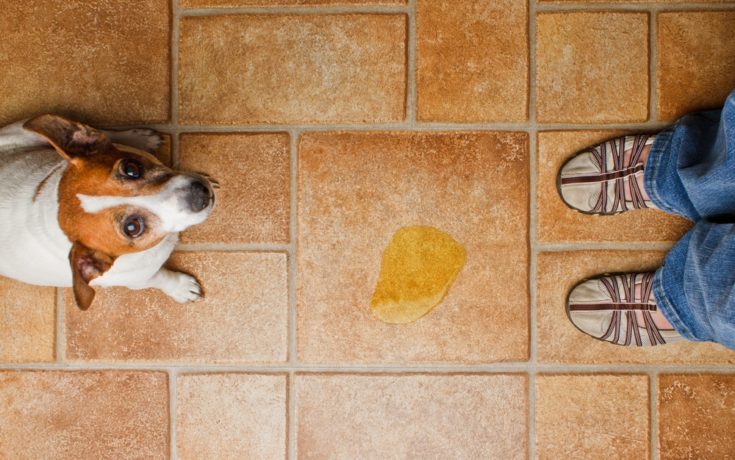
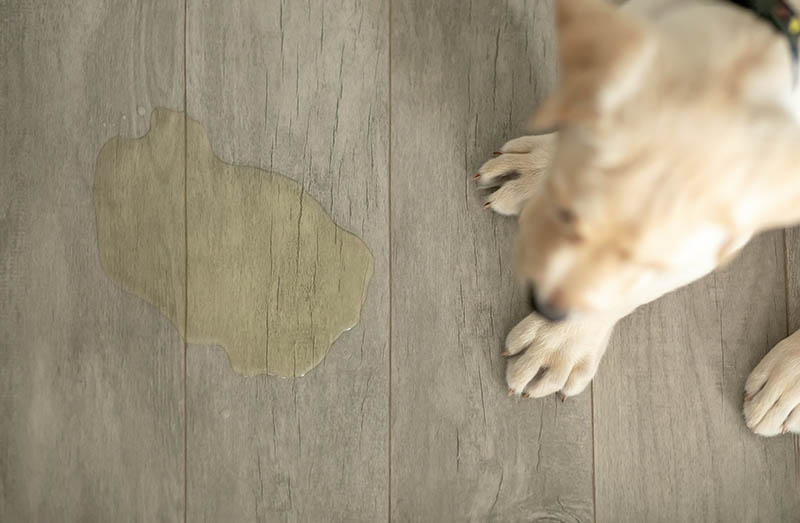
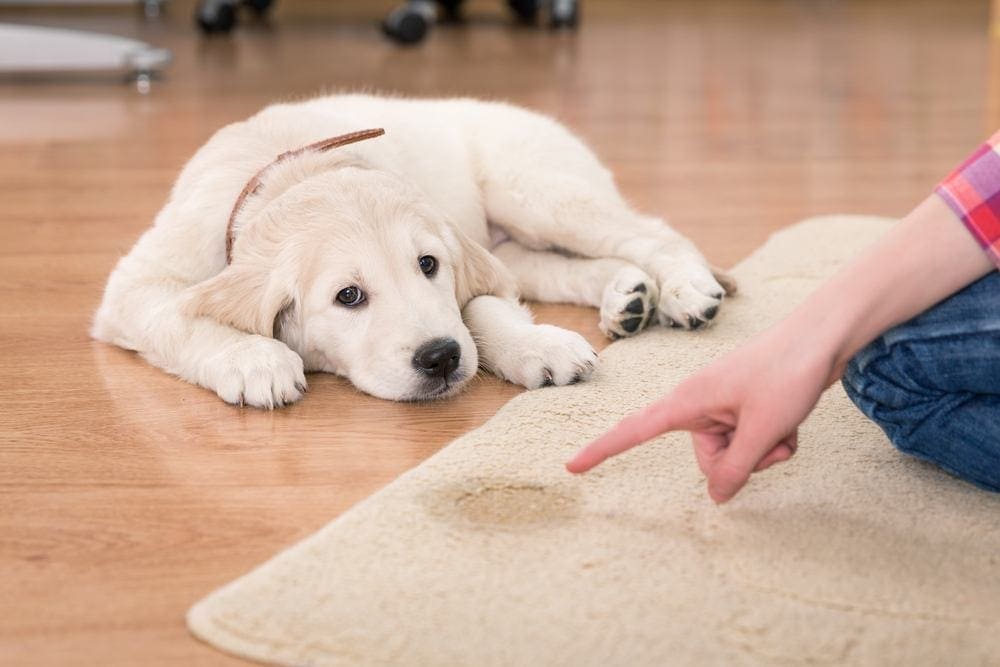
There can be consequences for making your dog wait for long periods of time for a bathroom break. Other than the minor inconvenience of a ruined carpet or a mess on your hardwood floor, there is a possibility of your dog developing serious health conditions.
If your dog is holding in pee for long periods on a regular basis, the following issues might develop.
Urinary Tract Disease
Your dog’s urinary tract system helps flush toxins and bacteria from the bladder, kidneys, and urethra. Holding in urine for extended periods can enable the bacteria and toxins to multiply in the urinary tract. Urinary tract disease can eventually lead to urinary stones, which if left untreated, are not only painful but can also lead to death.
Bladder Cancer
Bladder cancer isn’t necessarily a common occurrence under these circumstances, but it’s a possibility. The longer that pee is held in the bladder, the longer that carcinogens stay in the urine and urinary tract. One common sign of bladder cancer is recurring urinary tract infections.
Incontinence
While this problem is more common with senior dogs, it can happen with dogs of any age. If a dog is continuously made to hold in pee for too long and too often, the bladder can start to distend, which leads to urinary incontinence. This damages the muscle, which can lead to leaking. Keep in mind that this damage is irreversible, so it’s best to not make your dog hold in urine too often.
How Should You Handle Those Long Stretches?
So, you’re aware that there’s a problem with making your dog wait for long stretches between bathroom breaks, but you need to go to work, so what can you do?
- Dog litter: You can train your dog to use the litter box when you’re away.
- Pee pads: These are typically used when housetraining a puppy, but they are effective for dogs of any age, particularly if they are confined to their kennel for the day.
- Dog wraps: This is a different way of saying doggy diapers. They’re better than a sick dog and a mess on the floor!
- Indoor grass: You can bring a small bit of the outdoor inside with a small patch of lawn. It’s artificial grass, but it still gives a dog a place to urinate.
- Doggy daycare: You can take your dog to doggy daycare. Not only will your dog be allowed to pee throughout the day, but the staff will also take great care of your dog, and there will be plenty of company with the other dogs.
- Dog walker: If you’re lucky enough to have a friend, family member, or neighbor who can check in on your dog throughout the day for free, then accept their goodwill! Otherwise, you can pay someone to take your dog out for a walk and bathroom break.
If you live close to your work, you can also zip home to let your dog out on your own lunch break.

Conclusion
While most dogs can hold their pee for a few hours, if your dog frequently has “accidents” and it’s not a health issue, you need to provide them with more frequent bathroom breaks.
We hope that our tips and information will help you and your dog deal with this whole urination issue. Just try not to make your dog hold on for too long and too often, as this can cause serious health problems. We want your dog to remain healthy and for you both to be happy.
See Also:
How to Get Dog Pee Smell Out of Concrete & Garages (Proven Methods)
How to Get Dog Pee Smells Out of Car Seats (6 Proven Methods)
Featured Image Credit: New Africa, Shutterstock
Get Hepper In Your Inbox


Pet care tips from our vets and experts, straight to your inbox.
You may opt-out at any time. View our Privacy Policy for more information.

Kathryn was a librarian in a previous lifetime and is currently a writer about all things animals. When she was a child, she hoped to work in zoos or with wildlife in some way, thanks to her strong love for animals. Unfortunately, she's not strong in the sciences, so she fills her days with researching and writing about all kinds of animals and spends time playing with her adorable but terribly mischievous tabby cat, Bella. Kathryn is hoping to add to her family in the near future – maybe another cat and a dog.
Join the conversation
Ask a question, share your story, or send private feedback.