Hepper is reader-supported. When you buy via links on our site, we may earn an affiliate commission at no cost to you. Learn more.
How to Surrender a Cat: Critical Steps You Need to Know
In this article
Cats are incredible pets. They are cute, cuddly, and full of life. However, taking care of a cat takes work. Sometimes, they have behavioral issues. In other cases, a female gives birth to adorable kittens, but you already have your hands full. And then we have senior parents that can’t catch up with their felines. Giving up a cat is not at all easy.
But if you’ve decided to surrender it, do it the proper way. So, how can you make sure the fur bay finds a new home? You do that by contacting a shelter or rescue organization, getting the papers ready, and sterilizing the pet. There’s a lot more to it, though. Let’s talk about it in more detail!

Before You Start: Make Sure Your Mind Is Made Up
If you’ve been living side by side with a cat for years, don’t make any hasty decisions: you’ll probably regret it later! Think twice before you surrender the four-legged member of the family; take some time to consider all the pros and cons. Even if you give it a week, you might change your mind. Besides, most behavioral problems can be fixed 1.
Also, people often believe that cats have short memories and don’t love their owners, but that’s not true. Although felines aren’t necessarily as affectionate as some dogs, these tiny troublemakers are very well capable of developing deep feelings for their favorite humans. In fact, cats get attached to humans just like babies do 2. So, try not to break that precious little heart!


How to Surrender a Cat
1. Start With Friends/Family Members
At this point, you’re probably thinking about handing the cat over to a relative or friend. This is a great option, as you won’t have to fill out any papers. More importantly, surrendering a pet to people that you know and trust is a great way of ensuring nothing bad will happen to your cat. And don’t be shy about it: you’ll never know whether a person is interested in adopting a feline or not—unless you ask them.
This is especially true when your cat gives birth to a litter of kittens. If the good people in your circle adopt a kitty or two, that will make your job a lot easier.
2. Schedule a Surrender Appointment
You can do this with the Animal Humane Society, SPCA, or any other adoption center, rescue organization, or shelter of your choosing. Just make sure they follow the “no-kill” rule and won’t euthanize the cat! As for the actual process, it’s going to be mostly the same. You schedule an appointment, the staff does a quick health exam and evaluation, and then you’re presented with the available options.
On average, these appointments last for 30–45 minutes, and the surrender fee is $50–60 for a single cat and $90 for a pair. Please keep in mind that most animal welfare organizations are always busy and understaffed. So, it would be best to have all the papers ready in advance. Also, consider calling them in advance to discuss details or read the surrender policy on the website.
3. Complete the Surrender Form
Once you have an appointment scheduled, go ahead and complete a surrender form. It will only take 10–15 minutes to do, but it’s a very important step. You’ll need to have some sort of ID on you, by the way (like a driver’s license). The form will ask you to fill out basic info like your home address and contacts.
Next, answer questions about the cat’s name, sex, breed, and age. The organization will also require a “report” on the fur baby’s behavior, temperament, diet, and more. Please be very thorough and specific, as that will make it easier to find a new home for the kitty. You can either fill out the form on the spot or download it online 3.
Get ready to share the following information:
4. Or Create a Profile on a Rehoming Website
Shelters are stressful, especially for shy or aggressive cats. So, if you’d like the pet to stay with you until someone comes around, put it up on a rehoming website. The process is very straightforward: all you have to do is share essential info about the kitty (don’t forget to add a cute picture!), much like you would with a surrender form.
Once you’re all set, you can check out available adopter applications, meet the new owners, sign the papers, and that’s it! 4 And yes, it is up to you to decide which home is best for the pet.
5. Have the Cat’s Veterinary Records Handy
Most shelters, volunteer-run rescue centers, and rehome/animal welfare organizations will need to look at the furry bud’s vet history before they can accept it. Don’t worry if you don’t have it at the moment: you can always ask your animal doctor to have the records ready for the pet. Again, the cat’s background profile will play a key role in finding a suitable new home for it.
6. Be Honest About Potential Issues
We can’t stress it enough: be 100% honest about the cat and don’t hide anything! If you try to “sugarcoat” or simply withhold important info about the kitty’s health or behavior, that will only make matters worse. So, if it’s a feisty, hard-to-please, and moody feline citizen, the adoption center has to know about that. Is it an overzealous fur ball that only an active family can handle?
Or maybe it’s a loner and prefers to stick to itself? Does the cat vocalize a lot, ruin carpets and furniture, and have bathroom accidents? Yes, that needs to be in the report. Now, it might sound like you’re setting the cat up, but that’s not the matter here. The more honest you are about it, the better.
7. Get the Furry Bud in Tip-Top Shape
This part is often overlooked by pet parents who are trying to surrender their pets, but if the cat is in bad shape, that can be a huge deal-breaker. Before you fill out any forms or look for any potential adopters, make sure the cat is healthy. First, have it thoroughly checked by a veterinarian to reveal any (potential) medical conditions. Next, have it vaccinated and treated against parasites.
Also, if you haven’t done it before, do consider sterilizing the pet. And the reason for that is simple: spayed and neutered fur babies live longer, happier lives. Sterilized cats have a lower chance of developing cancer that targets the uterus (for a female) and testicles (for a male). They also become less aggressive and don’t bark as often.
8. Don’t Forget About Grooming!
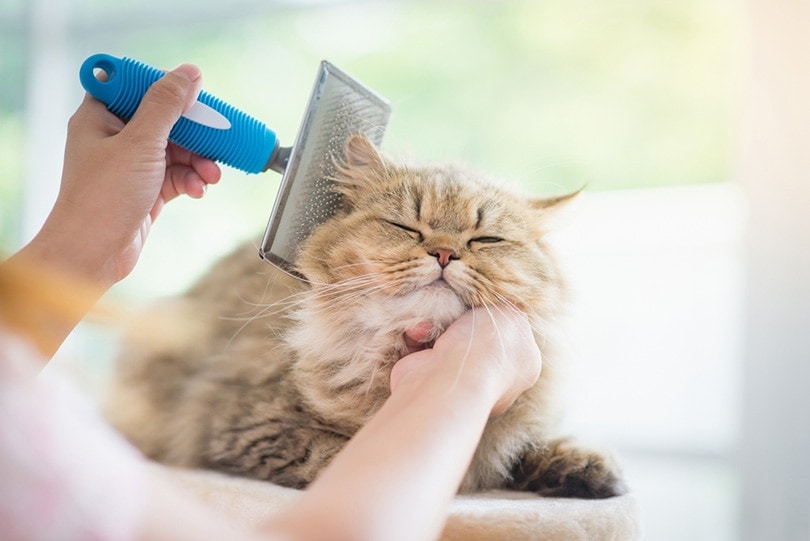
Looks matter—there’s no denying that. So, once you have all the papers ready and the pet is thoroughly checked, grooming comes next. We’re talking about brushing its coat, trimming the cat’s nails, and cleaning its ears. Now, if you’ve been keeping up with the four-legged bud’s maintenance routine, you can skip this part. If not, you might want to pay a pro groomer to handle everything.
It’s never a good idea to surrender a cat that doesn’t look its best. That will make it a less desirable pick, which is NOT what we’re going for here! True, shelters and rescue centers often take care of the grooming. Still, it would be best if you get the cat looking like a gift with a ribbon on it, ready to meet its new owners.
Why Are Cats Surrendered?
Most pets are given up because of various behavioral issues. Financial difficulties are another common reason for it. Some people get divorced, move to a different place, and don’t (or can’t) take the feline with them. Owners of a non-spayed female cat that gives birth to kittens also think about surrendering at least some of those babies.
Older folks often struggle with maintaining cats and decide to give them up. Lastly, some cat owners surrender their cats when they get sick, due to medical costs. But, if you have the means, we encourage you to take care of the pet. The reason: most welfare organizations won’t accept a cat if it’s untreatable. Or they’ll end up spending their own money on it, which, again, is not really fair.
Summing up, the major reasons for surrendering cats include:
Final Thoughts
Surrendering a cat is no small task. However, if you feel like looking after the furry bud is too hard of a job, surrendering the pet might be the right solution. It will, of course, take a while before the cat is adopted by someone. But, if you follow the tips/tricks from our guide, you’ll be able to greatly increase the cat’s chances.
Start by filling out the form, sharing the cat’s veterinary records, grooming the feline, and creating a profile. There are quite a few shelters and adoption organizations in the US and beyond that can help with that. Or, if you have friends that are willing to take the fur baby off your hands, that’s even better!
Sources
Featured Image Credit: Alice, Unsplash
Get Hepper In Your Inbox


Pet care tips from our vets and experts, straight to your inbox.
You may opt-out at any time. View our Privacy Policy for more information.

Nicole is a lover of animals of all sizes but is especially fascinated with the feline variety. She’s the proud mom of Baby, a Burmese, and works every day so he can relax in the sunshine or by the fire. She’s always had a cat in her home and has spent countless days with others, observing behaviors and softening up even the grouchiest of the lot. Nicole wants to share her kitty expertise with you so you and your cat can live happy, healthy, and care-free.
Join the conversation
Ask a question, share your story, or send private feedback.