Hepper is reader-supported. When you buy via links on our site, we may earn an affiliate commission at no cost to you. Learn more.
How to Tell if a Cat Needs Their Glands Expressed (Vet Answer)
In this article
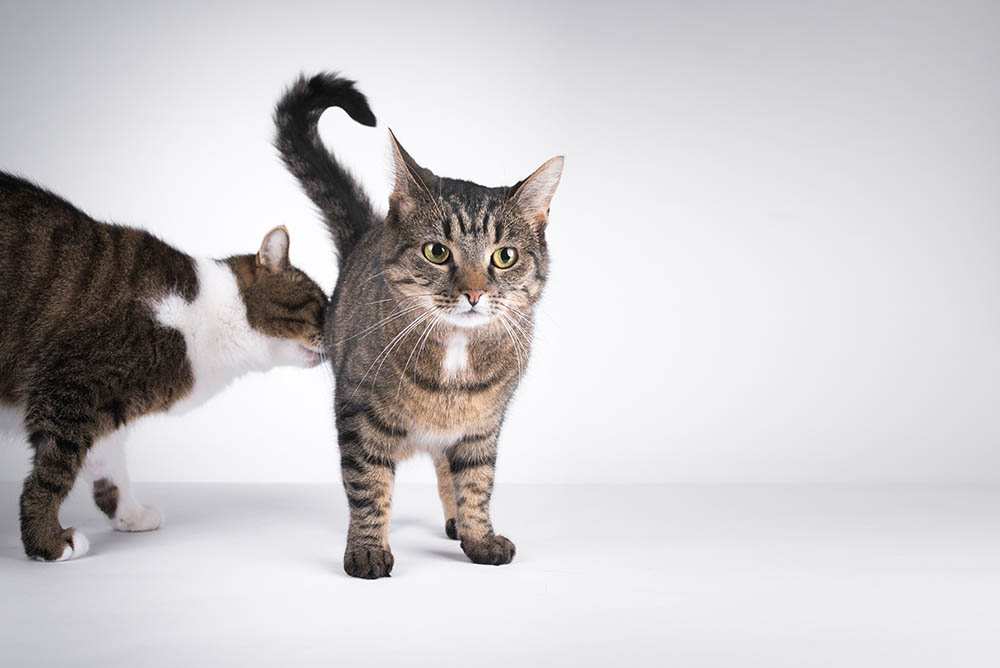
Anal gland problems are much less common in cats than in dogs. However, it is good for cat owners to be aware of what signs to look out for so that veterinary advice can be sought when appropriate and good anal gland health can be maintained.

What Are Anal Glands?
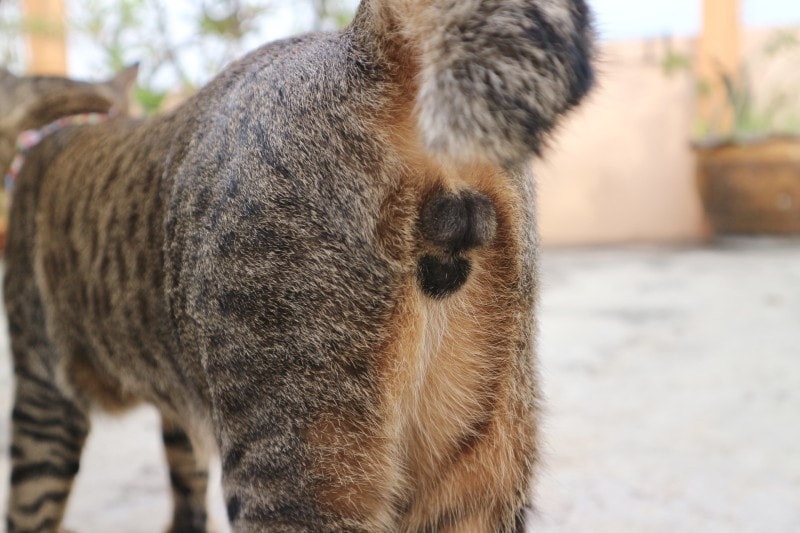
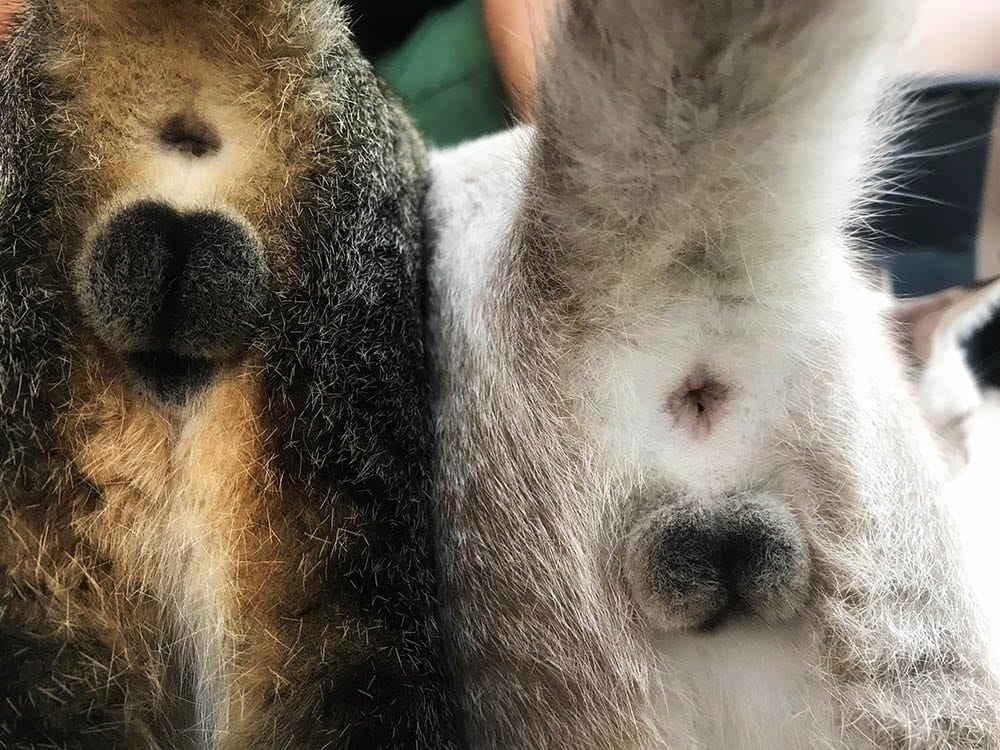
Anal sacs, commonly known as anal glands, are pouches located on either side of the anus, at the 4 o’clock and 8 o’clock positions. They produce a very distinctive-smelling liquid that empties via ducts or tubes, just inside the anus. Small amounts of this fluid pass during bowel movements. For this to happen, feces need to be firm and properly formed so that enough pressure can be exerted during the motion.
Problems Associated with Anal Glands
The most common problem associated with anal glands in cats is impaction. This can contribute to the development of infection, and in some cases, subsequent abscess formation. Dealing with impacted anal glands promptly can help prevent further complications, as well as relieve your cat’s immediate discomfort. If you notice any of the following problems, it is important to seek veterinary treatment for your cat's anal glands.
Impaction
Anal gland impaction occurs when the tubes, through which the secretion empties, become clogged. The glands cannot be emptied in the usual way during defecation, and this leads to a lot of discomfort. Owners need to be aware of signs that their cat’s glands are impacted, but they may be much less obvious than in dogs.
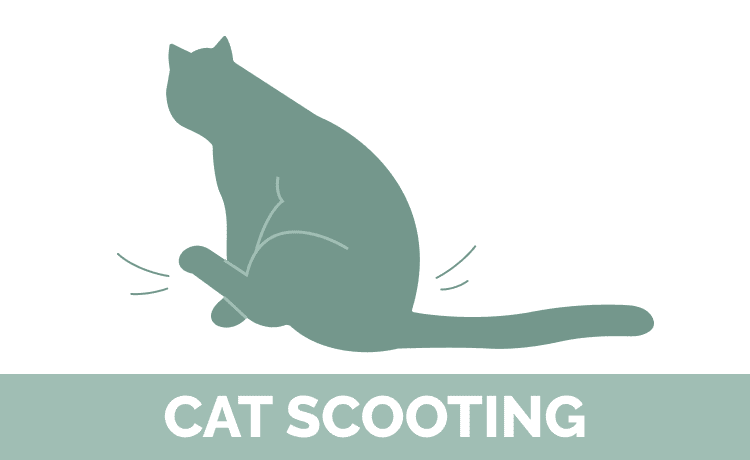
Indications that all is not well include scooting or rubbing their bottom on the ground, biting, licking their bottom, pain, or irritation when their owner touches their rear end, and discomfort when defecating or sitting. If you notice your cat exhibiting any of these behaviors, it is advisable to have him or her examined by your veterinarian. Some of these signs may also be indicative of a problem other than anal gland impaction. For example, the presence of tapeworms. If anal gland impaction is present, the problem can usually be solved quite easily by expressing the glands. This provides immediate relief to your cat and can help prevent further problems.
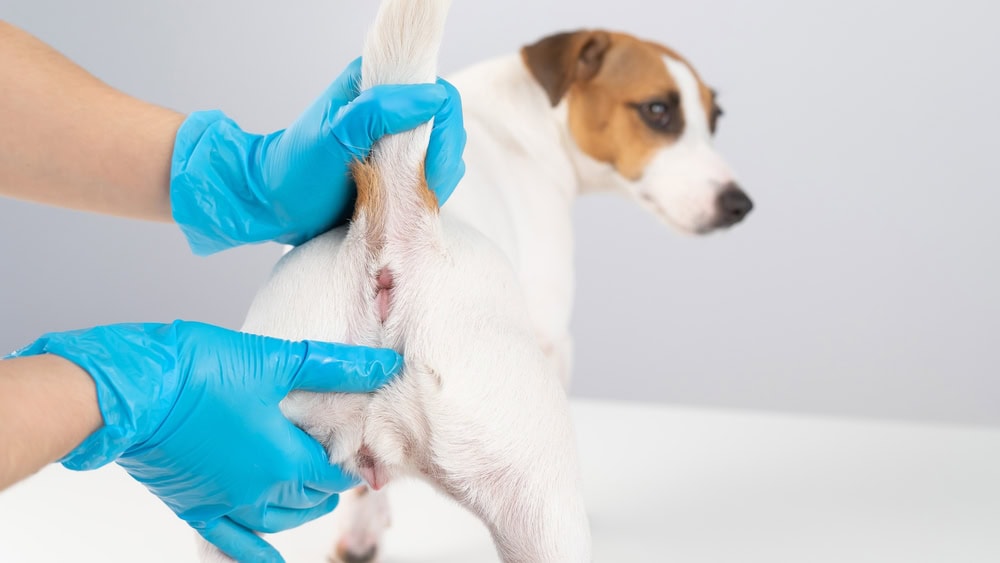
Your veterinarian can usually express the glands by gently applying pressure and squeezing the glands, using their thumb and forefinger. This pressure is applied externally and usually doesn’t cause too much discomfort to your pet. Generally, this is enough to remove the impaction. Occasionally, further intervention is required, such as flushing the glands. This is usually done under sedation, or if necessary, general anesthesia.
Infection
Anal glands can become infected, too. Given their location near the anus, there is a lot of bacteria in the vicinity that can travel up the tubes and infect the glands. When the fluid in a healthy gland is being voided, bacteria in the tubes are flushed out during the process. In an impacted gland, the liquid cannot be voided normally. So, this protection is then reduced, making the gland more vulnerable to infection. The signs of an infected anal gland are like those of an impacted one, although the glands will be more painful and inflamed, leading to a very grumpy cat!
Abscess
Infection can lead to abscess formation, which is an even more painful condition. An abscess is an accumulation of pus, in this case, in the anal gland. In addition to the signs described above, owners may notice swelling near the anus. However, most cats will resent examination of their rear quarters when an abscess is present, so owners may not get close enough to see this. If the abscess has ruptured through the skin, there most likely will be a discharge containing blood, pus, and anal gland fluid, along with a distinctive foul smell! Often, owners notice this discharge on bedding, on the floor, or on furniture.
Treatment of Anal Gland Infections and Abscesses
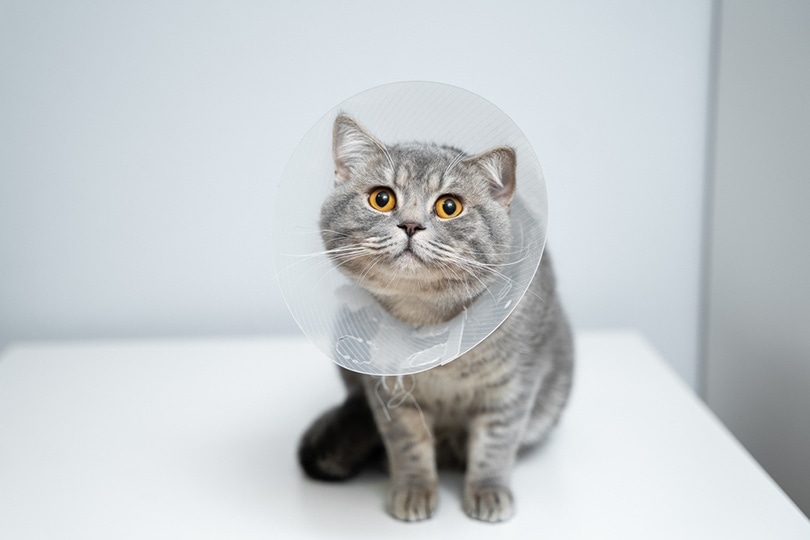
The mainstay of treatment is, unsurprisingly, antibiotics. Pain relief also plays a significant role, as it is such a painful condition. If an abscess hasn’t ruptured, lancing and flushing the gland under general anesthesia will be required. Sometimes antibiotics are also placed within the gland. Your cat may also be given a pet cone, otherwise known as a buster or Elizabethan collar (aka the Cone of Shame!). This prevents them from licking and biting excessively on their bottom. They won’t thank you for this! While wearing a cone, they will need to be kept inside.
Long-term Problems
Unlike some unlucky dogs, cats generally do not have recurrent anal sac problems. However, overweight cats have an increased chance of this happening. This is another good reason to keep your cat’s weight in check!
The feces need to be of a firm consistency for the glands to empty normally. The addition of fiber to the diet may help if your cat does have recurrent anal gland problems. As with any diet change, speak to your veterinarian first. Any chronic diarrhea also needs to be addressed. Chronic diarrhea can be caused by several factors or disease processes that your vet can help you get to the bottom of.
As mentioned above, it is rare for cats to have persistent anal gland problems. If this were to happen, then surgical removal may be a potential option. However, as with any health concerns you have with your pet, consult your veterinarian. They can advise on the most appropriate course of action following a clinical examination and any necessary investigations. Surgical removal of glands is not something that is undertaken lightly. There are risks with any surgery or anesthetic, as well as risks that are specific to this type of surgery.
Cancer
Cancer of the anal glands is very uncommon in cats. It is advisable to book a full clinical examination with your veterinarian if you are concerned or notice any of the symptoms above.

Final Thoughts
Luckily, cats don’t tend to have frequent anal gland problems. However, when they do occur, they can cause a lot of pain and discomfort and can lead to more serious, harder-to-treat problems. It is good for owners to be aware of what to look out for so that any issues can be dealt with quickly. As with any pet health concerns, always seek advice from your veterinarian.
Featured Photo Credit: Nils Jacobi, Shutterstock
Get Hepper In Your Inbox


Pet care tips from our vets and experts, straight to your inbox.
You may opt-out at any time. View our Privacy Policy for more information.

Nicole is a lover of animals of all sizes but is especially fascinated with the feline variety. She’s the proud mom of Baby, a Burmese, and works every day so he can relax in the sunshine or by the fire. She’s always had a cat in her home and has spent countless days with others, observing behaviors and softening up even the grouchiest of the lot. Nicole wants to share her kitty expertise with you so you and your cat can live happy, healthy, and care-free.
Join the conversation
Ask a question, share your story, or send private feedback.