Hepper is reader-supported. When you buy via links on our site, we may earn an affiliate commission at no cost to you. Learn more.
How to Treat Sebaceous Cysts on Cats: Our Vet Answers (With Infographic)
In this article
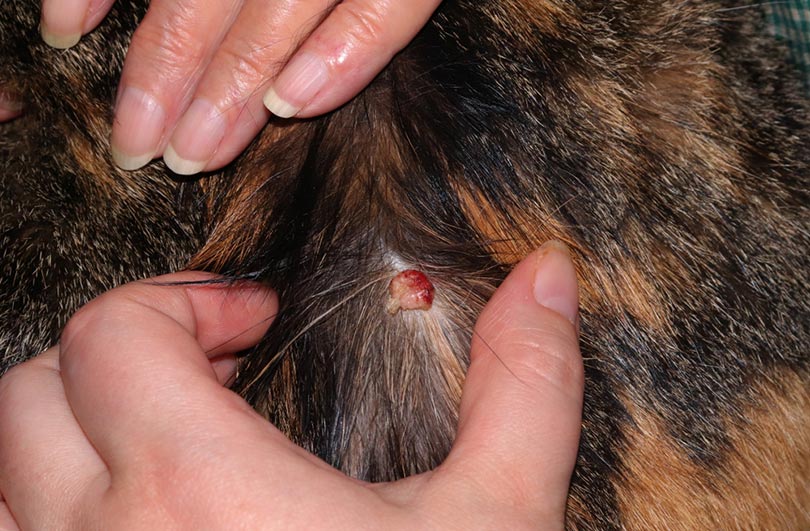
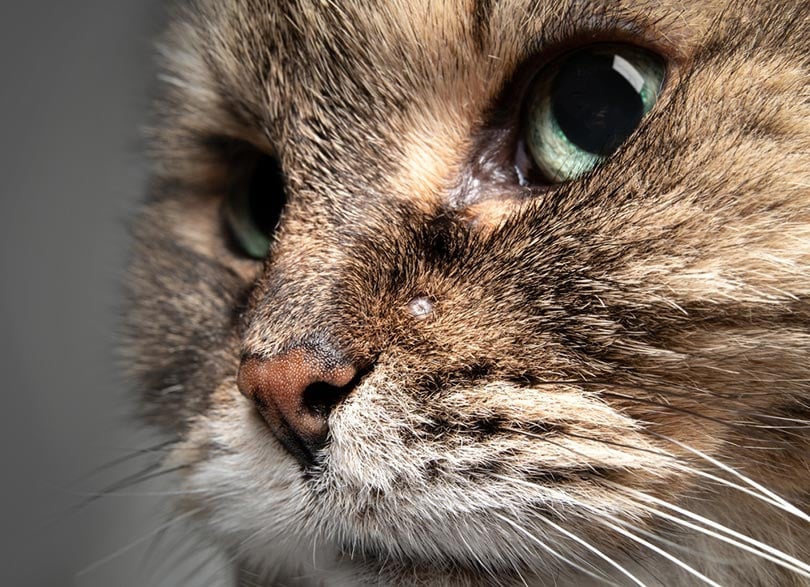
Sebaceous cysts are benign (non-cancerous or non-life threatening) growths within the skin of cats and dogs that can occur anywhere on the body. They often appear as raised, non-painful nodules along the skin with a slightly blue or gray color. These cysts can range in size and location. But how can you treat these cysts at home? Do you need to worry about treating these cysts on your cats? Continue reading for more information on sebaceous cysts and what you can do at home to treat them.

What Are Sebaceous Cysts?
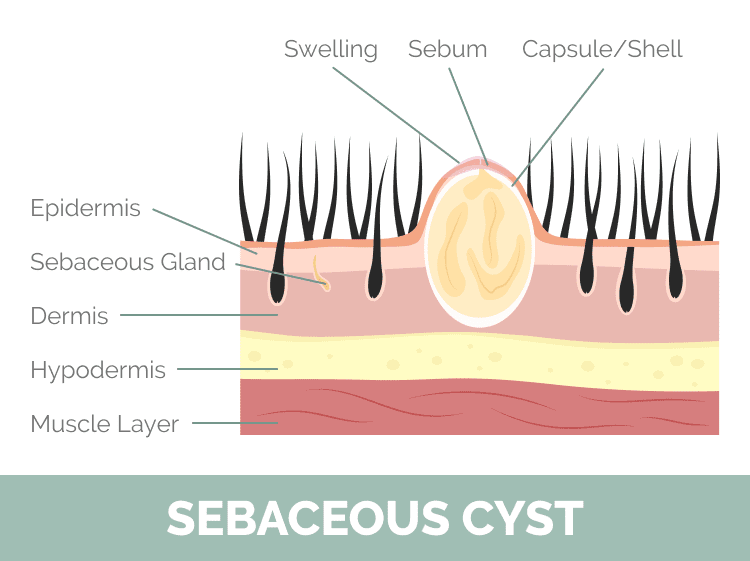
Sebaceous glands are oil glands present on the skin that secrete oil and sebum. The sebum contains fatty acids, oils, and other secretions, and helps to protect the skin and hair follicles from water, trauma, and bacteria. Sebum varies amongst species, which will be important to remember when we discuss treating sebaceous cysts.
A sebaceous cyst forms when one or multiple of these glands become blocked or obstructed. The gland then becomes clogged and forms a raised nodule within the skin.
Are Sebaceous Cysts Cancerous?
Sebaceous cysts are not cancerous. They are benign growths, which form secondary to the gland becoming clogged and/or traumatized. Some cats will only develop one throughout their entire life. Other cats may develop multiple over their body.
The cysts are typically non-painful unless they grow to become very large. If the cyst is painful, it could just be from the pressure built up below the skin from its growth. If the growth is small and your cat seems to be in painwhen it is touched, it may not be a cyst. Cysts do not have the ability to metastasize or spread elsewhere in the body like many cancers can.
The 6 Steps for Treating a Sebaceous Cyst
If a sebaceous cyst is not growing and not bothering your cat, you don’t necessarily need to worry about it. However, we do always recommend having any lump or bump evaluated by your veterinarian first to make sure that it’s in fact a cyst and not another type of mass or tumor.
If the cyst is growing, starting to bother your cat, or it ruptures at home, below is a step-by-step guide on how to treat a sebaceous cyst at home.
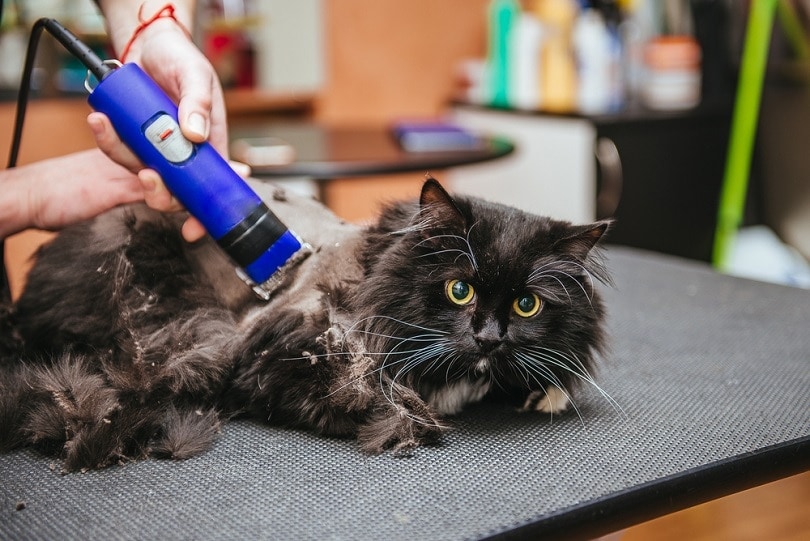
1. Clip the Fur Over and Around the Cyst
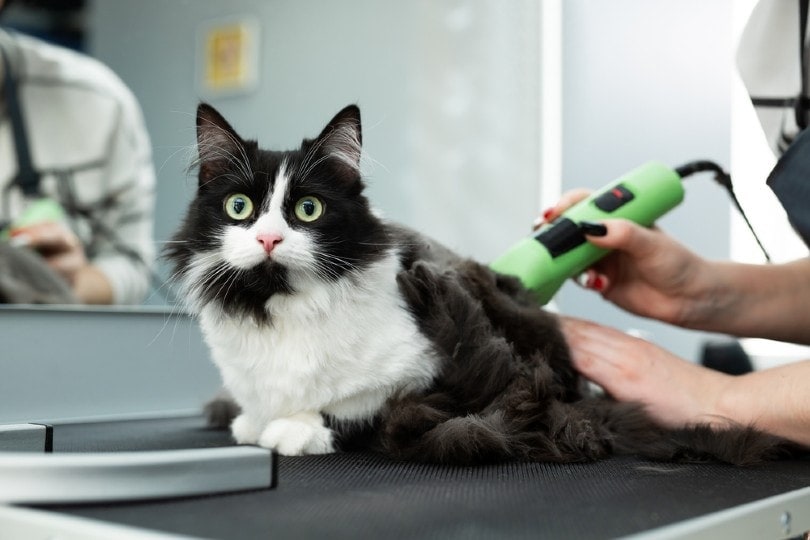
You mustn’t use scissors! Cats can become spooked and suddenly move while you are trying to cut their hair. If you use scissors, you can accidentally cause a large wound on your cat.
A small, quiet veterinary clipper can be purchased online or from your local pet store. A quiet clipper is strongly recommended because your cat may become nervous and want to run away from the noise of regular clippers.
2. Warm Pack the Cyst
Take a clean, warm washcloth and run it under hot water. Test it on your skin first to make sure the washcloth is not too hot. Hold the warm pack over the cyst for at least 5 minutes, a few times a day. Repeat this for a few days prior to attempting to express the cyst.
3. Clean the Fur Over the Cyst After Warm Packing
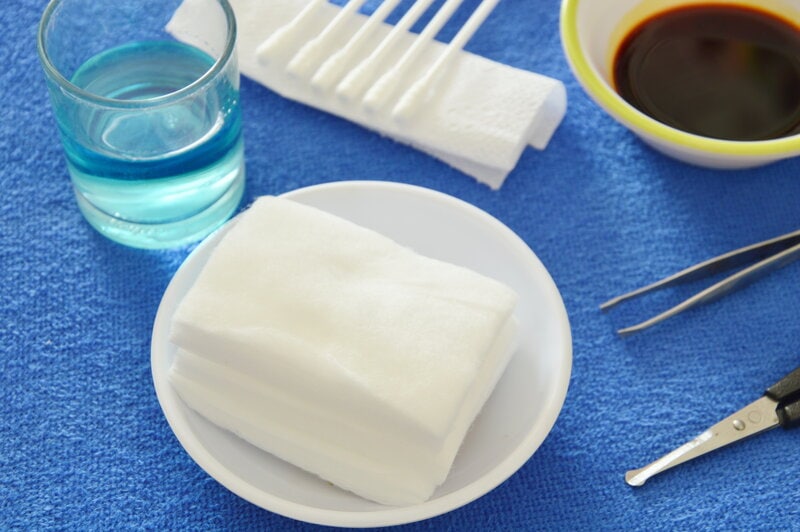
We recommend using diluted chlorhexidine solution or diluted iodine solution. Dilute either solution with warm water and use clean gauze or a clean washcloth to gently clean the cystic area.
Clean in a circular motion, starting from the inside and working your way out. Take care not to go over the same area twice or drag any fur or dirt from the outside in.
Do not use alcohol, vinegar, essential oils, or scented shampoos or cleaners. This may irritate your cat’s skin, causing dryness, itching, or an allergic reaction. Because sebum differs amongst species, any over-the-counter product marketed for “dog and cat skin” may react differently. Therefore, we don’t recommend any OTC products without first speaking with your veterinarian for a recommendation.
4. Gently Express the Cyst
If the cyst has not ruptured on its own, gently express the cystic contents out after following the steps above. The material will be a very thick, toothpaste-like consistency. You can use one of the clean warm cloths to gently wipe away any material.
Do not use a scalpel blade, needle, or any type of instrument to open up the cyst—this may cause infection and unnecessary damage to the tissue. Also, if your pet jumps or moves from the pain, you may hurt yourself or them unintentionally.
5. Keep the Area Clean
After you have gently expressed some of the material, keep the area clean with the same diluted chlorhexidine or iodine solution you used above. Make sure your cat cannot lick or bite the area. An e-collar may be needed to prevent this. If your cat can lick at the location, it may cause infection and trauma to the tissues.
6. If the Cyst Has Already Ruptured on Its Own...
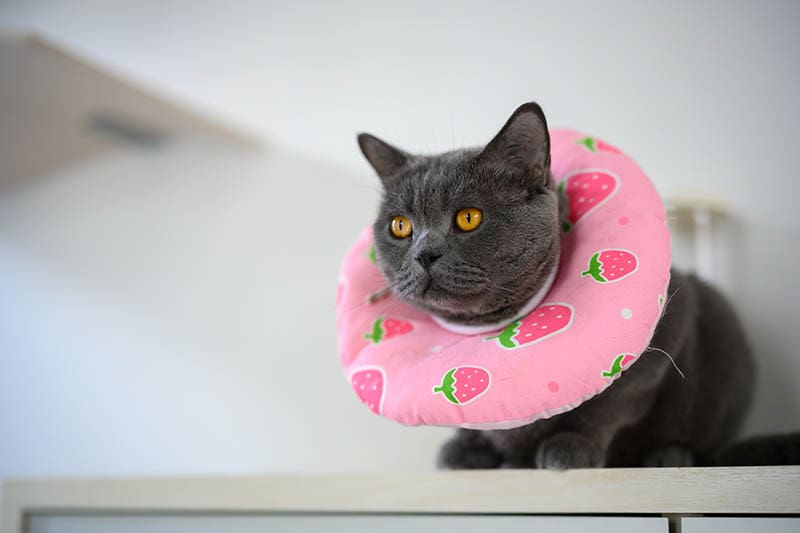
Simply follow step 5! Keep the area clean and dry, and prevent any additional trauma.
What if the Cyst Won’t Express or Keeps Coming Back?
If the cyst won’t express on its own, do not force it! As mentioned above, do not use a scalpel, needle, or other instrument to cause trauma to the area while at home. Take your pet to your regular veterinarian, as they may be able to safely express the cyst in the hospital.
If the cyst is very large, becomes painful, or continues to come back despite expressing it, then surgical removal may be needed. Your veterinarian will help you determine if surgery is the right option for your pet.

Conclusion
If your cat has a sebaceous cyst, oftentimes, these do not hurt or bother your cat. They are benign growths that will sometimes go undetected. However, if the cyst ruptures or becomes very large, expressing the material may help your cat to feel more comfortable. If you are unable to safely treat your cat’s sebaceous cyst at home, speak to your veterinarian about if they think surgery may be needed to remove it.
Sources
Featured Image Credit: Zhuravleb Andrey, Shutterstock
Get Hepper In Your Inbox


Pet care tips from our vets and experts, straight to your inbox.
You may opt-out at any time. View our Privacy Policy for more information.
Dr. Podlecki is a graduate of The Ohio State University College of Veterinary Medicine with more than 12 years of experience working with small animals in the US. Dr. Podlecki spent 10 years working almost exclusively in emergency and specialty medicine before transitioning to relief in general practice and the ER. She also owns her own veterinary consulting company (renewvetconsulting.com) that helps vet hospital improve their internal culture.
For as long as she can remember, Dr. Podlecki always wanted to be a veterinarian. It is her passion and she lives to help animals. She also owns her own consulting company (renewvetconsulting.com) which focuses on helping veterinary hospitals prioritize their staff to promote a healthier internal culture.
Education
Dr. Podlecki graduated from The Ohio State University College of Veterinary Medicine.
Experience
Dr. Podlecki has over 12 years of experience working in the USA with small animals. For more than 10 years, she worked almost exclusively in emergency and specialty medicine, before transitioning to relief in both general practice and ER.
Join the conversation
Ask a question, share your story, or send private feedback.