Hepper is reader-supported. When you buy via links on our site, we may earn an affiliate commission at no cost to you. Learn more.
Skin Tumors in Cats - Taking a Look at Histiocytomas (Vet Answer)

In this article
It's always a bit disconcerting to find a skin bump on your cat! Skin growths in cats are arguably not as common in cats as they are in dogs. However, they do still occur and are worth knowing more about. Growths of the skin are generally named after the cell type that comprises the majority of the growth. One type of skin growth in cats is called a histiocytoma—a type of cell that is found in the layers of a cat’s skin.
Read on to learn more about histiocytomas in cats, how concerning they are, what to look for, and how to help your cat if you find one.

What is a Histiocytoma?
A tumor is defined as an unwanted growth. Some people automatically think of this to mean cancer, but a tumor can be made of non-cancerous cells as well, such as fat. In the case of a histiocytoma, the growth occurs in the layers of the skin. These growths can occur anywhere on the body: legs, neck, head or trunk—always within the layers of the skin.
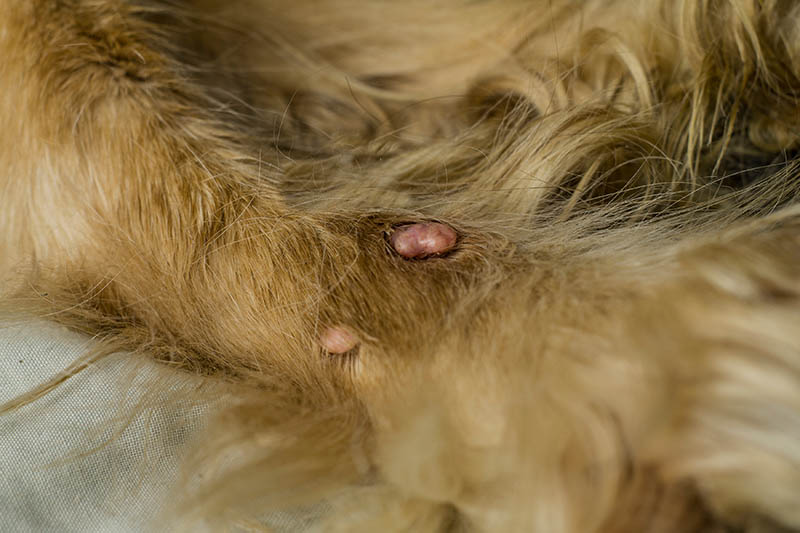
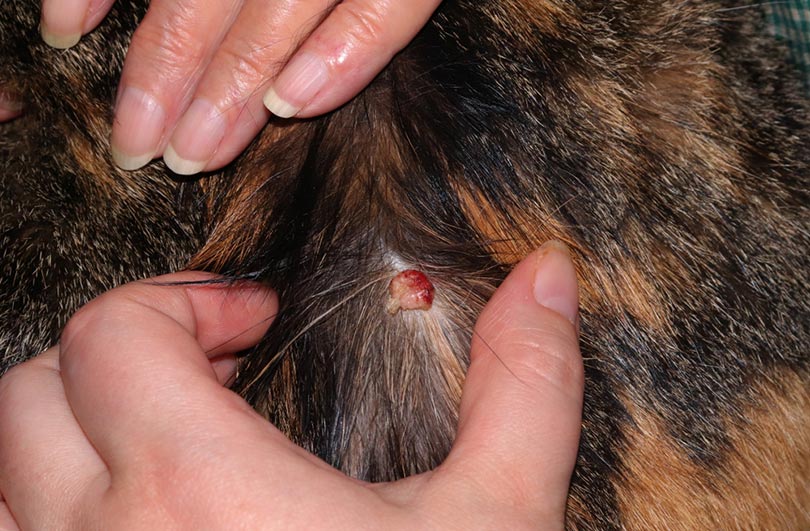
Histiocytomas arise from a type of cell called a histiocyte. Because growths are often named after the type of cell they are caused by, a mass formed by histiocytes is considered a histiocytoma. Histiocytes are surveyors for the immune system that live within the layers of the skin and work to alert the body when a foreign object or pathogen has penetrated the skin. Generally, these are growths that are not painful for cats, tend to be solitary, and look like hairless lumps. They typically do not bleed either.
Histiocytomas occur in other species besides cats, and are actually more common in other species. In cats, they are one of the less common skin tumors. There is no specific breed of cat that is more prone to developing histiocytomas, although in general, older cats are more likely to develop skin growths than younger ones.
What Do Histiocytomas Look Like in Cats?
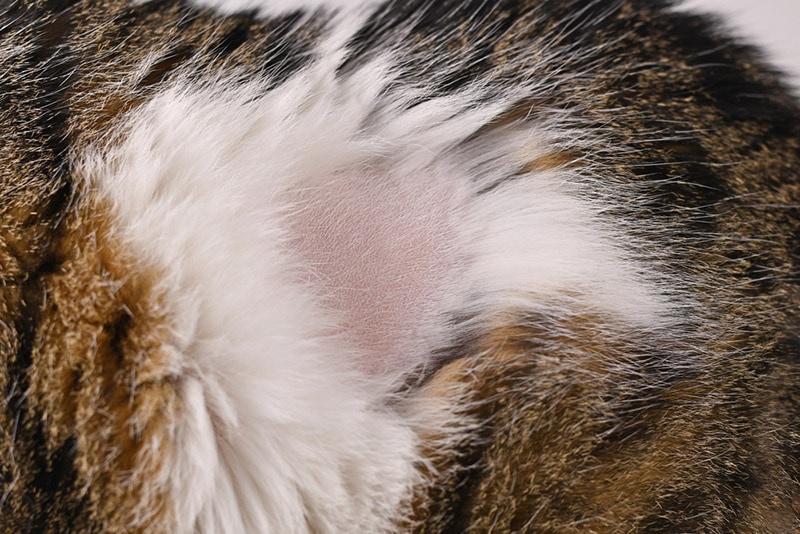
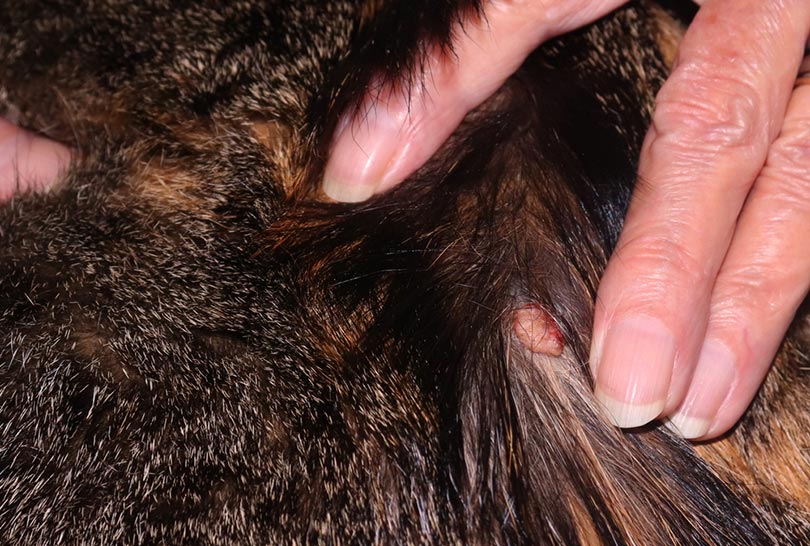
Histiocytomas are pretty much a straightforward lump or bump on the skin. They can be small when first noticed, but they do often grow slightly in size. As they get larger, they will often become more noticeable as well. Their expansion in size makes them appear more hairless, as the skin stretches. If they have been irritated by the cat, they may become red or scabbed at this point. Though rare, they may also bleed if such trauma is recent.
You may first notice histiocytomas while petting your cat, or you may notice an area of their haircoat is distorted or appears to have less hair. They should not appear infected or discolored, or have active discharge.
Further, because these growths tend to behave, and do not spread to distant organs, or invade local tissues, they should not make cats feel overtly sick. Therefore, typical signs of illness, such as not eating, vomiting, excessive sleeping, or having diarrhea are not expected with a histiocytoma. Even typical signs associated with skin growths—including biting at the growth, infections, or itching—are also generally absent.
What Are the Causes of Histiocytomas in Cats?
There is no definitive evidence as to what causes histiocytomas in cats. Other skin tumors and cancers are known to arise from specific genetic mutations, sun exposure, or other carcinogenic factors. So, it is possible that any of these may contribute to the formation of feline histiocytomas. However, no direct links or associations currently exist.
What Are the Potential Dangers of Histiocytomas?
The good news about histiocytomas is that these growths are generally not considered to be overtly dangerous. They do not tend to spread throughout the body or become locally invasive in most cats. So, clinical signs are generally limited.
Likewise, because histiocytomas stay local, they tend not to cause dysfunction of various internal organs. Therefore, as far as skin growths form, they are fairly benign. It is possible that if one is scratched or traumatized, the surface may be more prone to bleeding, itching, or other forms of irritation.
And further good news: they also aren’t contagious—so touching one doesn’t cause another cat or person in the house to get it too.
Frequently Asked Questions (FAQs)
If I find what might be a histiocytoma on my cat, what should I do?
First thing’s first: photos are your friend. If you find anything abnormal on your cat, photos or videos are helpful for monitoring the size, shape and progression, as well as capturing data to send to your vet. Don’t forget to also record the location of the suspected histiocytoma, so you can find it more easily in the future.
How are histiocytomas diagnosed?
As with most skin growths, the first step is a physical exam. This is often followed by a fine needle aspiration, where cells are sampled to examine and identify on cytology. Sometimes, this step is omitted, and the entire mass is instead removed for histopathology. The latter process is considered a biopsy.
What is the treatment for histiocytomas?
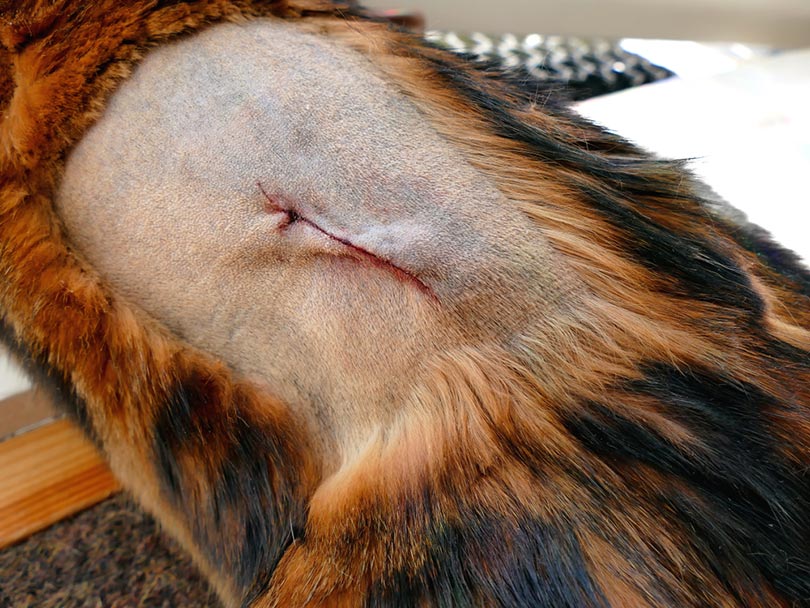
Treatment for histiocytomas is pretty straightforward. A wait-and-see approach may be adopted in some cases, where the mass is monitored without further intervention. Another option is surgical removal, wherein the treatment is to remove the mass, therefore mitigating any future effects it may have on the patient.
Surgical removal is often a recommended treatment for skin bumps in cats—even ones that aren’t dangerous. This is for a few reasons. First, if a growth gets too large, it can hamper movement, walking, or laying down for your cat. So, it is often better to remove bumps before that happens. Similarly, it is a much easier surgery if the mass is small, compared to if it becomes larger!
What does monitoring a histiocytoma involve?
Monitoring involves keeping an eye on the mass. Photos and video can be helpful, as can actual measurements of the size of the mass. Touching the mass to ensure it hasn’t become painful or deeply attached to the underlying tissue can also be important, as can a visual inspection of the mass, at least a few times a week.
Having a quick feel to ensure it hasn’t changed in size or shape, or gotten noticeably larger, are important things to check for. You also don’t want a sudden change in color or odor. And, if it starts to bother your cat, that would be another concern!
Can you prevent histiocytomas in cats?
Unfortunately, no current prevention of histiocytomas exists that we know of.

Conclusion
Histiocytomas in cats are certainly a bit less concerning than many other issues we see arising in our feline friends. However, any skin lumps or bumps should be closely monitored, and also reported to your cat’s vet for further advice. Skin bumps also highlight the importance of doing regular checks of your cat to feel for any changes in their skin, as finding changes early often makes treatment much easier!
Sources
Featured Image Credit: Eleanor McDonie, Shutterstock
Get Hepper In Your Inbox


Pet care tips from our vets and experts, straight to your inbox.
You may opt-out at any time. View our Privacy Policy for more information.
As a veterinarian, Lauren is happy to share her experience in emergency medicine and cats, with everyone. She enjoys sharing insightful, real life tips for having cats as part of your life, and what to do in critical situations with your pets.
Lauren is a vet with over a decade of experience in cats and dogs, along with infectious diseases. She loves teaching, and lectures for students, owners, and clinicians, on various topics.
Lauren received her degrees from Murdoch University, in Perth.
Experience
Education
Join the conversation
Ask a question, share your story, or send private feedback.