Hepper is reader-supported. When you buy via links on our site, we may earn an affiliate commission at no cost to you. Learn more.
Human-Grade Cat Food: What It Is & How It’s Different


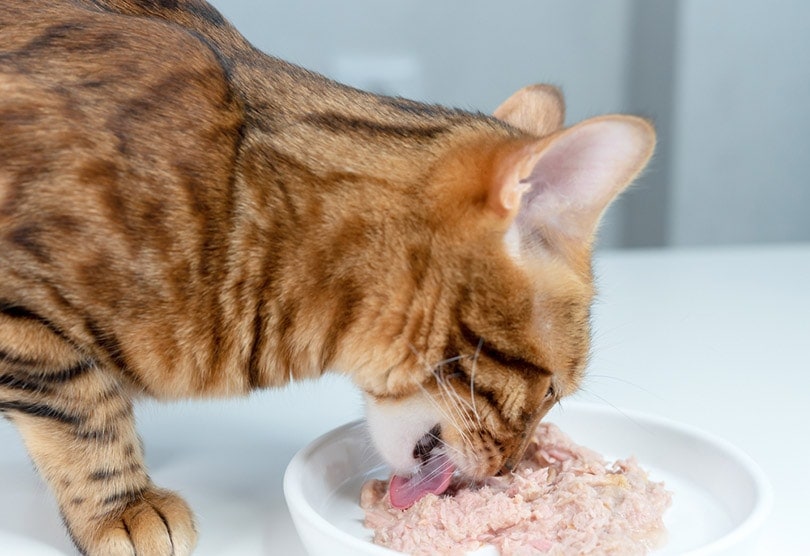
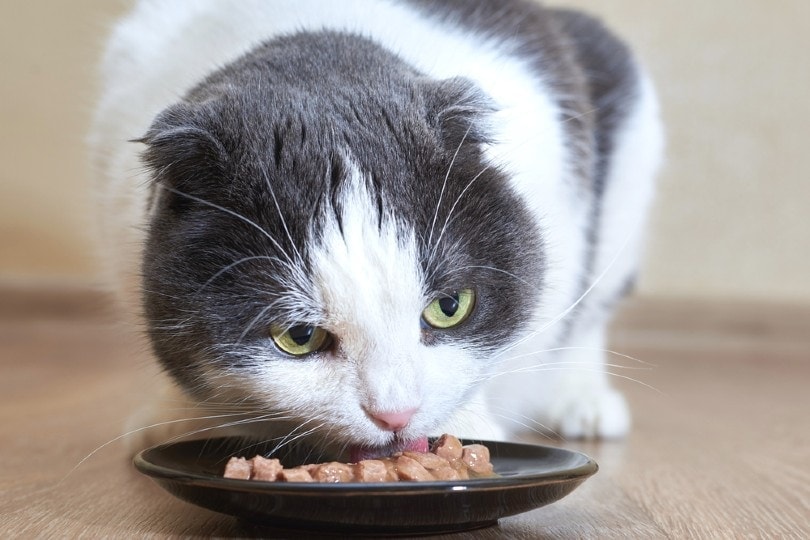
When it comes to your cats' food, there is a long list of claims to consider in deciding what ultimately goes in their bowl. As a diligent pet-parent, you've probably noticed that "human-grade" is a newer label that's having a moment. But what is human-grade anyway? And is it the right option for your cat? Simply put, it is food that meets a standard of quality that is safe for humans to consume.
When considering any new food for your feline friend, it's important that the food, regardless of quality, is formulated to meet at least the AAFCO standards, which means it meets the minimal requirements established for a cat not to suffer from deficiencies. It's also a good idea to chat with your vet before making a switch.
Here's what you need to know about human-grade cat food, its benefits, and where to find it.

Defining Quality
The United States Department of Agriculture (USDA) and Food and Drug Administration (FDA) are the agencies responsible for regulating what is acceptable for human consumption, as well as overseeing the manufacturing safety and labeling of food. These agencies, along with the Association of American Feed Control Officials (AAFCO), define regulatory requirements and proper labeling for pet products.
Despite being in existence for over 100 years, the AAFCO didn't have a definition for feed-grade—or human-grade—food until recently. Very recently. The Association's conversation around these terms kicked off in late 2015 and didn't actually wrap up until August 2021. Unfortunately, their recently released definitions are under copyright, but here's the gist:
Human-Grade Ingredients
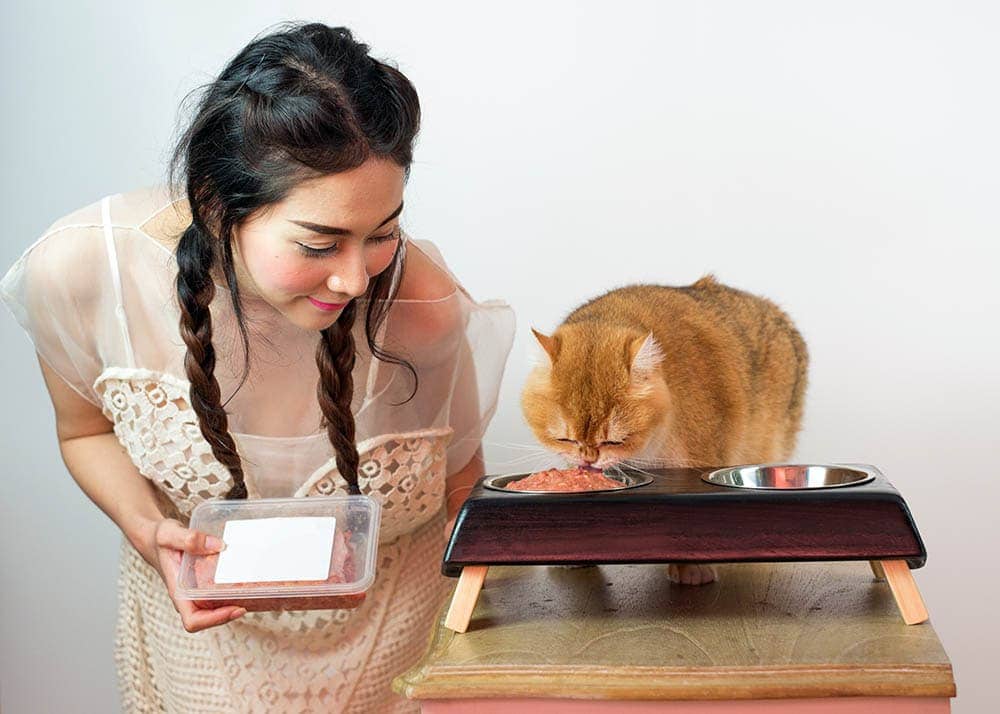
Human-grade pet food first starts with human-grade ingredients. As with all cat food, we need to keep in mind that our feline friends are obligate carnivores—they require animal protein to survive. When it comes to human-grade food, you can be sure that there won't be mystery meats like "by-products" or "meals."
By-products, while in part are made up of nutritious organs, also contain other low-quality "non-meat" that allows conventional pet food manufacturers to keep recipe protein levels consistent, albeit low quality, and costs low. Meal is another common ingredient in cat food that vaguely encompasses "tissue," which is then cooked by the process of "rendering" or cooking out moisture to create dry, tissue-crisps.
Sound unpleasant? That's because these industrial scraps would never be seen (or permitted) at a deli counter. The lack of transparency in the exact ingredients and their quality is something unfortunately permitted in pet food manufacturing. Sadly, studies have found undeclared horse meat and endangered species of wild animals, such as sharks and turtles, in commercial pet food1.
When it comes to human-grade pet food, you will see an ingredient list filled with familiar ingredients, like chicken breast or turkey thigh. Human-grade cat food recipes won't hide behind "by-products" or "meal" and will instead proudly tout exact ingredients like chicken hearts, turkey or beef liver.
Human-Grade Manufacturing
The benefit of human-grade food for cats is more than the quality of ingredients; it's the safety of the manufacturing process. To label themselves as human-grade, a company has to ensure that all ingredients are safe for human consumption and that all food has been prepared, stored, and transported per the legal requirements of food for humans.
(1) all ingredients are safe for human consumption and (2) all food has been prepared, stored, and transported per the legal requirements of food for humans.
As mentioned earlier, the FDA doesn't require pre-market review for pet foods, but when it comes to human-food safety, the FDA regulates non-meat processed food, and the USDA oversees the meat industry, inspecting the pre-market process thoroughly, from the slaughter house where the meat was harvested, the kitchen where the meat is cooked, and the facility where the food is stored and prepared for transport. These additional safety precautions give pet parents peace of mind
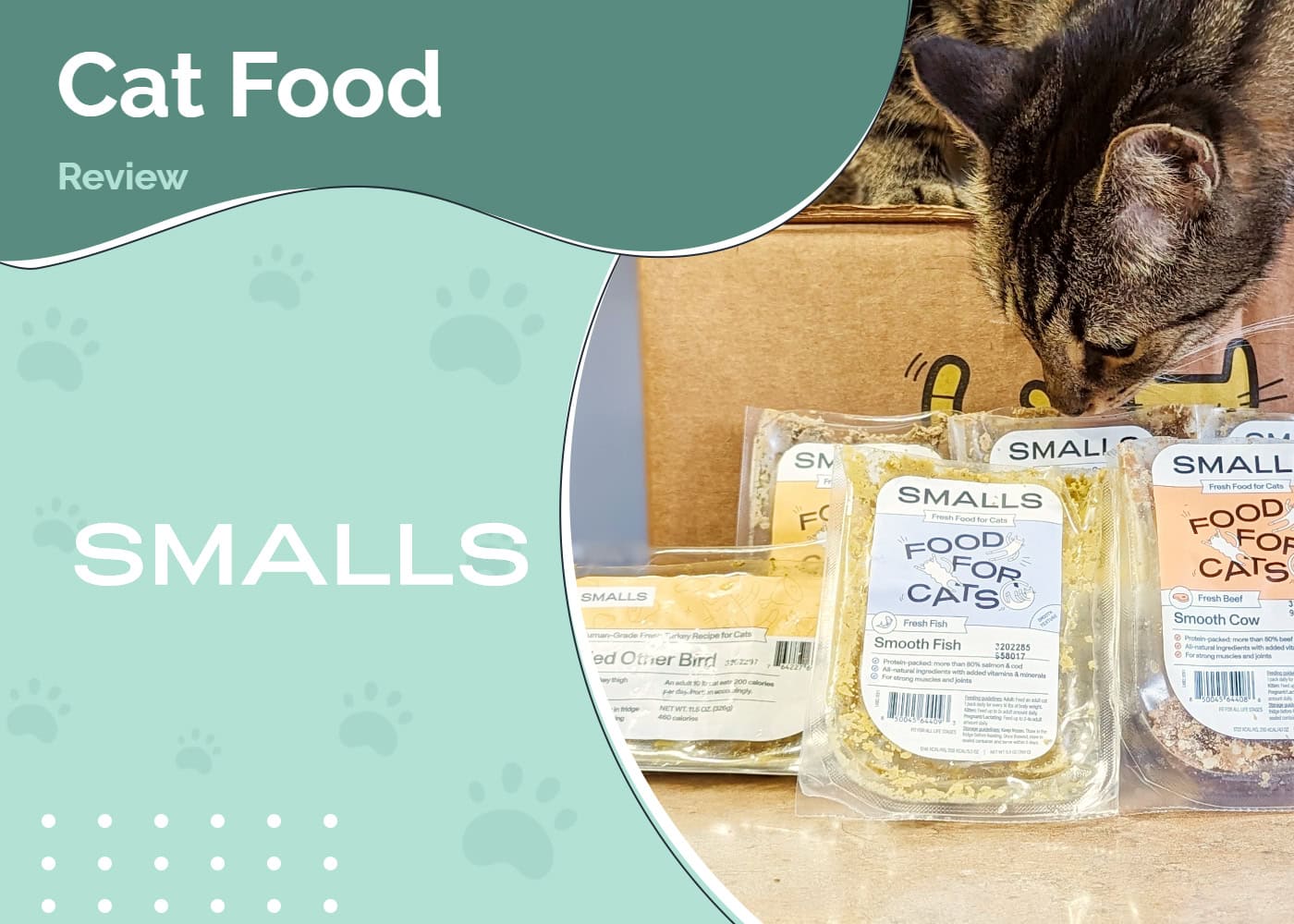
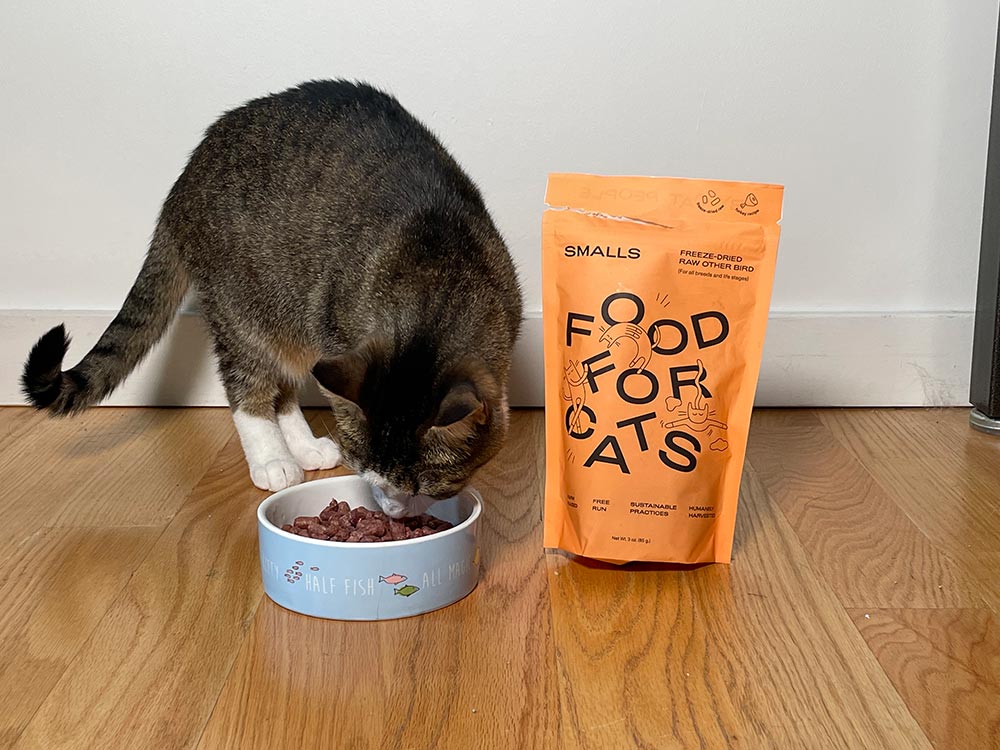
Smalls: The Original Human-Grade Cat Food
Looking back on the last 100-years of pet food, it's hard to imagine how housecats that have evolved from their wild, hunting counterparts have come to living primarily on a diet of kibble and the occasional canned "wet" food.
Kibble was invented as a necessity to keep pets fed amidst WWII meat and tin rations that crippled the canned pet food industry, but after the restrictions were lifted, pet food manufacturers doubled down on kibble. Not because it was designed for pets, or even because it was healthy for them, but because it was cheap to make—letting profit margins soar.
In 2016, friends and Smalls co-founders Matt Michaelson and Calvin Bohn discovered the pet food industry's sorted past and decided it was time for cats to be fed like the family members they are. Together, they started making cat food with locally-sourced ingredients in their own kitchens.
After a few weeks, they turned first into “Smalls Human-Grade Fresh” and then to what is now “Smalls Fresh Cat Food.” Smalls isn’t small-batch anymore, but maintains high-quality human-grade standards.
Our Favorite Cat Bowl Right Now
While providing our feline companions with high-quality food is paramount, selecting the right food and water bowl is equally important. The modern yet practical design of our Hepper NomNom Cat Bowl combines cat-catered features, like whisker-friendly shallow dishes and slight elevation, with a contemporary style aimed at protecting your floors from messy eating and drinking. The NomNom is entirely dishwasher safe and was thoughtfully created with your cat’s health and well-being in mind.

- NO MESS - The 360° tray on this cat food and water bowl set has a raised design to catch and contain stray crumbs and drips. Protect your indoors and floors from wet and messy meals!
- WHISKER FRIENDLY - Shallow and wide metal containers with flat bottoms ensure your kitty can enjoy mealtime free from whisker fatigue!
- CHEW-SAFE MATERIALS - Kittens and cats love chewing on silicone and soft rubber - but it's a choking hazard. Our cat feeding station materials are anti-chew for a 100% safe feeding frenzy!

Pro Tips for Picking the Best Human-Grade Cat Food
When it comes to choosing the best human-grade food for your cat, here's what you need to know:
Read Carefully
Marketers choose their words carefully for a reason. When reading a cat food label, consider "made with" as a red flag. This precise phrasing is probably accurate, but when using the word "with," manufacturers are only required to include 3% of that named ingredient in the food. So, even “cat food with chicken” may have a lot less chicken in it than “chicken cat food.”
Something truly human-grade would contain only human-safe ingredients and have the labeling practices to back that up. Human-grade food wouldn't contain a nondescript "meat by-product" or a meat "meal," as these vaguely named mystery meats are not classified for human consumption.
Ingredient Quality and Quantity
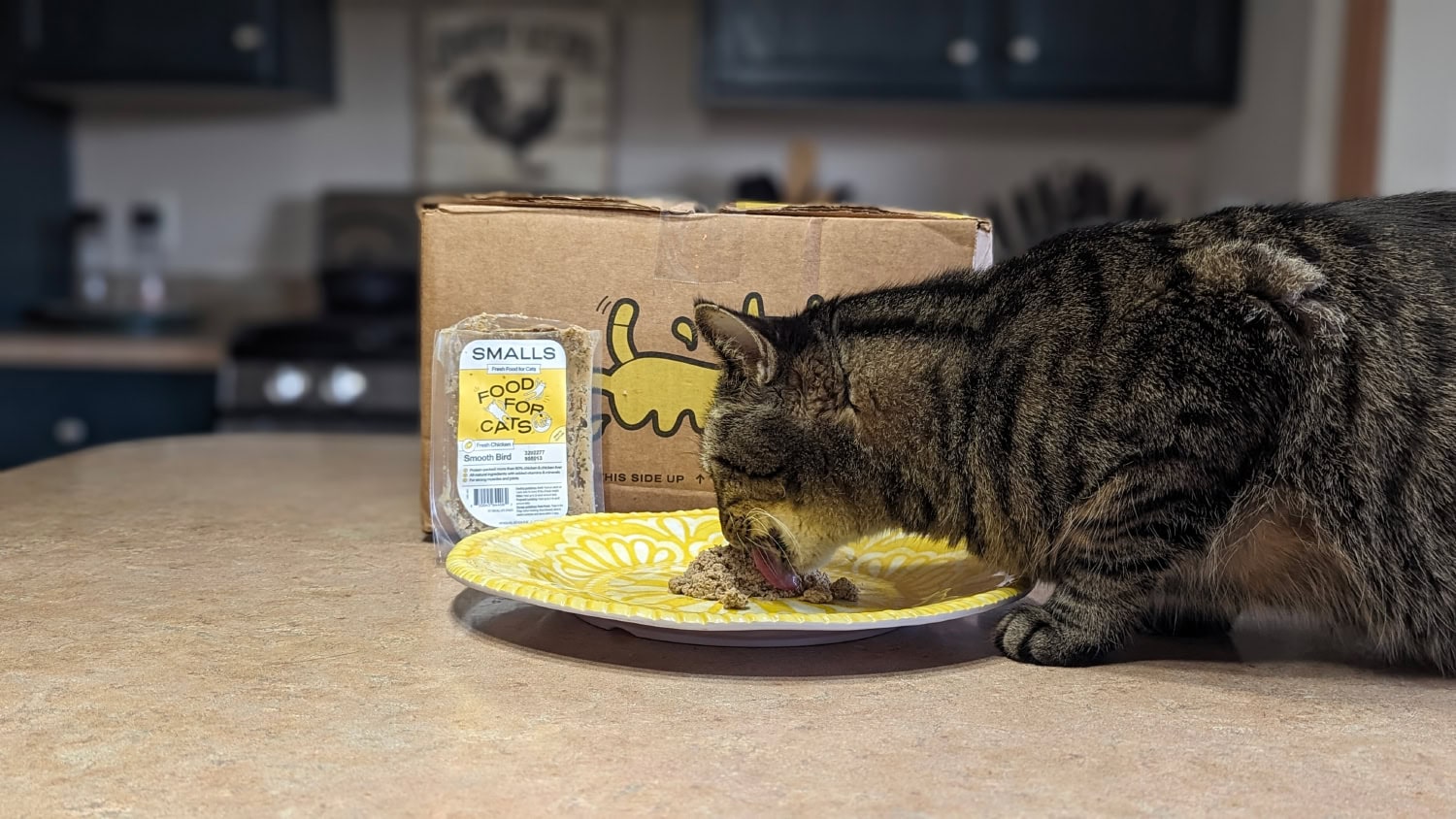
Human-grade indicates quality, but it's still important that your cat's human-grade food is packed with protein, fats, and moisture. When reading your cat's food label the first and second ingredients should be an identifiable meat source, ie. turkey thigh and turkey breast instead of "turkey byproduct meal", but don't stop reading there. This list helps to contextualize the nutritional value of the ingredients, which is indicated by the labels Guaranteed Analysis (GA).
The GA tells the reader the minimum and maximum amounts of four nutrients: protein, fat, fiber, and moisture, which are essential to cat health. The problem is that the GA doesn't tell the whole story, so you can do a bit of math (or Googling, we're not here to judge) to find the recipe's Dry Matter Basis (DMB) value. The DMB helps to compare the actual nutrient content of food without the moisture content, and can be found by dividing the GA percentage of a nutrient by (100 minus the percentage of moisture) and multiplying the result by 100 to bring us back to a percent.
As obligate carnivores, cats need a protein-rich diet, light on carbohydrates, so an above average cat food should have more than 50% dry matter protein with less than 10% dry matter carbohydrates.
For reference: Fancy Feast's Classic Chicken Pate has a GA of 10% crude protein and 5% carbohydrate, but DMB of 45% crude protein and a whopping 22% carbohydrate. In contrast, Smalls Fresh Chicken recipe has a GA of 13% protein and 0.4% carbohydrate, with a solid DMB to match of 48% protein and 1% carbohydrate.
Conclusion
With so many different types of pet foods and labels, it can be hard to determine what exactly “human-grade” pet food actually is. Hopefully, after reading this article, you have a bit of a better idea and can use what you learned to make an informed decision about what to feed your pet. If you’re ever confused about what food is best for your cat, it’s always best to reach out to your vet for advice.
Featured Image Credit: Svetlana Rey, Shutterstock
Get Hepper In Your Inbox


Pet care tips from our vets and experts, straight to your inbox.
You may opt-out at any time. View our Privacy Policy for more information.
Nicole is a lover of animals of all sizes but is especially fascinated with the feline variety. She’s the proud mom of Baby, a Burmese, and works every day so he can relax in the sunshine or by the fire. She’s always had a cat in her home and has spent countless days with others, observing behaviors and softening up even the grouchiest of the lot. Nicole wants to share her kitty expertise with you so you and your cat can live happy, healthy, and care-free.
Join the conversation
Ask a question, share your story, or send private feedback.