Hepper is reader-supported. When you buy via links on our site, we may earn an affiliate commission at no cost to you. Learn more.
What Is Human Grade Cat Food, and Should My Cat Be Eating It? Vet-Reviewed Science & Info


In this article
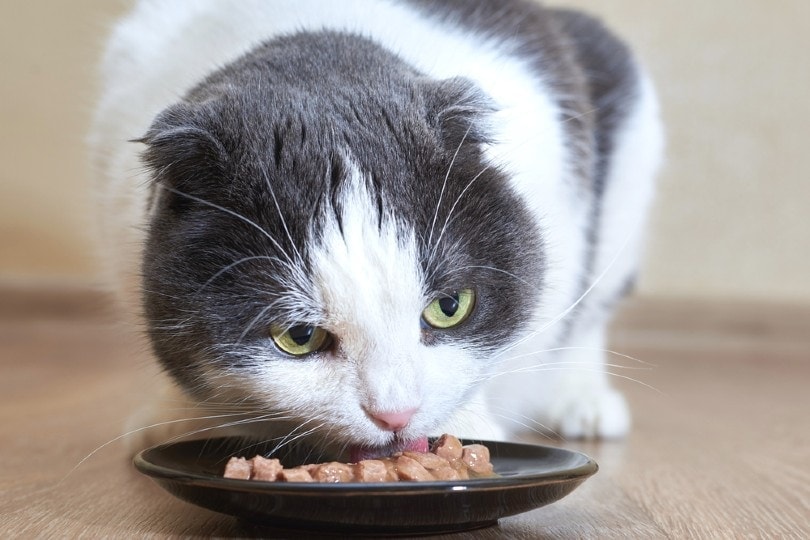
Have you ever wondered what exactly is in your cat's food? Unlike clearly recognizable human meals which you might prepare for yourself, such as chicken breasts or fish filets, cat food formulas transform the actual ingredients into hard, brown kibbles or mysterious minces. Since diet is a vital factor of your cat's overall health and longevity, you want to make sure they're eating meals that will sustain them long-term. Human grade cat food claims to be better than your typical run-of-the-mill cat food formula, but is it really? What is human grade cat food and how does it differ from a standard bag that you might pick up at the supermarket? Let's dig in to find out.

What Is Human Grade Cat Food?
To earn the human grade label, the AAFCO says the formula must be,1 “human-edible and the product must be manufactured, packed, and held in accordance with federal regulations in 21 CFR 110,2 Current Good Manufacturing Practice in Manufacturing, Packing, or Holding Human Food. If these conditions exist, then human-grade claims may be made. If these conditions do not exist, then making an unqualified claim about ingredients being human grade misbrands the product.” Unfortunately, however, there are no legally binding definitions of what's considered human grade, so a pet company could potentially get away with making a misleading claim without facing any penalties depending on the jurisdiction.
Our Favorite Cat Deal Right Now
AAFCO
The American Association of Feed Control Officials (AAFCO) regulates guidelines for what's considered human grade in pet food. It's important to note that although they set down guidelines, the AAFCO actually has no authority to enforce the rules. Rather, it's a volunteer association that encourages state and local governments to make their own laws.
Thus, just because the AAFCO declares certain “rules” doesn't mean that pet food companies are legally obligated to abide by them in their jurisdiction. Indeed, the website for the AAFCO states that they do not, “regulate, test, approve or certify pet foods in any way. AAFCO establishes the nutritional standards for complete and balanced pet foods, and it is the pet food company's responsibility to formulate their products according to the appropriate AAFCO standard.”
Human-Grade Label
Assuming that the pet food company told the truth, human grade pet food is held to human standards in both ingredients and production. There is a subtle yet profound difference between a pet food that's labeled as “human grade” and a recipe that's “made with human grade ingredients.” A human grade cat food must only use human grade ingredients and must be manufactured, shipped, and stored according to the FDA guidelines for the food that humans eat. A food that's merely made with human grade ingredients might not follow manufacturing procedures fit for human consumption and may even contain some ingredients that are feed grade.
Although it's not completely regulated, pet food that's labeled as human grade does have the potential to be examined by the FDA to ensure that it meets the AAFCO requirements to earn the label. If it's chosen for examination, it will have to pass stricter tests than regular cat food.
What's Allowed in Feed Grade Pet Food?
Unless your cat's food is specifically labeled as human grade, you can automatically assume that it's feed grade. The AAFCO defines feed grade as ingredients that are suitable for animal consumption. However, the wording doesn't give any explicit details on what that means exactly. We know for sure that meat by-products such as hearts, heads, and intestines are allowed in the food. Unfortunately, 4-D meats are also permitted. These meats come from animals that were dead (killed), diseased, dying, or destroyed. A 2016 petition to change this allowance was denied.
The potential presence of pentobarbital in pet food continues to be an ongoing concern. Pentobarbital is the drug veterinarians use to euthanize pets. Its chemical structure remains intact even through the rendering process that kills contaminates such as salmonella. The FDA launched an investigation in the early 2000s after receiving complaints from concerned veterinarians who stated that the drug was starting to lose its effectiveness. Pentobarbital was actually found in some samples of pet food.
Worried pet parents immediately jumped to the conclusion that their discovery might indicate that euthanized cats and dogs are present in pet food. However, a DNA test found no remains of the canine or feline species in the contaminated food, which led the FDA to suggest that the euthanasia drug was likely introduced by feed animals such as cattle instead. The FDA now prohibits pentobarbital in pet food and considers any pet food containing the drug as adulterated. However, it's unclear how this rule is enforced, leaving many people to speculate whether the drug is indeed still lurking in bags sitting on the shelves today.
Pentobarbital was found again as late as 2018 in pet food produced by Smuckers and Evanger's. While the FDA did try to intervene, the contaminated food was never officially recalled.
What Do Cats Need in Their Diets?
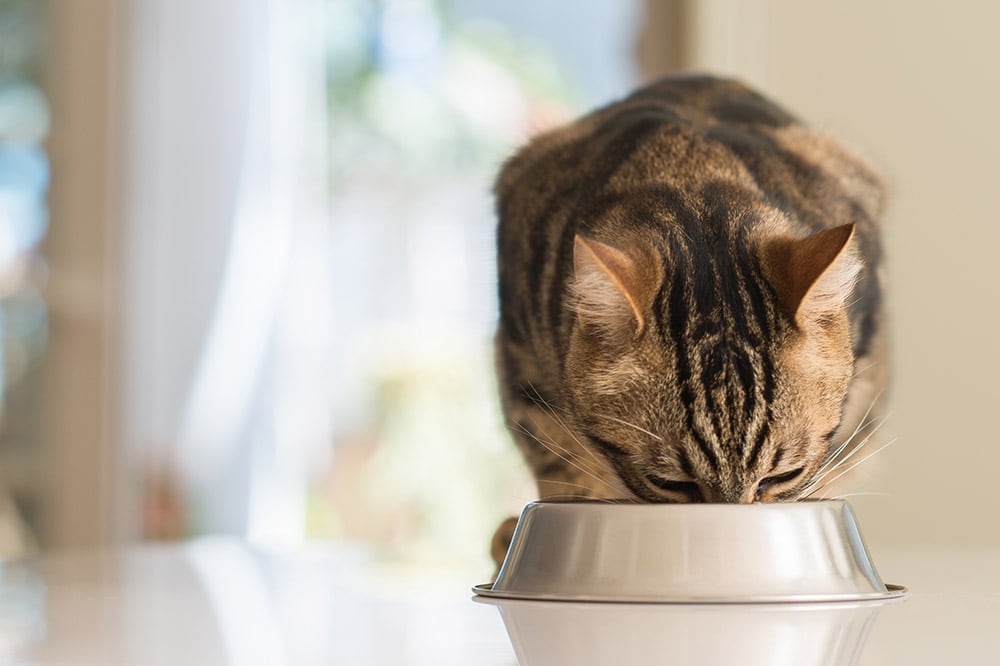
While human grade cat food makes some important distinctions about what's not on the menu, it's also just as important to focus on what's in your cat's bowl. You should explore the ingredients list regardless of whether the formula has a human grade label or not. Cats still need certain ingredients in their food for optimum nutrition, and a human grade formula that's loaded with fillers isn't necessarily more beneficial than a feed grade food with nutrient rich ingredients.
Unlike dogs, cats are obligate carnivores. They literally cannot survive without eating meat. This is partially because cats require an amino acid named taurine that their bodies cannot produce on their own. Taurine is found in meats and may also be featured as a supplement in your cat's food.
While it may not be strictly necessary for your cat to be on a grain-free diet, you'll also want to steer away from recipes which rely heavily on cheap, nutritionally void fillers such as corn. Meat should make up the bulk of the formula, followed by high quality fats and all the other essential micronutrients cats need in their diet (such as niacin and arachidonic acid). Preservatives don't belong in your cat's food, nor do additives such as carrageenan, which is often used to thicken wet formulas. Carrageenan is derived from seaweed, which may lead you to believe it's a harmless, natural ingredient. However, it causes inflammation and may be a possible carcinogen.
Do Cats Need Human-Grade Food?
Keeping the things we’ve discussed above in mind, the decision of whether to feed your cat human grade cat food is entirely up to you. If you decide it’s the right choice for your cat, we recommend talking to your vet about finding a human grade formula that features whole meats and vegetables as the main ingredients and avoids preservatives and fillers. Your cat's food should also include a taurine supplement since it's a vital nutrient that your cat can't live without.
While providing our feline companions with high-quality food is paramount, selecting the right food and water bowl is equally important. The modern yet practical design of our Hepper NomNom Cat Bowl combines cat-catered features, like whisker-friendly shallow dishes and slight elevation, with a contemporary style aimed at protecting your floors from messy eating and drinking. The NomNom is entirely dishwasher safe and was thoughtfully created with your cat’s health and well-being in mind.

- NO MESS - The 360° tray on this cat food and water bowl set has a raised design to catch and contain stray crumbs and drips. Protect your indoors and floors from wet and messy meals!
- WHISKER FRIENDLY - Shallow and wide metal containers with flat bottoms ensure your kitty can enjoy mealtime free from whisker fatigue!
- CHEW-SAFE MATERIALS - Kittens and cats love chewing on silicone and soft rubber - but it's a choking hazard. Our cat feeding station materials are anti-chew for a 100% safe feeding frenzy!

Conclusion
Discerning between human grade and feed grade cat food can be a challenging task. Although the rules regulating pet food are clearly laid out by the AAFCO, there's not enough enforcement to make us believe that they're followed 100%. Talk to your veterinarian about finding a trusted recipe that will fulfill your cat's individual health requirements and actually follows the guidelines to be considered human grade, starting from the raw ingredients all the way to your cat's bowl.
Sources
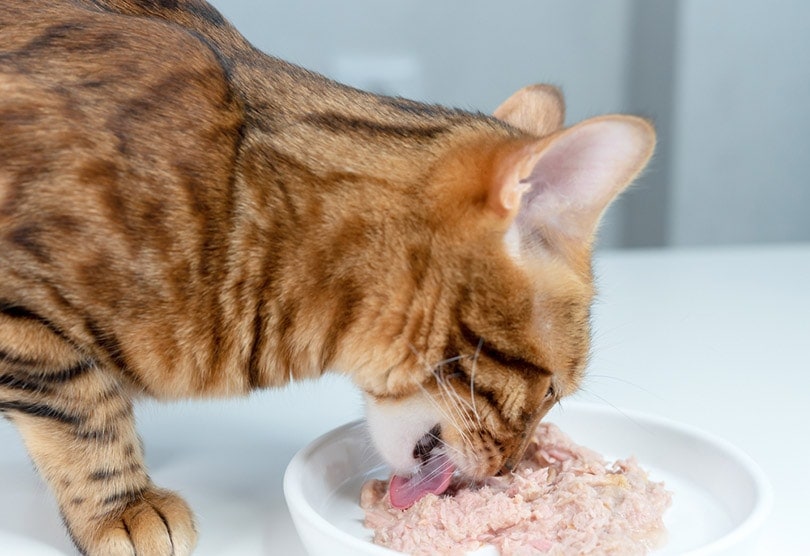
Featured Image Credit: Krakenimages.com, Shutterstock
Get Hepper In Your Inbox


Pet care tips from our vets and experts, straight to your inbox.
You may opt-out at any time. View our Privacy Policy for more information.
Brooke Bundy is a freelance writer who graduated from the University of North Georgia with a B.S. in Media Studies. She is interested in storytelling across different mediums. When she isn’t writing, Brooke loves to spend time with her dog, and three cats, in New Orleans, Louisiana. Brook enjoys gardening, cooking, brewing coffee, and making her pet's house a home.
Join the conversation
Ask a question, share your story, or send private feedback.