Hepper is reader-supported. When you buy via links on our site, we may earn an affiliate commission at no cost to you. Learn more.
Ichthyosis in Golden Retrievers: Our Vet Explains Causes, Signs & Treatment
In this article
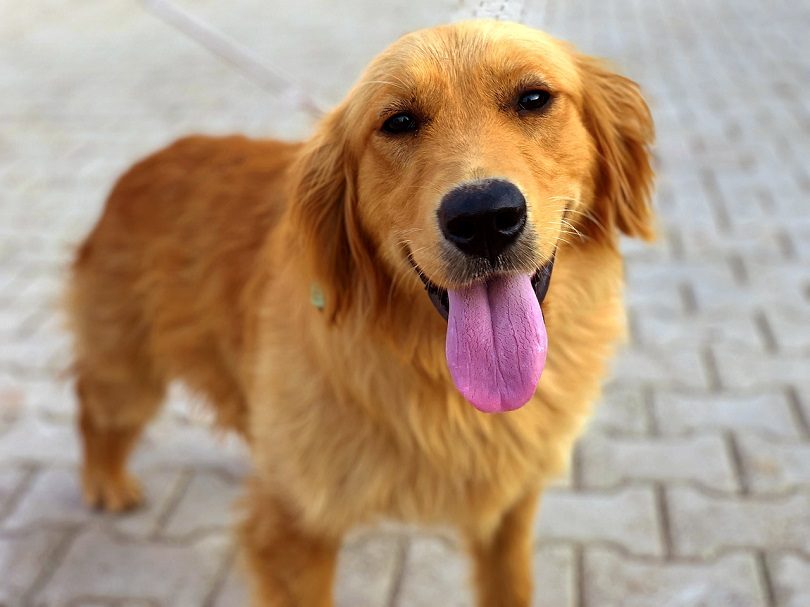
Golden Retrievers are known for their long, silky, golden coats. So, if your dog’s skin and coat look anything but perfect, it’s natural to be concerned. Golden Retrievers can develop dry, flaky skin as a result of a number of conditions—one of them being ichthyosis. If your Golden Retriever has been diagnosed with this condition, or if you suspect that your dog has ichthyosis, you’ll want to be armed with as much information as possible in order to provide them with the best possible care.
Let’s discuss this condition in more detail.

What Is Ichthyosis in Golden Retrievers?
Ichthyosis is a genetic disease affecting the skin of Golden Retrievers. The condition gets its name from the Greek word, “ichthy”, which mean “fish”, as dogs with ichthyosis have scaly skin resembling fish scales.
Other breeds can be affected by this condition as well, however, they tend to develop a more severe form of the disease.
What is the Cause of Ichthyosis in Golden Retrievers?
Ichthyosis is caused by a genetic mutation. Scientists have identified two genetic variants that are associated with the disease.
It is hypothesized that, as a result of the mutation, the cells in the outermost layer of skin, known as keratinocytes, do not form properly. This causes scaling and peeling of the skin. Ichthyosis shows an autosomal recessive pattern of inheritance.
“Autosomal” means that the specific gene is located on one of the numbered chromosomes and not on a sex chromosome. Therefore, the disease is not related to the sex of the dog, and both male and female Golden Retrievers can be affected. “Recessive” means that two copies of the mutated gene (one from each parent) are required to cause the disorder. Therefore, for a dog to show signs of the disease, both its parents must carry the gene.
The parents may have two copies of the mutated gene and, therefore, show signs of the disease and appear scaly. Althernatively, they may have one normal gene and one mutated gene, therefore appearing normal. A puppy may get one mutated gene from each parent and develop scaly skin, or it may get one mutated gene and one normal gene from each parent and look normal. In the latter scenario, the puppy becomes a carrier of the disease and it may pass on the mutated gene to its own puppies in the future.
What Are the Signs of Ichthyosis in Golden Retrievers?
Golden Retrievers with ichthyosis have mild to moderate scaling of the skin, predominately on the trunk. The head, limbs, paw pads, and nose are usually not affected. There is no sex predilection for ichthyosis—both male and female dogs can be affected.
The scales range in size from small to large, and vary in color from white to grey. The scales tend to be white in young dogs, and progressively blacken and become rough and dry with age. Affected dogs sometimes appear dirty, especially as the pigmented scales shed and adhere to the coat.
The skin is usually not itchy or inflamed, but affected dogs may develop secondary yeast or bacterial infections as a result of the disease, which may result in inflammation and itching.
Scaling may be seen within the first 3 weeks of life, but can also take up to 3 years for dogs to show any symptoms. The majority of affected dogs are diagnosed with this disease by one year of age.
What is the Treatment for Ichthyosis in Golden Retrievers?
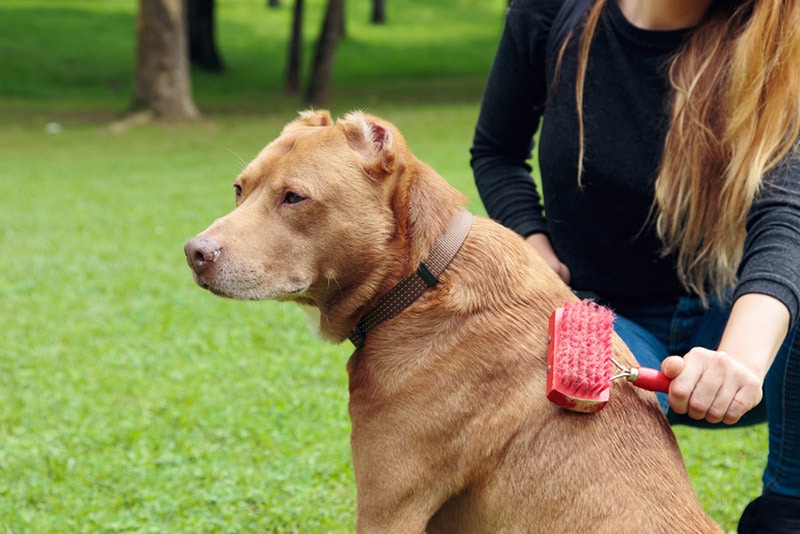
Although ichthyosis is incurable, it can be managed with commitment and diligence on the owner’s part. Treatment is tailored to the individual dog depending on its symptoms, and usually includes frequent brushing, medicated shampoos to remove scales, and moisturizing rinses.
A diet rich in fatty acids may also be beneficial to reduce symptoms of the disease. If there are any secondary skin infections present, the dog will also need to receive treatment for those. Oral isoretinoin may also be effective at treating this disease.
A study published in 2022 looked at the the effectiveness of oral isoretinoin in the treatment of ichthyosis in Golden Retrievers. Retinoids are a class of chemicals that are structurally and functionally related to vitamin A. Retinoids offer several benefits, including decreasing thickening and scaling of the skin, and are used to treat a form of ichthyosis that occurs in people known as Autosomal Recessive Congenital Ichthyoses (ARCI). The study showed that oral isotretinoin was effective in improving ichthyosis in Golden Retrievers without any side effects.

Frequently Asked Questions (FAQs)
My Golden Retriever has been diagnosed with icythyosis. What is the prognosis?
Although ichythosis is an incurable disease, it can be managed with commitment to the treatment plan. In Golden Retrievers, it does not appear to have any other effect on a dog’s overall health or life span.
How is ichthyosis diagnosed in Golden Retrievers?
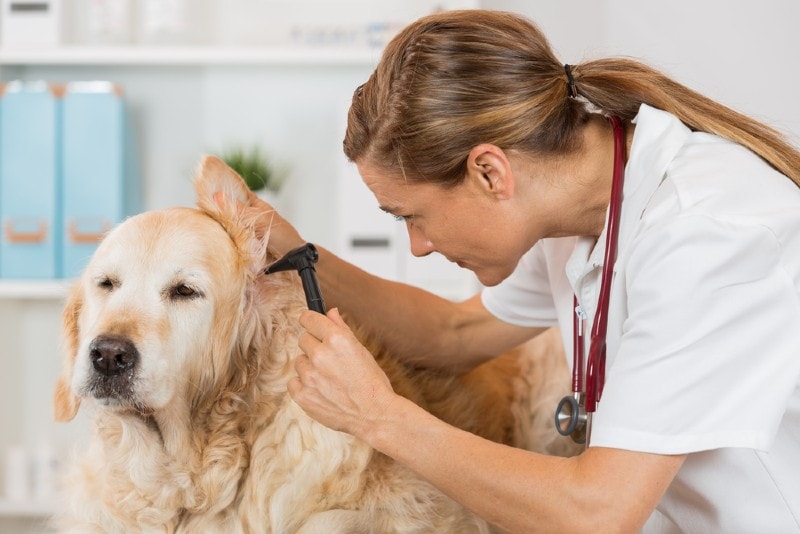
You veterinarian may suspect ichthyosis based on your dog’s clinical signs. The diagnosis can be confirmed with a biopsy of the skin. A biopsy is a procedure to remove a small section of tissue so that it can be examined under a microscope by a veterinary pathologist. Genetic testing is also available to identify the mutation responsible for the disease.
It’s recommended that all Golden Retrievers intended for breeding are tested. The test will be able to tell if your dog is a carrier of the disease, even if it looks normal. It’s not advisable to breed dogs that carry the mutated gene.
My Golden Retriever has scaly skin. Does this mean they definitely have ichthyosis?
There are many causes of scaling skin in Golden Retrievers other than ichthyosis. These include allergic skin disease, infections (bacterial, fungal, parasitic), hypothyroidism, hyperadrenocorticism (Cushing’s disease), environmental dryness, and frequent bathing. These should be ruled out before a diagnosis of ichthyosis is made.
Final Thoughts
Ichthyosis is a hereditary skin condition affecting Golden Retrievers that is caused by a genetic mutation. This mutation prevents the outer layer of the skin from developing properly, which causes the skin to scale and flake. The scales range in size from small to large, and vary in color from white to grey. The scales tend to be white in young dogs, and progressively blacken and become rough and dry with age.
Ichthyosis is an incurable disease but it can be managed with a combination of brushing, medicated shampoos, moisturizing rinses, and a diet high in omega 3s. Oral isoretinoin shows promise as a potential treatment for this disease.
Featured Image Credit: Linoleum Creative Collective, Unsplash
Get Hepper In Your Inbox


Pet care tips from our vets and experts, straight to your inbox.
You may opt-out at any time. View our Privacy Policy for more information.
Lindsay is a veterinarian who lives in the beautiful city of Cape Town, South Africa with her husband and their rescue cat and dog, Harrison and Blizzard. Lindsay obtained her bachelor's degree in veterinary science from the University of Pretoria and currently works in small animal practice. When she’s not at work, you can find her out in nature, hiking with Blizzard, or following some kind of creative pursuit, such as writing, playing the piano or sewing.
Lindsay is a veterinarian living in Cape Town, South Africa with her husband and their rescue animals, Harrison and Blizzard. You can find her hiking with Blizzard, enjoying time in nature, or writing when she’s not working.
Education
Lindsay graduated from the University of Pretoria, receiving her bachelor's degree in veterinary science.
Experience
Lindsay currently works in small animal practice.
Join the conversation
Ask a question, share your story, or send private feedback.