Hepper is reader-supported. When you buy via links on our site, we may earn an affiliate commission at no cost to you. Learn more.
Long Haired Weimaraner: Info, Pictures, Personality, & Facts


In this article
Breed Overview
Height:
Weight:
Lifespan:
Colors:
Suitable for:
Temperament:
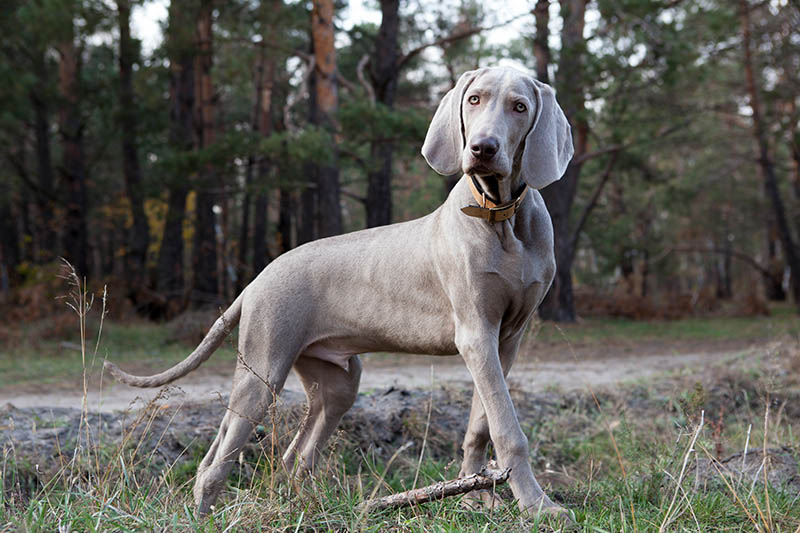
Long-haired Weimaraners, with their athletic and streamlined build and striking colors, are elegant and intelligent dogs with much to admire. Originating from the region of Thuringia in central Germany, Weimaraners were bred by professional hunters and gamekeepers as elite hunting dogs for the nobles of Weimar.
Long-haired Weimaraners have beautiful 1–2-inch-long fur that can either be wavy or straight. A long coat on a Weimaraner is a disqualifying feature for the American Kennel Club, but the FCI accepts both long and short-coated varieties of this beautiful breed.
In this article, we’ll tell you everything you need to know about the loving and energetic long-haired Weimaraner!
Sleek and swift, these adorable dogs enjoy lots of exercise and play. Weimaraners are loved for their friendly, gentle nature and strict obedience—they also get along famously with kids!
If you are looking for an active and intelligent family-friendly dog, then the long-haired Weimaraner may be for you.

Long Haired Weimaraner Breed Puppies

Long Haired Weimaraner Characteristics
Long-haired Weimaraners are rarer than the short-haired variety, which means they can be a little more expensive, too. On average, a long-haired Weimaraner puppy can cost between $1,500 and $2,000. Smaller breeders tend to charge more, but they also—generally—bring up their puppies with closer and more personal care.
If you’re thinking of bringing a long-haired Weimaraner home, it’s vital that you do your research to make sure you adopt your puppy from a reputable and ethical breeder who’s run health tests on both parents.
Generally, if a breeder’s asking price is well below the market price, this may be a cause for concern.
When you do manage to bring home a long-haired Weimaraner puppy, the adorable addition to your family will require lots of attention. Weimaraner puppies are energetic and intelligent—they’ll need training, positive reinforcement, and patience. Like all puppies, setting a daily routine will help them settle in and adapt.
The 3 Little-Known Facts About The Long Haired Weimaraner
- Weimaraners are nicknamed “gray ghosts” because of their silver fur and ethereal pale eyes.
- Weimaraners have webbed feet that help them glide through water effortlessly, ready to hunt waterfowl.
- Weimaraners are born with adorable stripes! Within a few days, their stripes fade away, and their eyes change color from blue to light amber, gray, or blue-gray as they grow older.

Temperament & Intelligence of the Long Haired Weimaraner 🧠
Long-haired Weimaraners are known for being loving, amiable, and intelligent. They’ll need lots of mental stimulation and training, making them ideal for active families that enjoy hiking, hunting, and other outdoor activities.
Ideally, owners will be able to provide their Weimaraner with plenty of outdoor space—such as a large backyard—for them to burn off some of their incredible amounts of energy.
Weimaraners are swift and graceful by nature. Combined with their intelligence and obedience, this makes them a perfect match for agility courses!
As loving and amiable as these dogs are, they don’t do well at being left alone for too long. Weimaraners are prone to destructive chewing and excessive barking when they’re not getting the companionship, attention, and mental and physical stimulation that they require.
Are These Dogs Good for Families? 🏡
Weimaraners get along excellently with children. According to the American Kennel Club, these dogs “yearn to be fully-fledged family members.”
Having said this, long-haired Weimaraners do not enjoy being left alone for long periods, so they’re not suitable for busy families with little time to spare. As long as your family has plenty of time for keeping a Weimaraner physically active and mentally engaged, they’ll fit in wonderfully!

Does This Breed Get Along With Other Pets? 🐶 😽
As long as your Weimaraner has been properly socialized as a puppy, they should get along just well with other dogs, but it’s a different story when it comes to other pets!
Weimaraners were bred to be the perfect hunting companion, and their hunting instinct remains strong, even now. For this reason, it’s not advisable to have Weimaraners near small dogs, cats, rodents, or other small animals, as their urge to hunt, chase, and kill these pets may take over.

Things to Know When Owning a Long Haired Weimaraner
Food & Diet Requirements
As medium-large, and very active dogs, Weimaraners expend a lot of energy, so they need an adequate diet of good-quality dog food with moderately high protein content. On average, a 70lb Weimaraner will need to consume at least 1312 calories, but this doesn’t take into account your dog’s level of activity. Active dogs and dogs that have not been spayed or neutered will consume more calories per day. Growing puppies also burn more calories relative to their size.
To figure out exactly how much food your Weimaraner needs, consider their age and activity level, and speak to your vet to formulate a personalized diet.
Weimaraners are not prone to obesity—as long as they’re getting adequate exercise. Generally, Weimaraner puppies will need feeding three times a day, while adults will probably have two big meals, one in the morning, and one in the evening, leaving at least one hour from when they last exercised. To avoid bloat, do not feed a Weimaraner just before or just after exercise.
Depending on their size, age, and activity level, an adult Weimaraner may require between 2–4 cups of dry food per day, while puppies may need between 1 ½ and 2 ½ cups of food per day, split over three meals.

Exercise 🐕
Weimaraners need plenty of exercise each day. These dogs are built to carry out a full day’s worth of hunting every day. The PDSA recommends at least 2 hours of exercise each day for your pet Weimaraner.
While going for a walk is okay, what Weimaraners really need is the opportunity to go for a sprint and make use of their agility, grace, and strength. Agility courses are perfect for helping your Weimaraner expend excess energy! Weimaraners are also naturally strong swimmers—another fun activity that’s sure to keep them happy for a while.
In the end, a tired Weimaraner will be a contented Weimaraner!
Training 🦮
Long-haired Weimaraners are very trainable. As intelligent dogs, they’re adept at learning new commands quickly. These dogs also have a natural obedience and innate desire to please their humans, which only makes them more trainable.
That said, if a Weimaraner is left untrained, they may soon decide they are the leader of the pack. If this happens, training can become an uphill battle.
Start training your Weimaraner when they’re still a young puppy. A daily training session of around 15 minutes is ideal. Try to incorporate the training session into your puppy’s daily routine, so they come to expect and even look forward to spending the one-on-one time with you.
Don’t forget to reward your Weimaraner with plenty of praise and give them treats when they get something right! Positive reinforcement is the best way to encourage your puppy to learn desirable behaviors.
Grooming ✂️
Long-haired Weimaraners may be higher-maintenance than their short-haired counterparts, but as average shedders, they do not require as much maintenance as some other long-haired breeds.
Brush your long-haired Weimaraner’s coat at least once a week to remove any dirt and debris they’ve picked up outside. During the start of summer and winter when they are shedding, you may need to brush them more regularly.
Weimaraners won’t need regular baths, but as active dogs, they tend to get their paws and feet muddy often, so these feathery areas may need cleaning regularly. Additionally, Weimaraners have floppy ears and floppy ears are more prone to trapping dirt. Weimaraners will need their ears cleaned once a week.

Health and Conditions ❤️
Weimaraners are generally healthy, but like all pedigrees, they are more prone to some illnesses. Additionally, as active balls of energy, these dogs do tend to get more cuts, scrapes, and sprains than a less active breed.
The most serious condition that Weimaraners are prone to is gastric torsion, also known as bloat. Bloat is a life-threatening condition that should be treated as an emergency.
The most common symptoms of gastric torsion are as follows:

Male vs Female
Both male and female long-haired Weimaraners make for wonderful pets, but they do have some differences which may sway you toward one or the other depending on your needs.
Physically, female Weimaraners are typically smaller than their male counterparts, and weigh between 15 to 20 pounds lighter, too.
Both male and female Weimaraners are generally affectionate and loving, but male Weimaraners are more so! Male Weimaraners tend to be more vocal and communicative, while female Weimaraners are a little more reserved.
Female Weimaraners are a little more independent than their male counterparts. They tend to be more self-sufficient, too. At home, female Weimaraners may behave more territorially toward strangers than male ones.
Female Weimaraners can be more stubborn in nature, though this is probably down to their independence. While you may be able to leave a female Weimaraner alone on their own for a short while, male Weimaraners really don’t enjoy being alone.
If you’re looking for a guard dog who’s a little on the independent side, a female Weimaraner may do better. If you are looking for the most obedient and easy to train, a male Weimaraner may be best.
Final Thoughts
For owners looking for an active, intelligent, and loving breed, long-haired Weimaraners would make an ideal pet.
These obedient dogs get along great with kids, too, but they need lots of attention and physical and mental engagement to keep them entertained and well-behaved.
If you are looking to bring a long-haired Weimaraner home, make sure you buy from a responsible and reputable breeder, and that both parents of the puppies have been screened for any health issues. When you do bring your puppy home, keep them occupied with plenty of attention, love, puzzle games, and training—your Weimaraner will shower you with affection and loyalty in return!
Related Read: Weimaraner Lifespan: How Long Do They Live?
Featured Image Credit: Ksenia Raykova, Shutterstock
Get Hepper In Your Inbox


Pet care tips from our vets and experts, straight to your inbox.
You may opt-out at any time. View our Privacy Policy for more information.
Cheryl is a freelance content and copywriter hailing from the United Kingdom. With expertise in gardening and photography, as well as a passion for hiking and amateur astronomy, Cheryl is constantly on the go but still makes time to savor the little things, like sipping coffee and cuddling with her cat on a cold morning as she types away.
Join the conversation
Ask a question, share your story, or send private feedback.