Hepper is reader-supported. When you buy via links on our site, we may earn an affiliate commission at no cost to you. Learn more.
Weimaraner vs Doberman: The Key Differences (With Pictures)

In this article
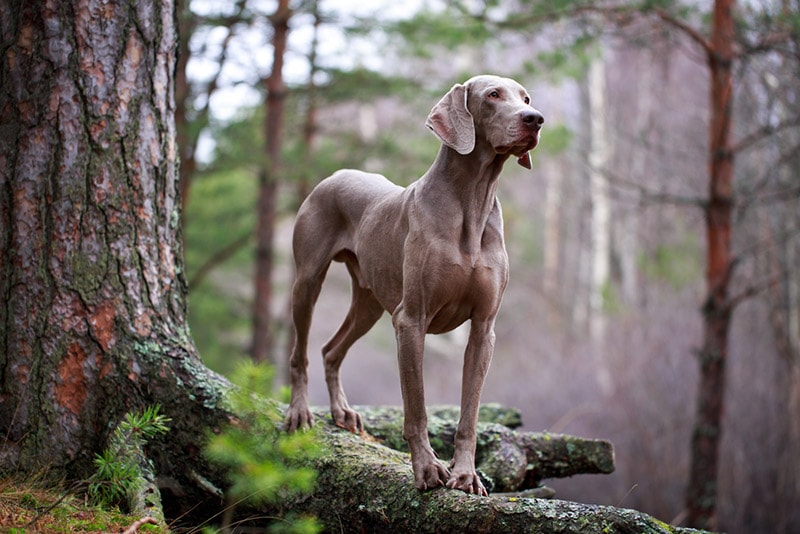
Weimaraners are medium-sized hunting dogs native to Germany. These beautiful and spirited dogs have been sought after for their intelligence, trainability, and great temperaments for centuries. In fact, the Weimaraner is the oldest registered breed of dog still in existence today. They're very active, loyal, and perfect for large families.
Dobermans are known for being gentle, affectionate family companions with a keen sense of smell. They have a very similar build to Weimaraners but are in a league of their own. So, why should you consider adding one of these trustworthy canines to your family? Well, there are plenty of reasons. Let's discuss.

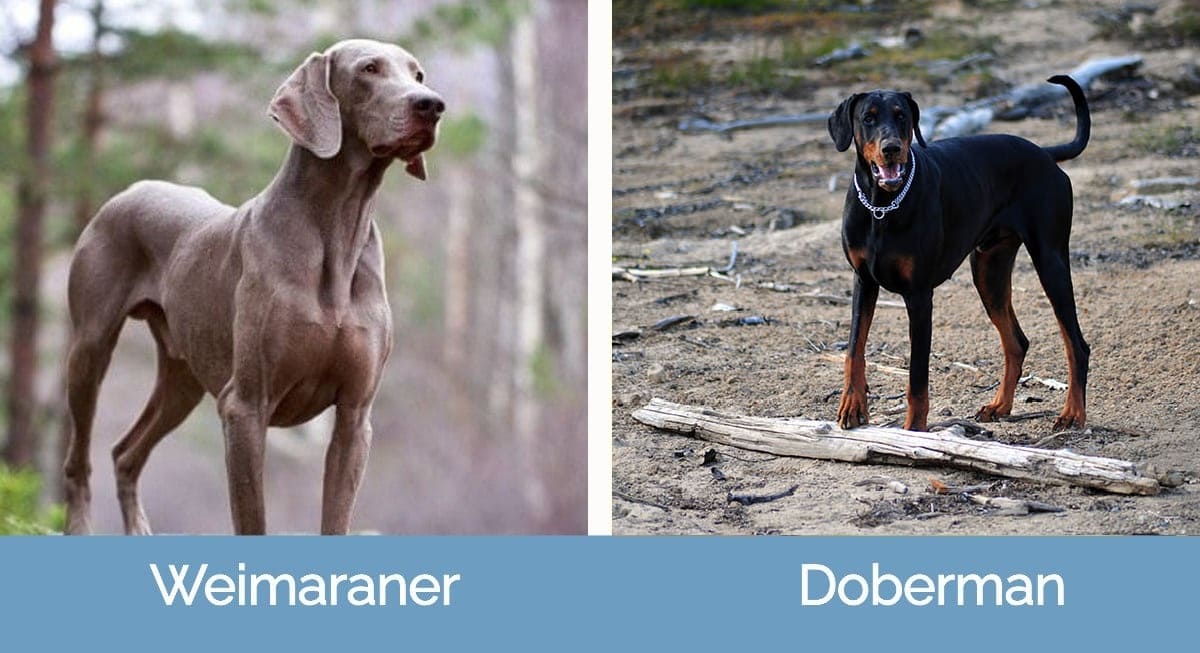
Visual Differences
At a Glance

Weimaraner Overview

The Weimaraner is one of the most popular dog breeds in the United States. It’s also one of the oldest and can be traced back through the centuries. They have German and Norse roots, having been developed based on various types of terriers that were actually used for hunting. The Weimaraner has always been used as a livestock guardian and pointer dog, being very active and alert when it comes to chasing after prey. This makes them excellent family pets as well as great support and guard dogs.
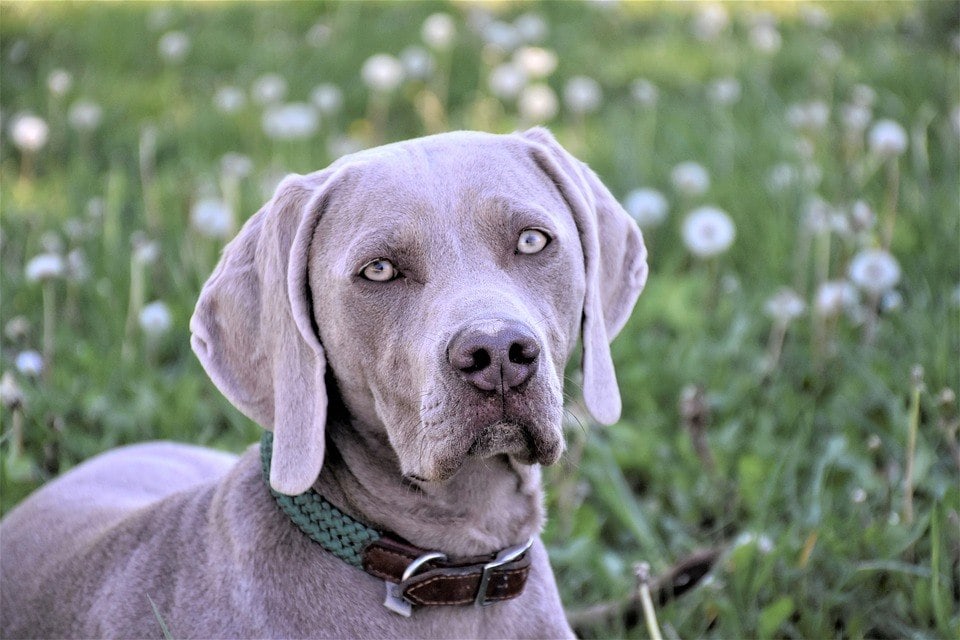
The Weimaraner is an athletic dog with a stocky build and well-defined muscles. Its head is broad and rounded, with a well-developed muzzle. Their coats are short and smooth, with a dense undercoat. These dogs have a wide girth and big feet that provide solid footing on rough terrain. The Weimaraner has an alert, confident demeanor.
Personality / Character
Perhaps what makes the Weimaraner such a popular breed is their intelligence. They're pretty intelligent dogs but also very sensitive to their owner's moods. They can be quite noisy when barking at strangers or if they have separation anxiety. These pups can also have very strong and aggressive canine instincts that can be controlled by training.
That being stated, they’re also a people-oriented breed with an affectionate personality, making them excellent for families with children. They make high-energy dogs that require daily activity, so if you don’t have the time to spend with them daily, this may not be the best breed for you. It's also best to watch them closely around young children, as they are fairly large dogs and maybe a bit too aggressive for them.

Training
These dogs are smart, which makes them highly trainable. They're also loyal and eager to please their owners, so training should be a fun and easy time. However, given that the breed is very active, training should be consistent and comprehensive. If not, you may find that this dog is a bit too much for your family to handle. These are high-energy dogs, so you can train them for an hour or so without them tiring out.
Grooming & Maintenance
Weimaraner dog grooming is similar to that of most other breeds. These dogs have a short, flat, single coat. So, they don’t require a lot of maintenance, but there are a few things that you should keep in mind. You will want to brush them once a week to keep their coats looking good and mats from forming.
Because they are single-coated, they won't shed as much as double-coated dogs or those with fairly long coats. You should also clip their nails frequently to keep them from digging into the ground and causing damage. Finally, you should check their ears regularly as they are large, floppy, and tend to get dirtier than other parts of their body.
Health
Weimaraners have sleek, muscular builds and are generally considered to be fairly healthy dogs from a breed perspective. However, they are susceptible to some hereditary ailments, just like with any other breed. Here are a few common issues that these dogs may face.

Hip Dysplasia
Hip dysplasia is a condition common in Weimaraners, perhaps because of their larger size and act of nature. It occurs when a dog's hip joint doesn't align correctly with its socket. This can cause pain, irritation, inflammation and even worse, total hip dysplasia. Your Weimaraner may struggle to put on weight, act lethargic, or perform everyday tasks.
Unfortunately, this condition is usually unavoidable because it is hereditary. However, it is treatable and not life-threatening. Your vet might recommend things like lifestyle modifications, pain medication, stem cell treatment, and surgery depending on how severe your pup's condition is. Many mature Weimaraners live happy, fulfilling lives despite the fact that canine hip dysplasia is fairly common in this specific breed.
Spinal Dysraphism
Weimaraners may also suffer from spinal dysraphism. This genetic disorder, which is present from birth, is caused by a defect in the spinal canal. This condition can cause difficulty in walking for dogs with the weakness of their legs as well as a lack of rear coordination. Spinal dysraphism is another condition that has no cure, unfortunately.
Von Willebrand's Disease
This bleeding disorder is quite common in large dogs. It is caused by a lack of a protein that helps the blood clot properly. A buccal mucosal screening test is used to diagnose this disease. Usually, there are no symptoms. This condition can cause bleeding in pets, which is why they should be more careful. If your dog has this condition, your veterinarian might recommend that you avoid certain medications.

Hypertrophic Osteodystrophy
Hypertrophic Osteodystrophy is a condition that affects large breed dogs like the Weimaraner. This is a condition that causes swelling and painful bones. It usually occurs between 2-6 months of age. It can cause irritation, daily lethargy, and even immobilization. The treatment is usually focused on pain management. Your veterinarian may prescribe pain medication or steroids, depending on the severity.
Suitable for
The Weimaraner is suitable for large homes with lots of space. They are also ideal for big families, or ones with older children. This is due to their high amounts of energy.
Doberman Overview

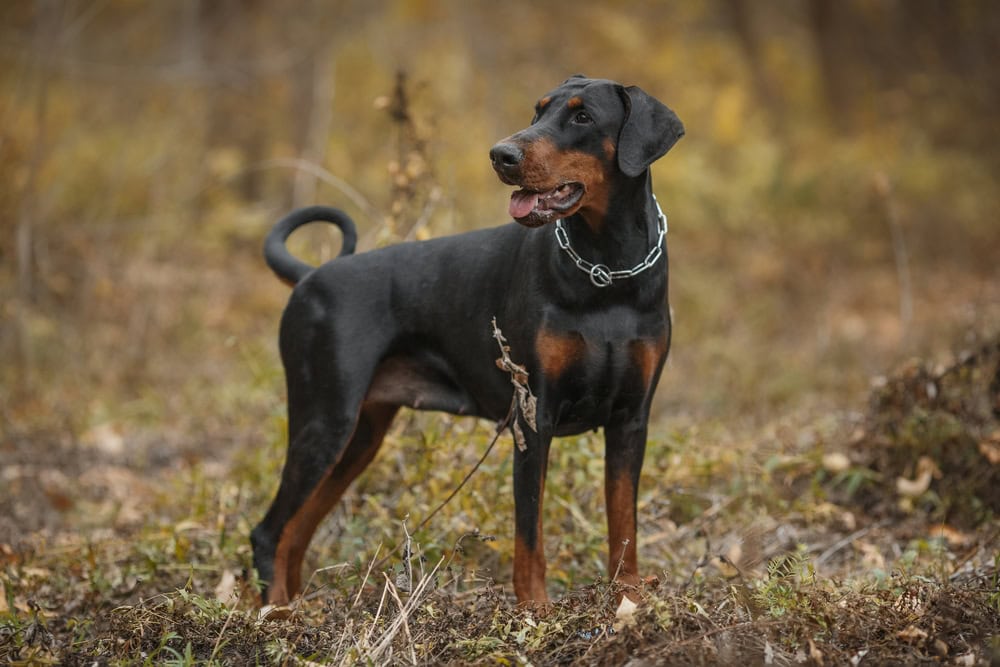
Dobermans were originally bred to be guard dogs, but they are also used as police dogs. They're well-known for their loyalty and strength. These dogs are also known for being able to play hard and keep up with their owner’s active lifestyle. This makes them a perfect choice for families who enjoy an active or outdoor lifestyle.
Personality / Character
Dobermans have many different types of personalities, but most of them are loyal, sweet, and loving. This breed is known for its intelligence, courage, and loyalty. Note that they can also be very aggressive if they don’t get enough exercise or if they aren't properly trained. These dogs are often used as guard dogs or police dogs, but they can be aggressive if they feel threatened or bored.
Training
Dobermans are intelligent and very trainable. This makes them a great choice for those who want to get their dog used to new environments and people. Dobermans will naturally excel at any task you throw at them, and they can be very protective of their family.
It's best to train these dogs early, and basic obedience training can be done at as little as 6 to 8 weeks of age. They are also known for being very vocal and may bark at passersby during the day or night. This is a natural instinct for them as they have an acute sense of hearing and smell. So, training is necessary if you want your Doberman to be quiet while they are outside on a walk or when they're in the home.

Grooming & Maintenance
Doberman dogs are fairly easy to groom, as they have single short coats that are sleek and easy to keep clean. Though they shed a bit more than Weimaraners, they tend to be on the lower end of the spectrum when it comes to coat maintenance. Regular baths are a must for this breed (they love to roll around outdoors), as their short fur can become tangled and matted easily.
Be sure to brush your Doberman regularly to remove any dead skin or matting. Use a sulfate-free shampoo and brush your dog’s coat regularly to prevent mats from forming. When bathing, be sure to pay extra attention to your dog’s face and eyes.
Health
Dilated Cardiomyopathy
Dilated Cardiomyopathy (DCM) is a common condition in large dogs such as Dobermans, German Shepherds, and Great Danes. DCM is a disease that affects the heart muscles. Progressive stretching causes the heart's muscle structure, especially the ventricles, to become weaker and prevents proper contractions. The heart is unable to pump enough blood to properly oxygenate tissues.
Low oxygenation can cause other organs to fail to function optimally, generating different insufficiency tables. It can also lead to irreversible injuries if not treated promptly. The accumulation of fluid around the lungs and in the abdomen can be a sign of this disease.

Wobbler Syndrome
Wobbler Syndrome refers to a variety of chronic and severe degenerative conditions that affect the intervertebral and vertebral discs in the cervical spine. These diseases can cause excessive compression of the spine and nerves in the neck.
The main risk factor for Wobbler Syndrome is genetic predisposition. However, sometimes, dogs may also experience displacement of intervertebral disks due to a stronger impact on their cervical region.
Wobbler Syndrome can be described as a silent neurological disorder. The first stages of the condition are mild and almost invisible. As the disease progresses, more specific symptoms will appear, such as wobbly walking and short, cautious steps, difficulty moving, and frequent loss of balance.
Gastric Torsion (Bloat)
Dobermans are also susceptible to developing gastric torsion, more commonly known as bloat. This is caused by excessive stomach dilation, which can cause the stomach to become twisted. The result is that blood flow is disrupted and the connection between the stomach and intestines becomes obstructed.
If not addressed quickly, this roadblock can cause irreversible damage to some organs. This disease can also cause death if not treated quickly. Signs of this ailment included general lethargy, excessive salivation, vomiting, difficulty breathing, and abdominal swelling.

Hip Dysplasia
Diagnoses of hip dysplasia in Dobermans are common, even though they aren't the most prevalent breed to be affected by this disease. While genetic predisposition is the primary cause, obesity and sedentary lifestyles can be risk factors. It is important to recognize certain signs, such as excessive fatigue, rigidity in the hind legs, back holstering, and difficulty performing simple movements.
Suitable for
Dobermans are best suited for either families or single-person homes. They’re also best for larger homes or areas with plenty of space and aren’t well suited for apartment living.
Which Breed Is Right for You?
Weimaraners and Dobermans are very similar, but there are some key differences that will help you decide which one might be the right choice for your family. Both are loyal, loving dogs that make excellent family pets. They have similar temperaments, and both can be trained effectively using positive reinforcement techniques. However, they do have some differences that may affect your decision.
For example, the Weimaraner is a bit shorter and leaner than the Doberman. It doesn’t shed as much as the Doberman, and its short coat requires little grooming care. It's important to note that both dogs are active and work best in homes where they can run and play around, either indoors or outdoors.
Featured Image Credit: (L) Dmitry Veryovkin, Shutterstock | (R) Jens Lanckman, Pixabay
Get Hepper In Your Inbox


Pet care tips from our vets and experts, straight to your inbox.
You may opt-out at any time. View our Privacy Policy for more information.

Nicole is a lover of animals of all sizes but is especially fascinated with the feline variety. She’s the proud mom of Baby, a Burmese, and works every day so he can relax in the sunshine or by the fire. She’s always had a cat in her home and has spent countless days with others, observing behaviors and softening up even the grouchiest of the lot. Nicole wants to share her kitty expertise with you so you and your cat can live happy, healthy, and care-free.
Join the conversation
Ask a question, share your story, or send private feedback.