Hepper is reader-supported. When you buy via links on our site, we may earn an affiliate commission at no cost to you. Learn more.
My Dog Ate Toothpaste! Here’s What to Do (Vet Answer)

In this article
Dogs will rarely pass up the opportunity for a tasty treat, and unfortunately, this can sometimes include the unexpected! Many kinds of toothpaste are designed to taste sweet or pleasant for us, and dogs will enjoy that, too. In addition, more and more people are now brushing their dog's teeth to help maintain their dental hygiene.
Not unreasonably, some people will look to use human toothpaste, but is toothpaste bad for dogs? In fact, human toothpaste can be dangerous for dogs, and in this article, we will explain why.

Why Is Human Toothpaste Bad For Dogs?
Firstly, it depends on what exactly your dog has eaten! If your dog has swallowed the plastic tube or cap, these cannot be digested and may act as irritating foreign objects in the gut. This may lead to bowel obstruction and other major consequences if not dealt with promptly. Foreign objects may cause vomiting, loss of appetite, diarrhea, and pain.
Secondly, toothpaste itself is designed to be used regularly in quite small amounts—hence the advice for people to use a pea-sized amount on the toothbrush and not to swallow much, if any, of it. Dogs are obviously smaller than people and may accidentally swallow quite a lot more than their human owners—I’ve yet to meet a dog that has been taught to spit!

What Should I Do If My Dog Has Eaten Toothpaste?
- Prevent any further toothpaste from being eaten. It is important to ensure that if your dog is still eating or trying to eat further toothpaste or objects, you prevent this from happening by shutting them away and cleaning up the offending items!
- It is useful to note the information listed below. Knowing these facts will help you and your veterinarian make the best treatment decision moving forward.
- Contact your veterinarian. It is vital to get veterinary advice as soon as possible to ensure the best outcome for your dog. If your vet isn’t open, call the Pet Poison Helpline or the nearest open veterinary clinic, which may be an emergency service.
- Follow your veterinarian's advice. This may be to come down to the clinic for an assessment and treatment, or your veterinarian may be happy to monitor the situation at home under close supervision.
What Exactly Is Dangerous for Dogs in Human Toothpaste?
Xylitol
One big reason that toothpaste is bad for dogs is that it may contain sweeteners to make it more pleasant for us to use. The most important sweetener to watch out for with your dog is called Xylitol—this is extremely dangerous. Other sweeteners like sorbitol may cause tummy upsets if swallowed in large amounts but are unlikely to cause more severe problems.
Xylitol convinces your dog's body that it has eaten a lot of sugar. This leads to a massive production of a hormone called insulin, which usually regulates your blood sugar. Too much insulin will lead to a big drop in blood sugar, and this can lead to weakness, lethargy, vomiting, walking "drunkenly", and collapse. At worst, it may lead to seizures and death.
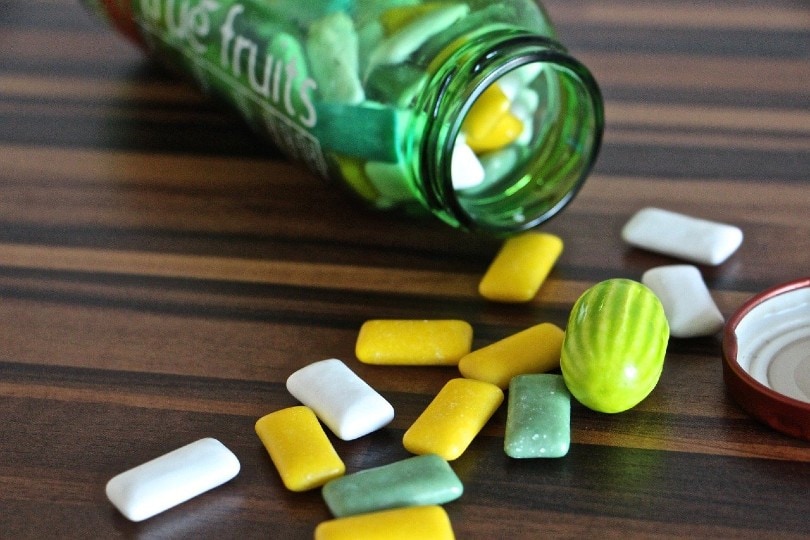
To be toxic, dogs usually need to eat about 50 mg of Xylitol per kilogram body weight, which works out as about 0.05 ounces for a 70-pound Labrador. Watch out for Xylitol in toothpaste, sugar-free treats, and chewing gum.
Fluoride
Human toothpaste usually contains fluoride (sodium fluoride or stannous/tin fluoride)—a safe product that is added to drinking water for humans and is greatly beneficial to dental health in small, regular quantities. Very large quantities can have toxic effects—for example, if a small dog ate a whole tube of toothpaste.
The fatal toxic dose is reported to be around 5mg per kilogram bodyweight in dogs, but anything over 1mg per kilogram bodyweight may produce symptoms. A typical 3.5-ounce tube of Sensodyne or Colgate toothpaste tube will contain enough fluoride to be dangerous in any dog less than about 35 pounds.
Fluoride toxicity in dogs usually causes severe vomiting and diarrhea, excess dribbling with saliva, restlessness, sweating, loss of appetite, weakness, stiffness, rapid breathing, and rapid heart rate. The reason for this is damage to the guts, liver, kidneys, and lungs. At worst, this can lead to seizures and death.
Plastic
The plastic toothpaste tube and toothpaste cap cannot be broken down by the gut, so have to come out again whole! They will irritate the gut and cause vomiting, loss of appetite, pain, and diarrhea. If they get stuck in the gut, they will cause bowel obstruction which can be life-threatening.
Lucky dogs may vomit them back up again straight away, and in some cases, they may pass all the way through and come out at the other end, but not all dogs are this fortunate, and complications may arise at any stage.
How Do We Treat Dogs That Have Eaten Toothpaste?
The most important thing is to seek professional advice from your veterinarian as soon as possible. With the information you gather above, your veterinarian will be able to come up with the best plan for your dog in your specific situation.
Plastic
If your dog has swallowed the toothpaste cap or toothpaste tube within the last 4 hours, your veterinarian may recommend an injection to induce strong, reliable vomiting and bring the plastic bits back up from the stomach. Inducing vomiting should only be performed by a veterinarian, as it can be very dangerous, especially when using home remedies!
If more than four hours have passed, your veterinarian may recommend allowing the plastic to pass through, depending on the size of the pieces eaten and the size of your dog, but this decision should only be made by a professional.
If your veterinarian is worried about the potential for a bowel obstruction based on your information and any symptoms your dog is showing, the next step is to take images of the gut using either X-rays or an ultrasound. Following this, it may again be best to monitor your dog closely, or surgery may be required to retrieve the plastic if it is stuck or likely to get stuck.
As long as professional advice is sought quickly, most dogs will make a full recovery from eating toothpaste tubes.
Xylitol
If the main problem for your dog is likely to be Xylitol in the toothpaste, then prompt treatment by a veterinarian is always required. Xylitol is absorbed very quickly so it is not usually possible to make the dog vomit it back up. Instead, treatment is aimed at maintaining good hydration and a healthy blood sugar level using intravenous fluids and sugar solution in a hospital setting.
Dogs usually need to be hospitalized for 24–72 hours on a drip to support their body while it flushes out the Xylitol. Blood sugar needs to be monitored regularly. Again, if quickly recognized and treated, most dogs will recover from this, although very high doses or a delay in treatment may be fatal.
Fluoride
Fluoride toxicity has no antidote and is only treated by supporting your dog's body in a hospital setting as it clears the fluoride away. If caught early, dogs may be able to have the injection to cause vomiting and bring up lots of fluoride before it is absorbed.
Veterinarians may need to perform blood tests to check for organ damage. Dogs will need intravenous fluids, including calcium and magnesium to help support the natural minerals of the body. A good outcome depends entirely on the amount eaten and how quickly help is sought.
Can Human Toothpaste Kill a Dog?
If your dog is small and swallows a large amount of human toothpaste, it is possible that the results could be fatal, especially if veterinary treatment isn’t sought straight away.
So, What Should I Use to Brush My Dog’s Teeth?
Luckily, dog toothpastes have been developed. They’re xylitol-free, fluoride-free, and flavored to make them easier to use. My dog loves the chicken flavor, but various brands have beef or fish available, too. A child’s soft toothbrush can be used, or a dog toothbrush often comes with toothpaste.
As with any pet dental products, look at the Veterinary Oral Health Council (VOHC) for "accepted products" that vets think will actually help. Don’t be tempted to use human toothpaste, as these are not safe for dogs.

Conclusion
Toothpaste tubes, caps, and the product itself can be dangerous if eaten by dogs in certain circumstances. If you are unsure, gather all the information you can and seek advice from your veterinarian as soon as possible!
Brushing your dog's teeth is a great idea, and highly recommended, but use a dog-specific toothpaste for this, not a human one!
Related reads:
Featured Image Credit: Tasha Cherkasova, Shutterstock
Get Hepper In Your Inbox


Pet care tips from our vets and experts, straight to your inbox.
You may opt-out at any time. View our Privacy Policy for more information.
Joanna is an experienced vet working in the UK. She has written about pets and pet health for many websites, blogs, and pet magazines and loves to help owners understand their pets through her writing.
Joanna is an experienced vet working in the UK who has always loved both writing and science. So, after following her passion for science and graduating as a veterinarian, she was able to begin writing and join her two passions together.
She has written about pets and pet health for many websites, blogs, and pet magazines. She loves to help owners understand their pets better through her writing, and loves to teach and educate her clients. She owns her own freelance company to help even more clients than just the one standing in front of her in a consultation room.
Education
In 2016, Joanna graduated from the University of Nottingham, with a degree in Veterinary Science (BVMedSci) and a degree in Veterinary Medicine and Surgery (BVM BVS).
Experience
Joanna practiced as a clinical vet from 2016 - 2019 and left full-time practice after that to work as a locum/relief vet in the Channel Islands, alongside her freelance writing work.
Join the conversation
Ask a question, share your story, or send private feedback.