Hepper is reader-supported. When you buy via links on our site, we may earn an affiliate commission at no cost to you. Learn more.
Nymph Goldfish: Pictures, Size, Care, Tank Setup, & More
In this article
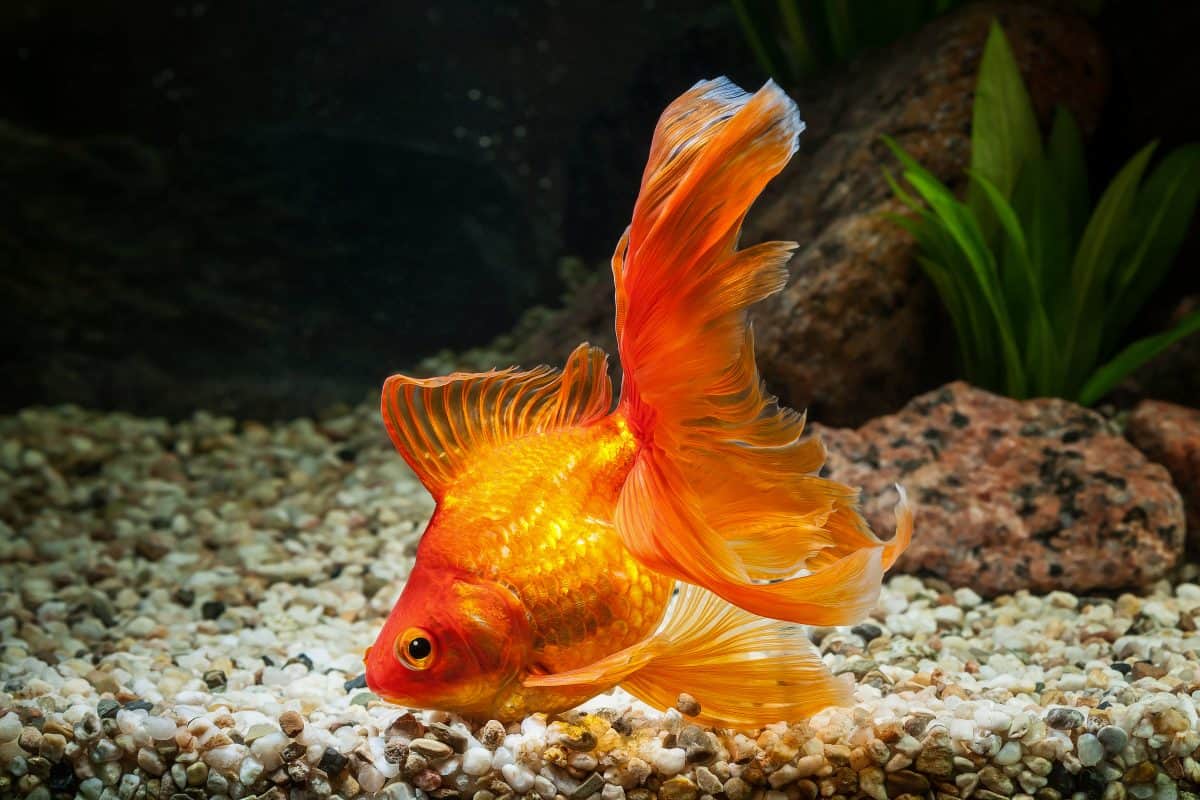
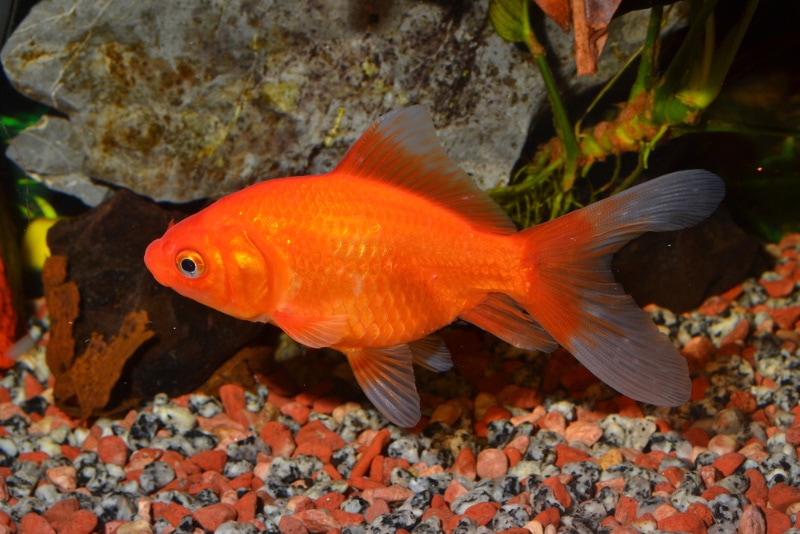
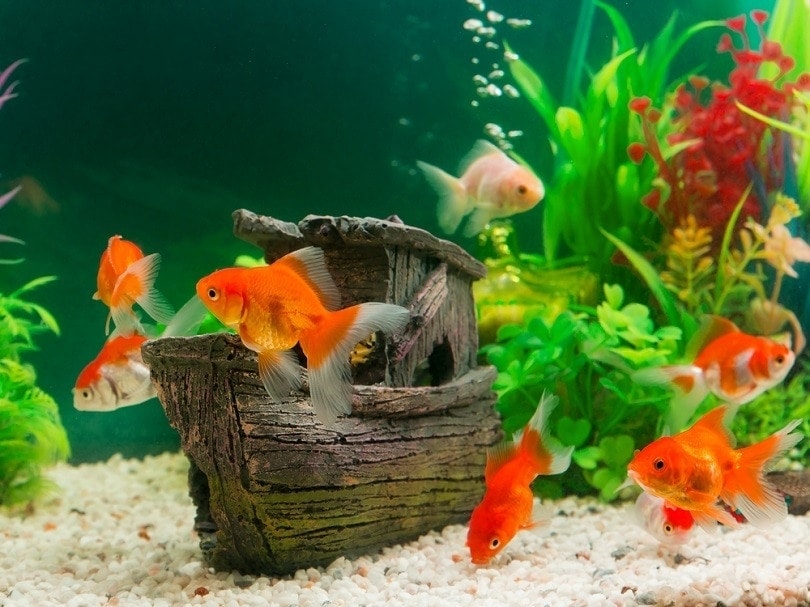
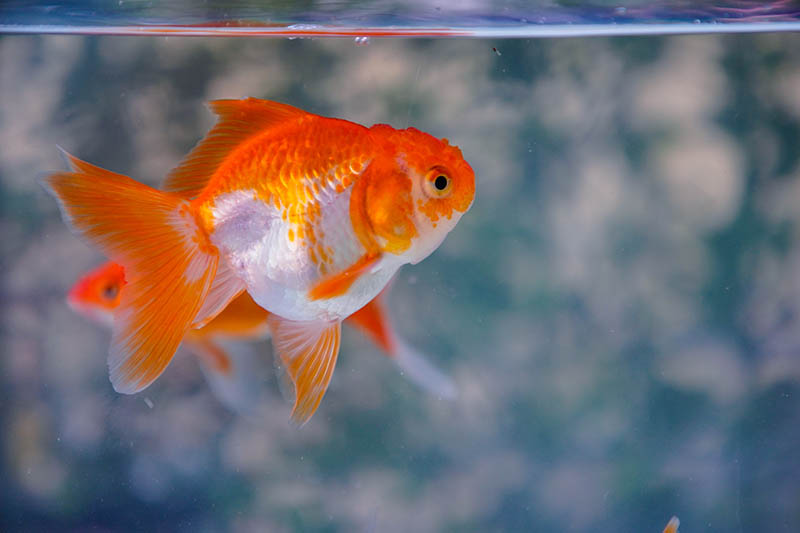
Goldfish can be found in many different shapes, sizes, and colors. One of the most fascinating varieties happens to be the Nymph goldfish, which is not necessarily a distinctive variety of goldfish. They have been around for decades and are a type of fancy goldfish with a single tail and anal fin caused by a recessive gene.
Although you might be drawn to the Nymph goldfish’s appearance at first, their sociability and ease of care are just as captivating.
Nymph Goldfish Overview
| Size: | Up to 12 inches long |
| Lifespan: | 10 – 15 years |
| Similar Breeds: | Oranda, Ryukin, and Fantail |
| Suitable for: | All goldfish keepers |
| Temperament: | Peaceful and social |
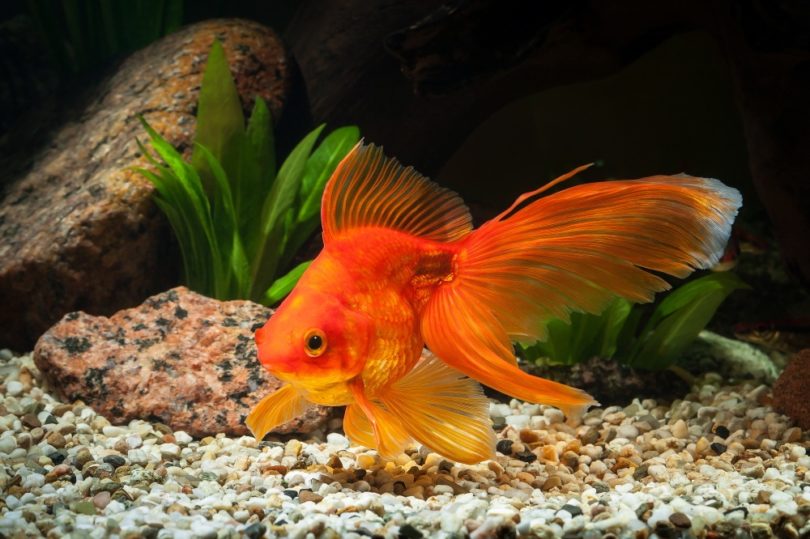
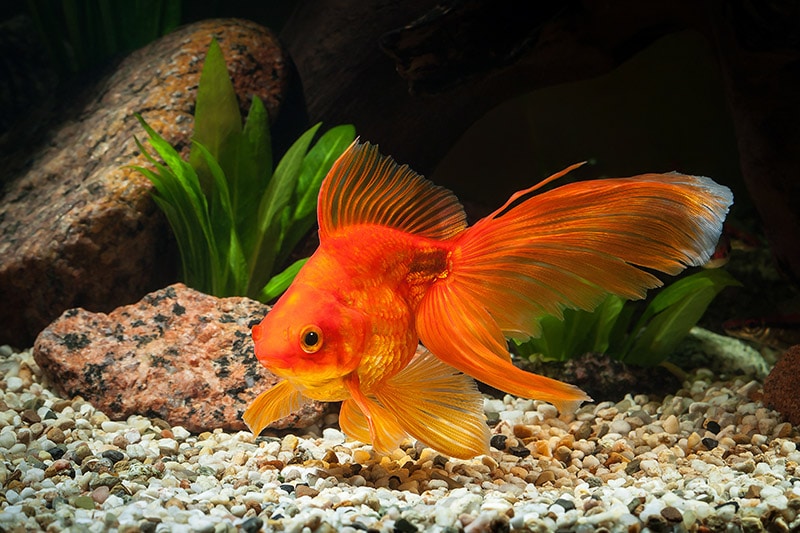
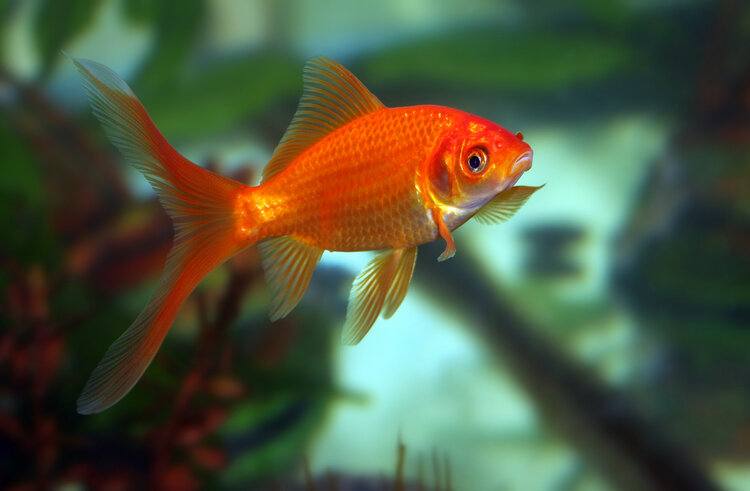
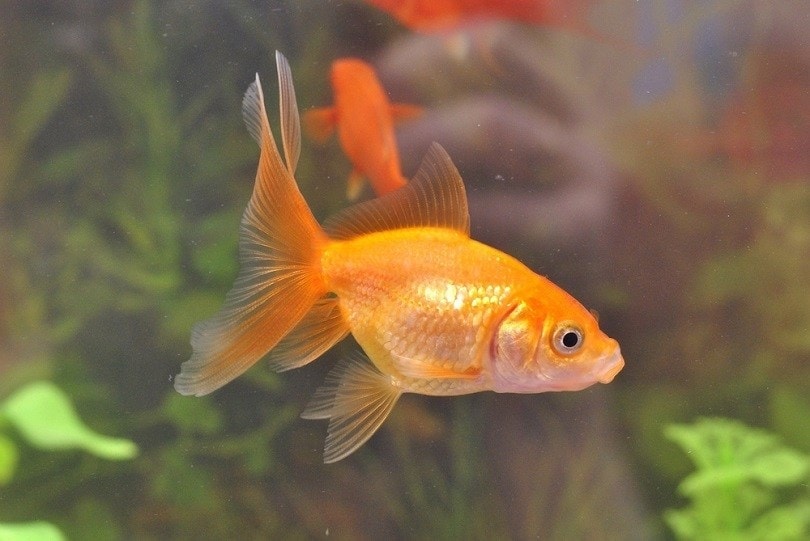
Most Nymph goldfish are believed to be a mix between the popular Fantail and Veiltail goldfish. They usually have the classic egg-shaped body of the Fantail and the long fins of the Veiltail goldfish. It is also common to find them with shorter fins and a more elongated body depending on which goldfish varieties they are mixed with.
Nymph goldfish can be found in an assortment of colors which allows them to liven up aquariums. They are an overall hardy and adaptable fish that are suitable for all goldfish keepers regardless of their experience level.
So, what exactly does the Nymph goldfish’s care entail? This article will tell you everything you need to know.

Nymph Goldfish Characteristics
How Much Do Nymph Goldfish Cost?
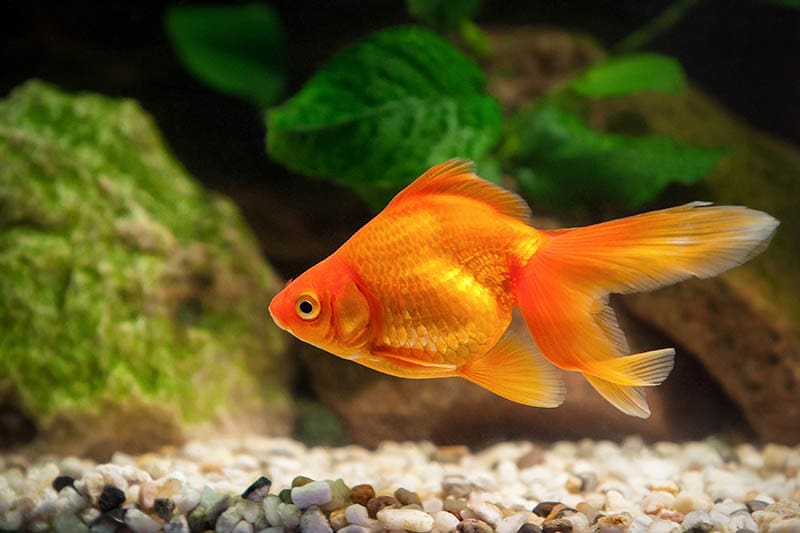
The exact date the Nymph goldfish was created is somewhat of a mystery. However, we do know that they originated from the same ancestors as any other variety of goldfish. Nymph goldfish originate from China thousands of years ago where they were selectively bred from wild carp.
Centuries of selective breeding by ambitious goldfish breeders have led to the development of over 100 varieties of goldfish. Some varieties are rarer than others, usually due to their availability, appearance, and breeding level. However, the Nymph goldfish is not a very rare fish. They are widely available at most pet stores and online retailers, often selling for a low price.
Nymph goldfish are created from fancy goldfish with double tails, and their single-tail fin is created from an undesirable recessive trait. Due to this, most Nymph goldfish are not qualified for shows and are often culled. This is why you shouldn’t expect to pay much for a Nymph goldfish, and they usually sell for around $5 to $35.
Sociability of the Nymph Goldfish
Do These Fish Make Good Pets?
Nymph goldfish can make fantastic pets for those who want a hardy goldfish with a classic fancy goldfish appearance. Their care level is suitable for both new and experienced goldfish keepers, and they do not have many specific care requirements.
Keep in mind that some Nymph goldfish have long and flowy fins that are very delicate. Their fins can easily be damaged by aggressive tank mates, certain diseases, and sharp aquarium decoration. You will need to make sure that their aquarium only has smooth substrates, plants, filters, and decorations to prevent any fin injuries.
Nymph goldfish only require three basic things to be healthy—good water quality, a spacious tank, and a balanced diet. They're relatively easy to care for and are not very demanding pets when their basic needs have been met.
Does This Fish Make a Good Tankmate?
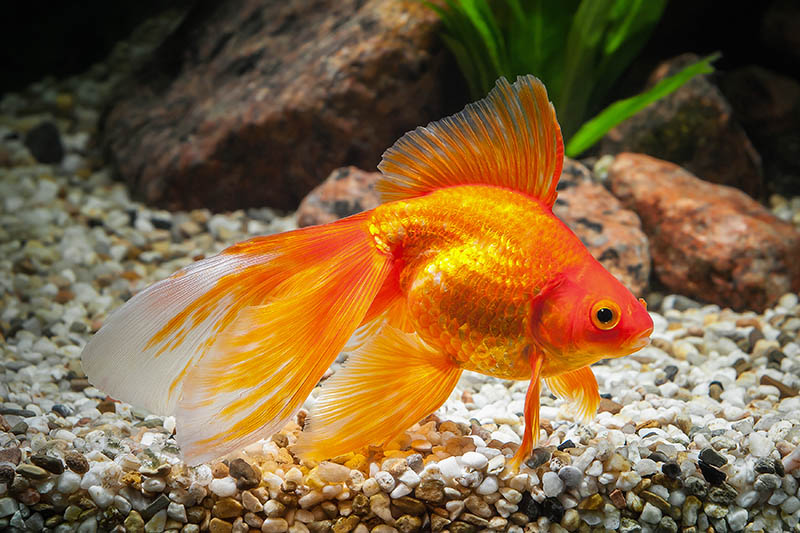
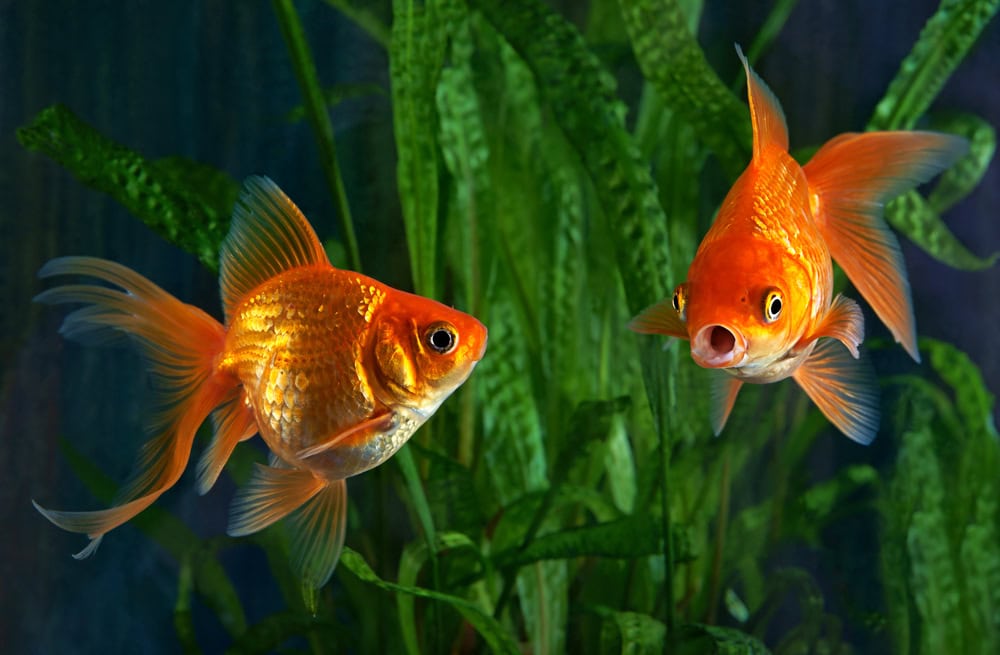
Nymph goldfish are highly social and need to be kept with other goldfish. You ideally want to keep them in pairs or groups of other fancy goldfish rather than ones with streamlined bodies. Certain Nymph goldfish are not the best nor fastest swimmers because of their long and heavy fins. They can be slow swimmers and do not socialize well with fast and agile streamlined goldfish, such as the Comet.
You will find that streamlined goldfish are often the first to reach and eat all of the food. Nymph goldfish may be too slow to compete with streamlined goldfish for food, which can cause nutritional issues. Furthermore, Nymph goldfish are not the best option for outdoor ponds which can house streamlined goldfish. They are better off in an indoor fish tank, where they are protected from harsh conditions.
Nymph goldfish should not be housed with any tropical, carnivorous, small, or aggressive tank mates. They are peaceful goldfish and the best tank mates for them are other fancy goldfish like the Veiltail, Lionhead, Ranchu, Oranda, and Fantail. Alternatively, you can keep Nymph goldfish with Mystery or Nerite snails.
Poor tank mates for Nymph goldfish include Betta fish, Cichlids, Plecostomus, and certain catfish. Shrimp are not a good tank mate for Nymph goldfish, since they will be eaten in a matter of days.

Care Guide & Tank Set Up
The minimum recommended tank size for a Nymph goldfish is 20 gallons of water. When adding more goldfish into the tank, an additional 5 to 10 gallons is encouraged. Nymph goldfish should only be kept in rectangular fish tanks with more horizontal swim space. They should never be kept in small bowls or vases, which are considered unsuitable permanent living conditions for them.
Water Quality, pH, & Temperature
| Water Temperature: | 65° – 75° Fahrenheit (18° – 24° Celsius) |
| pH Range: | 0 – 8.0 |
| Water Hardness: | 80 – 160 ppm |
| Ammonia: | 0 ppm |
| Nitrite: | 0 ppm |
| Nitrate: | Below 20 ppm |
Nymph goldfish are cold or temperate water fish that do not need a heater in most indoor fish tanks. They have a wide temperature range and aren't too fussy over a gradual drop in temperature over a few hours. They require well-maintained water and a tank that has been fully cycled with no traces of ammonia or nitrite.
Slight traces of ammonia and nitrite are dangerous for Nymph goldfish, and their long fins show burn marks from poor water conditions easily. The nitrate level in their tank is tolerable up until 20 ppm before you need to do a prompt water change. However, you might start noticing issues at around 15 ppm.
If you're a new or experienced goldfish keeper who’s struggling to figure out the best temperature for your goldfish family, check out our best-selling book on Amazon, The Truth About Goldfish, which covers everything about tank maintenance practices, maintaining optimum fish health, and more!
This crucial aspect of the tank setup could be affecting your pet’s health more than you suspect. which
Substrate
A substrate is optional in Nymph goldfish tanks, and there are many suitable options. Sand, quartz, fine gravel, and marbles can be safely used as a substrate. You generally want to avoid any substrates that alter the water pH, contain colorful dyes, or are large enough to get lodged in their mouth. Some Nymph goldfish keepers simply prefer to keep the bottom of the tank bare. Plus, bare-bottom tanks are easy to keep clean and any poop and debris can easily be removed during a water change.
Plants
You can grow various live plants in a Nymph goldfish tank. There are also many benefits to growing live plants in goldfish tanks, including improved water quality, algae control, and oxygenation. Live plants create a natural environment for Nymph goldfish that they can explore while offering them shelter when they feel vulnerable.
The best live plants for a Nymph goldfish tank are ones that thrive in the same water conditions. Water sprite, java moss, hornwort, anubias, and Amazon swords are some great live plants for Nymph goldfish.
If you do not have a substrate in your Nymph goldfish’s tank but still want to grow live plants, you have the option of growing them in pots. This can either be a heavy pot made from aquarium-safe materials, or the little black basket they are sold in.
Lighting
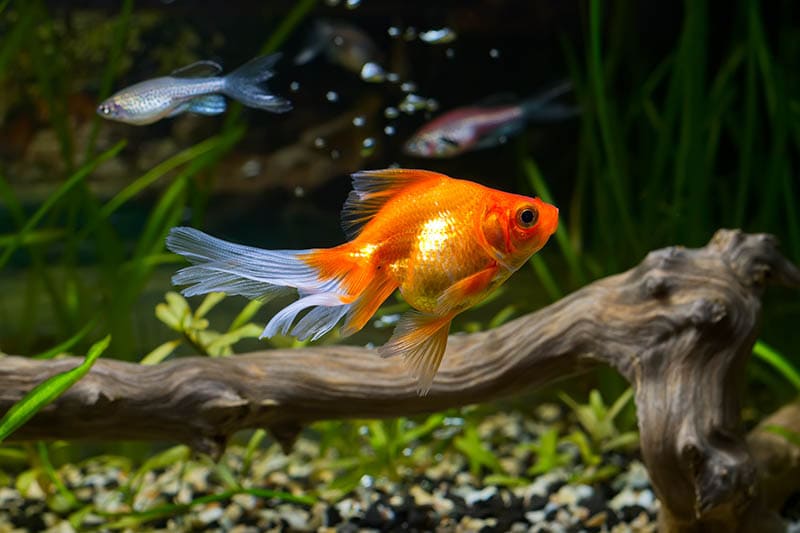
Lighting is critical for any live plants in your Nymph goldfish’s tank and creates a natural day and night cycle. You generally want to use a low to moderately bright overhead light in their tank. A gentle white, yellow, or pink light is preferred over blue or red lighting for visual purposes.
You might struggle to see your Nymph goldfish in a tank that is illuminated with unusual colors. Regardless, you will need to keep the lighting on during the day for around 6 to 12 hours. Any lighting needs to be turned off at night and your Nymph goldfish needs total darkness to rest. Nymph goldfish do not require any night lights that mimic moonlight, and they are not stressed by nighttime darkness.
Filtration
Filtration is key to good water quality in Nymph goldfish tanks. Nymph goldfish require well-filtered water to thrive and grow. However, their filter should not have a very strong suction or output flow. A Nymph goldfish has long fins that could get suctioned and damaged from a strong filter intake.
It would be better to keep them in tanks with either a sponge or an under-gravel filter instead. Sponge filters do not create a strong suction that could trap a Nymph goldfish’s fins. Whereas under-gravel filters do not produce a very strong current or pose a trapping risk to their long fins.
You can use most types of filters in tanks with Nymph goldfish with short tail fins.

Things to Know When Owning a Nymph Goldfish:
Food & Diet Requirements
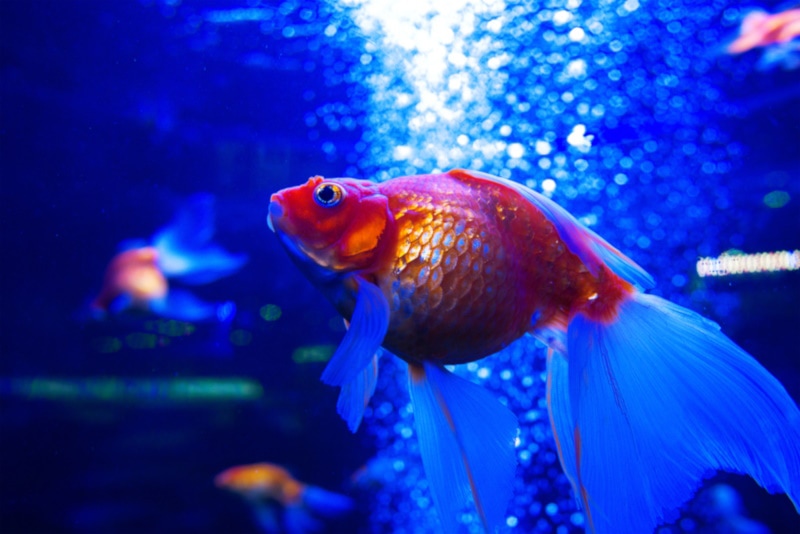
Feeding a Nymph goldfish is no different than other varieties of goldfish. They are naturally omnivores and opportunistic feeders that thrive on a balanced and varied diet. Granules, pellets, or flake foods should be offered to Nymph goldfish daily and as a staple source of food. They should get most of their nutrients from a commercial food specifically formulated for goldfish.
Their diet will influence their growth, health, and overall immunity. This makes it important for Nymph goldfish to eat nutritious foods and provide them with the essential vitamins and minerals they need.
When choosing a staple food for Nymph goldfish look for one that offers protein, fat, and fiber from both animal and plant-based ingredients. You can supplement their diet with live or freeze-dried foods like bloodworms, daphnia, brine shrimp, and crickets. It is unnecessary to include feeding those foods every day, and up to four a week is recommended.
Nymph goldfish can benefit from blanched vegetables like shelled peas, zucchini, and broccoli one to three times a week. Any leftover food should be removed from the tank within 10 minutes as decomposing fish food can be detrimental to the water quality.
Size & Growth Rate
Most Nymph goldfish grow between 10 to 12 inches in size. They do not get as big as streamlined goldfish, although they have similar growth rates. Nymph goldfish grow fairly quickly under the right conditions. You can’t expect them to grow fast or large if they are kept in small aquaria like bowls and vases. However, you can expect Nymph goldfish to grow at a normal rate in a spacious tank with ideal water parameters and a healthy diet.
Varieties
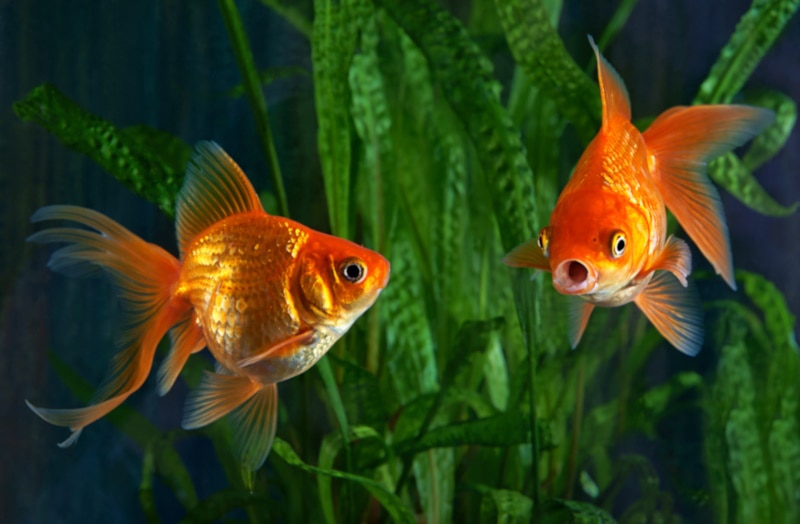
When breeding double-tail fancy goldfish together, some of the offspring may have a recessive trait that causes them to have a single caudal (tail) and anal fin. However, they still have the standard egg-shaped body seen in most fancy goldfish.
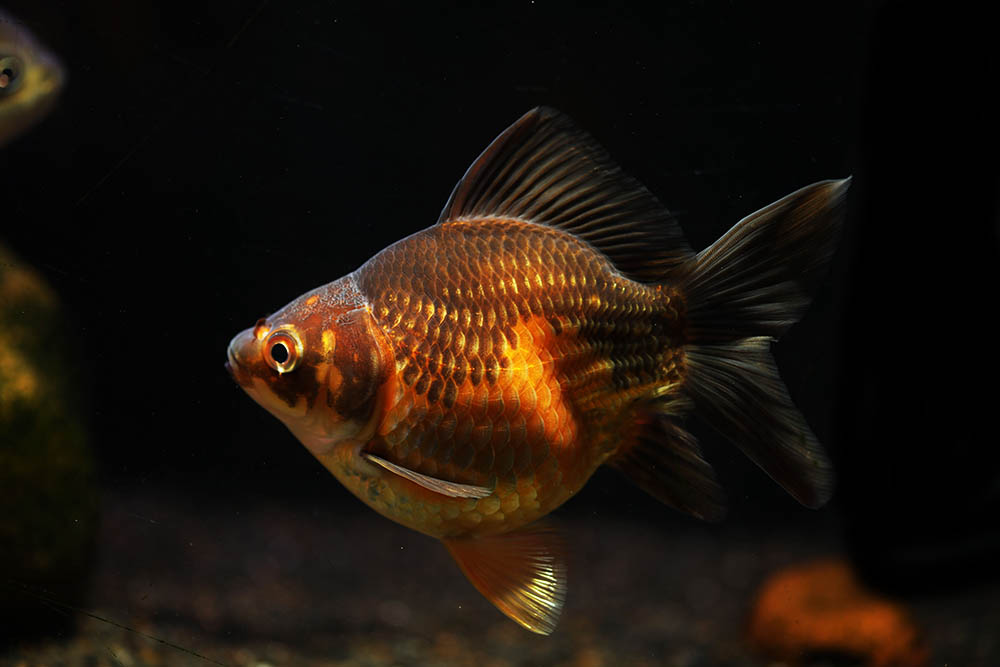
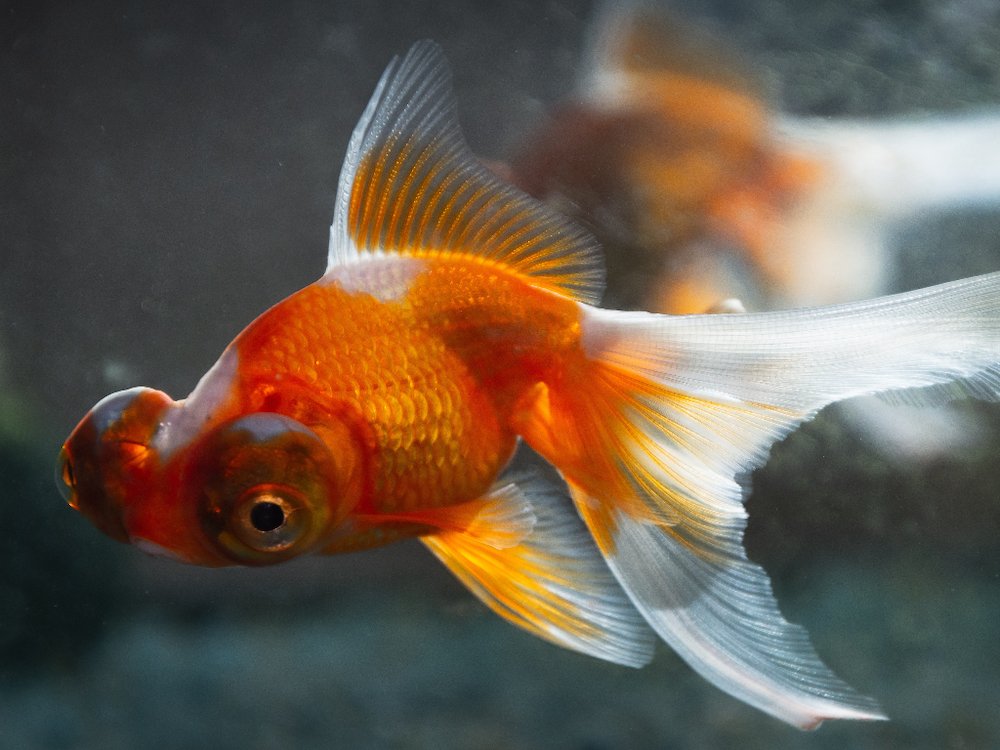
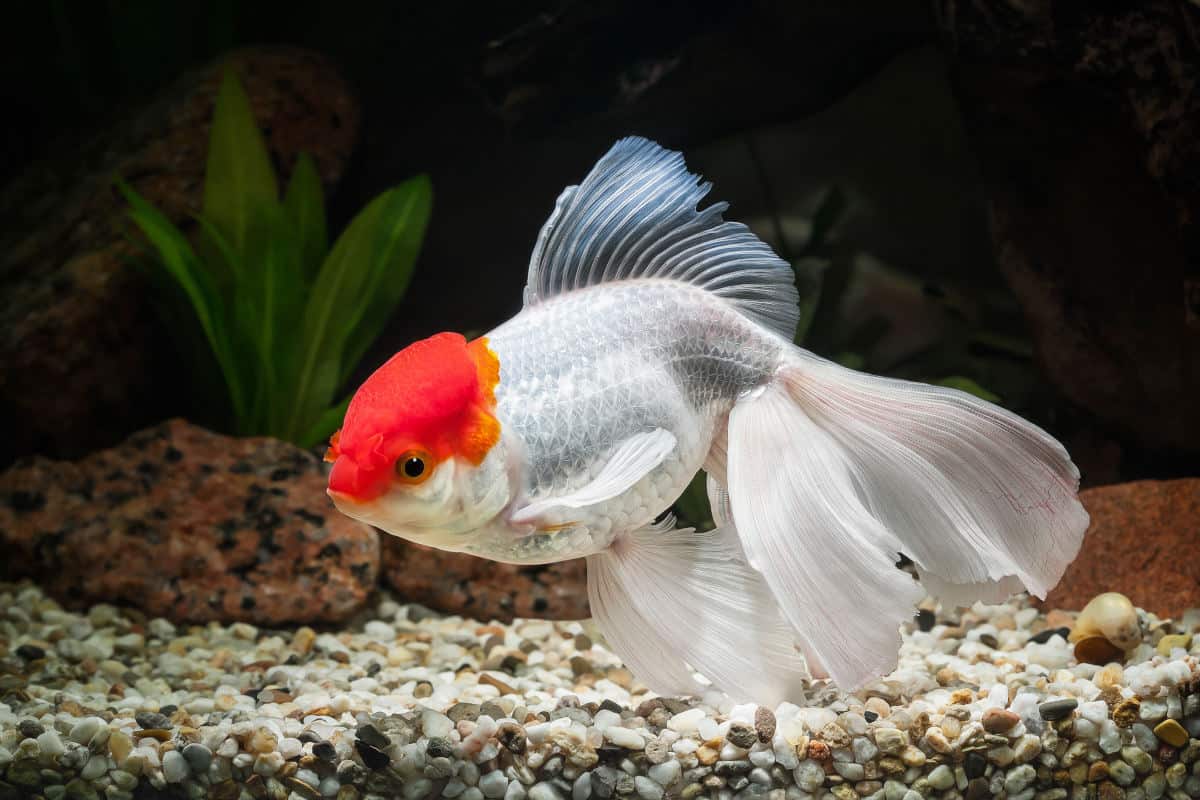
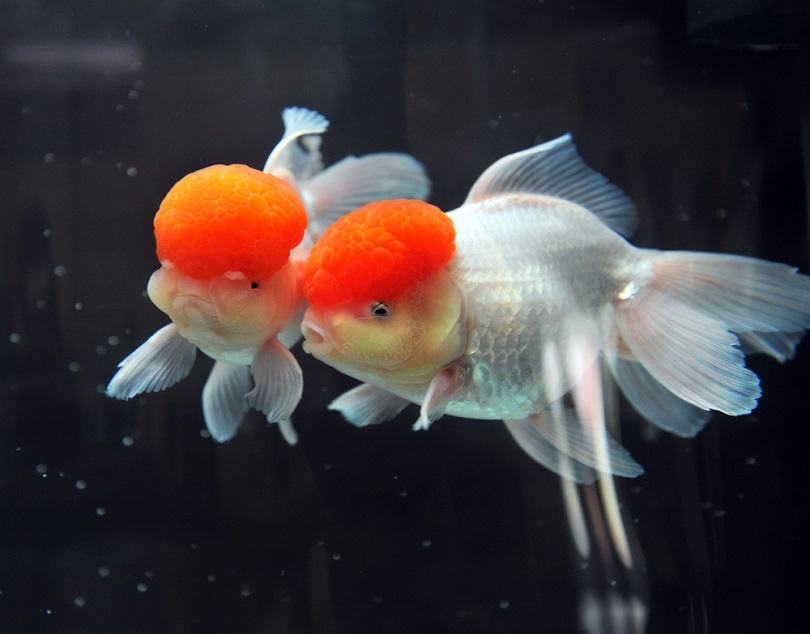
Nymph goldfish are usually a mix between a Fantail or Veiltail goldfish, but they can also be mixed with Telescope, Black Moor, or Ryukin goldfish. They are not considered a distinctive variety of goldfish, but rather the result of a recessive trait passed from double-tail goldfish. Their appearance can vary depending on which varieties of goldfish they are mixed with. Nymph goldfish can have short, medium, or long fins, and some variations have a rounder stomach than others. They have a triangular dorsal fin and a pair of pectoral and ventral fins.
Lifespan and Health Conditions
The average lifespan of a Nymph goldfish is around 10 to 15 years, similar to other varieties of fancy goldfish. Most Nymph goldfish are hardy and generally healthy fish. Regardless, they are still prone to the same health conditions as any other goldfish.
Male vs Female
The main differences between male and female Nymph goldfish are their appearance. Males generally have pointier and larger fins than females. They have a concave vent, and females have a convex vent that protrudes slightly. Female Nymph goldfish will have a more rounded abdomen than males, which can become uneven and swollen during the spawning season.

3 Little-Known Facts About Nymph Goldfish
1. The Nymph goldfish is not a distinctive variety of goldfish itself.
Instead, they are the result of a recessive trait passed down from double-tail goldfish. They can be a mix between most double-tailed fancy goldfish varieties.
2. Nymph goldfish are often culled by reputable goldfish breeders.
However, most goldfish breeders that supply to pet stores do not have the time to cull them. This is why Nymph goldfish are commonly found in large-chain pet stores and are inexpensive.
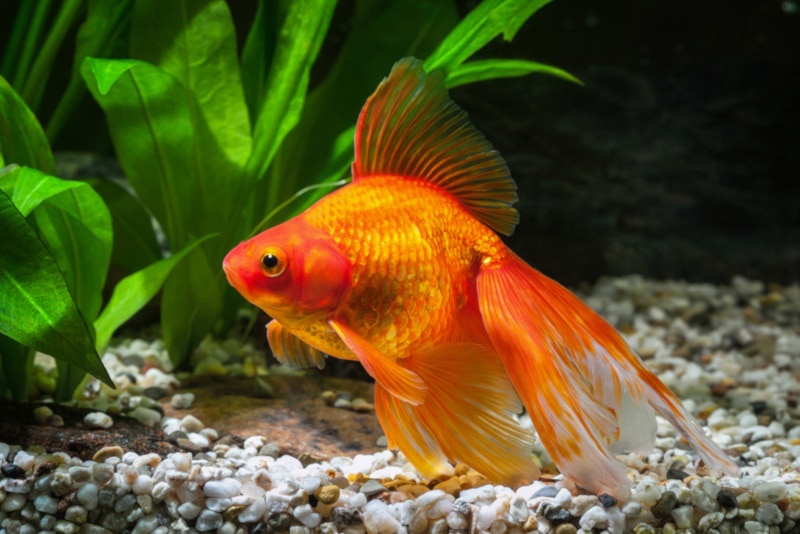
3. The most common variation of Nymph goldfish is a mix between a Fantail and Veiltail goldfish.
This enchanting hybrid showcases the elegant grace of the Veiltail's flowing fins, harmoniously fused with the endearing charm of the Fantail's dual tail lobes.

Final Thoughts
The Nymph goldfish is a popular fancy goldfish that can be distinguished by its egg-shaped body and single tail and anal fin caused by recessive genes. You can find Nymph goldfish in a range of different colors, including red, white, orange, black, and yellow. They are relatively hardy and healthy fish but still require a spacious and well-maintained aquarium to thrive.
If you decide to get a Nymph goldfish, make sure that you can keep them in a large tank and with at least one other fancy goldfish.
Sources
Featured Image Credit: Chaikom, Shutterstock
Get Hepper In Your Inbox


Pet care tips from our vets and experts, straight to your inbox.
You may opt-out at any time. View our Privacy Policy for more information.

Sarah is residing in South Africa with her partner and pets. She currently is interested in veterinary science and ichthyology, which she wants to study alongside her main passion: pet content writing. Sarah has over 60 fish including goldfish, tropicals, shrimp, and snails. She also keeps hamsters and a tarantula and wishes to provide quality content for readers and allow others to learn from her knowledge and experience. Sarah has much experience in all aspects of pet care, and providing the world with knowledge on ethical pet ownership is her lifelong dream.
Join the conversation
Ask a question, share your story, or send private feedback.