Hepper is reader-supported. When you buy via links on our site, we may earn an affiliate commission at no cost to you. Learn more.
Pit Bull vs Mastiff: The Notable Differences (With Pictures)
In this article
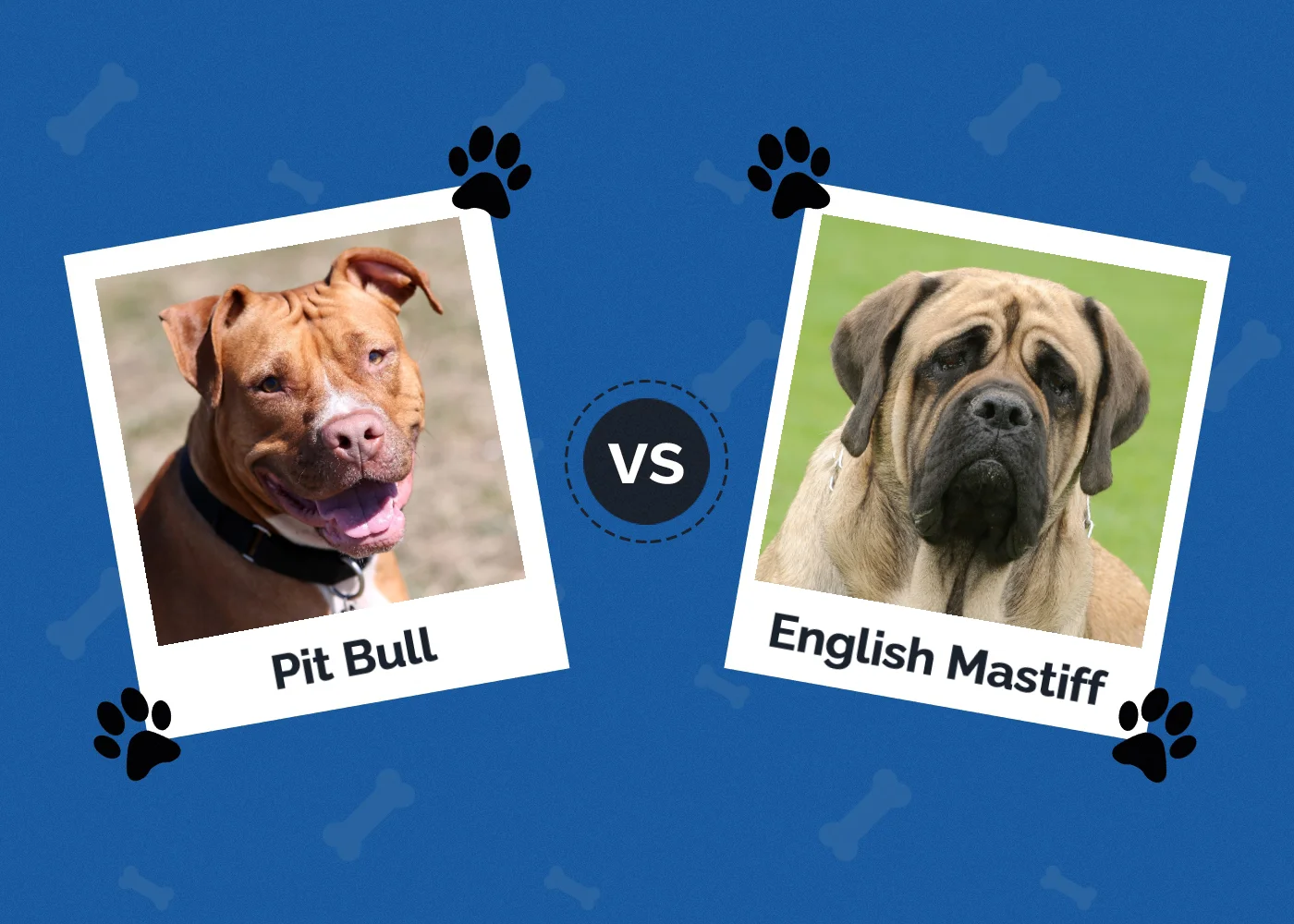
When it comes to choosing a dog, it's essential to consider several factors, such as temperament, size, energy level, and exercise requirements. The Pit Bull and Mastiff are similar in many of these aspects, which is why they're often compared as potential family pets.
Both breeds are known for their loyal, affectionate, and protective natures, while their strength and athleticism are also similar. Despite their similarities, they also have some unique characteristics and traits that may make them a good fit for specific lifestyles and families.
In this article, we'll explore the differences between these breeds to help you make a better decision. Keep reading to learn about the training, exercise, nutrition, health, and diet of Mastiffs and Pit Bulls.

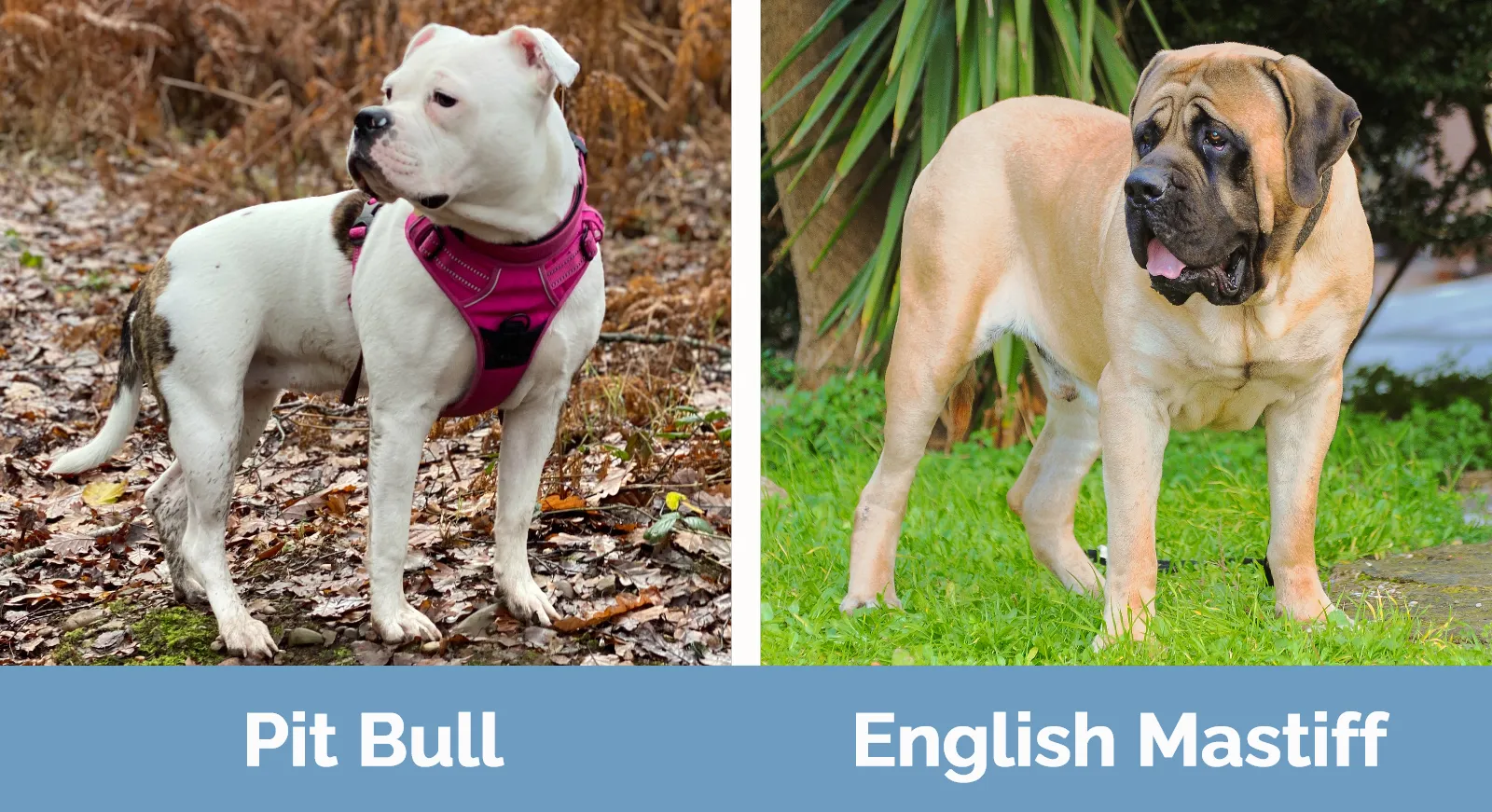
Visual Differences
At a Glance

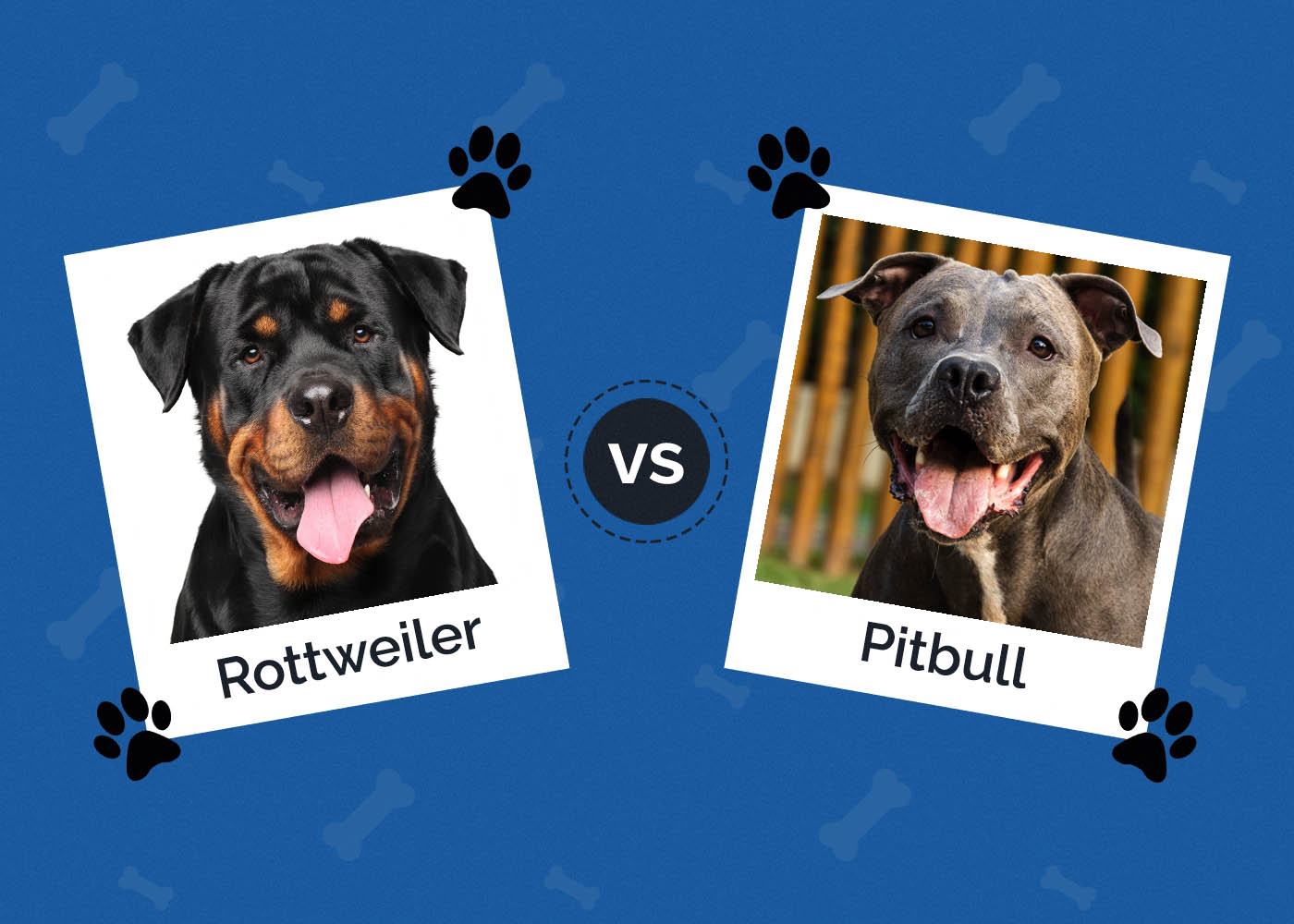
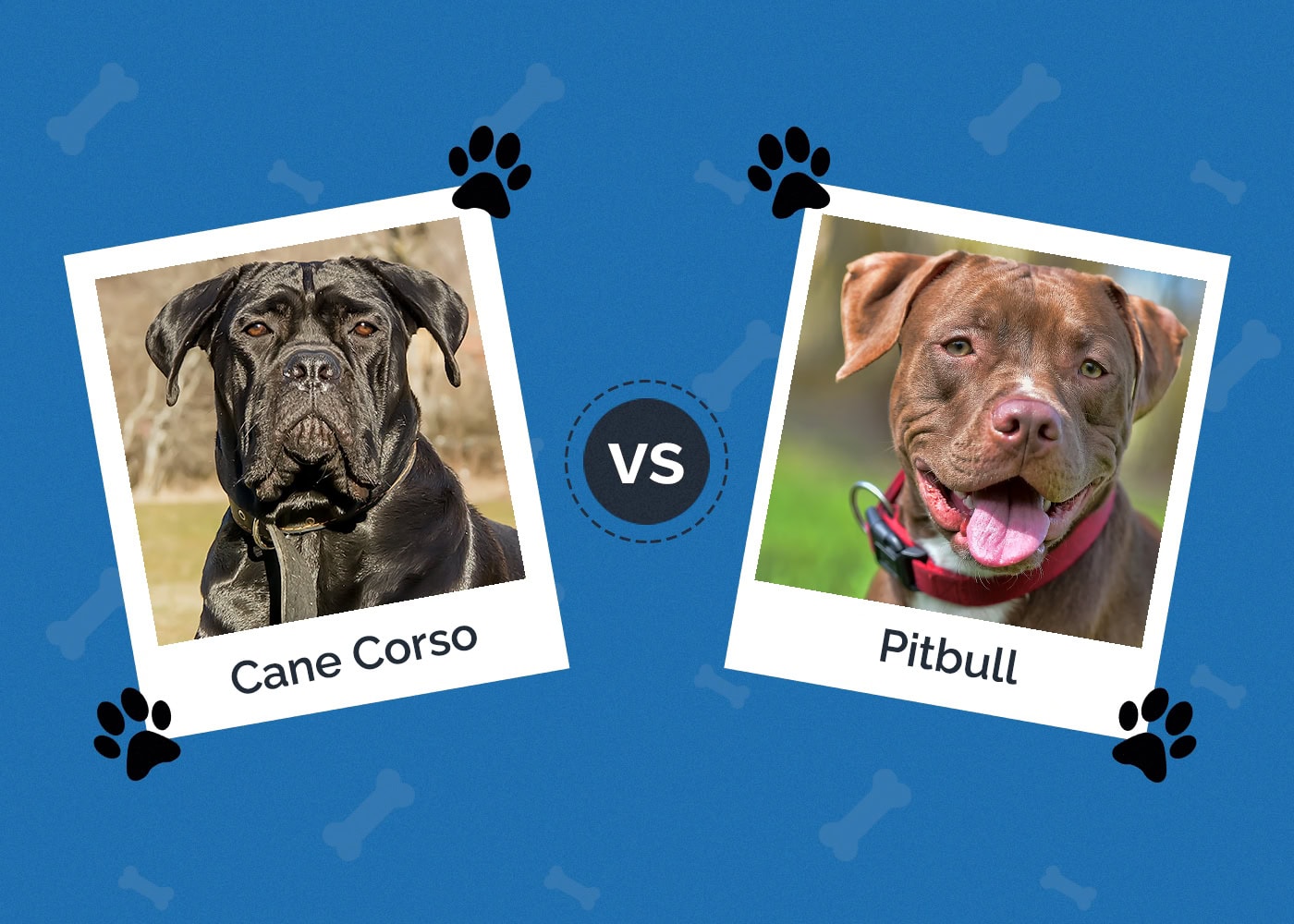
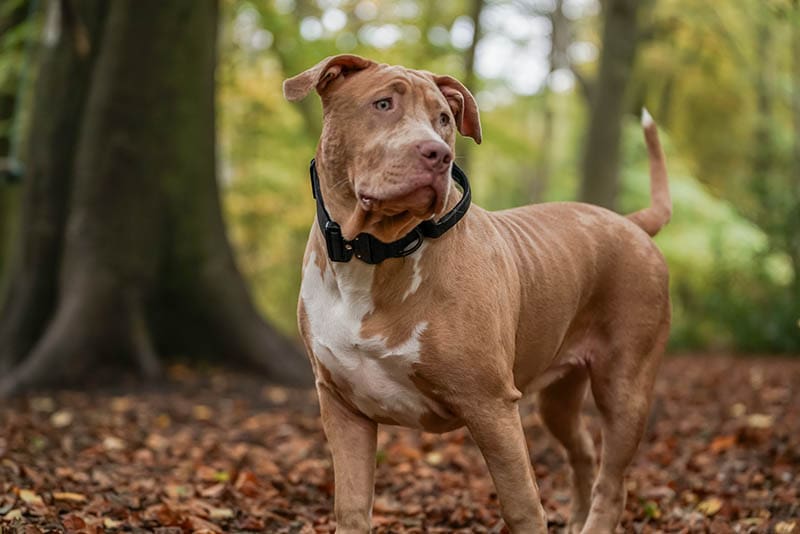
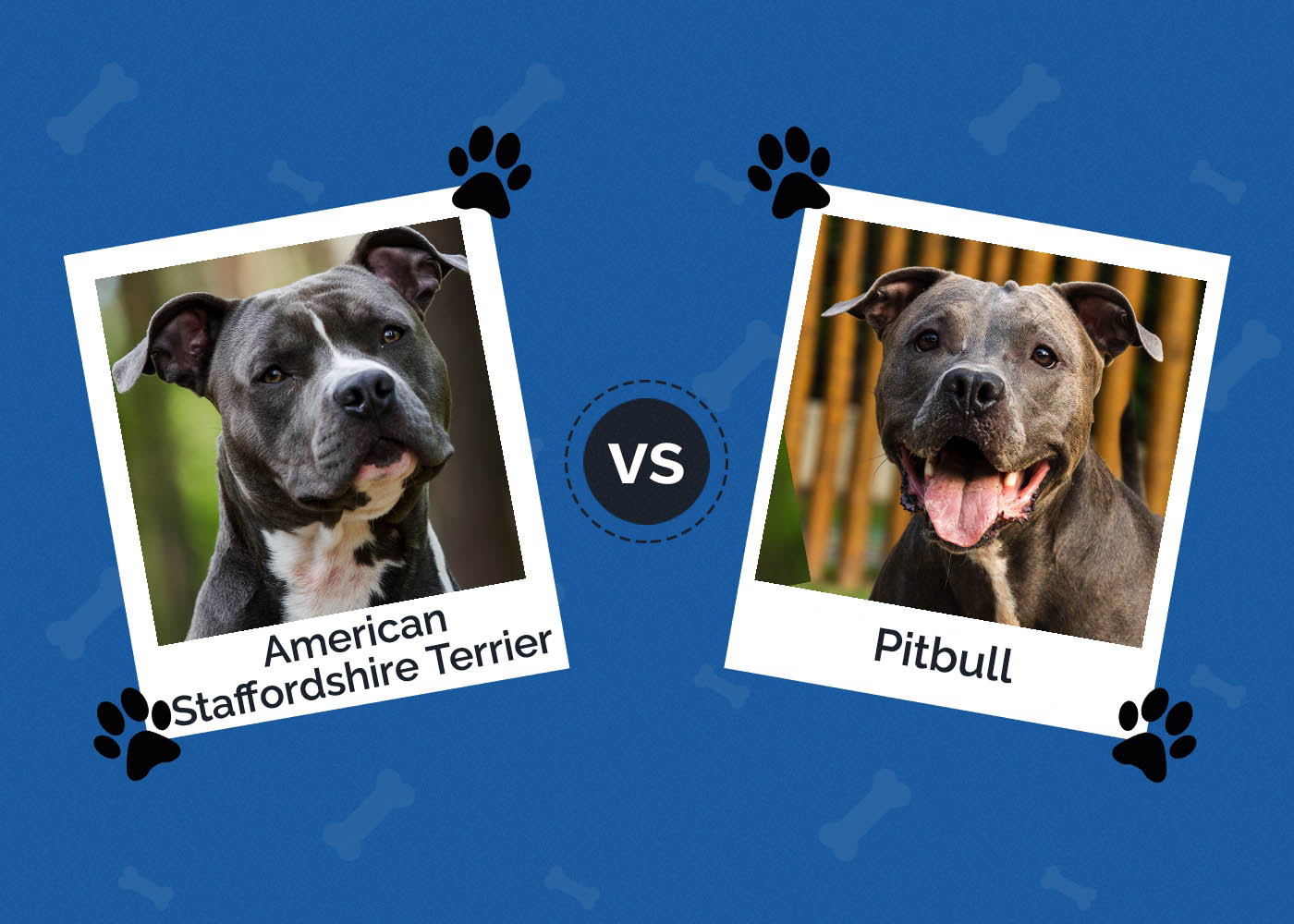
Pit Bull Overview

Undoubtedly, the Pit Bull has a complex and controversial history. Its origins date back to the 1800s due to crossbreeding of Terriers and Bulldogs. Unfortunately, these dogs were bred for bull baiting, a cruel blood sport in which dogs were made to attack bulls.
After banning this sport in the 19th century, Pit Bulls were used in dog fighting, further damaging their reputation. Unfortunately, as dogfighting became more popular, Pit Bulls became recognized as an aggressive and unapproachable dog breed.
Throughout the 1900s, these dogs were targeted by breed-specific legislation aiming to ban or restrict their ownership. Although this breed is not inherently dangerous, the controversy and misconceptions surrounding Pit Bulls have stayed consistent in the US. In reality, these dogs are affectionate and loyal when well-trained and socialized.
Personality / Character
Pit Bulls have energetic and affectionate personalities. Despite popular belief, these dogs are incredibly loyal, friendly, and dependent on human attention. When trained well, the Pit Bull can be the ideal family pet since they always use their enthusiasm and playfulness to make their owners laugh.
Their strong-willed personalities can make training difficult, but most dogs in this breed are eager to please their owners. With the proper training and socialization, Pit Bulls can also get along with children and other pets.

Health and Care
Unfortunately, Pit Bulls can be prone to a few health conditions. Hip dysplasia is a prevalent health condition in Pit Bulls, which causes painful symptoms and lameness in the hips. Allergies in Pit Bulls can result in itching and skin irritation.
These dogs can also be vulnerable to specific cancer types, such as mast cell tumors and lymphoma. In some cases, they may also develop a heart disease called dilated cardiomyopathy, which leads to heart failure.
Training
To train a Pit Bull correctly, you must practice positive reinforcement, patience, and consistency. While these dogs are brilliant and eager to please their owners, they can still be strong-willed.
By practicing positive reinforcement through praise, playtime, and treats, you have a better chance of maintaining your Pit Bull's obedience in the long run. Harsh or physical punishment will inevitably lead to aggressive behavior or fear.
Socializing your Pit Bull early on is also essential to prevent aggression toward other animals.
Exercise
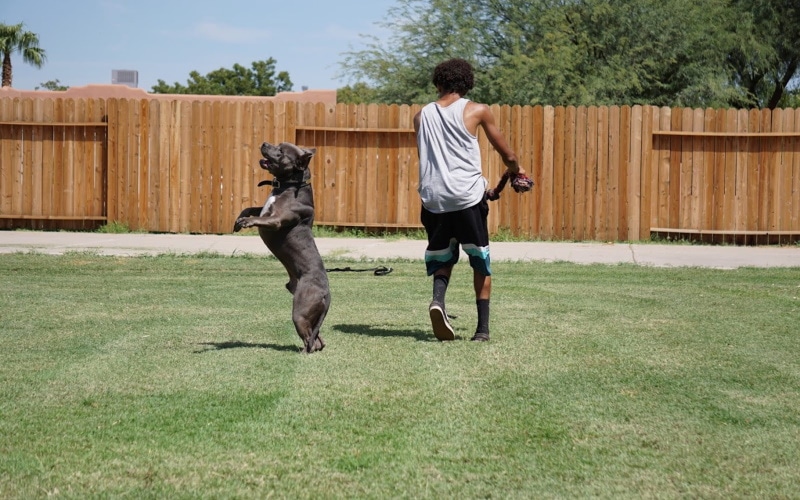
Pit Bulls are quite an active breed, requiring daily exercise to stay happy and healthy. These muscular and athletic dogs thrive on at least half an hour to 1 hour of exercise every day in the form of playtime, jogs, or brisk walks.
They also demand some level of mental stimulation through obedience training or puzzle toys. By ensuring your Pit Bull meets its activity requirements, you can prevent obesity, other health problems, and destructive behavior like digging or chewing.
Since these dogs love spending time with their owners, they can accompany you on your daily jog or hike. You must monitor their behavior in hot weather since this breed is prone to overheating.
Nutrition
Like any other breed, Pit Bulls thrive on a balanced, nutritious, and age-appropriate diet. These active and muscular dogs require high-protein meals to keep them going and maintain good muscle tone. When choosing a dog food, make sure that its main ingredient is meat.
You may feed them supplements such as glucosamine or fish oil to promote better joint health. Additionally, monitoring their calorie intake and only giving treats sparingly will allow owners to prevent obesity and associated health issues.

Suitable for:
Pit Bulls are suitable for those with years of experience owning and training dogs. To own a Pit Bull, you must be dedicated to its training and meeting its daily exercise requirement. Owning this energetic and powerful breed can be quite a responsibility.
These dogs are incredibly loyal and affectionate but also need a confident and experienced owner to lead them and ensure good behavior. If your children are too young to recognize aggressive behavior in dogs, a Pit Bull may not be a suitable pet for you yet.
Additionally, it's important to research your municipality's legislation to ensure that it's legal for you to own a Pit Bull. This breed is most commonly targeted by breed-specific laws in various counties in the US.
Pros
- Loyal and affectionate nature
- Excels in various dog sports
- Intelligent and easy to train
- Ideal guard dogs
- Easy-to-maintain coat
Cons
- Requires extensive socialization
- Illegal to own in certain cities
- Prone to allergies and hip dysplasia

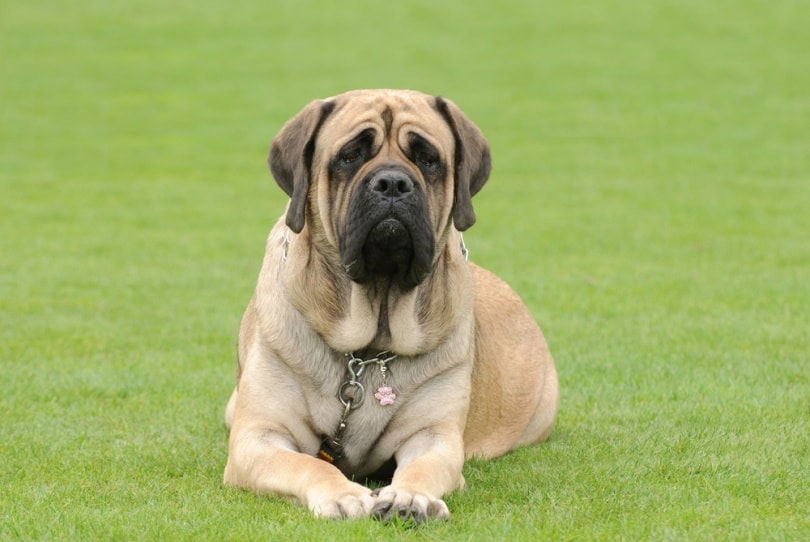
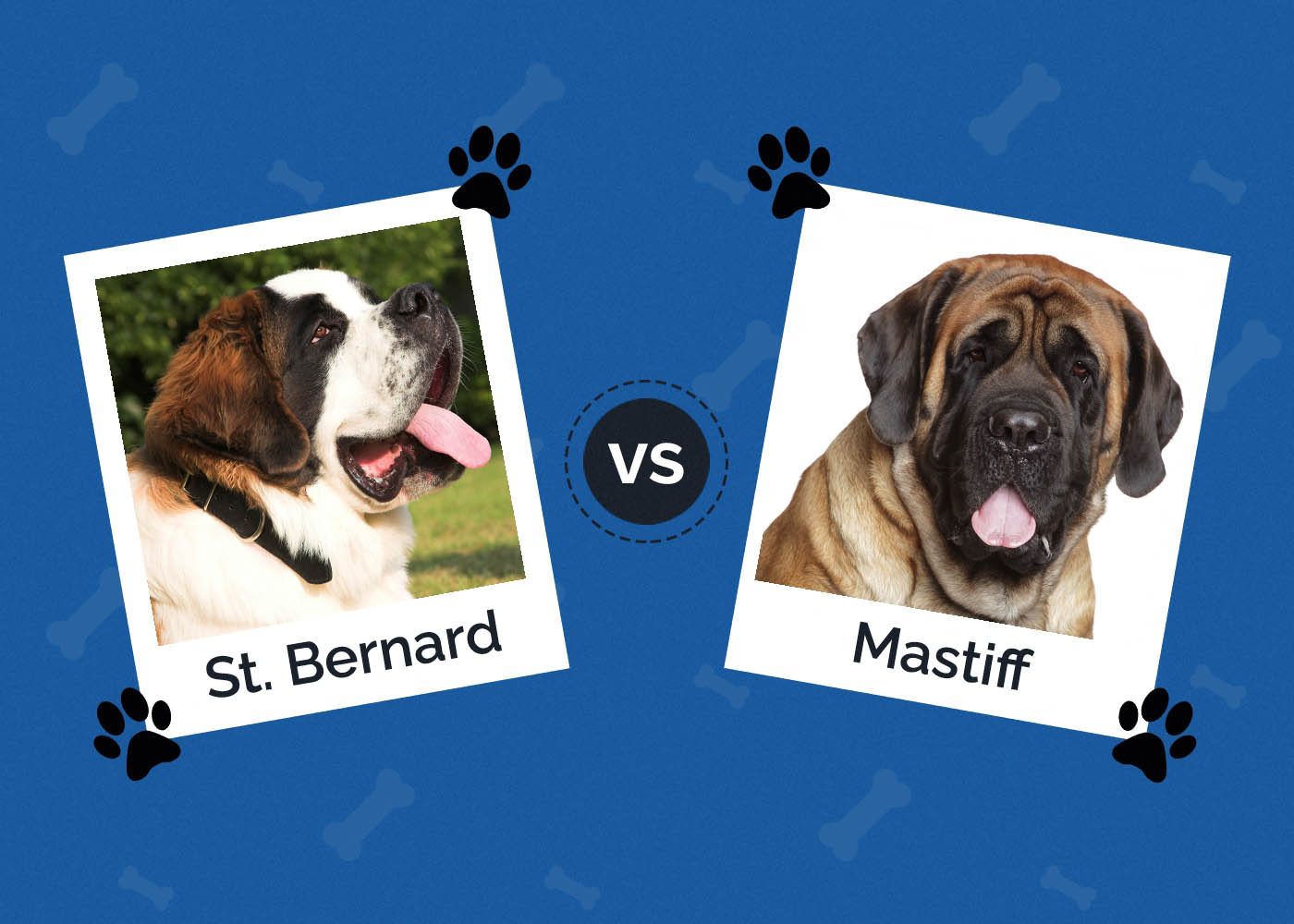
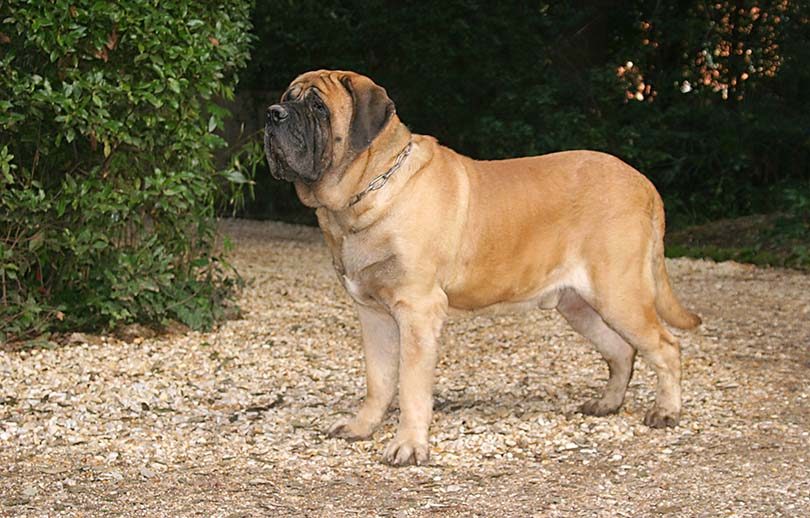
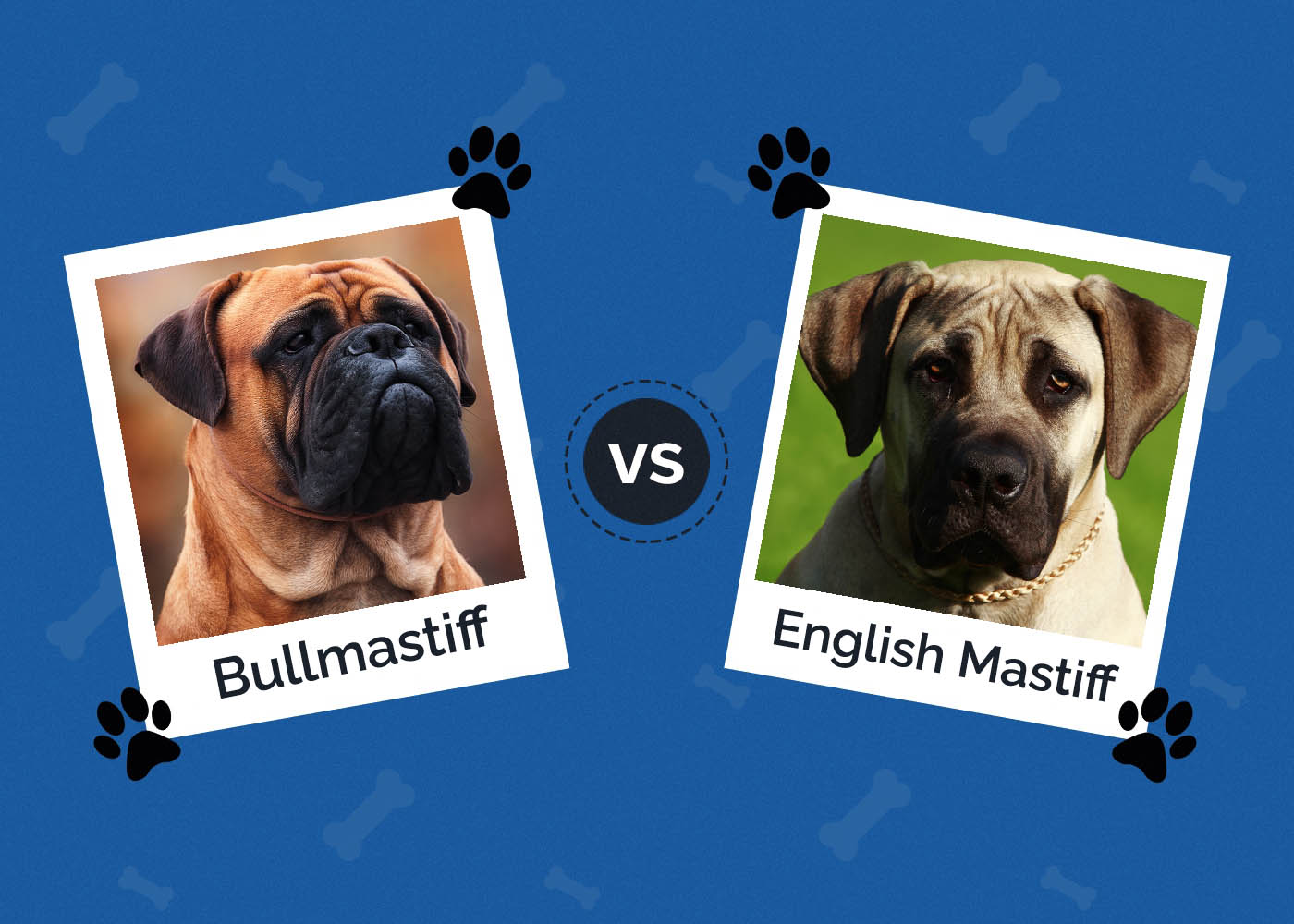
Mastiff Overview
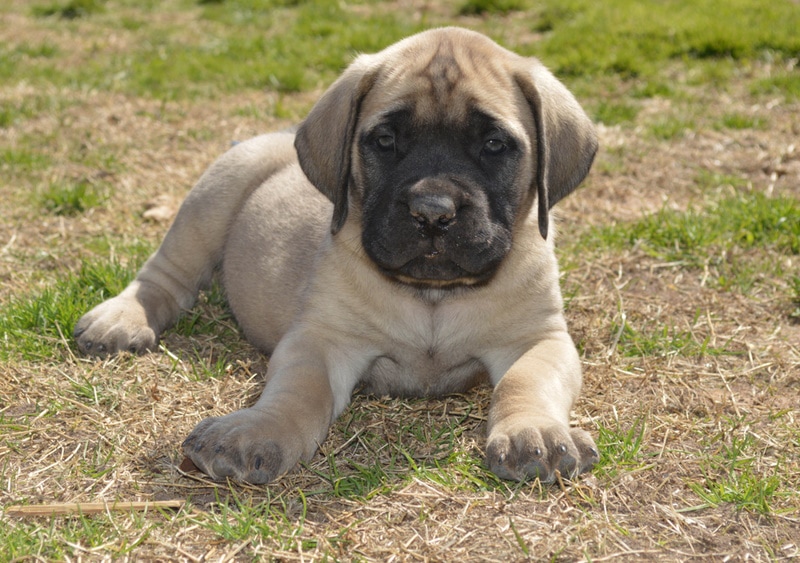
It's believed that Mastiffs originated in the Tibetan region of Asia, where they served as guard dogs for livestock and properties. The breed made its way to Europe through trade routes, where it was crossbred to create new variations, such as the Neapolitan Mastiff and Dogue de Bordeaux.
The English Mastiff was owned by the nobility and used to guard castles and estates. As the Middle Ages began, the breed fought in battle while also using their powerful jaws and strong nose to hunt boars and bears.
Due to a sharp decline in popularity, the breed nearly went extinct in the 19th century. However, a group of dedicated English breeders revived the breed and led to its recognition by the AKC. Today, Mastiffs are known for their family-friendly, calm, and loving nature, classifying them as gentle giants.
Personality / Character
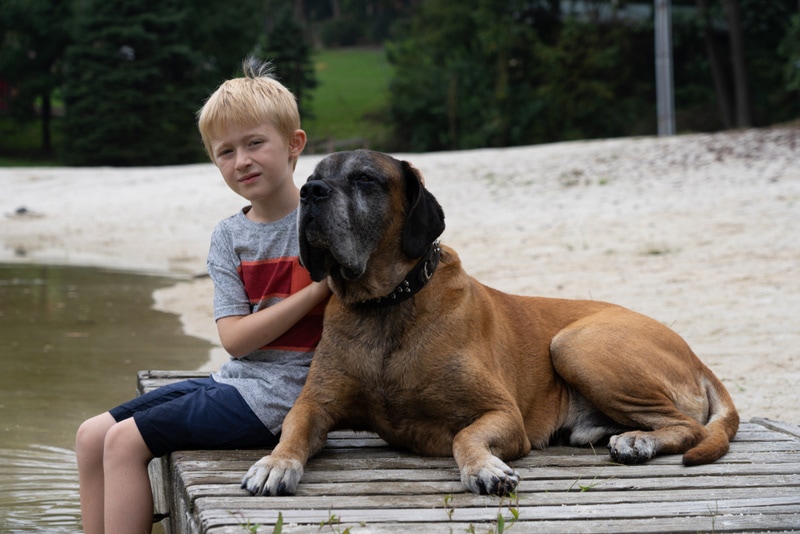
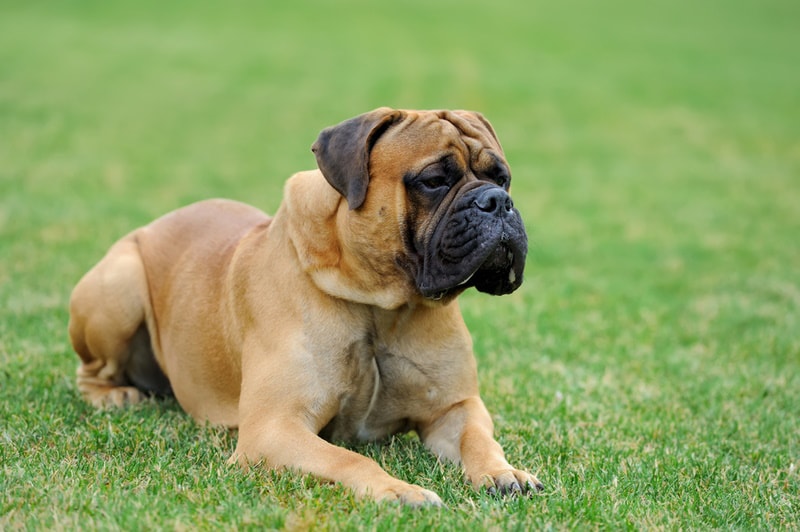
Mastiffs are generally calm and gentle dogs, which is why they can be excellent family pets. Their protective nature and large size also make them perfect guard dogs. These dogs are popularly described as gentle giants since they're surprisingly affectionate, considering their large size.
Well-behaved and easy-going, these dogs are entirely content with cuddling up to their favorite family member. Although they may be wary when introduced to strangers, you can implement early socialization to increase their comfort level in new environments.
Health and Care
Mastiffs are generally considered a healthy breed, but they can be susceptible to certain health problems. Hip dysplasia is common among Mastiffs, causing pain and lameness in the hips. This breed is also vulnerable to bloat, which can be life-threatening if untreated.
These dogs can also develop cardiomyopathy, a condition that inevitably leads to heart failure. By taking your Mastiff for regular vet check-ups, maintaining a healthy diet, and ensuring daily exercise, you can prevent many health problems in your pet.
Training
Training a Mastiff is definitely not easy, requiring a patient and consistent approach. Their strong-willed and stubborn nature makes them hard to train, so you'll need to implement positive reinforcement methods. That includes praise, playtime, and treats.
These dogs do not react well to harsh punishment, which only leads to aggression and fear. Mastiffs can also be wary of strangers and other animals, but you can prevent this with early socialization.

Exercise
Mastiffs don't have demanding exercise needs, but they still benefit from regular walks and moderate exercise on a daily basis. Since they aren't as active as other breeds, they're completely content lounging with their favorite family member.
Still, they need an hour of exercise every day to prevent obesity and maintain good muscle tone. These dogs enjoy short walks and light playtime, which is why they're the ideal pet for people with a low-key lifestyle.
Since Mastiffs can be prone to overeating, it is crucial to avoid over-exercising in hot weather.
Nutrition
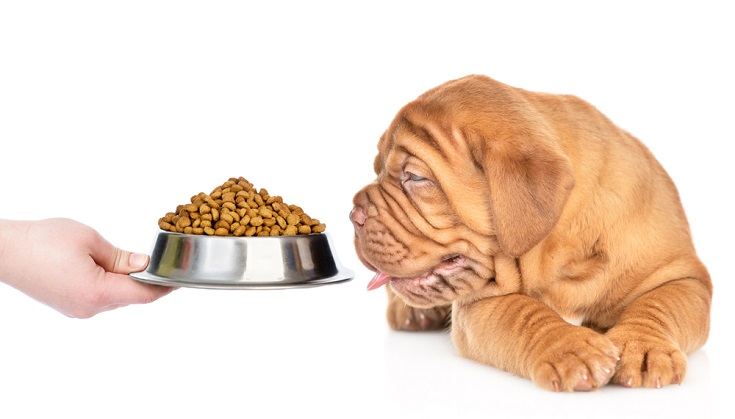
Mastiffs also benefit from a balanced, nutritious, and appropriate diet for their age and activity level. Since it's a large breed, it's crucial that their diet is high in protein to maintain their muscle mass. High-quality dog food for your Mastiff must contain meat as its primary ingredient.
Other than that, you can improve your dog's joint health by feeding supplements such as glucosamine and fish oil. Obesity and associated health problems can also be avoided by monitoring their calorie intake and giving treats in moderation.
Suitable for:
A Mastiff is suitable for those that have experience with owning and training large dog breeds. You must have the right time and resources to provide your Mastiff with the attention and care they need. Otherwise, they will retort to destructive behavior.
Although they are known for their loyal and affectionate nature, these dogs can be independent and stubborn while training. The ideal owner for this pet must be confident and patient, providing consistent leadership to ensure good behavior.
These dogs can also be incredibly patient and gentle with children when socialized early on. However, since it's a pretty large breed, it may not be suitable for families with very young children or small pets.
Pros
- Loyal and affectionate
- Calm and laid-back
- Great with children and other pets
- Ideal guard dogs
- Moderate exercise needs
- Low-maintenance coat
Cons
- Not for inexperienced owners
- Stubborn while training
- Prone to bloat and hip dysplasia
- Not suitable for families with young children

Which Breed Is Right for You?
Pit Bulls and Mastiffs are often brought up in the pet-picking process due to their similar nature. They're both known for being loyal and protective but differ wildly in other aspects.
When deciding between a Pit Bull and a Mastiff, the easiest course of action is to consider your lifestyle, livable space, and personal preferences. Both breeds require a ton of love and attentive training, and their large size demands a spacious home.
If you are a high-energy individual with a large home and a comfortable schedule, a Pit Bull may be right for you. On the other hand, Mastiffs are better for those who need a laid-back, low-energy dog in a large living space.
Sources
Featured Image Credit: Left - Pit Bull (joestoltz, Pixabay) | Right - English Mastiff (Waldemar Dabrowski, Shutterstock)
Get Hepper In Your Inbox


Pet care tips from our vets and experts, straight to your inbox.
You may opt-out at any time. View our Privacy Policy for more information.

Jeff is not only a writer but also a tech professional with lots of experience leading teams at various Fortune 100 startups. Jeff's hobby is photography but his real passion are his pets, whom he loved to spend time with.
Join the conversation
Ask a question, share your story, or send private feedback.